Published June 2, 2017 12:00AM
Life in the Fat Lane
Oversize tires are the best thing to happen to trail riding in years
The Niner Rip 9 RDO might be one of the year's best new trail rides. (Photo: Dustin Sammamann)
Tire sizes are starting to resemble algebra equations: 26 x 4.8, 27.5 x 2.6, 27.5+ x 3.25, 29 x 2.4, 29+ x 3.0.
But the numbers all add up the same—wider equals better. From a little extra girth on “normal” tires to the monster-truck treads of fat bikes, bigger tires are becoming the norm for their superior grip and comfort. “By increasing tire size, you increase the amount of rubber contacting the ground,” says Chris Cocalis, owner of Pivot Cycles. “That extra traction gives you confidence.”
There are drawbacks to a bigger tire, in the form of increased weight and rolling resistance. Finding a happy medium spawned the plus-size trend; three-inch tires on 27.5-inch rims are an optimal compromise between heft and grip.
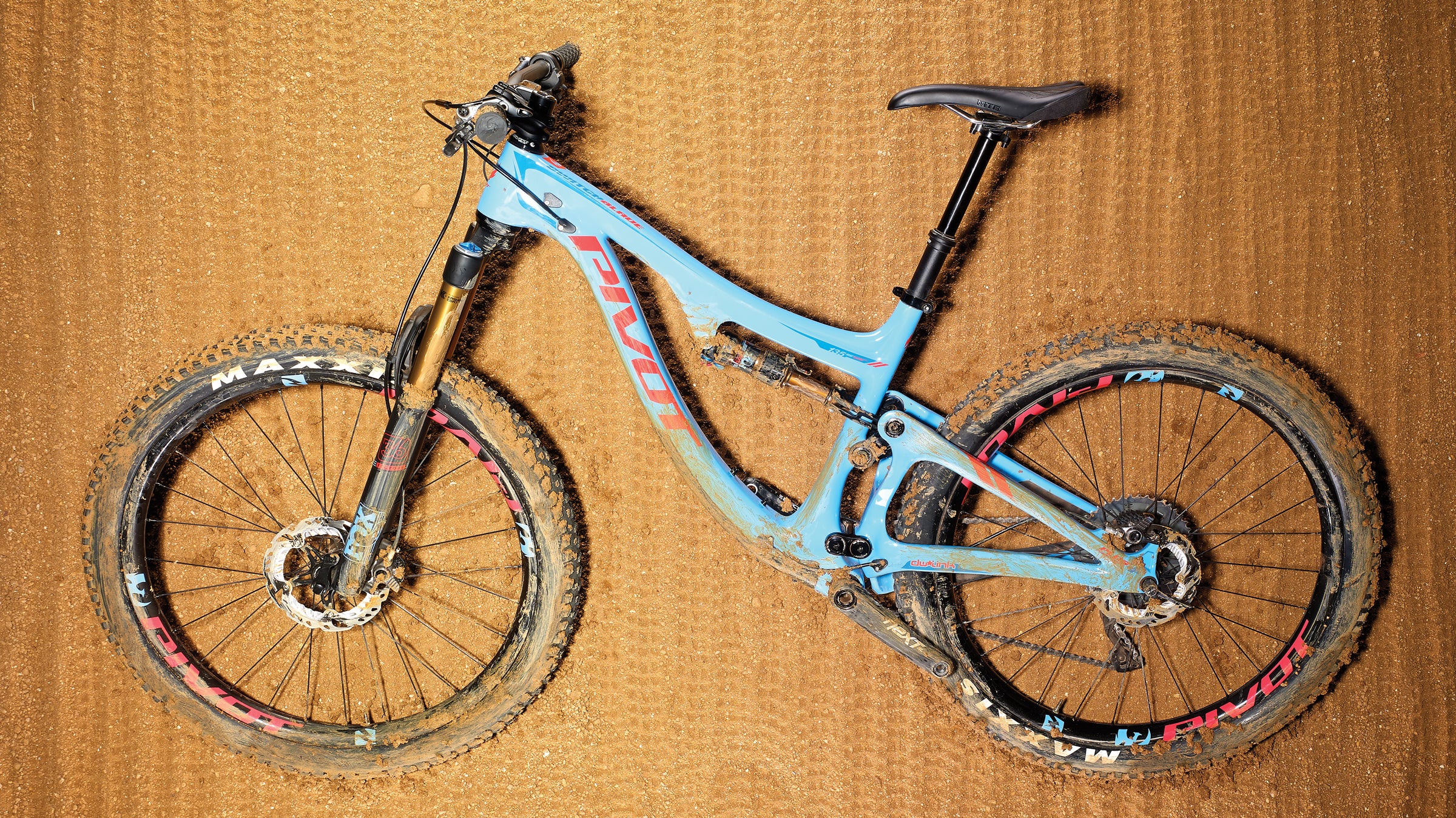
Pivot Switchblade
That search for an ideal traction-to-weight balance made the Pivot Switchblade ($9,500 as tested; 28.9 lbs.) our favorite. It’s already an aggressive trail bike, with 135 millimeters of rear travel and a stout 150-millimeter Fox 36 fork, but the 2.8-inch Maxxis Rekon tires on this carbon stunner turned the nastiest trails into an easygoing cruise.
Part of the Switchblade’s success comes from tricks like extra-wide rear hub spacing, which allows for extremely short chainstays and the resulting poppy handling that’s rare in such an assertive bike. Then there’s the hulking 815-millimeter-wide bars, which made steering through rock gardens a snap. The Switchblade also accommodates 29-inch wheels fitted with 2.5-inch rubber, an arrangement that aggressive testers preferred for the added agility and cornering. With all options included, it’s the best-riding, most versatile mountain bike money can buy.
ADVERTISEMENT
Three Other Standouts
- The Niner Rip 9 RDO ($4,700 and up; 28.4 lbs.) is one of the most aggressive 29ers on the market, with 150 millimeters of rear travel and a banger 160-millimeter fork.
- Though the Trek Stache 9.8 ($4,700; 27.4 lbs.) is a plus-size model, it puts three inches of rubber on 29-inch hoops for outrageous technical capabilities, making it the only hardtail that can keep up with a full-suspension bike.
- With a pedaling stance as narrow as most standard mountain bikes, the Otso Warakin ($3,200 and up; 24.6 lbs.) pulled double duty on snow and summer trails.
