Published August 23, 2018 12:00AM
If you buy through our links, we may earn an affiliate commission. This supports our mission to get more people active and outside.Learn about Outside Online's affiliate link policy
Food-Planning Basics for Backpacking
How much food do you need to bring? What kind? How do you store it? We've got answers.
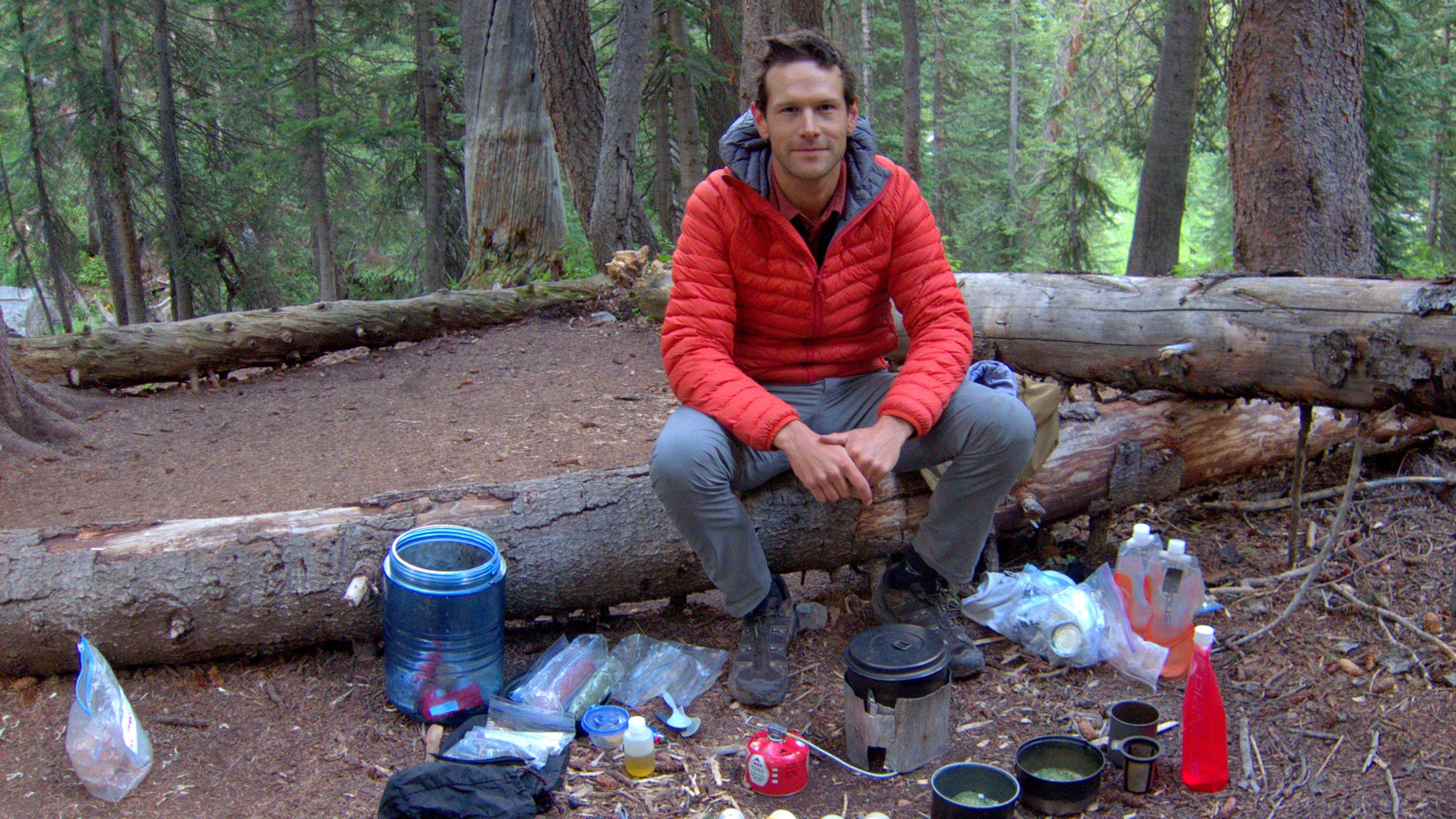
The author preparing dinner, with his trusty bear canister nearby.
Second only to gear, food is the most difficult thing for backpackers to get right. Follow these recommendations on amounts, types, and overnight storage to avoid learning the hard way.
How much food does a backpacker need?
My experience is that most backpackers will be satisfied with 2,250 to 2,750 calories per day. If you are young, muscular, larger in size, and/or on an intense trip, aim for the high end of this range. If you are the opposite of any of those aim for the low end of this range.
Calorie-counting is tedious, so you may find it more practical to weigh your food. In this case, aim for 18 to 22 ounces of food per day. The average caloric density of your food is generally about 125 calories per ounce, so 18 ounces equals 2,250 calories and 22 ounces equals 2,750 calories.
ADVERTISEMENT
Caloric density is a calculation of calories per weight. Pure fats like olive oil contain 240 calories per ounce. Pure carbohydrates like gummy bears contain 100 calories per ounce, as do pure proteins like whey protein powder. By packing fattier foods, you can reduce the net weight of your food load while still getting the necessary calories.
Backpackers tend to pack their fears, and so the natural tendency is to pack too much—no one wants to starve. I have had guided clients who were skeptical of my 2,250 to 2,750 range, and every time they have returned to the trailhead with uneaten food.
What types of food should backpackers eat?
The types of foods that work (or don’t work) are very personal. I recommend that you experiment until figuring out what performs best for you.
Here’s what I do:
ADVERTISEMENT
Most mornings I get up at the crack of dawn, and hike for about an hour before stopping for breakfast. This helps to develop an appetite, and to spread out the hiking over more hours, increasing the opportunities for breaks. Every day for breakfast I eat granola with protein powder. On my guided trips, which are more casual and which must accommodate a broader range of eating preferences, we also have an oatmeal and cheesy potato recipe.
I snack throughout the day. About every 2.5 hours, I eat about three ounces of food. This keeps my energy level stable, and avoids big meals that put me in a food coma. The snacks fall into several categories:
- Sweet, like chocolate-covered cashews and M&M’s
- Salty, like Pringles and corn nuts
- Sweet and salty, like yogurt-covered pretzels
- Real, like salami, dried fruit, and avocados
- Protein, like protein bars and beef jerky.
If I’m guiding backpackers who enjoy a dedicated lunch, I will bring cold cuts, cheese, and bread or tortillas.
Every night I make a hot dinner, as my reward for a hard day of hiking. For years I have been running with a few winning recipes:
There are lots of other good ideas online, too. Err towards those that are easy to prepare—that is, that call for only a few widely accessible, shelf-stable, and inexpensive ingredients.
ADVERTISEMENT
How should backpacking food be stored overnight?
On their websites, land managers normally specify accepted methods of overnight food storage. Their primary concern is keeping the wildlife wild, by preventing access to human food. The basic options are:
- Sleep with or on your food
- Hang your food from a tree
- Store your food in a bear-resistant sack or canister
Of these, the method I most wholeheartedly recommend is a hard-sided canister like the Bearvault BV450. They’re heavy and difficult to pack, but they’re very effective against both bears and mini-bears (i.e. mice, marmots, squirrels, rabbits, and other small rodents that tend to inhabit high-use backcountry campsites). Such canisters are required in popular backpacking locations like the High Sierra, Rocky Mountain, and Adirondacks.
Only in one instance will I hang my food: if I’m only concerned about rodents. In that case, hanging your food from a tree a few feet off the ground and away from branches and the trunk will do the trick . If I’m legitimately worried about bears, however, I will just bring a canister (or an Ursack, if canisters are not required).
I never try to protect my food from bears by hanging it. It’s very difficult to find “the perfect tree” for hanging, and bears are much more skilled than you can imagine. This is your competition, good luck:
Sleeping with or on your food is not something I necessarily recommend, but I’ll admit that I do it often if I’m not in an area where canisters are required or where I have legitimate bear/mini-bear worries. But most of my trips, including my guided trips, are off the beaten path where bears and mini-bears still have a healthy fear of humans.
Sleeping with or on your food is not something I necessarily recommend, but I’ll admit that I do it often if I’m not in an area where canisters are required or where I have legitimate bear/mini-bear worries. But most of my trips, including my guided trips, are off the beaten path where bears and mini-bears still have a healthy fear of humans.
