Published October 16, 2019 12:00AM
If you buy through our links, we may earn an affiliate commission. This supports our mission to get more people active and outside.Learn about Outside Online's affiliate link policy
Which Airlines Have the Best Gear Policies?
The answer: it depends. But we read through the fine print so you don't have to.
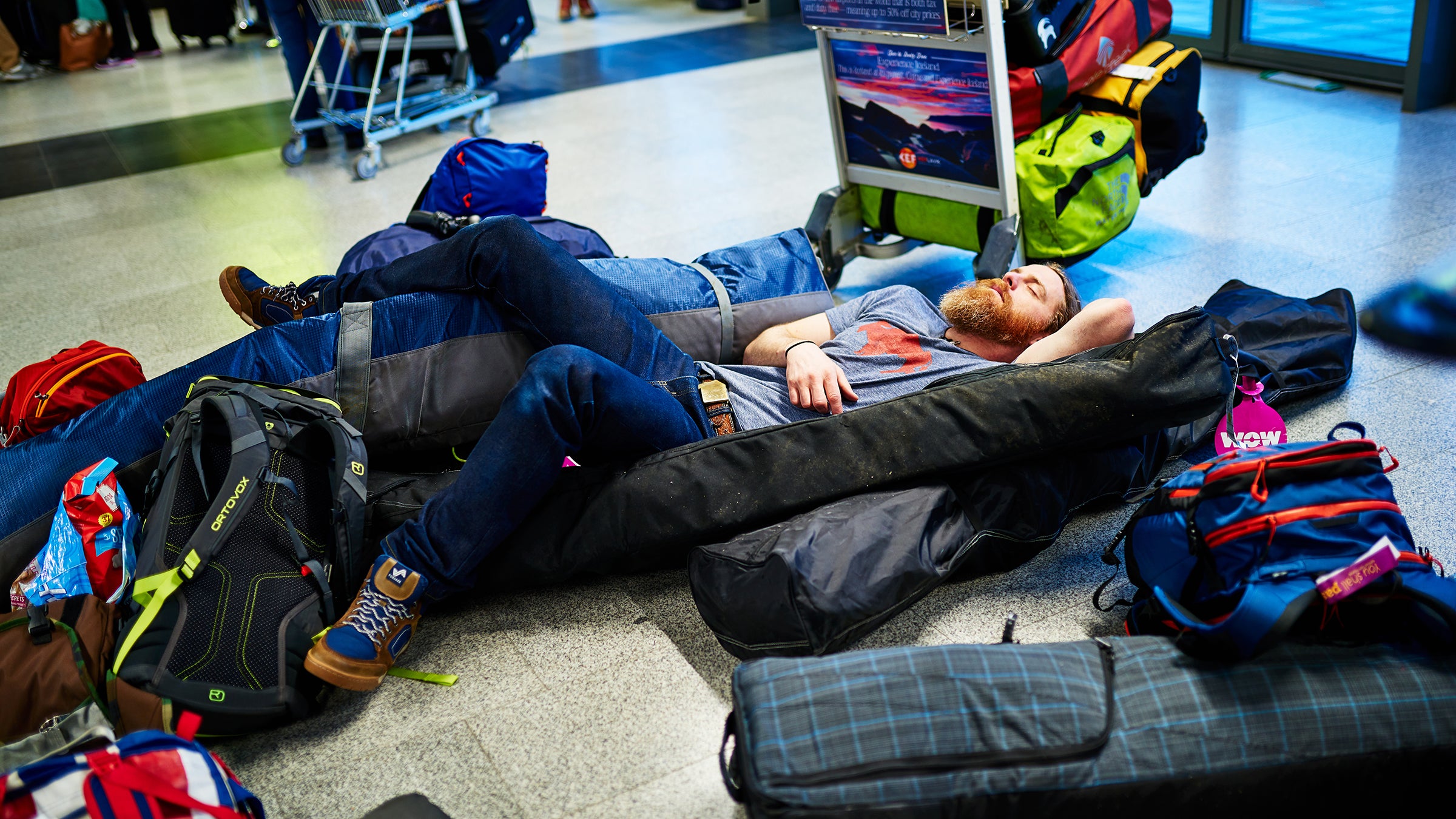
Which airlines have the best policies for flying with gear? We read the fine print to find out.
Whether you’re planning a ski trip to Japan or a mountain-bike vacation in Moab, Utah, the thought of getting your equipment there can be pretty intimidating (and the end result expensive) due to confusing airline gear policies. In the last few years, though, several companies have eliminated the specialty sports-bag fee that hit adventure travelers hard, which means it’s now cheaper than ever to bring your bike, surfboard, or skis along when you fly. But with rules that vary from carrier to carrier, figuring out which airline to fly with is still as confusing as ever. We’ve broken down the fine print of six major options so you no longer have to rely on rentals.
American Airlines
In May, American Airlines announced it would be getting rid of its extra sports-bag fee, which marked a huge boon for adventure travelers. The former $150 bill for items like bikes and snowboards was knocked down to just $30—the cost of a standard checked bag. There are some caveats, though: the linear size (length plus width plus height) of your checked gear still has to be 126 inches or less (sorry, stand-up paddleboarders), the item won’t be allowed if it weighs over 70 pounds (you, too, trad climbers), and you’ll get dinged with an oversize-bag fee if it weighs over 50 pounds (yep, that’s how they get you). Most items you’d want to check are included in the new rule, but there are some things that don’t qualify, including antlers if you’re coming back from a hunt or kiteboarding gear. Otherwise, here’s how to get around a few other particulars and the gear that can help:
- For bikes, your best bet is to use a hard-sided case or bike box, but it has to be under 50 pounds; otherwise, as with all airlines on this list, it’ll be treated as a fragile item and the company won’t be liable for damage.
- Divers can travel with a bag of scuba gear (a buoyancy-control device, a regulator, and so on), but if you want to bring your own tank, you’re out of luck with the new rule—it’ll all count as one item, and you’ll still have to pay $150. Instead, rent a tank at your destination (it’s typically pretty cheap) and only pay the standard checked-bag fee for the rest of your kit.
- Your ski and boot bags count as one item, and as long as they’re under the 50-pound weight limit, you won’t pay extra.
Delta
Delta followed American’s lead in July, eliminating its $150 specialty sports-bag fee for items like skis, surfboards, and bikes. Standard bag fees apply, so as long as your gear adheres to size and weight restrictions (less than 115 linear inches and under 50 pounds) and isn’t listed on this page, you’re good to go. Here are some other points to be aware of:
- Depending on where you’re flying to, there may be special regulations and fees, so check with the company ahead of time, especially if the flight’s on a smaller plane.
- Because you were probably wondering: kiteboards, kneeboards, folding kayaks, and javelins all fall under the standard baggage allowance so long as they meet requirements.
Frontier
As with most budget airlines, Frontier will charge a varying fee for any bag you check. Its gear policy is also a bit confusing. Beyond anything that fits in a standard checked bag, you should study its list of acceptable items before you book to determine if your gear will cost extra. You’ll need to download this PDF to do that, which only complicates matters. Be on the lookout for the following outliers:
- You’ll be charged a checked-bike fee of $75 for each leg.
- Canoes or kayaks that weigh less than 100 pounds and are 15 feet long are fine, but you’ll be charged an oversize-bag fee if they’re over 50 pounds.
- Checked skis and boots count as one item (even if packed separately), and you’ll be charged only the standard checked-bag fee as long as your boot bag weighs less than 25 pounds.
- You can bring a surfboard, but it will be subject to overweight- and oversize-bag fees ($75 each way) if it’s over 50 pounds.
ADVERTISEMENT
JetBlue
JetBlue’s sports-gear policy is tricky to nail down. While it depends on which level of ticket you purchase, in general, most items will count toward your baggage allowance and accrue an additional fee. For example, if you bought the base Blue fare and want to bring your bike, you’ll be charged a $30 bag fee and an additional $100 bike fee. Here are some key takeaways:
- There’s no additional charge for fishing equipment.
- Antlers are prohibited.
- Surfboards, like bikes, are subject to a $100 fee.
Southwest
With a great reputation for customer service (at least as far as airlines go), it’s no surprise that Southwest’s sporting-equipment policy is one of the simplest and most generous to passengers. In general, so long as your bag is less than 50 pounds and 62 linear inches, it can count as one of your two free checked bags. It’s worth noting that Southwest is the only airline on this list to offer two free checked bags no matter which level of ticket you buy. Here are some of the highlights:
- Divers are in luck: scuba equipment (including one tank) won’t cost extra as long as it weighs under 50 pounds. With that weight limit, though, you still might want to consider just renting tanks at your destination.
- Fishing-rod cases can be up to 91 inches in length and still count as a regular checked bag.
- Your boot bag and ski bag only count as one free checked item, even if they’re packed and tagged separately.
- Surfboards, sailboards, kiteboards, and kayaks are considered special items and will be slapped with a $75 checked-bag fee each way.
- Water and snow skis are not subject to extra size charges, but they are subject to a 50-pound weight limit.
United
United made waves in 2018 when it nixed the $150 sports-bag fee for anyone traveling with a surfboard, paddleboard, or wakeboard on a flight ending at or originating from a California airport. The company’s policy is a bit more hazy when it comes to other kinds of sporting equipment, so check the list to see if your item qualifies as a standard checked bag or will be subject to other fees. There are a few exceptions:
- Bikes qualify for standard checked-bag fees if the packed case weighs under 50 pounds and is less than 62 linear inches. Since most bike cases are larger than this size restriction, you’ll likely end up paying a $150 bike fee each way for domestic flights (and $200 for international ones).
- Make sure your flight doesn’t have an excess-baggage embargo, which is when companies place restrictions on certain routes due to space and weight issues. Some destinations (like Auckland, New Zealand) have permanent embargoes.
- Take extra care when packing your fishing and ski equipment: United says it isn’t liable for damage to those items.
ADVERTISEMENT
The Takeaway:
- American, Delta, and Southwest are your top options for traveling with gear. Southwest is especially appealing, thanks to a policy that’s simple to understand and, unlike other company policies, allows a bike to count as a free checked bag.
- If you’re bringing a surfboard, go with American or Delta.
- Only fly Frontier with gear if you can get a dirt-cheap ticket—and even then, the cost of your checked gear might make the low fare worthless.
- Most importantly, do your homework before booking a ticket instead of showing up at the airport with your board bags and fishing rods in tow. The money you save could be enough to buy a ticket for your next trip.
