Published April 20, 2007 12:00AM
Automated Response
Helicopter rescues on the summit of Everest may soon be reality. And the pilot won't be anywhere in sight.
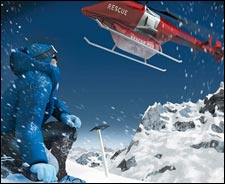
THE HARDEST PART of flying to the top of Everest: finding a pilot dumb enough to try it. “Step out of an aircraft up there and you might be dead in 30 seconds,” says Trevor Rogers, owner of Auckland, New Zealandbased helicopter manufacturer TGR Helicorp. His solution? Lose the pilot.
Rogers hopes his new Alpine Wasp, a $5 million unmanned craft, will one day whisk climbers off the Hillary Step with greater ease than a Chinook on Mount Hood. The 40-foot-long craft boasts a revolutionary diesel engine and carbon-and-Kevlar rotor that allow it to hover at 31,000 feet. It also carries an array of cameras and infrared sensors that will supposedly enable it to fly through high winds and blinding clouds.
During future rescues, a “pilot” at a hangar in Namche Bazaar, 17 miles from Everest Base Camp, would sit in a cockpit simulator using images from the Wasp’s 16 infrared and high-def cameras to fly via remote control, while onboard computers constantly adjusted for turbulence. As the helicopter approached a climber, it would extend a proboscis with another camera, a microphone and speaker, and a Kevlar rope with a harness. “Strap the thing up tight, pray to your gods, and we yank you straight off the mountain,” says Rogers.
ADVERTISEMENT
If test flights this year on New Zealand’s Mount Cook go well, TGR hopes to put the Wasp into service by next spring. But some Everest hands wonder whether it belongs there. “In combat, a rescue drone is fine,” says mountaineer Conrad Anker. “On Everest, I think it’s out of place. Up there, the risk is part of the allure.”