Updated March 3, 2026 01:50PM
Iceland’s Swimming Pool Culture Is Now UNESCO-Recognized. Here’s Where to Soak It Up.
Year-round Icelanders “go for a swim” in their hot springs and geothermal pools. This longstanding tradition is not about doing laps, but more so a warm soak and a daily chat. Here are the top local-loved spots to take a dip.
(Photo: Lauren Breedlove)
Moonlight dances on the fjord waters; the reflection is so bright it might as well be midday. The wind stings my face as I lower myself into a beachside pool of relief from January’s wrath. The air temperature hovers around 15 degrees Fahrenheit, but every drop of the 100-degree water is glorious. My partner and I are dumbfounded that we have the whole place to ourselves, and by the absurd beauty of it all—a perk to our overnight stay at Hvammsvík Nature Resort, a rural coastal retreat 55 miles outside of Reykjavik.
Some experiences in life fuel obsession, and for me, soaking in a natural Icelandic hot spring is one of them. On each of my eight trips to Iceland, I’ve dipped in hot springs and geothermal-heated pools in the rain, snow, pitch black darkness, midnight sun, and in freezing temperatures and whipping wind. I’ve relaxed in remote, rock-ringed pools, hypnotized by steam rising from a verdant valley. And I’ve driven for hours chasing the thrill of a new-to-me hot spring in the middle of nowhere, and mingled in a large city swimming pool, dotted with locals relishing in the warmth of the water and company. Every experience has undoubtedly been nothing short of magical.
Now, Iceland’s daily practice of a warm dip is getting the global recognition it deserves.
Iceland’s Bathing Culture Gets UNESCO Recognition
In December 2025, UNESCO added Iceland’s swimming culture the Intangible Cultural Heritage of Humanity category, which aims to protect living traditions, rituals, skills, social practices, and arts that have been shared through generations. It acts like a “safety net” to protect and promote a time-honored element of culture from disappearing.
Iceland joins the list, along with other intangible cultural heritage practices such as Finnish sauna, Swiss yodeling, Italian cooking, Singaporean hawker food, and Uzbek yurts. The daily practice of swimming is inclusive of all, from babies to the elderly, and it’s woven into Iceland’s cultural tapestry.
“The UNESCO designation is important to emphasize how valued this culture is to people in Iceland. It’s a varied and multilayered tradition, bringing forth aspects such as community, social well-being, health, and fitness—and being in the moment,” Sigurlaug Dagsdóttir, a folklorist and ethnologist at the National Museum of Iceland, tells me.
Known as the ‘Land of Fire and Ice,’ the volcanic island is rich in geothermal energy, with roughly 30 to 33 active volcanic systems in the country. Icelanders not only coexist with the natural forces surrounding them, but also use them to their advantage. Geothermal water warms their homes and greenhouses, provides electricity, melts snow and ice, and heats the island’s outdoor pools, big and small, from underground.
ADVERTISEMENT
“The swimming pool culture has deep roots. It is a privilege to grow up with that. And it is a privilege to get old with it,” says Margrét Pálsdóttir, a 70-year-old linguist, teacher, and choir director in Reykjavík. Almost every town has its own swimming pool, and the biggest might have more than one, she adds. “They are really cherished, and we welcome every guest and invite them to join us.”
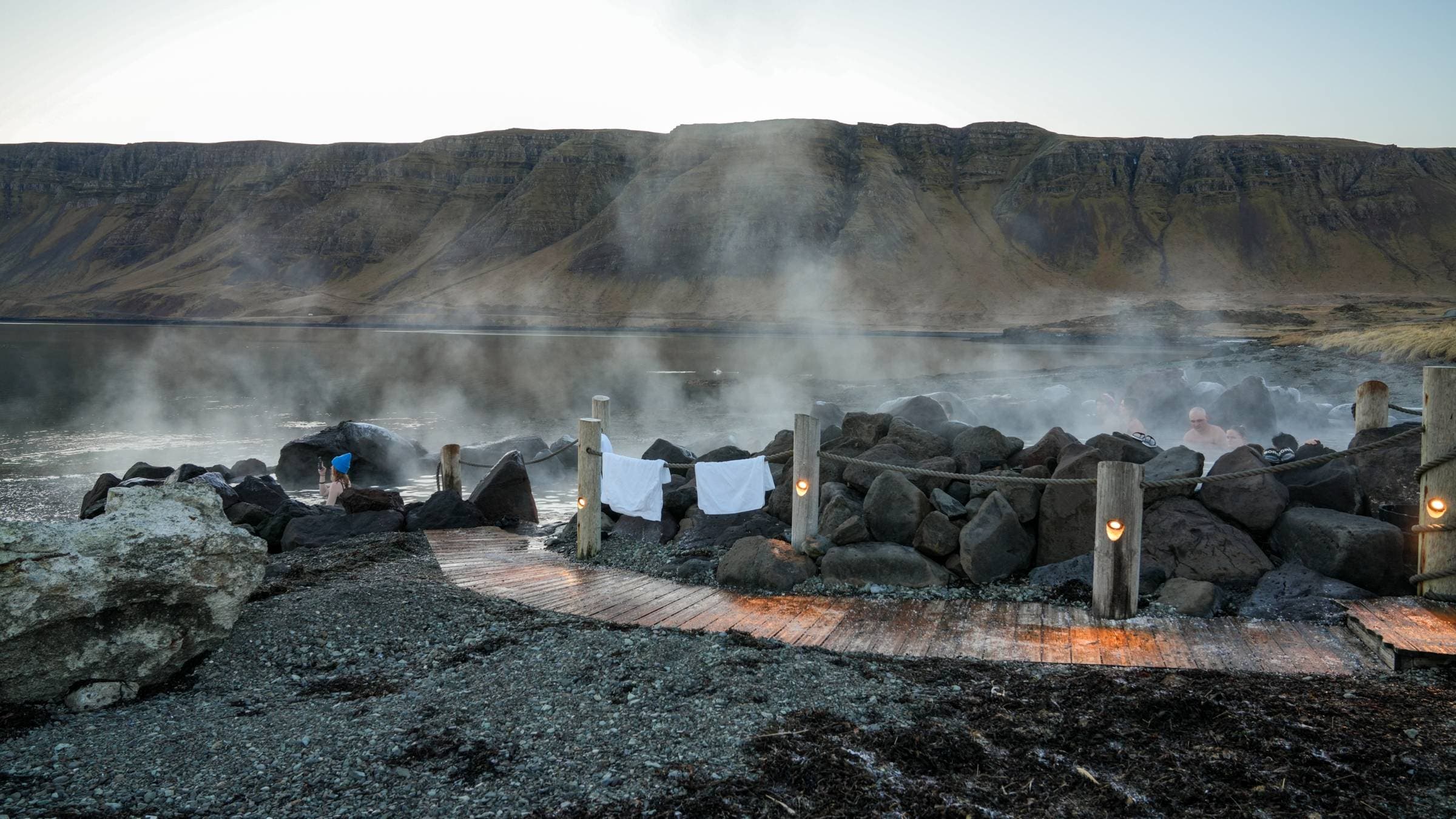
When I was soaking in Hvammsvík, I had the extra bonus of being surrounded by views of the snow-capped Esjan Mountains fringing the rugged fjord, and, occasionally, seals peering out of the dark Atlantic ocean waters. Many of Iceland’s pools are immersed in nature, combining water therapy with dramatic landscapes of jagged mountains, waterfalls, rivers, and lava fields. Some are so remote it’s instantly a quietcation, while others are buzzing with activity and bathers socializing.
“Iceland is a country of extremes, and Icelanders are full of contradictions. Our pool culture is the embodiment of our nation; an outdoor activity that combines action and relaxation. You can be in a geothermal pool to meditate or to socialize,” says Skúli Mogensen, founder of Hvammsvík Hot Springs and Nature Resort.
The Roots of Iceland’s Bathing Culture
For travelers, the lure is wellness in a scenic place, but for Icelanders, swimming is a longstanding tradition rooted in survival. Long before foreigners became enamored with Iceland’s outdoor bathing experiences, swimming was ingrained in everyday life. In 1925, the country, an island nation surrounded by wild ocean waters, created a public health law, requiring swimming lessons for all children to combat the many tragedies involving fishermen and sailors at sea.
ADVERTISEMENT
Iceland’s public swimming pool culture developed when the nation was forming its identity towards independence. ”It’s also when people in Iceland realized the importance of swimming for the safety of a nation surrounded by the sea, and increasingly made their livelihood from fisheries,” says Dagsdóttir. Throughout the 20th century, the country’s swimming pool culture evolved beyond its survival roots. “It expanded from the important task of teaching people to swim into a playground for all ages in the latter half of the century,” says Dagsdóttir.
Soaking and Socializing
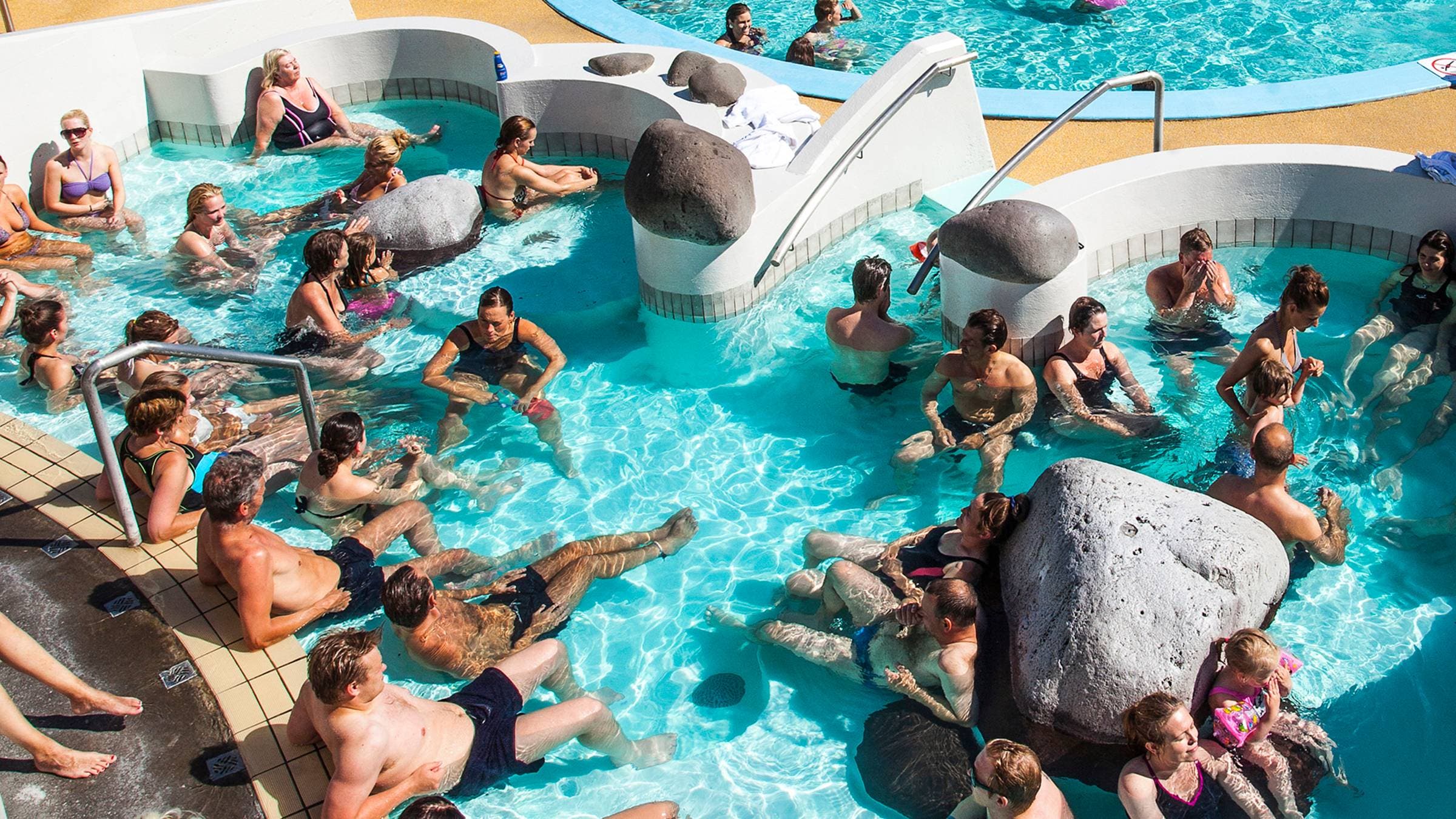
Today, Iceland’s swimming culture emphasizes how Icelanders build community, survive in a harsh climate, and disconnect from the stress of everyday life. “I say that I’m going swimming, but I don’t always swim. I guess the pools are like the pubs in other countries. You go there to meet friends and chat in the hot tubs,” Pálsdóttir says. “Well, yes, you might have the goal of swimming first, maybe 200 meters, or one kilometer (like my daughter does every day). But afterwards, you take time with friends in the hot tubs.”
Another reason why Icelanders want to hold on to this daily ritual is that they are one of the last phone-free spaces, which Dagsdóttir says is proof of how deeply related the swimming pools are to their communities and important to society as a whole. “This allows people to have more chill moments in this environment, allowing for deeper conversation, even sometimes with a stranger,” says Marteinn Briem, owner of CityWalk walking tours in downtown Reykjavík.
ADVERTISEMENT
Word of mouth is a powerful tool while traveling, and I have never benefited from it more than I have while soaking in the geothermal waters of Iceland. I’ve ended up at lesser-known hot springs, a yarn shop, an eatery with incredible fish soup, and the best place to view puffins on the island by chatting with locals and other travelers in community pools or natural hot pots.
It was a tip from a local that landed my partner and me at Vesturbæjarlaug, one of Reykjavík’s most popular swimming pools, chock-full of locals on New Year’s Eve morning. After following the organized chaos of the routine pre-soak shower and swimsuit change in our respective locker rooms, we met outside by the pools. It was 11:30 A.M., and the sun was just coming up, fueling steam across the collection of pools, varied in size and temperature (between 91 and 111 degrees Fahrenheit). The lap pool was practically empty—people were there to socialize and relax during the holiday. The children’s pool was bustling with families, people greeting each other, and chatting; a few relaxed with their Kindle in the toasty waters. We were outsiders, but welcomed just the same.
Where to Take a Warm Dip in Iceland
Iceland has more than 120 natural and man-made pools, and upwards of 50 hot springs. Each one has a unique personality in its history, design, surroundings, temperature, and community. If you really want to immerse yourself in Icelandic culture, pack a bathing suit.
ADVERTISEMENT
While places like the Blue Lagoon and Mývatn Nature Baths are well-known, these are a selection of some of my tried and true favorites to add to your list.
Seljavallalaug Swimming Pool
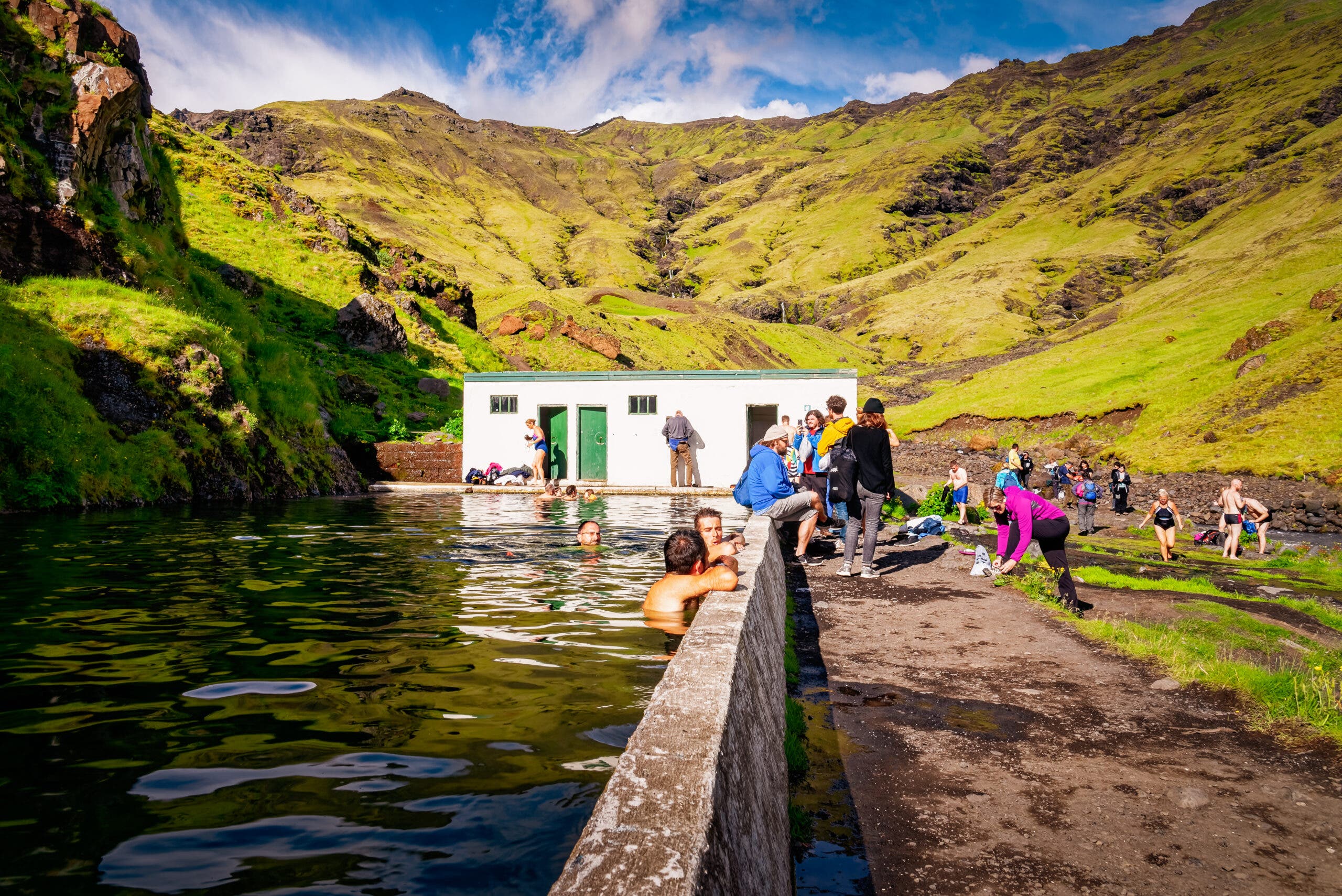
Fancy swimming in one of Iceland’s oldest pools? Tucked into a valley in the south of Iceland, this 82-foot-long outdoor pool feels as wild as its setting; a concrete haven jutting from the side of the basalt rock cliffs, draped in splotches of moss. More than a century old, it appears as much a part of the landscape as the surrounding peaks, deep valley, and adjacent river. The community-maintained pool is hardly a secret, but when I visited solo in 2018, trudging the 15-minute flat trail lit by the midnight sun at 11 P.M, I only saw one other person. My feet slipped a bit on the algae in the lukewarm water, but that’s to be expected, as it’s only cleaned once a year by a group of volunteers. None of that distracted me from the charm of swimming in the middle of nowhere. Access to the pool is free, and parking is accessed off the Ring Road (Route 1).
Hvammsvík Hot Springs
One of the country’s newest hot springs, Hvammsvík Hot Springs, is right on the coastline within the tidal zone of the Hvalfjörður (Whale Fjord). Only a 45-minute drive from the capital city of Reykjavik, it’s perfect for a day trip, but even better if you stay a couple of nights, as I did. Steam rises from the hem of the shore before you spot the source: eight natural rock-lined hot spring pools of various temperatures, linked by a network of boardwalks. In the largest pool, a swim-up bar connects to the main building, where refreshments are sold. From here, you can watch brave souls choosing to cold-plunge in the ocean between warm soaks. If you’re lucky, you could spot the northern lights, too, just like I did. The remote location and lack of light pollution create an ideal backdrop for witnessing the splendor. It’s recommended to make a reservation, and the tickets vary in price from 5900 ISK ($48 USD) to 14100 ($116 USD), depending on the package you choose.
Guðlaug Baths
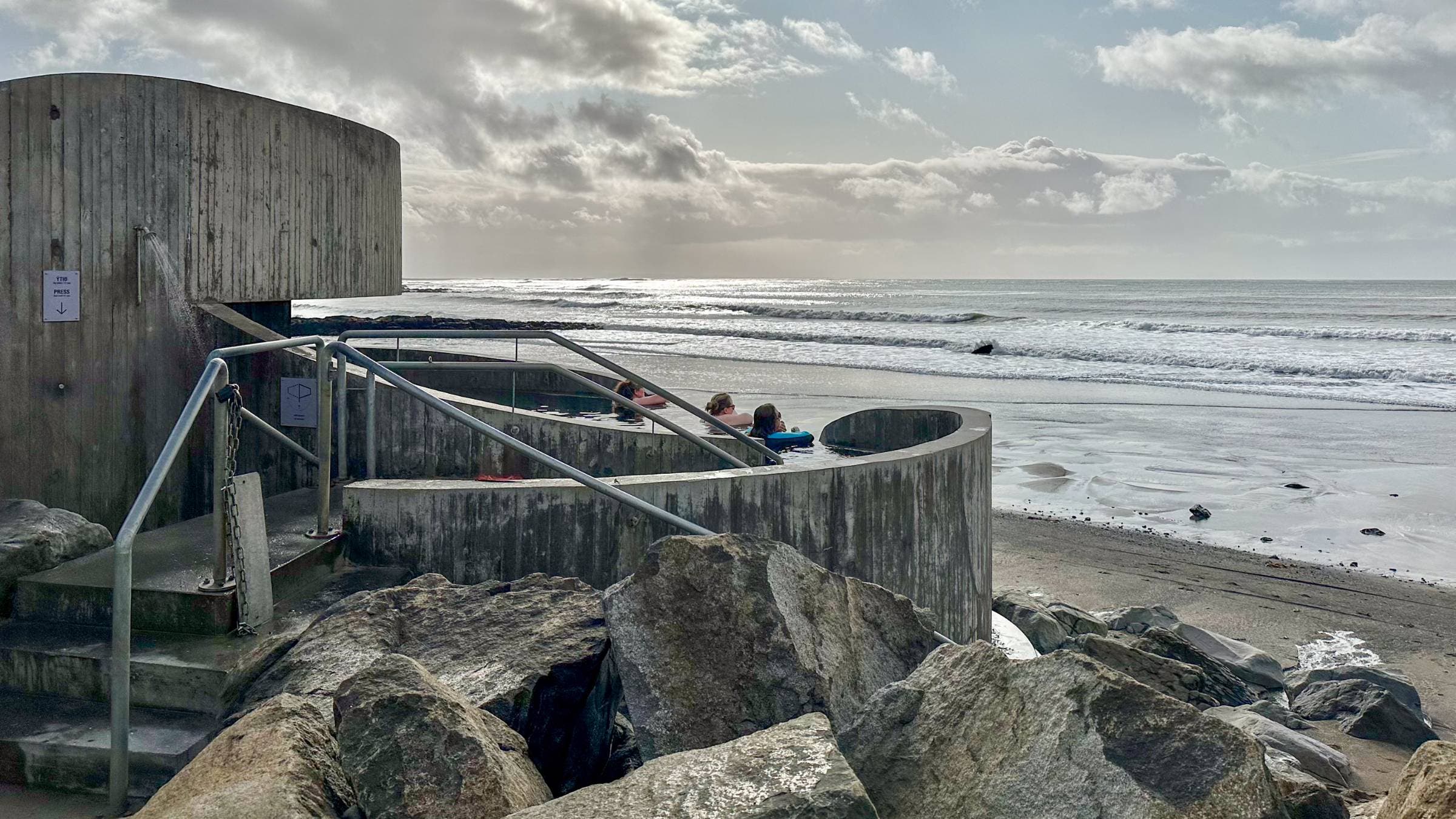
Located in the town of Akranes in western Iceland, the Guðlaug Baths are perched right on Langisandur beach, one of Iceland’s few Blue Flag Beaches, popular for swimming year-round. A set of infinity-edge concrete pools gives visitors an uninterrupted vantage point overlooking the bay. The hot spring pools blend into the natural rocky breakwater barriers and offer the opportunity for a warm soak after swimming in the sea. They’re open year-round and serve as a coveted sunset spot for locals and visitors alike. The entrance fee is 2800 ISK ($23 USD), which includes use of basic changing rooms.
ADVERTISEMENT
Guðrúnarlaug Hot Spring
This small, circular geothermal pool in West Iceland, just south of the Westfjords, feels like dipping in a Viking storybook. The scene feels like a movie set: a small wooden hut backed by a waterfall, and a stone-ringed, steamy pool. Viking history runs deep here. The devastating love story of the Laxdæla Saga is detailed on the property’s welcome sign. No complaints about the temperature of the water here, it’s perfect: hot enough to stay in for a while without feeling like you’re overheating. This natural hot spring is free to use, and changing is permitted in the small hut.
Landmannalaugar Hot Springs
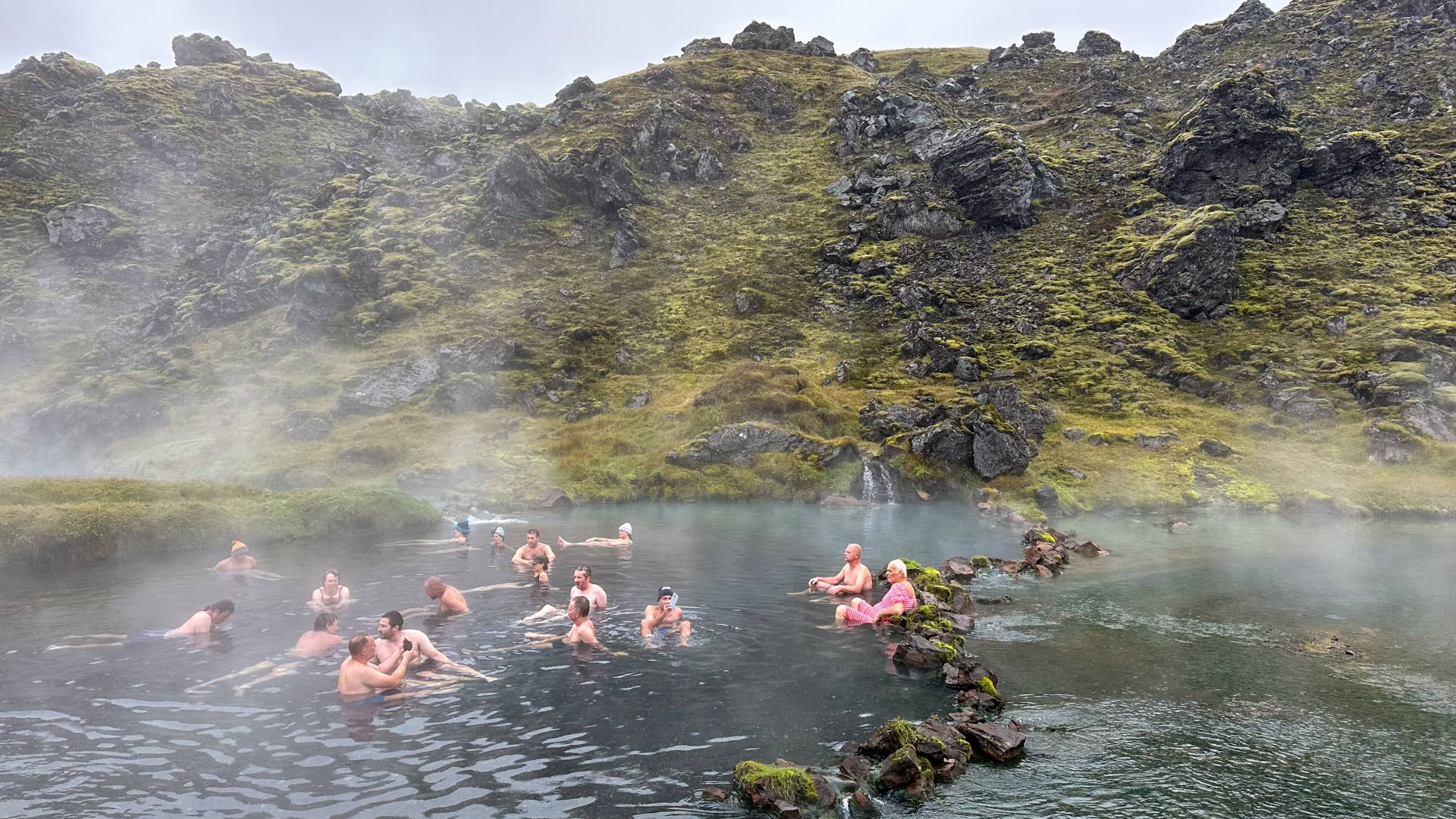
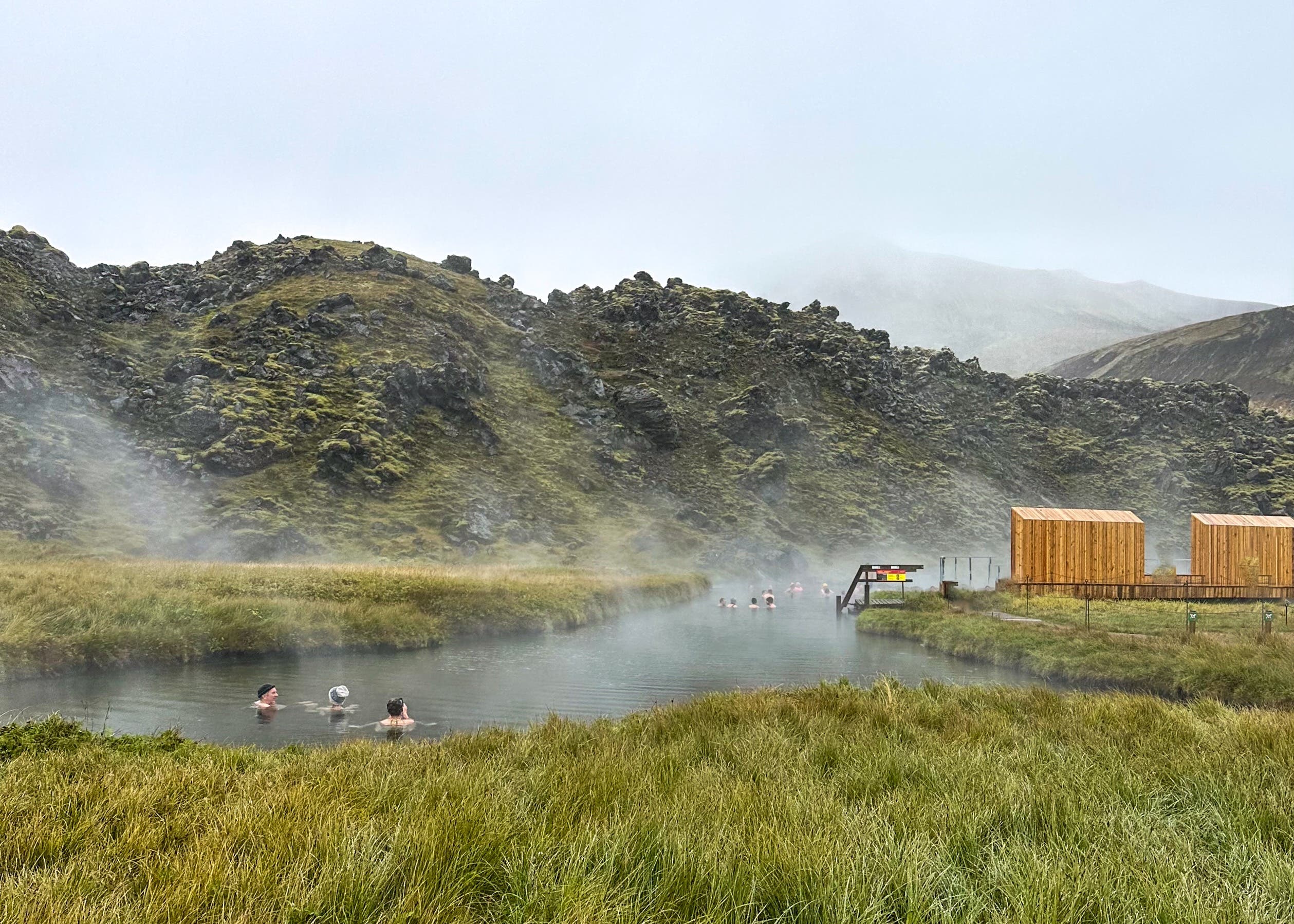
If you’re up for a trek, venture into the Highlands for this unique backcountry soaking experience. Located in the Fjallabak Nature Reserve, these natural springs are river-fed geothermal pools, cradled in a cinematic landscape of contrasts: dark lava fields and vivid, multi-hued rhyolite mountains. Reaching them is an adventure in itself, requiring a 4×4 vehicle if you go on your own (June through early September), or by joining a tour like this one, offered by Hotel Ranga. While access to the hot spring is free, if you’d like to use their on-site changing facilities or showers, the fee is 500 ISK (about $4 USD). There are also paid camp sites available.
Krosslaug Hot Springs
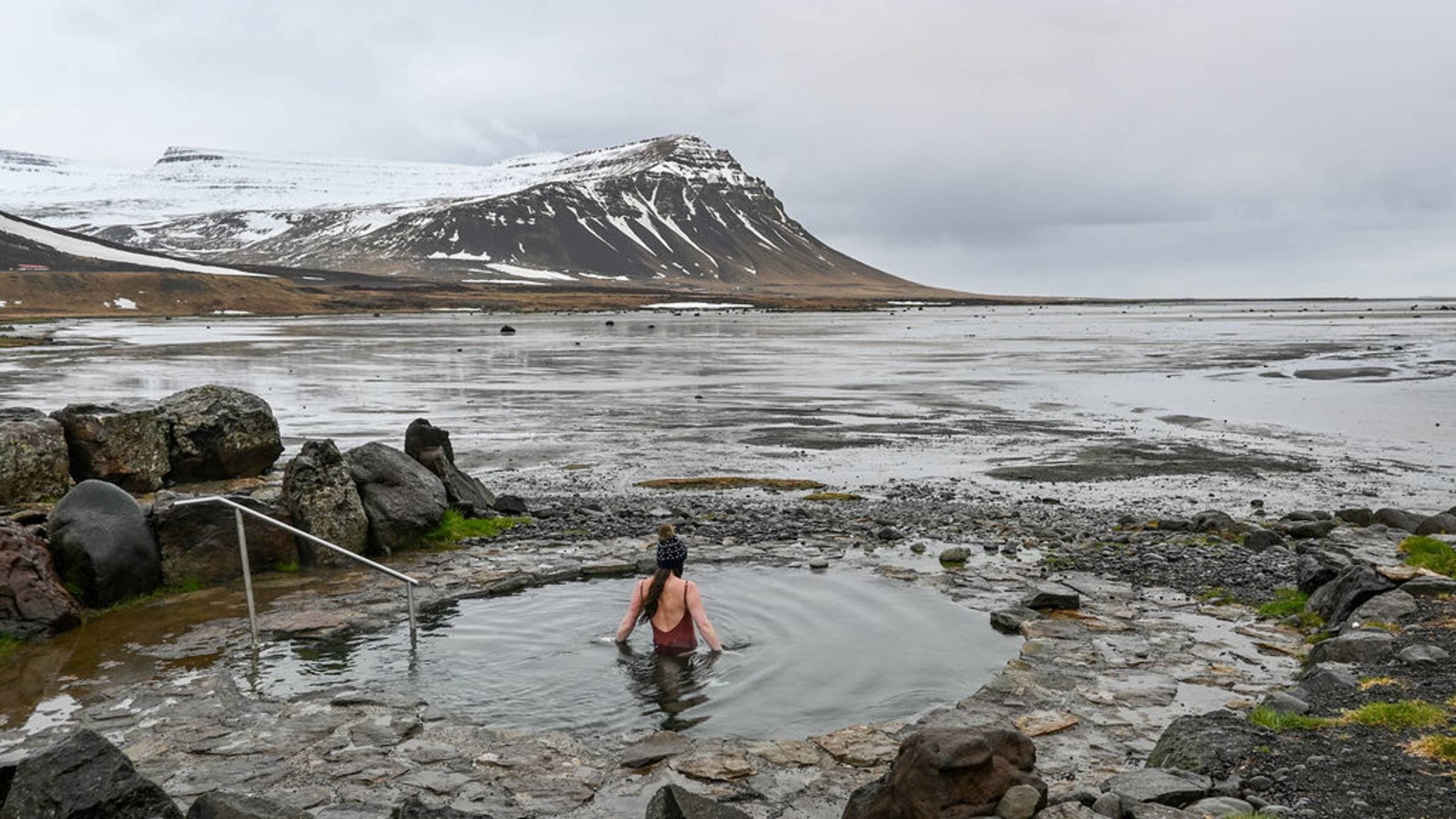
My midweek daydream takes place at the Krosslaug hot spring in the Westfjords, a lesser-known spot and Icelandic treasure. Although the pool and hot spring duo (also known as the Birkimelur swimming pool) is located right off a main road, Route 62, many don’t make the journey to the further-flung Westfjords. We had the whole place to ourselves, with endless views of the coastline stretched out for miles, interrupted only by staggering snow-capped peaks. This hot spring entrance fee is 1700 ISK (about $14 USD).


