Updated February 24, 2026 10:28AM
How I Got Hooked on Ice Fishing (And 7 Places to Try It for Yourself)
Avid angler Robert Annis shares what it's like to go ice fishing on Green Bay, Wisconsin, and 6 other places you can try it this winter.
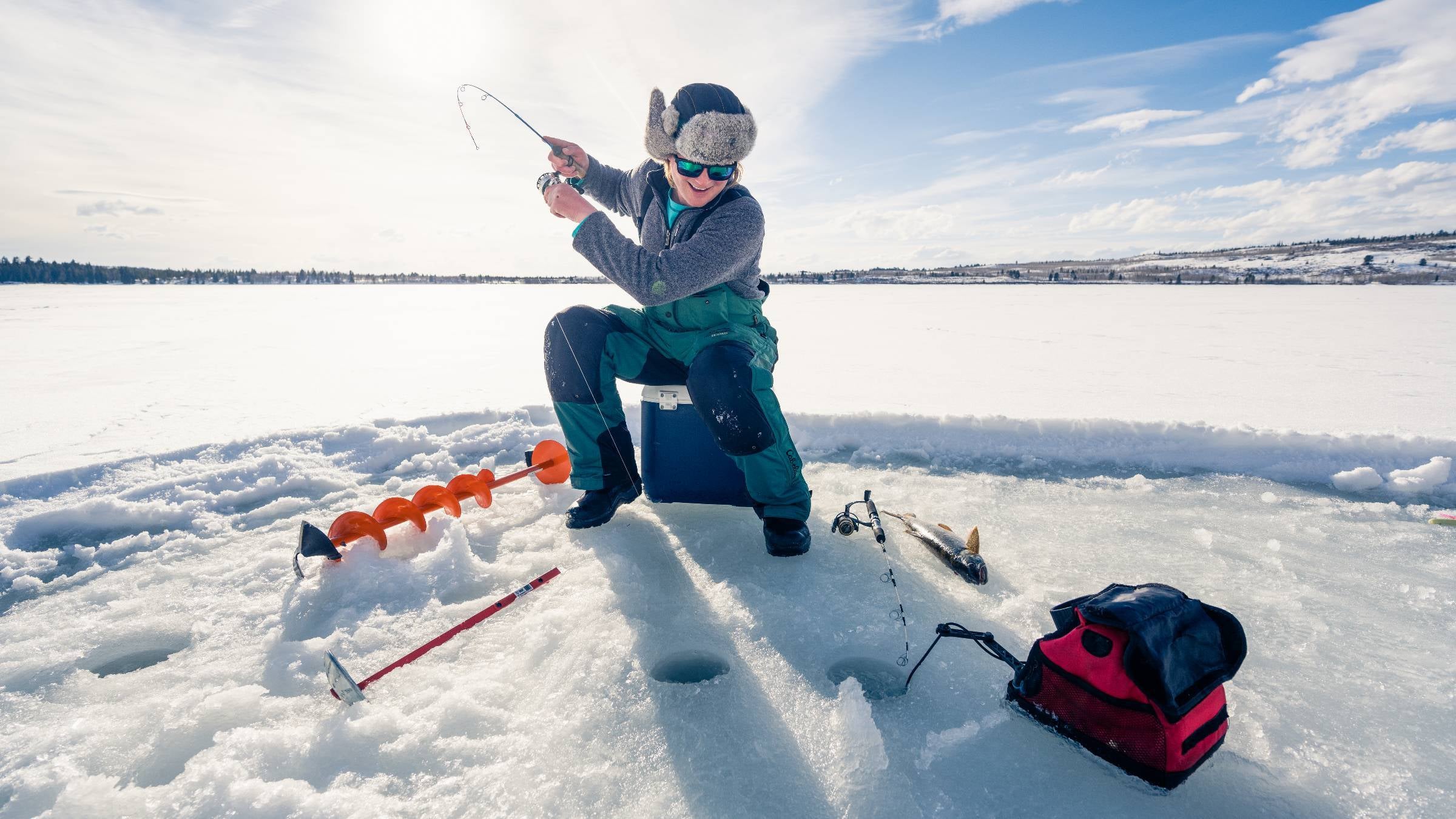
An angler keeps the line tight while reeling in the hooked fish so it doesn’t get away. (Photo: Photo courtesy of Wyoming Office of Tourism)
It was still dark when my fishing partner and I pulled into the parking lot at Geano Beach Bar and Grill in Green Bay. The temperatures were nearing in the single digits, and the wind chill made us feel as if we were being pummeled by Mike Tyson wearing a Frosty the Snowman costume. It wasn’t even 6 A.M., and the mercury was still below zero; too early and too cold for any rational creature to be moving about outside. Both of us looked as if we were about to hit the ski slopes—insulated boots, wind-resistant bibs, and thick parkas—but instead we were heading onto frozen Lake Michigan to go fishing.
Once our fishing guide, Scott Allen, pulled up, the three of us climbed into his ATV to head to one of his six shacks on the frozen inlet. It was a mile-and-a-half ride out to the shack, located just above a reef that’s a known hot spot for its prized catch, the walleye. It’s a fighter when hooked and tasty when cooked.
The 6-foot-by-12-foot plywood ice shanty, consisted of two wooden benches on either side with a small table in between, and a propane heater on high keeping the frigid temperatures at bay. On the ground in front of each of the benches were four holes—eight in total—measuring about eight inches in diameter. Grabbing a small jigging rod about a third of the length of a standard fishing pole, I popped some wax worms onto the Rapala jig that was pre-rigged for me, and dropped the lure down to the lake bottom.
ADVERTISEMENT
We set up a Garmin Livescope, a sort-of radar that detected both fish and our lures. It made the experience feel like a bit of a video game. Every 20 minutes or so, a school of perch or whitefish would swim past, giving our lures the occasional swipe. Throughout the day, the below freezing temperatures meant the ice continued to enlarge and expand. The booms from the ice cracking sounded like a chorus of slamming doors, as if Poseidon had hundreds of surly teenagers living underwater with him. When a whitefish would circle our jigs, a loud crack would scare the skittish fish away.
I’ve been fishing most of my life and have caught hundreds of fish on a fly throughout the Americas, and while this was only my second time ice fishing (the first was only a brief hour in a polar vortex in Wisconsin), it’s fair to say I’m now hooked. After spending two days on frozen Green Bay, I understand why ice fishing has a dedicated following of nearly two million hardcore anglers who cast a lure into the icy-cold depths of their local lake every year. For one, it’s a way to embrace winter and get outside no matter how cold it gets. And it can be as social or as peaceful and meditative as you want it to be. There’s the thrill of the catch, of course, made even more exciting when it’s all under the ice.
Interested in trying it yourself? These are the 7 best places in the U.S. to try it for yourself.
Green Bay, Wisconsin
 Two ice fishers set up another insulated tent to keep warm while fishing. (Photo courtesy of Discover Green Bay)
Smaller lakes typically freeze by late December or early January, with the ice lasting until late March, depending on how brutal the winter has been. Lake Michigan takes a bit longer to freeze and, in some years, has somewhat spotty ice. In those years, it may be best to stick to Lake Winnebago, White Potato Lake, or Shawano Lake, which hold plenty of fish.
ADVERTISEMENT
The state of Wisconsin offers an online database of fishing spots, but doesn’t track local ice conditions, so head onto the lakes at your own peril. (If you see a bunch of people fishing on it, it’s usually safe.) There’s no shortage of good ice fishing throughout the state.
Duluth, Minnesota
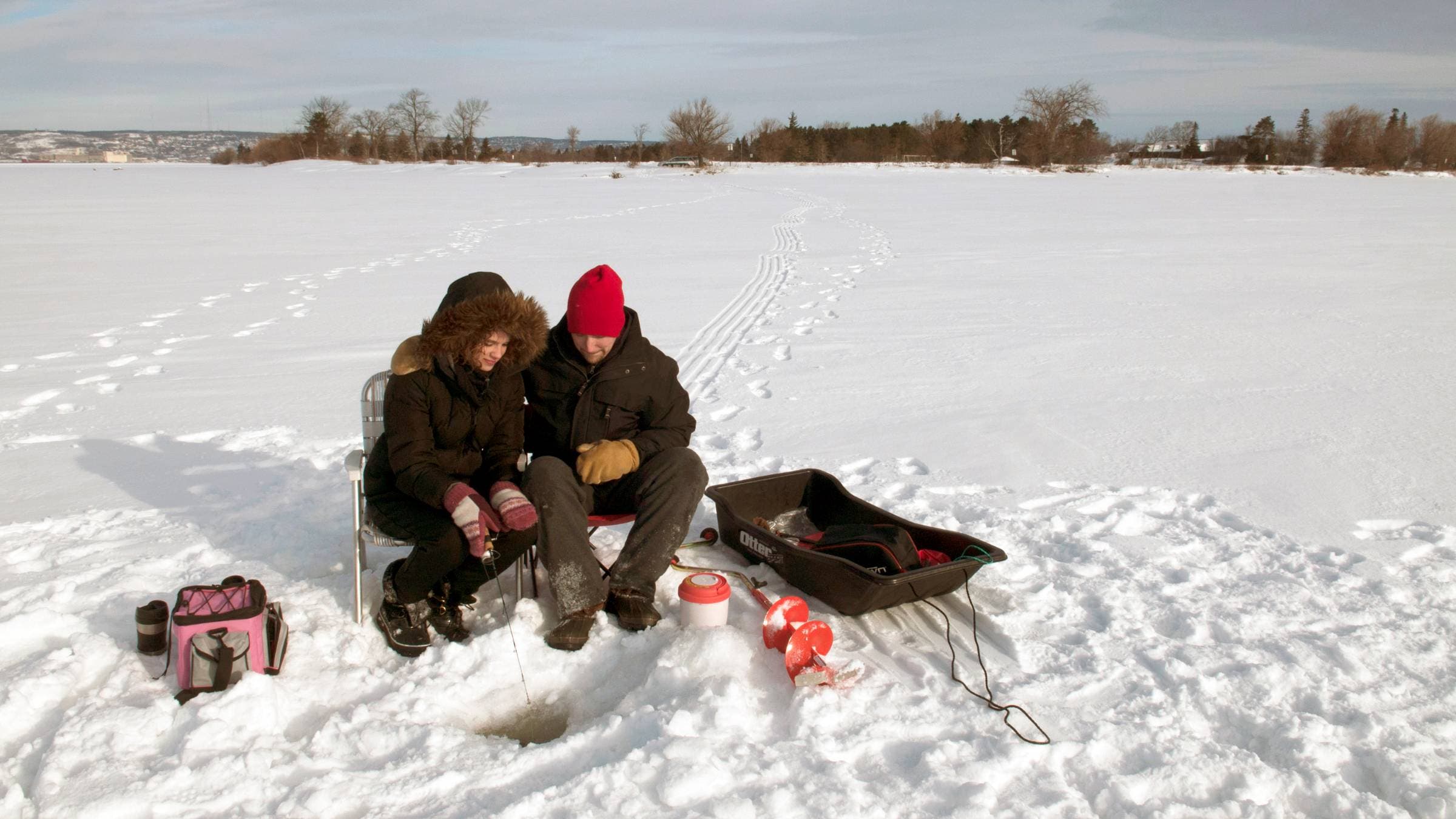
Captain Jarrid Houston, a guide in Minnesota and Wisconsin for more than 15 years, tells me he and other ice anglers target trout and salmon on Lake Superior and walleye in the St. Louis River Estuary System in the winter.
The season typically begins around Thanksgiving and continues until late March or even April. Houston wistfully describes the warmer months of the season, when he and his clients leave the warmth of the ice shacks to sit on buckets outside catching monster bluegill and crappie, before heading out to Canal Park’s Green Mill for a beer.
ADVERTISEMENT
The state Department of Natural Resources’ Minnesota Lake Finder is an excellent place to research potential ice-fishing spots, such as Mille Lacs Lake, which is known for walleye and trophy perch. Truly adventurous—and experienced—ice anglers can drive north, then cross-country ski into the Boundary Waters Canoe Area (BWCA) for not only lake trout, pike,and more, but also quiet solitude (if you don’t count the multitude of moose who call BWCA home).
Upper Peninsula, Michigan
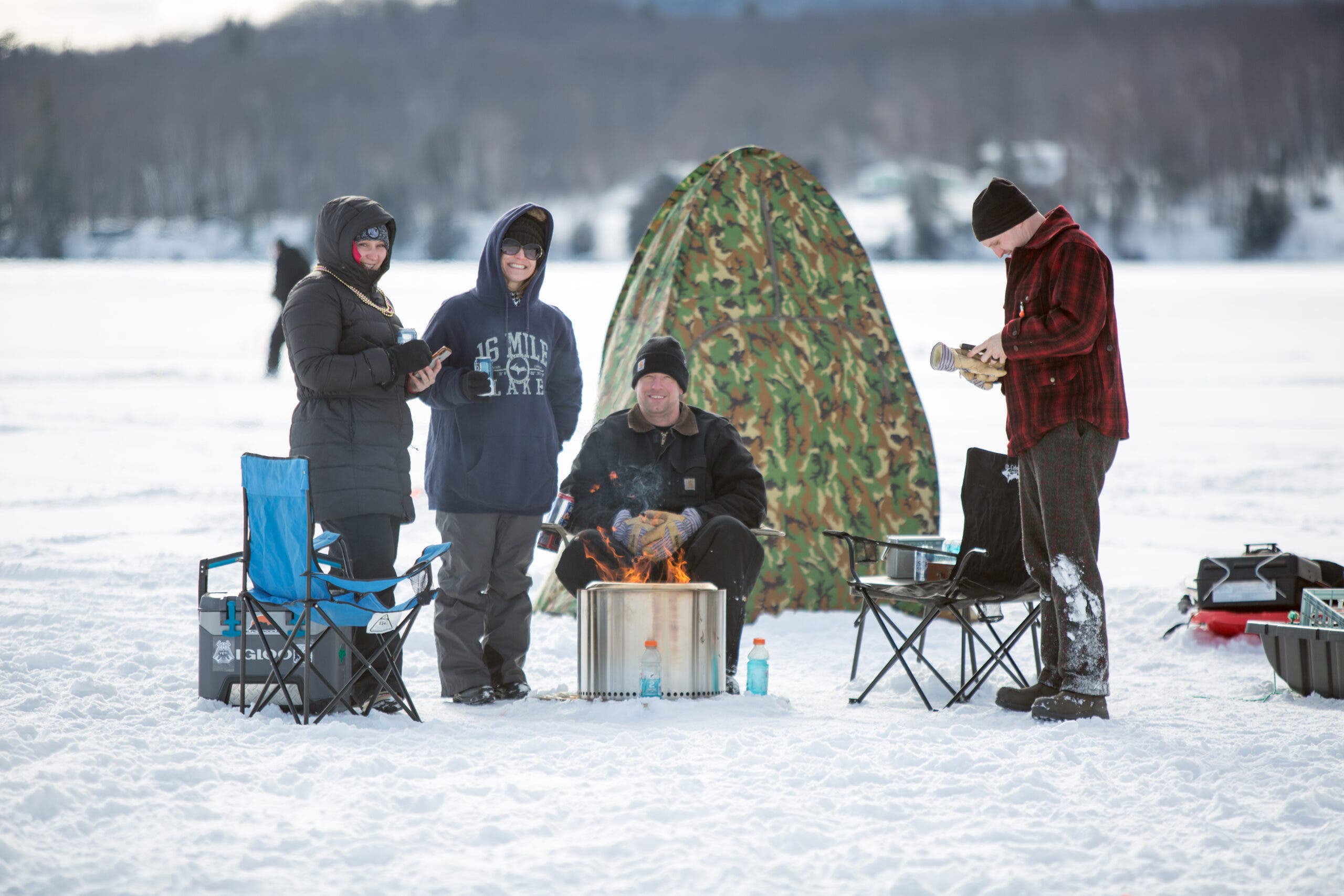
During the ice-fishing season, which can run from just after Thanksgiving to late March or early April, you’ll see shacks dotting nearly every frozen lake across Michigan’s Upper Peninsula. The area’s long been known for excellent fishing, and there are multiple places where you can rent a shack or hire a guide during winter. Michigan provides weekly fishing updates and ice conditions on its website.
Ice fishers coming into Mick’s Bait Shop off South Manistique Lake typically target pike, walleye, and bluegill. So many anglers were on the ice that he ran out of minnows right before our interview. Nick Simon, the owner of Marquette’s Superior Outfitters, a fishing gear shop located in Marquette, Michigan, rarely, if ever, guides ice-fishing trips himself, but he does go out with friends when he can. He says ice fishers can catch three types of trout—rainbow, browns, and lake—as well as perch, walleye, burbot, and more on Lake Superior.
“People travel to Marquette because they want to target one or more different types of fish,” Simon says. “I know people from California and Texas who come up specifically for the ice fishing.”
ADVERTISEMENT
Cleveland, Ohio
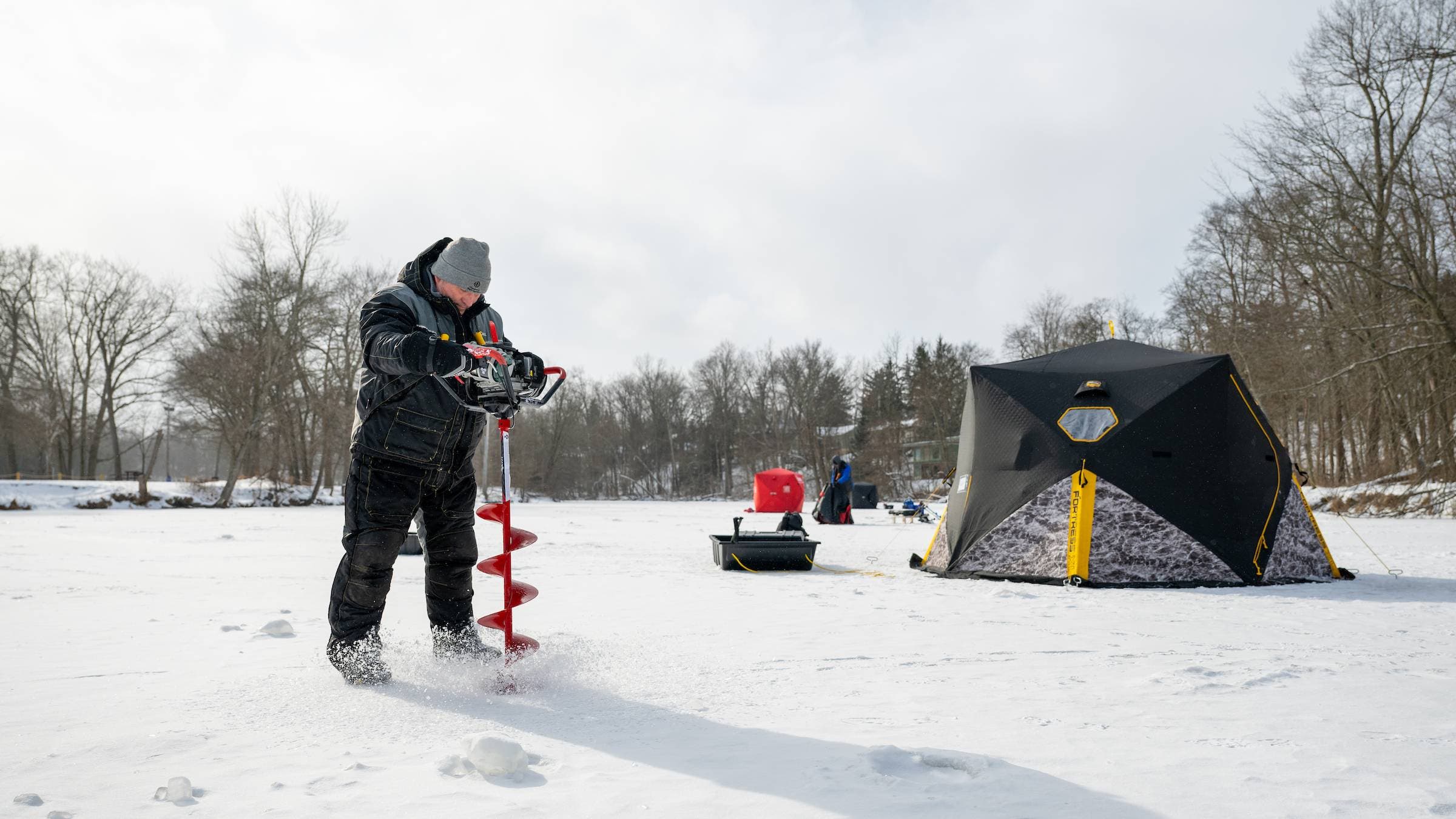
Combining big city and big fish excitement, Cleveland can be a hotbed for ice fishing from early January to early March, depending on the weather. Ice conditions can be wildly different from year to year; the latest ice conditions can be found on the Ohio DNR’s (Department of Natural Resources’) website. Inland lakes tend to have the longest season and safest ice, recommends guide Mario Chance. Visitors and locals alike flock to Portage Lakes, Mogadore Reservoir, and Ladue Reservoir, all within a short drive of Cleveland, where they can target panfish and even get some opportunities to catch walleye. Diehard ice anglers live for the coldest years when the “big water,” namely Lake Erie, freezes.
“Targeting huge, migratory walleye on Lake Erie’s Western Basin gets my blood pumping more than anything,” Chance says. “In good years, we head out off the mainland targeting big walleye, and sometimes we’ll take a short plane ride out to the islands [further out on Lake Erie].”
Burlington and Stowe, Vermont
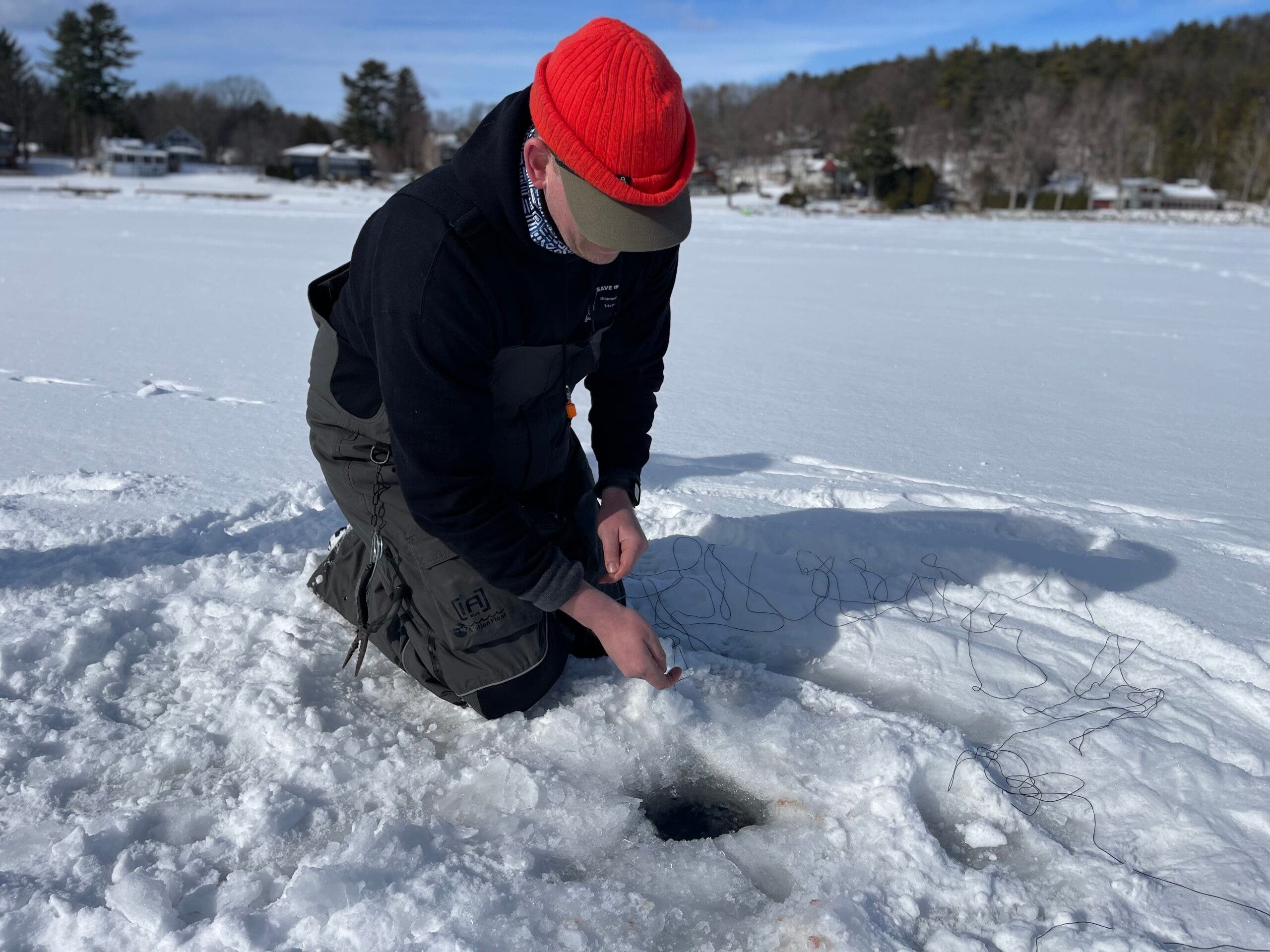
The massive, 120-mile Lake Champlain holds landlocked salmon, lake trout, northern pike, yellow perch, white perch, walleye, and crappie, while surrounding smaller lakes hold various combinations of fish. The ice-fishing season tends to be a bit shorter and more unreliable due to climate change than in locations further west, so planning a trip can be a little difficult, but given Vermont’s stunning winter beauty, it can definitely be worth the extra effort.
ADVERTISEMENT
This year was the first time Lake Champlain completely froze over in seven years, drawing thousands of people to the lake. Vermont’s Fish and Wildlife Department offers a rundown of lake-freeze conditions there and throughout the state, fish species, and more on its website. The Fly Rod Shop, located in Stowe, offers ice fishing tours, and ski resorts like Smuggler’s Notch promote packages where ice anglers can take a break from the slopes to spend the day on the ice with a guide.
Laramie, Wyoming
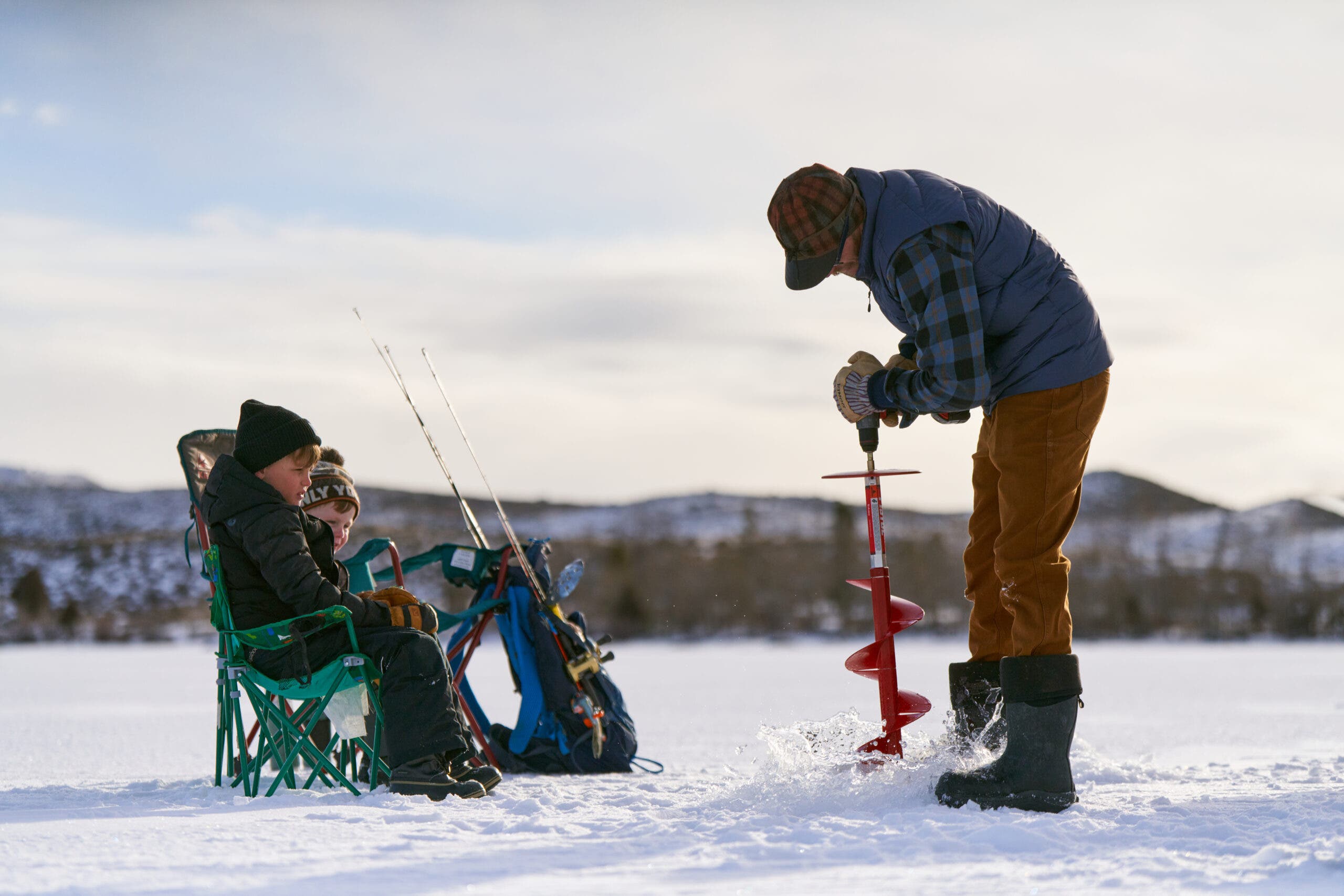
Ice fishing has become a very popular activity throughout the state and around Laramie in particular, thanks to easy lake access, says Brandon Specht, owner and guide at the West Laramie Fly Store. The season typically runs from December to March, with the high alpine lakes freezing earlier in some years.
The best places to catch a large quantity of sizable trout are Lake Hattie and Twin Buttes, both of which are large enough for fishermen to spread out and offer good habitat for large fish. Many lakes also carry Kokanee salmon, walleye, and perch. Two Dogs Guide Service offers fully equipped ice fishing guide trips for people looking to enjoy the local lakes in the winter, while resorts like Brooks Lake Lodge provide guided trips in addition to lodging and meals.
Although the state doesn’t have an up-to-the-minute database of ice conditions, anglers use various Facebook groups to keep each other updated. A lack of solid ice led organizers of fishing tournaments throughout the southwest part of the state to cancel events for safety reasons this January, but higher-elevation lakes tend to freeze reliably.
ADVERTISEMENT
Southern Maine
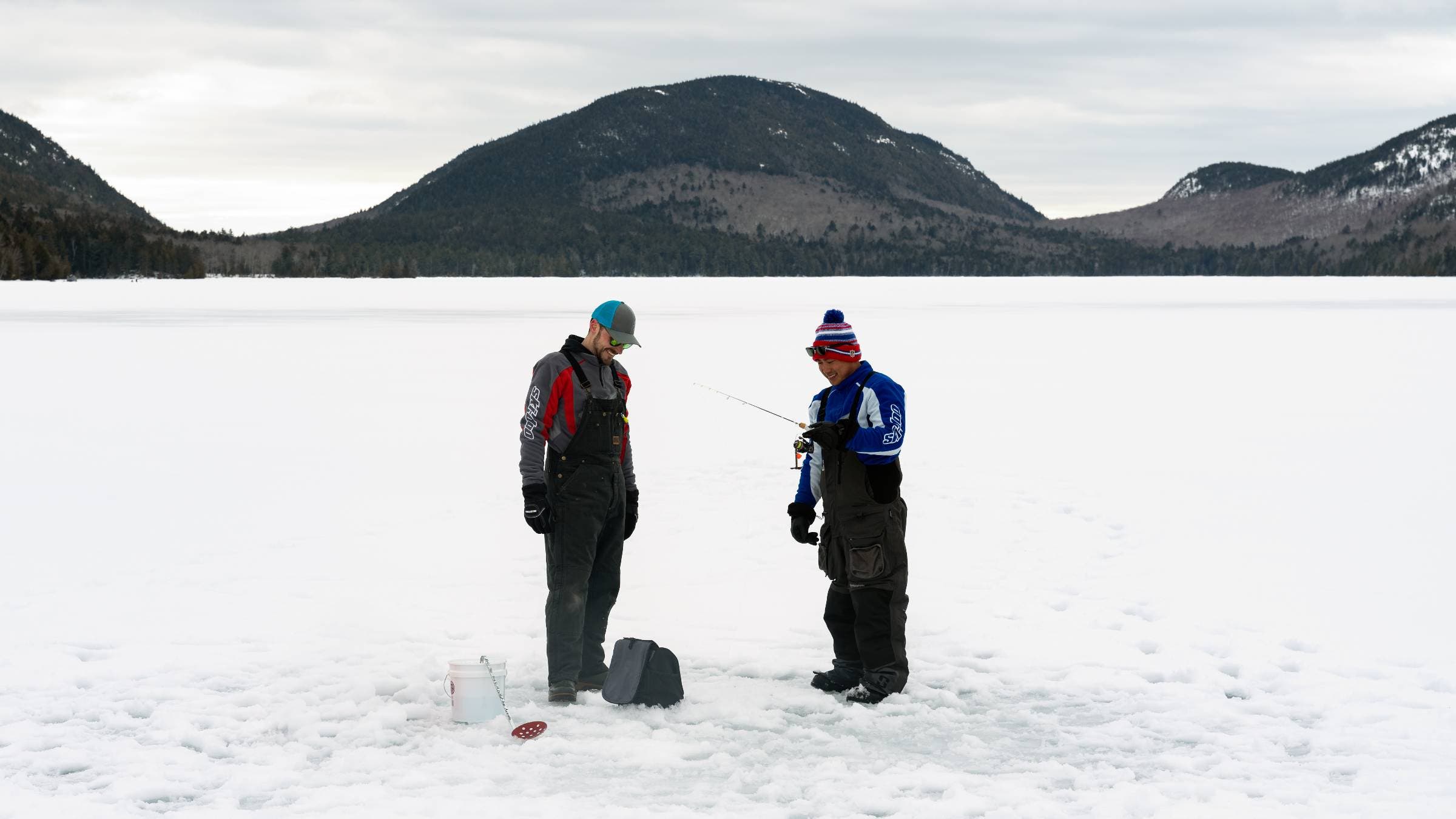
Guide Jake Rackliff recommends locations based on the species of fish clients want to target. Pike anglers should visit Belgrade Lakes, he says, while Great East Lake is ideal for lake trout enthusiasts. Moosehead Lake is where you’ll find brook trout. Panfishers and crappie lovers should seek out Shaker Pond. Pike are probably the favorite choice among his clients, as “they’re very large and really fun to fight,” he adds.
Ice conditions are generally favorable from the end of January to early March, but to be sure, check out Maine’s Inland Fisheries and Wildlife page before heading out. In the coldest months, a shack or insulated tent is absolutely needed to protect from the cold and wind, but in the later days of the season, you’ll find anglers in hoodies on the ice.
How to Stay Safe on the Ice
One more thing to consider before heading onto the vast frozen water. Ice fishing can be dangerous if you’re not prepared. Each year, people fall through the ice, or succumb to frostbite or hypothermia. If you don’t know what you’re doing, hire a guide.
ADVERTISEMENT
“I had three younger guys who came in to get supplies, and their plan was to sleep on the ice in tents with no heaters,” Gilsdorf says. “I tried to convince them that it wasn’t a good idea. Things can turn south pretty quickly on the ice.”
Hiring a guide or, at the very least, going with an experienced friend, can be more economical as well, especially if you don’t have the needed gear. It’s rare for a tackle shop to rent ice-fishing gear, although some will have shacks for daily or weekly rental.
“People will routinely come in looking for all the basic gear, and in no time, are walking out with $400 worth of stuff,” Gilsdorf shares with me, adding that most guides will have all the gear, the shed, and an ATV or snow machine to get you from shore to shack (mostly) comfortably.
As you’re breaking out your best cold-weather gear, don’t forget your sunglasses and sunscreen. “The sun reflects off the ice,” Rackliff says. “If you’re spending time out on the open ice, you will get sunburned.”
ADVERTISEMENT
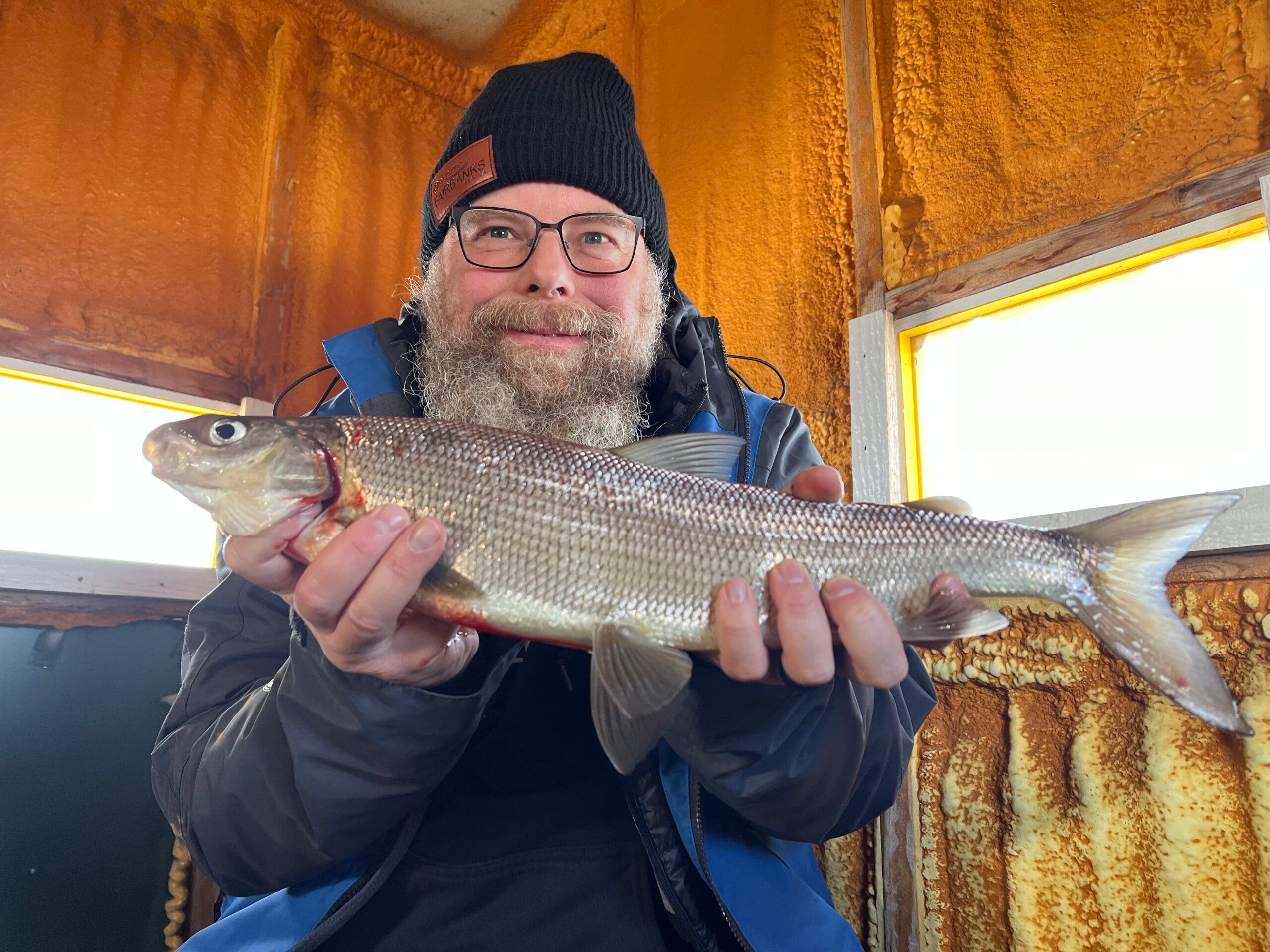
Outside contributor Robert Annis took time away from prepping for spring fly fishing to spend some time on the ice. He most recently wrote about some of the best fly fishing and multisport spots in the U.S.


