Published March 28, 2026 04:00AM
Moab Opened 200 Miles of Trail to E-Bikes. I Was One of the First to Ride Them (Legally).
The world’s most iconic mountain bike destination just opened 200 miles of singletrack to e-bikes. From saving a veteran racer’s career to turning brutal climbs into a "turbo-charged" cruise, here is what the new rules really mean for the desert.
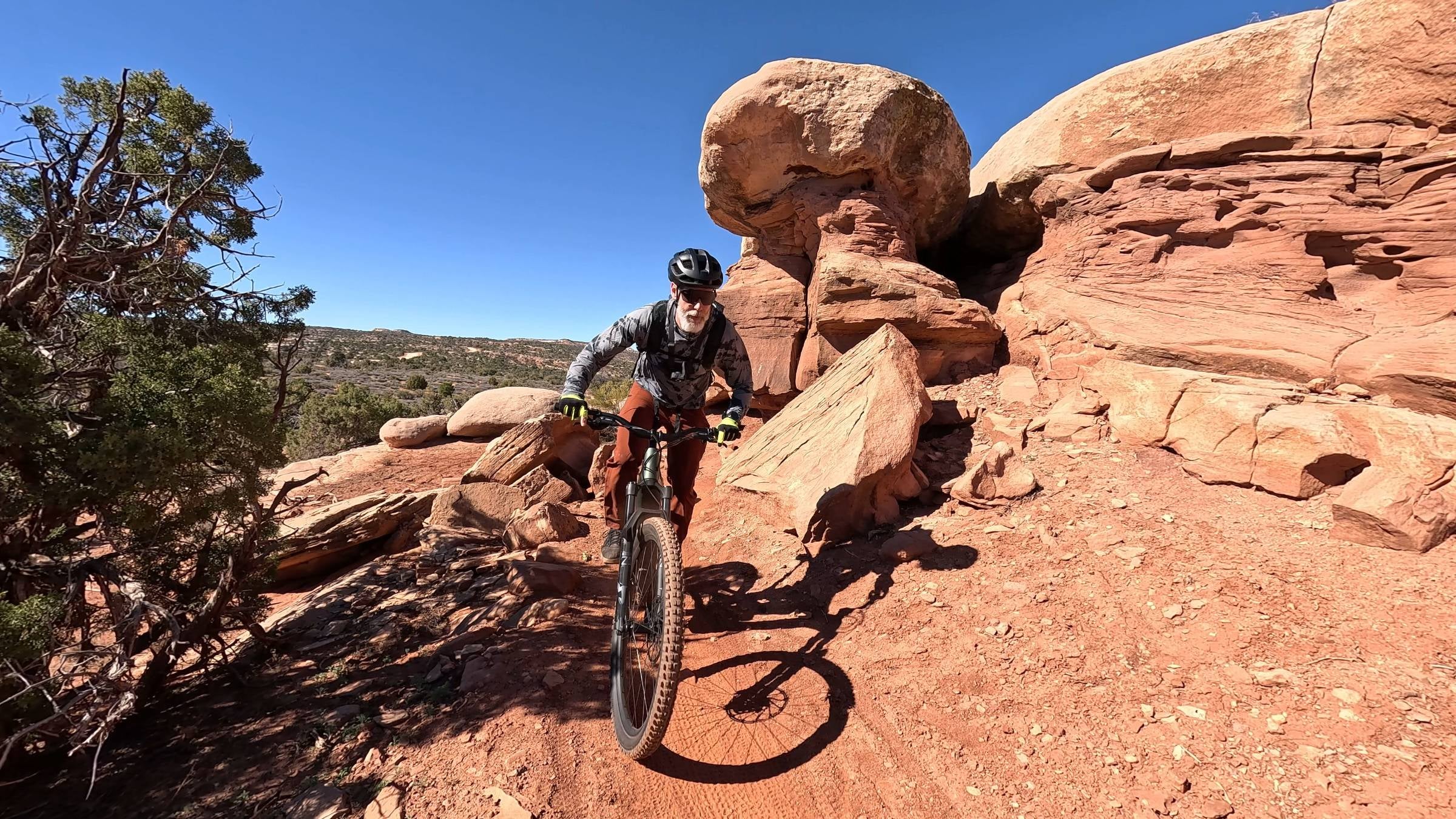
Graham Averill rides an e-bike on Getaway Trail's singletrack in Moab. (Photo: Courtesy of Graham Averill)
I’m riding a mountain bike deep in the backcountry of Bureau of Land Management (BLM) land outside of Moab when I start to feel the unmistakable sensation of my quads cramping. It’s only some dull tightness at first, but I know what’s coming—the sharp pains, the stiffness. Pedaling a mountain bike through cramps is not pleasant, and I have at least seven miles of rough, 4WD road back to the trailhead ahead of me. I don’t panic; I drink some water, eat a bar, and click the assist button on my electric mountain bike. Instead of a three-hour-long death march, I have a 30-minute cruise at 18 miles per hour up the dirt road. Welcome to the brave new world of electric mountain biking (EMTB) in Moab, Utah.
BLM Opens Trails in Moab to Class 1 E-Bikes
The BLM’s Moab field office opened more than 200 miles of singletrack surrounding Moab to Class I e-bikes on March 1. A Class 1 e-bike provides motor assistance only when the rider is pedaling. The minute you stop pedaling, the assist stops. And there’s no assistance once the bike reaches 20 mph. All e-bikes are prohibited on singletrack in most of our national forests, but BLM units are allowed to make regulations on a case-by-case basis.
There are other BLM units that allow e-bikes on singletrack, but considering Moab’s reputation as an iconic mountain bike destination, this is a significant shift in public land regulations. And the regulation shift is sure to upset certain people. EMTBs are a relatively new development, but they’ve been a point of contention from the get go, sparking lawsuits from various user groups over the years, particularly wilderness advocates, regarding e-bike access on public trails that allow mountain bikes.
“The advent of Class-1 e-bikes presents an opportunity to increase public land access,” a spokesperson for the BLM agency told me. “We fielded many requests for e-bike use to improve access for riders with physical disabilities, and we were aware of unauthorized use of e-bikes throughout the field office. Since it was clear that people were interested in using e-bikes on trails, we determined it was time to start the process of evaluating their impact.”
ADVERTISEMENT
Environmental impact studies performed by the BLM show that Class 1 e-bikes and analog mountain bikes affect trails in very similar ways. E-bikes are heavier and can move a little more dirt when turning or going up or down hills, but the BLM has determined that most trail damage happens because of poor trail design or lack of maintenance, not the bikes themselves.
Is Moab the New Electric Mountain Biking Capital?
“Inclusive” is the key word with this new regulation. Bikers still have to pedal EMTBs, and you still need to be able to handle the technical demands of the trail beneath your tires, but the pedal assist allows more bikers of various physical abilities to experience the trails.
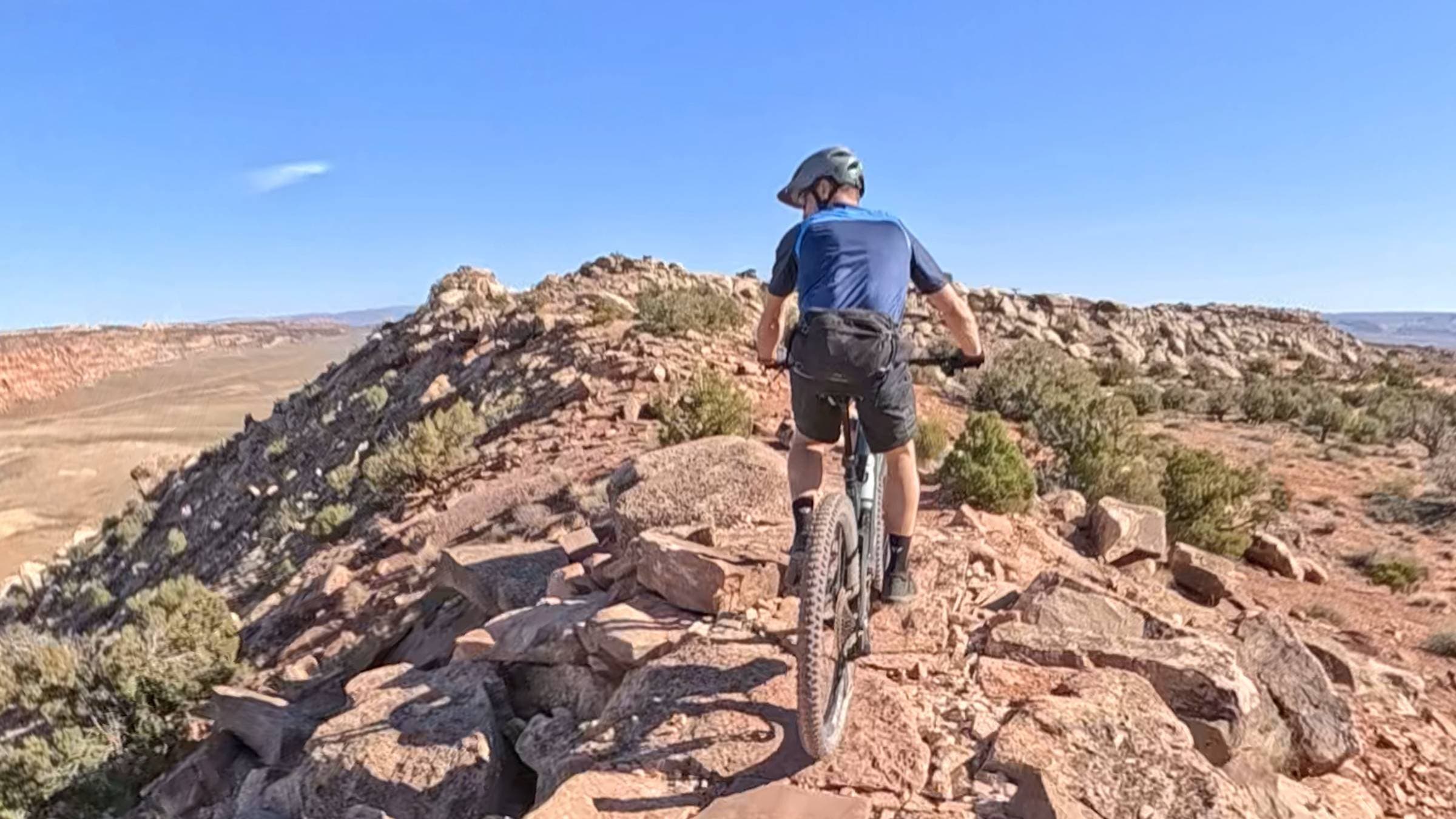
One afternoon, while I was in Moab, I had the chance to ride with Jason Graham, a former mountain bike racer who has a nervous system condition that causes him to get physically sick when his heart rate rises too much. Riding a traditional bike is out of the question for Graham, but the advent of e-bikes has revitalized his passion for the trails.
“The e-bike saved my life,” Graham says. “Being able to turn the pedal assist on and not push my system too hard has helped me stay on the bike and stay active.”
ADVERTISEMENT
Graham coaches a high school mountain bike team and has a note from his doctor that allowed him to ride Moab’s trails on an e-bike. With the BLM’s new regulations, Graham can now ride most of Moab’s iconic singletrack without the need for a doctor’s note.
He’s not the only mountain biker in town that’s excited about the new development. David Glover is the owner of Moab Cyclery, and he’s a long-standing fixture in the local mountain bike scene. He’s young and fit and currently training for the SingleSpeed World Championship 2026, but he also loves to ride his carbon fiber Specialized Turbo Levo EMTB.
“The e-bike is just a different tool to have in the garage, another way to explore the terrain,” Glover says.
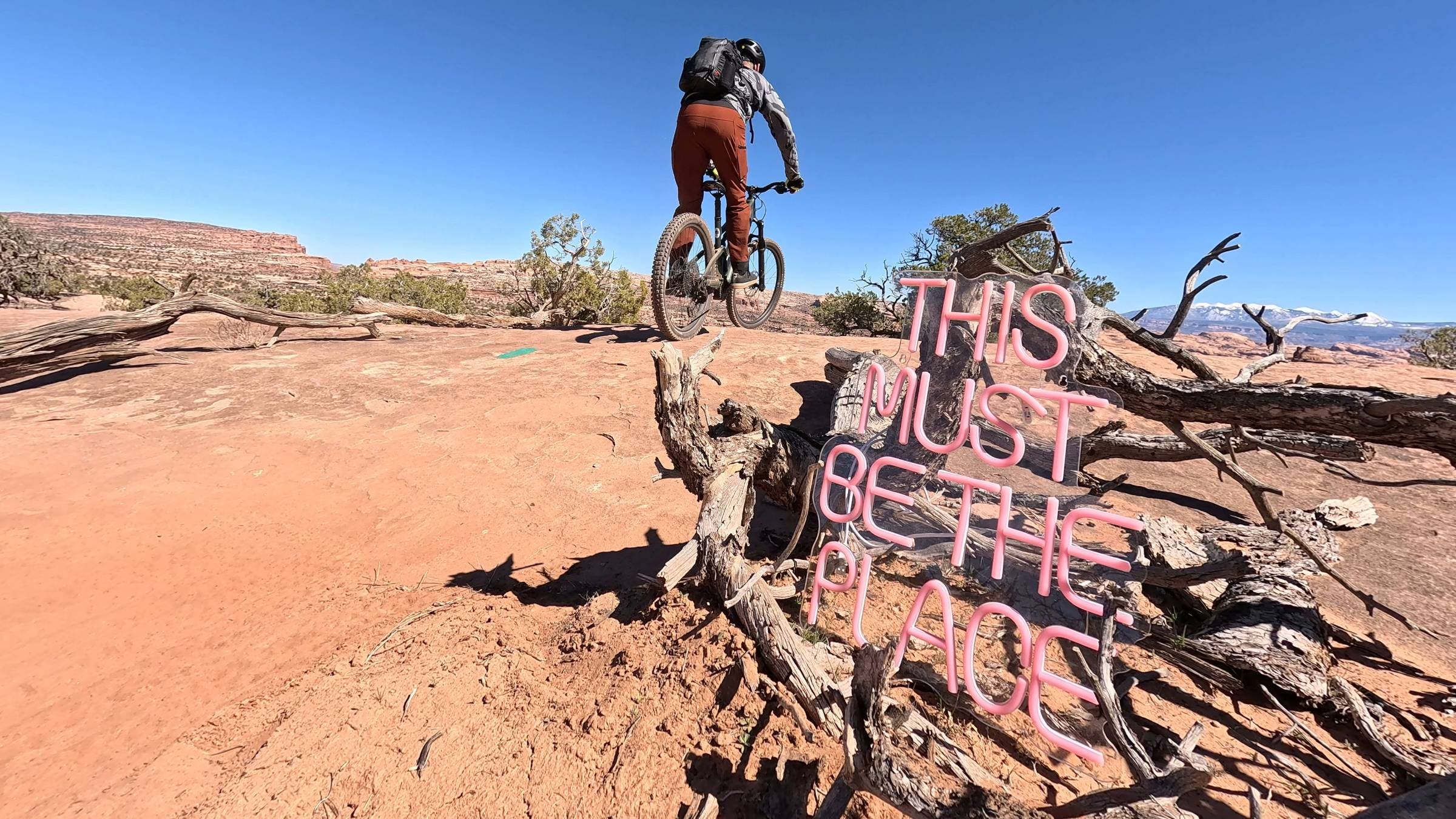
E-bikes are very well suited to Moab’s technical singletrack, which can be chunky, with short, punchy climbs. The pedal assist gives you the power you need to muscle over some technical moves that you might otherwise have to walk.
“The pedal assist allows me to ride like I’m 20 years younger,” says Danny Prickett, 55, another local e-biker who’s excited about the new regulations.
ADVERTISEMENT
Most of the singletrack near my home in Asheville, North Carolina, is managed by the forest service. My local ranger district doesn’t allow e-bikes on non-motorized trails, so I don’t have an EMTB in my garage. But while I’m in Moab, I love these machines because it allows me to explore more of Moab’s terrain than I would normally be able to see.
For example, I rode for almost five hours on my first day in Moab, pedaling a flowy system with beautiful views of the La Sal Mountains on the horizon. I didn’t turn the pedal assist on until I was 13 miles into the ride. The singletrack was fun, the views were incredible and I wanted to keep pedaling. So I did. I kept riding further than I normally would because I knew I could rely on the battery to help me get back to the trailhead when I wore myself out. When I got tired, I turned on the turbo jets and pedaled back to my truck. It was as if I had a shuttle at my disposal.
3 Rules for Riding Electric Bikes on Singletrack
Keep the following in mind ahead of your first e-bike ride on singletrack.
- Practice on dirt roads. If you’ve never ridden an electric bike before, don’t go straight to the singletrack. Each bike has several levels of assist, but all of them have a kick if you’re not used to the power. Take some time to get a feel for the new machine in a safe space without consequences.
- Don’t rely too heavily on the battery. I recommend leaving the pedal assist off at first. If you’re able, pedal the bike with your own power for a few miles, so you get a sense for what that effort will be if you were to run out of battery life. And when you do turn on the assist, use the lowest level of power to make your ride comfortable. The less you rely on the assist, the longer the battery will last.
- Be cool to acoustic bikers. If you see another biker on the trail who’s struggling up a climb, give them space to work out their situation. Don’t try to pass them and don’t ask them to get out of your way. In most situations, common courtesy dictates that acoustic bikes (you know, those conventional, non-electric bicycles) have the right of way before electric bikes.
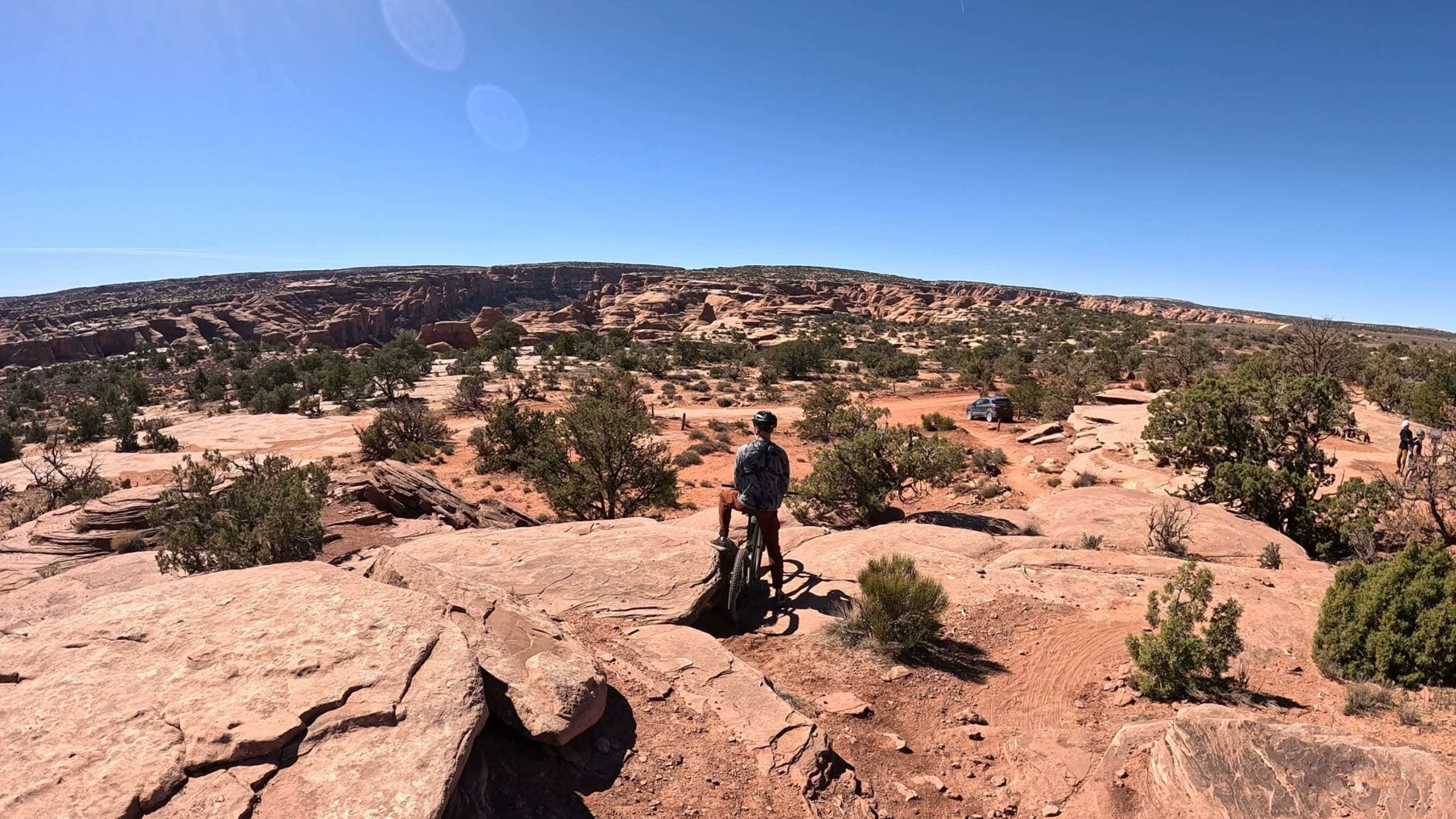
EMTB Rides to Try in Moab
Not every trail in Moab is open to EMTBs. A handful of iconic paths, like Upper Porcupine Rim and Lower Porcupine Rim, are still closed to electric bikes. But there is a lot of terrain to choose from once you get to town and charge your whip. Here are three incredible trails you should check out.
ADVERTISEMENT
Getaway Trail, Magnificent 7 Trail System
Getaway is a great introduction to the type of singletrack you’ll find around Moab. The route is flowy, without being too steep, as it traverses tight singletrack and large swaths of slick rock through the desert between Moab and Canyonlands. There are some chunky rock drops and punchy climbs, but everything on this trail rolls, so it’s good for beginner and intermediate riders, and the views of the snow-capped La Sal Mountains are stunning. The 8-mile-long singletrack crosses an unimproved 4WD road that leads back to the trailhead, so there are multiple bail options. Or, if you’re having fun, connect Getaway with a variety of other trails in the Magnificent 7 trail system for longer rides.
Alaska Trail, Jurassic Trail System
The 4-mile-long Alaska Trail is a step up from Getaway in terms of technical difficulty, and it requires a long approach ride and climb, but the effort is worth it. Alaska runs along a ridge just outside of Arches National Park, offering long-range views of the park’s towers and buttes across the Salt Valley. The riding is fun, even without the views, as you’ll navigate around massive boulder clusters and flow down long stretches of slick rock. You can even take a quick side trip to see dinosaur footprints that are still pressed into the earth. Alaska is the highlight of the Jurassic Trail System, but it’s just a piece of the larger puzzle, so be prepared to spend some time exploring these trails.
Captain Ahab, Amasa Back System
OK, this ride is no joke and not for inexperienced mountain bikers. The full 4.5-mile Captain Ahab offers some amazing views of Moab’s iconic canyons and buttes, but it’s a double black with lots of exposure and plenty of big drops for those who want to send it. A big, tough 8-mile loop will take you on a tour of the best the Amasa Back System has to offer. But again, make sure you know your stuff before you pedal here.
ADVERTISEMENT
Where to Rent a Bike
Moab Cyclery has a fleet of Specialized Turbo Levos ($129 per day), which has become the industry standard for EMTBs with 160mm of front travel and 150mm of rear travel and a large, 840wh battery that will last for four hours under casual use. Moab Cyclery will also give you recommendations for specific trails to ride near Moab. Electric bikes are heavier than acoustic bikes, so make sure you have a bike rack that can handle the weight. I rented a truck to haul my Levo around while I was in Moab.
Where to Stay
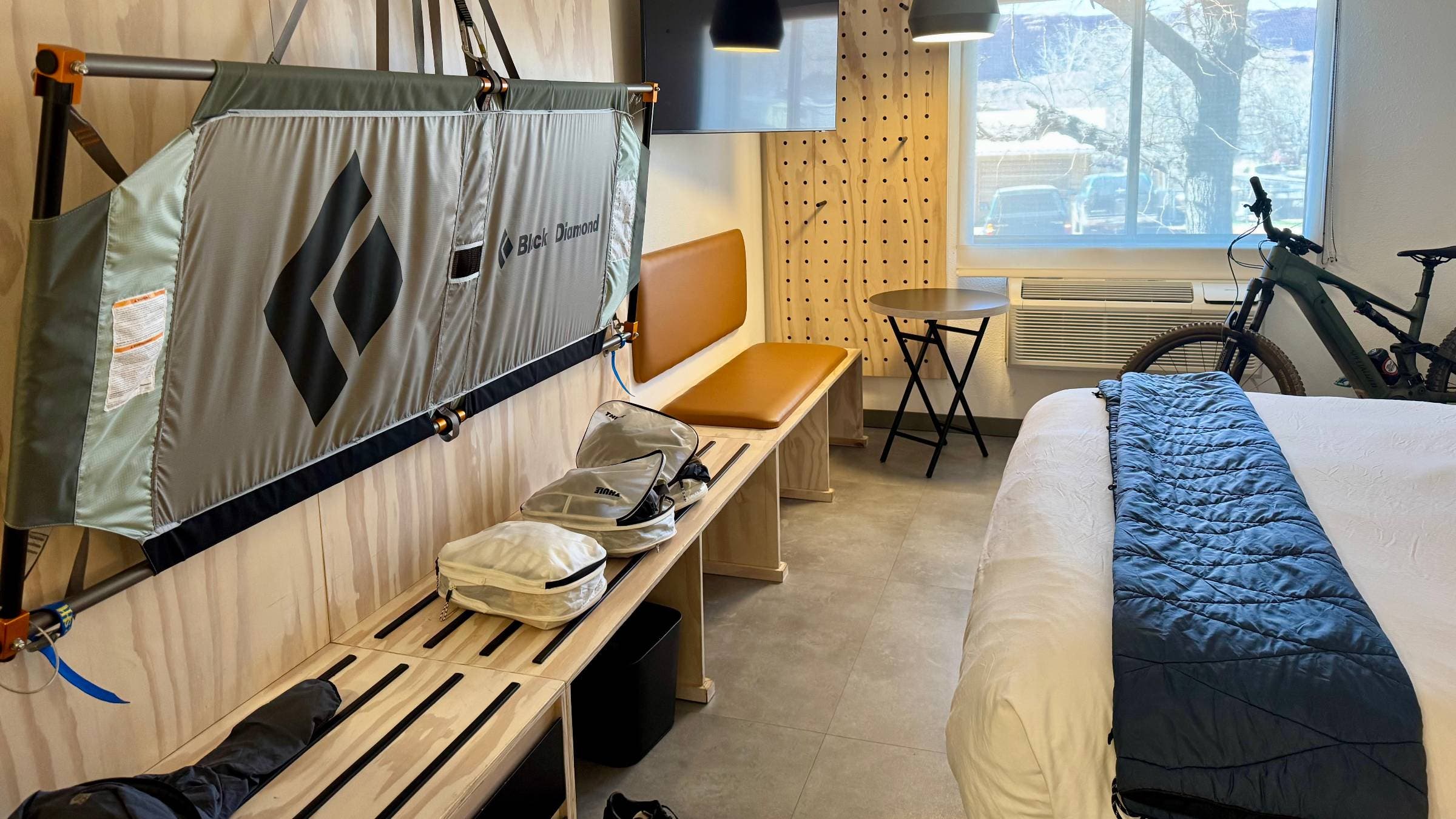
Grab a room at Slackline Moab (Outset Collection by Hilton), an adventure basecamp that’s fresh off a renovation. The lobby doubles as a bike and gear shop, and there’s a pool and hot tub just outside the cafe. Try to get a room on the ground floor so you can wheel your EMTB in at night to charge it (from $143). I also enjoyed the adventure-themed rooms, which have Dometic fridges and climbing portaledges hanging from the wall.
Where to Eat
I’ve been visiting Moab for the last 25 years, and I’ve enjoyed watching the culinary scene evolve during that time. The food is legitimately good now. If you want comfort food, inventive burgers, and a solid list of local beers, head to The Spoke on Center, right in the heart of downtown. They also happen to make their own ice cream, which hits just right after a hot day in the desert. Thai Bella has a great outdoor patio and a large menu of authentic Thai dishes. I highly recommend the coconut broth-based Tom Kha soup.
ADVERTISEMENT
Graham Averill is Outside magazine’s national parks columnist. He’s passionate about all kinds of bikes and hopes to one day include an EMTB in his quiver. He wrote about the best bikepacking trips across the U.S.


