Updated September 18, 2024 03:19PM
How to Get a Reservation at Phantom Ranch, the Grand Canyon’s Most Sought-After Lodge
Historic Phantom Ranch is the only park lodging on the floor of the Grand Canyon. Tens of thousands of people try to book a stay there. Our writer scored a night there recently, and if you follow her tips, you can, too.
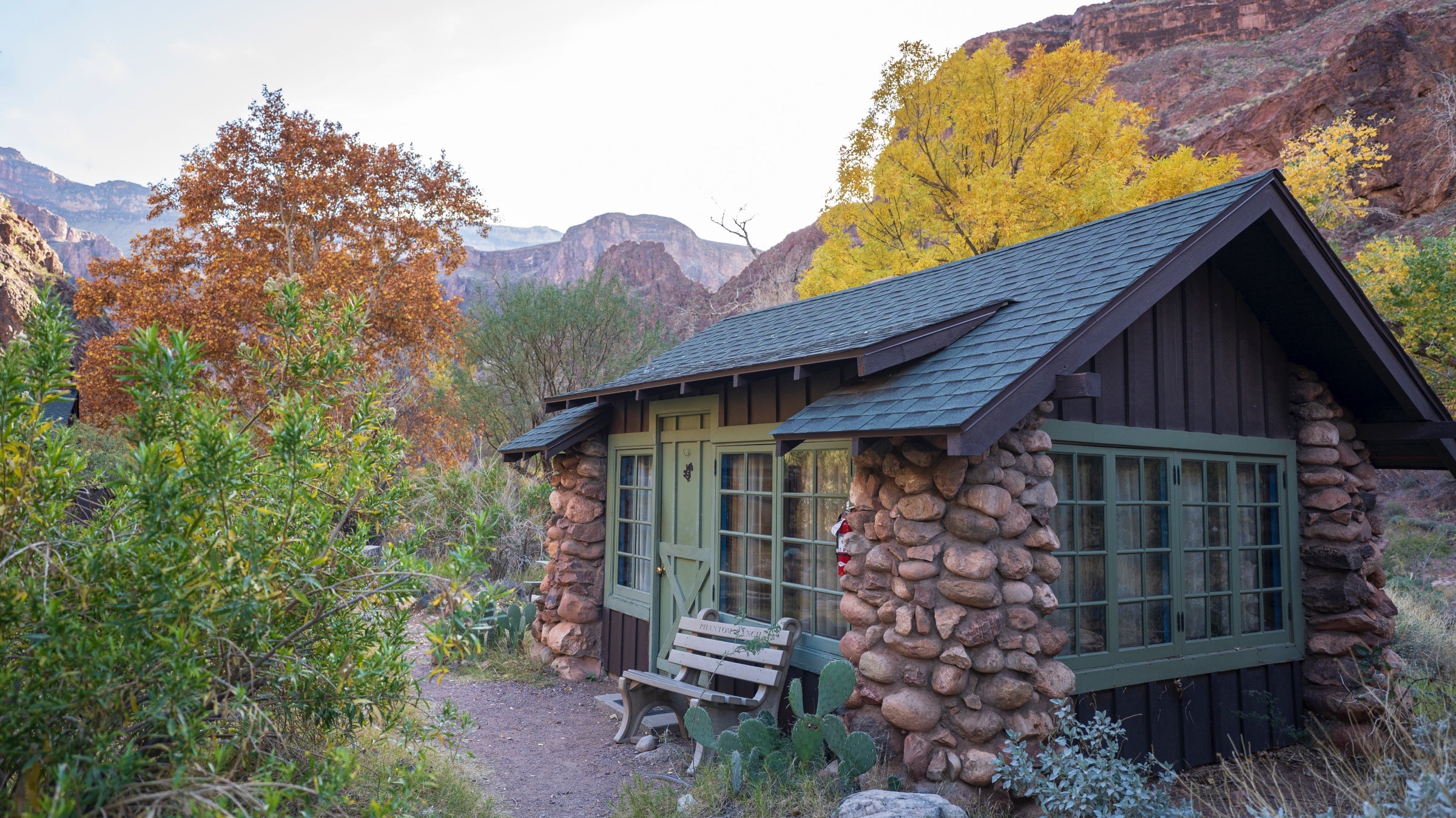
One of the 11 Phantom Ranch cabins designed by renowned architect Mary Jane Colter. This was where the author stayed in 2023. (Photo: Courtesy Stephanie Vermillion)
Ever come across an incredible hotel that stops you mid-scroll and makes you think, Wow, wouldn’t it be something to stay there? We do, too—all the time. Welcome to Friday Fantasy, where we highlight amazing hotels, lodges, cabins, tents, campsites, and other places perched in perfect outdoor settings. Read on for the intel you need to book an upcoming adventure here. Or at least dream about it.
If Grand Canyon National Park is for the masses—and in 2023 it was America’s second most visited national park, with nearly five million visitors—then historic Phantom Ranch, an architectural marvel located far from the crowds on the canyon floor, is for the chosen 1 percent. Literally. Its digs are so popular that they book up 15 months in advance via a lottery, and only 1 percent of anyone who visits the park ever stay here.
But my husband, Frank, and I got lucky. We scored one night there at the last minute in December.
We’d planned our trip to the Grand Canyon six months ahead of time, nabbing a backcountry permit to stay at the nearby Bright Angel Campground, whose 33 sites are vied for by tens of thousands of people, up to four months in advance. (According to the Grand Canyon Trust, you have about a 43 percent chance of booking a stay here.) But I continued to check the Phantom Ranch booking portal every few weeks, just in case. Then, two days before our flight to Arizona, I nearly fell out of my chair: one of its 11 cabins was available.
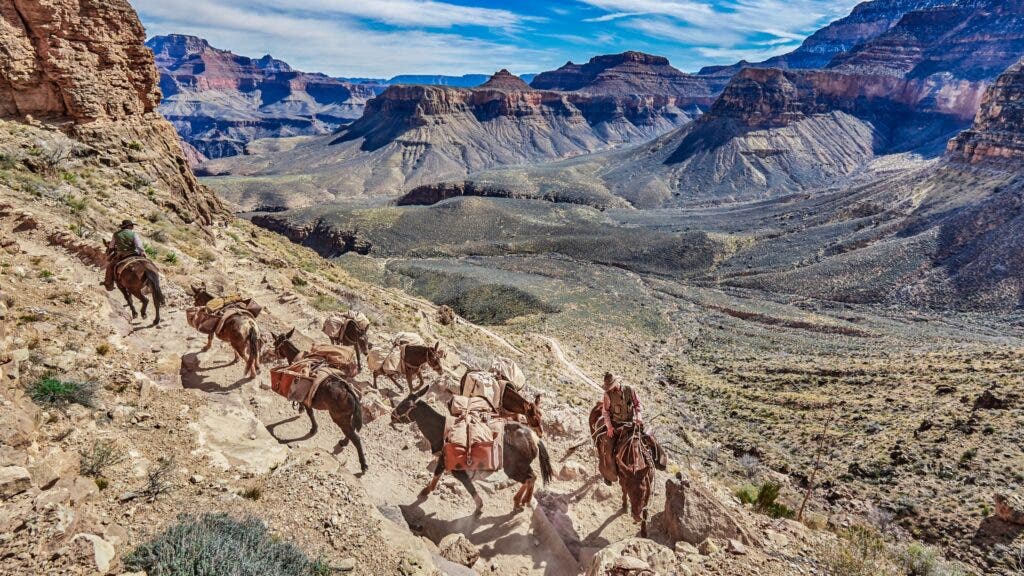
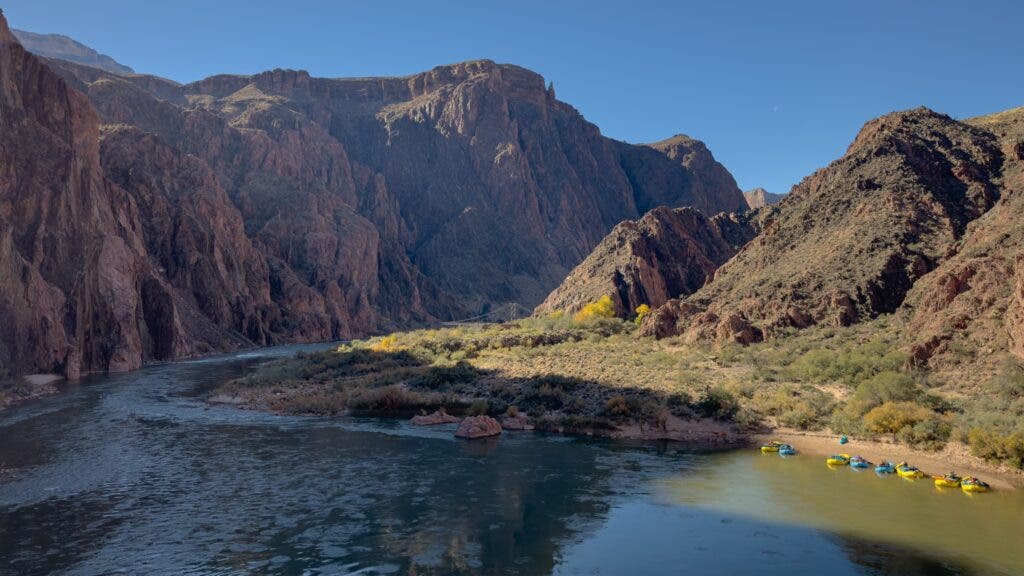
Frank and I spent the entirety of our seven knee-grinding miles zigzagging down the switchback-laden South Kaibab Trail swapping variations of “I can’t believe this is happening!” The jaw-dropping natural attractions along our 4,600-foot descent only increased our awe—the gradual trek down through 1.8 billion years of geologic history, stored in strata of red rocks; the powerful Colorado River carving through them; and the possibility of seeing resident animals around any turn, from bighorn sheep and mule deer to pack mules toting supplies.
ADVERTISEMENT
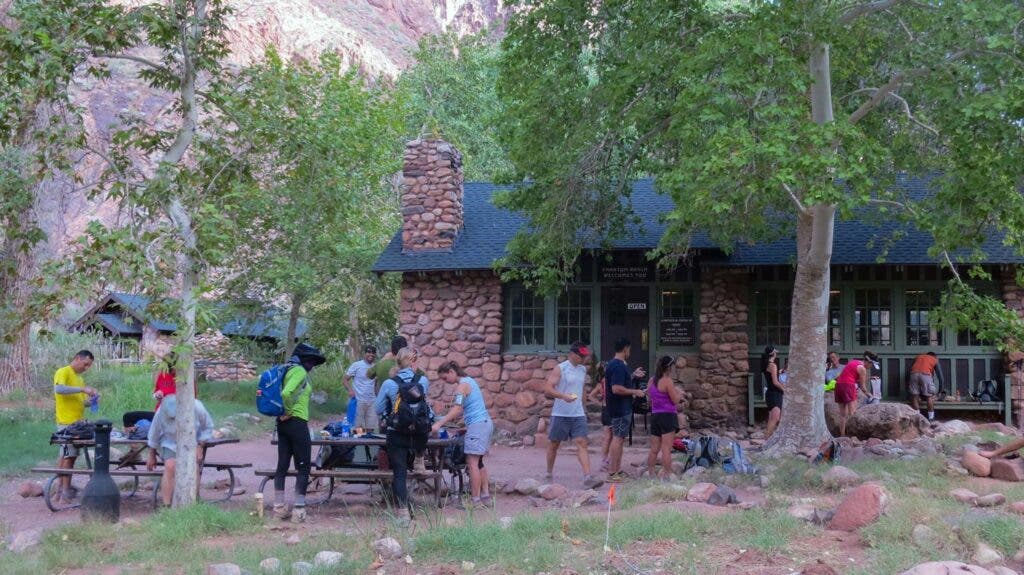
It wasn’t until we hit the canyon floor four hours later that our good fortune really set in, confirmed by a simple signpost: “Phantom Ranch Welcomes You.” This dream trip was really happening. Here’s how we did it and how to make the most of your time below the rim.
Booking and Adventure Intel
One thing I couldn’t wrap my head around was how in the world Phantom Ranch was built. While I thought our rim-to-river trek was grueling, it was a cakewalk compared to those of construction crews in the 1920s. Renowned architect Mary Jane Colter wanted structures to incorporate native materials, particularly stone, for both a natural aesthetic and more efficient building process. While mules hauled supplies like windowpanes and plywood, crews and their working animals alike slogged up and down the vertiginous switchbacks and across narrow swinging bridges (later replaced with two sturdy steel suspension bridges that you cross today).
These efforts were all the more mind-blowing as we tackled the same exhausting route in and out of the canyon with nothing but our packs, and the feat only adds to Phantom Ranch’s allure.
ADVERTISEMENT
All that to say: If you plan to hike to and from Phantom Ranch, you should be prepared and in good condition. It’s steep, challenging, and can seriously strain your knees (I highly recommend trekking poles). By the time you reach the bottom, it won’t be lost on you that you’ll have to regain the elevation you lost—almost a vertical mile—shortly thereafter on your way out (a maximum stay is four nights).
Fortunately, if you’re staying at Phantom Ranch, you can pack light, since food is available and bedding and towels are provided. You can also send your duffel up and down via a mule to travel even lighter; it costs $85.50 each way.
The Park Service tells trekkers that hiking out of the canyon generally takes twice as long as the journey in. It recommends using the steeper South Kaibab Trail down to the ranch and the Bright Angel Trail out, because the latter has a gentler elevation gain over a longer distance. I’ve written more about both options below, in How to Get There.
How to Land a Reservation at Phantom Ranch
- Start with the Phantom Ranch lottery. This is an adventure in itself. Aspiring guests enter the drawing 15 months before their preferred dates, then learn their fate and next steps the following month via email. Any unsold inventory then goes through a second lottery for those who were unsuccessful in the first round (14 months out from your desired dates). December through February tends to be an easier time to get in, while early March through November are typically when visitors make the most requests.
- Look for any unsold inventory. If there’s still availability after the first two lotteries, Grand Canyon’s concessionaire, Xanterra, which operates Phantom Ranch, releases those cabins to the public on the first day of the next month—so 13 months out. This inventory is posted on the general reservation page, which I bookmarked and checked regularly.
- Watch for cancellations if you can’t get in either of these ways. According to Xanterra spokesperson Sam Langner, finding a last-minute reservation “happens all the time.” Take my stroke of luck as proof. I picked up another insider tip over dinner at the Phantom Ranch canteen. A tablemate and 20-time ranch guest said that he checks for inventory around 45 days out from each trip. That’s because Xanterra has a 45-day cancellation policy for Phantom Ranch; guests who opt out before this will get a full refund, which means that anyone on the fence tends to cancel around this time.
- Apply for a backcountry permit for the adjacent Bright Angel Campground, available through Recreation.gov (from $10 per permit, plus nightly charge of $15 per person). It may not be the full experience of Phantom Ranch, but campers can book dinner at the ranch’s canteen to get a sense of this legendary property.
- Join a tour. If the aforementioned logistics sound too cumbersome, this is the one surefire way to get in. Outfitters like REI Adventures and Wildland Trekking run Grand Canyon trips with an overnight or two at Phantom Ranch; they handle all booking, planning, and organization, but it comes at a price (from $3,299 and $1,650, respectively).
What to Do near Phantom Ranch
Many outdoors people dream about hiking or running the Grand Canyon from rim-to-rim or rim-to-rim-to-rim, but if you’re not in a hurry, what can you actually do down at the canyon floor?
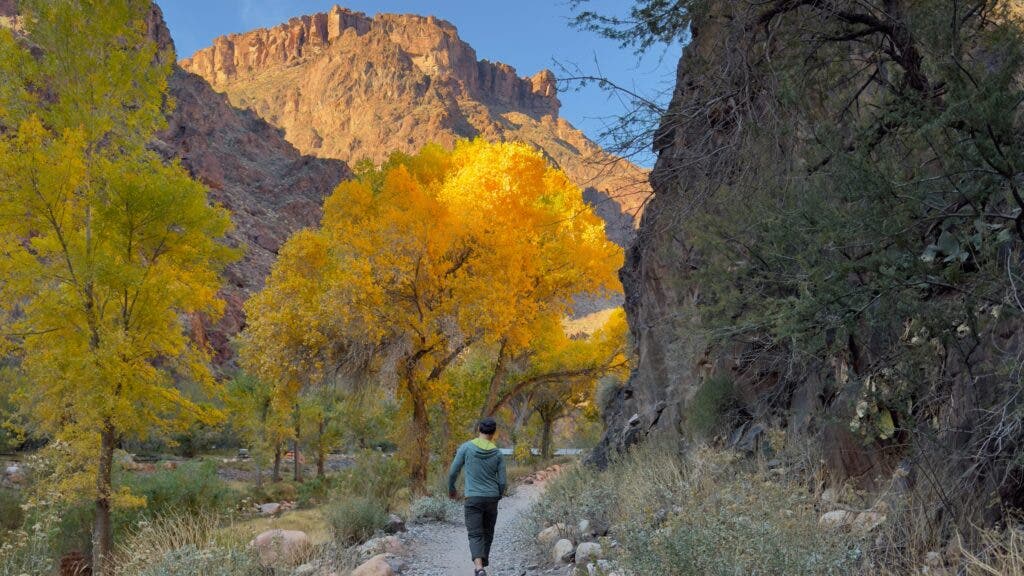
First, relax. We spent the sunny hours after we arrived playing cards. Then we gave our legs a shake-out on the nearby river loop, a roughly two-mile path that crosses the Bright Angel Trail Bridge and skirts the Colorado before heading back toward Phantom Ranch across the South Kaibab Trail Bridge. It was a peaceful amble with a gentle grade—a welcome treat after the morning’s schlep—and we enjoyed the slow pace and time to appreciate a rare view of this section of the canyon, pausing on the bridges to admire the rushing Colorado River and gazing up into the time capsule of rock, whose lower layers predate even the first land animals.
ADVERTISEMENT
If you have more time than just one night at Phantom Ranch, you might enjoy the nine-mile (round-trip) jaunt to Phantom Overlook via the Clear Creek Trail. You’ll get to see a stretch of red crag few ever explore, with only 1,600 feet of elevation gain.
Choice Cabins
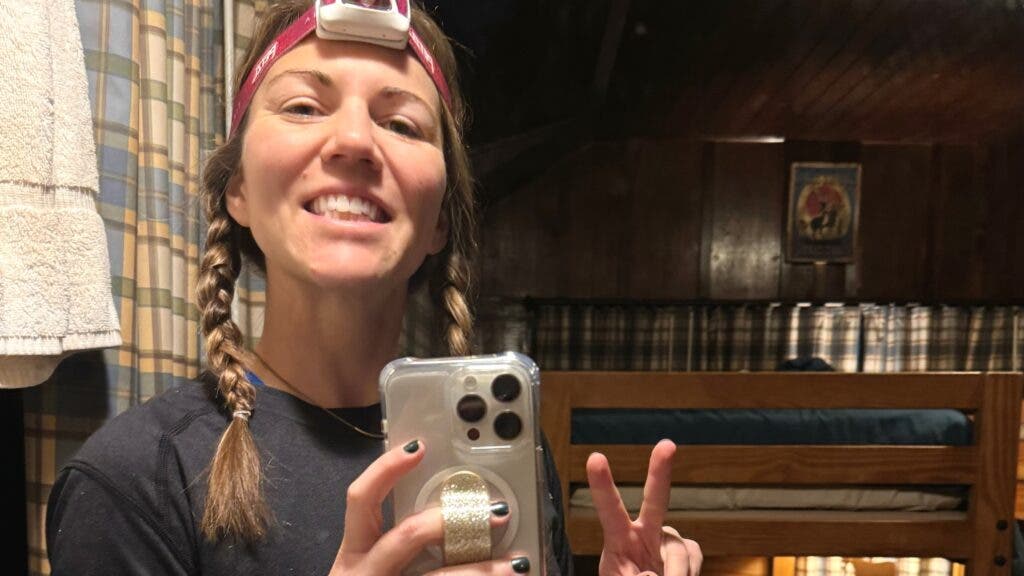
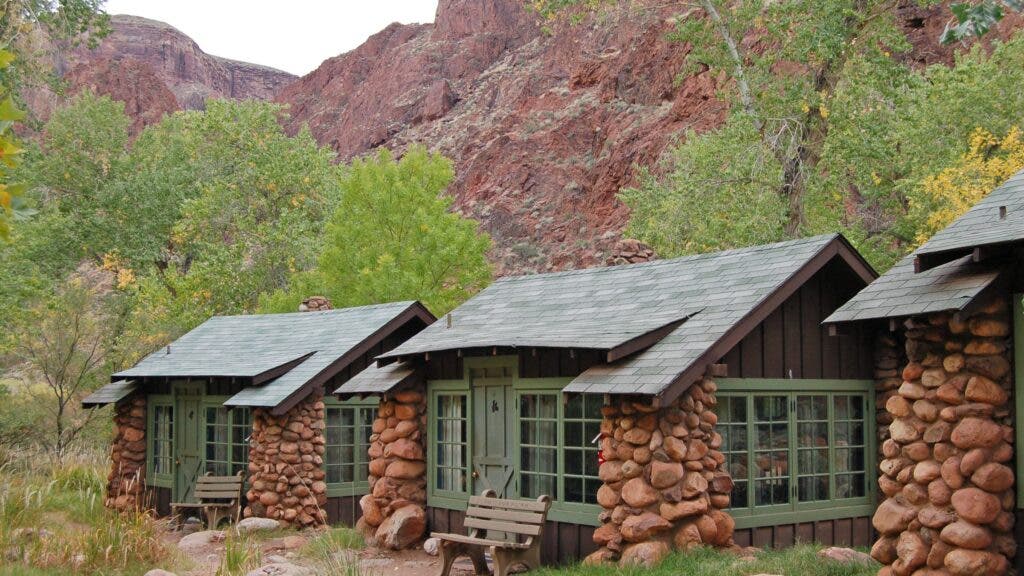
Phantom Ranch is the definition of Parkitecture. Its century-old buildings, made largely of native stones and boulders from nearby Bright Angel Creek, include cabins, a canteen, and hiker dormitories (which have been closed for several years due to needed pipeline and water-treatment improvements, with no reopening date set, according to Langner).
Cabin sizes vary and can sleep from two to ten people, and all accommodations share shower facilities. Rustic though they may be—you’ll be set up with either a queen bed or twin bunk beds, linens, a sink, a toilet, soap, and hand towels—they do have a few nice amenities like electricity, air-conditioning in the summer, and heating in the winter. Wi-Fi is not available.
Instead of picking a cabin as you would at most national park lodges, the Phantom Ranch lottery is random. You won’t learn your cabin number until you arrive.
ADVERTISEMENT
Eat and Drink
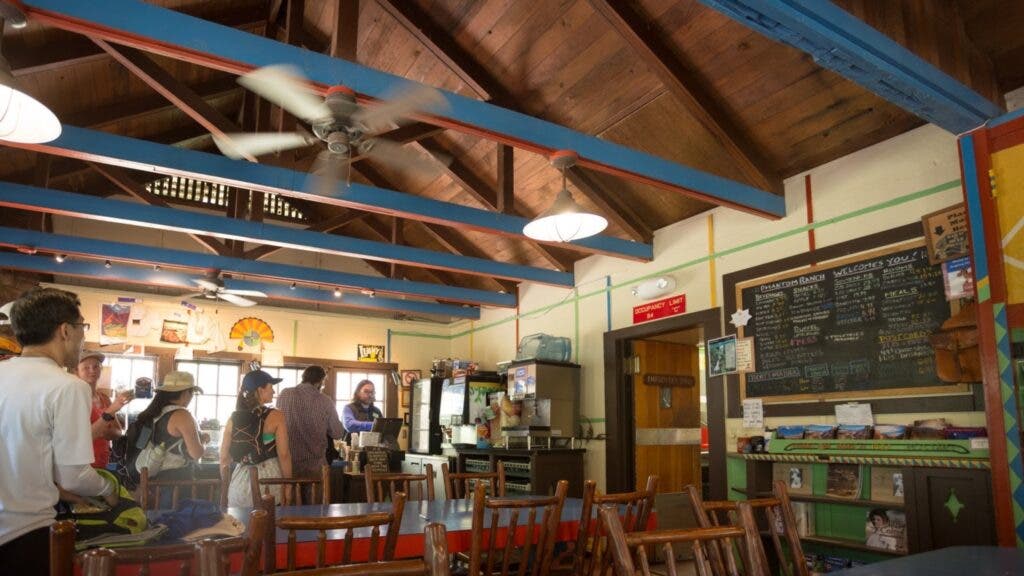
The first thing to know: everyone raves about the ranch’s lemonade. It’s a generic, sugary mix, but it tastes top-shelf after hours of trekking in and is a lovely way to celebrate your arrival to the canyon floor.
All Phantom Ranch guests eat family-style meals in one central dining room, known as the canteen. It’s a laid-back environment where you can swap stories and share travel tips over breakfast (from $31) and dinner (from $61). Both meals require advance reservation and payment; Xanterra suggests booking meals as soon as your accommodation is confirmed, as seating fills up quickly. However, you can buy snacks and drinks from the canteen during the day; cash or credit cards are accepted.
ADVERTISEMENT
For dinner, there are two seatings: an earlier round at 5 P.M., in which steak is served, or a stew round at 6:30 P.M., with a choice of a meat or vegetarian option. In addition to the main course, everyone is offered salad, homemade cornbread, and a dessert du jour—which for us was a deliciously gooey brownie. After that the canteen morphs into a beer hall, where guests can keep the trail talk going late.
Similarly, there are two time slots for breakfast—5:30 A.M. and 7:30 A.M.—but both serve the same menu of pancakes, scrambled eggs, bacon, and fruit, as well as juice, coffee, and tea.
While we packed our own lunch of jerky, nuts, and granola bars for the day of departure, you can buy a take-away sack (from $26); inside each is a bagel with cream cheese and jelly, a sausage, an apple and an energy bar, cheese, and an electrolyte drink or juice.
When to Go
The weather at the Grand Canyon is best in spring and fall. In the summer months, the heat can be extreme (surpassing 100 degrees Fahrenheit), especially on the canyon floor, which year-round can be 20 degrees warmer than that on the rim, given the elevation change. Winter on the canyon floor ranges from 38 to 58 degrees Fahrenheit, while spring and fall see anywhere from 55 to 82 degrees Fahrenheit, according to Xanterra.
ADVERTISEMENT
Unpredictable weather and potential snow, particularly toward the rim, can hamper winter trekking to and from the ranch, so pack accordingly. It does get warmer as you trek down in the winter, so wear layers you can easily shed. (When we visited in early December, we came across a light dusting of snow on the rim but had sun and temperatures in the high fifties at the ranch.) Winter also brings decreased daylight hours, so start your hikes in and out of the canyon early, and pack a headlamp to be safe.
How to Get There
To reach Grand Canyon National Park (which requires a $35 entrance fee or an America the Beautiful pass), you could fly to Tusayan, Arizona, the closest airport, although many visitors simply road-trip from Las Vegas or Phoenix, both approximately four hours from the park’s south entrance.
From there, getting to Phantom Ranch itself requires one of three transit modes: a trek, a raft down the Colorado River, or a mule ride.
ADVERTISEMENT
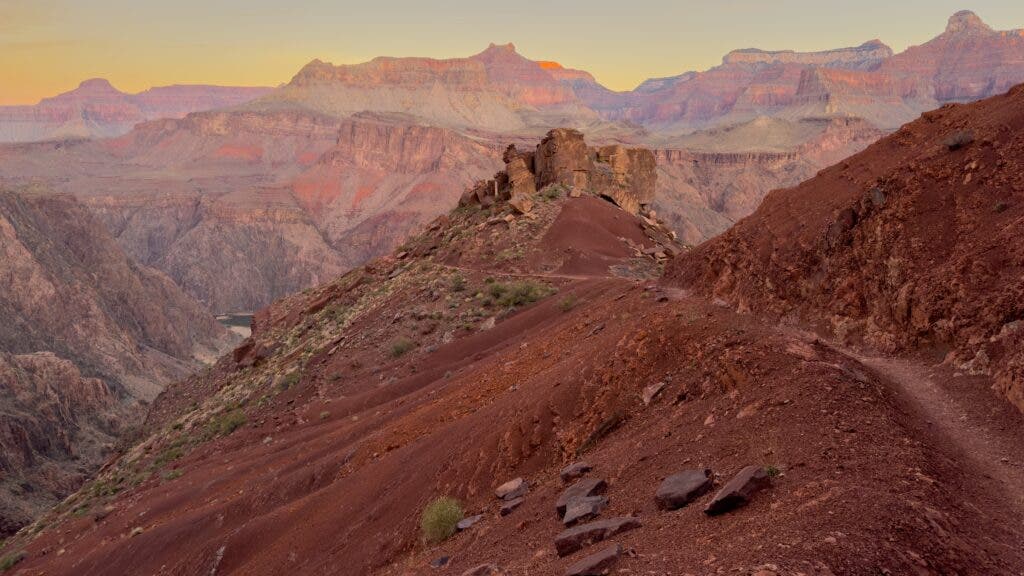
If you’re hiking, start your journey from either the North or South rim. Trips from the former cover more ground. The trip via the North Kaibab Trail is around 14 miles one-way, with a rim-to-river elevation loss of 5,850 feet. From the South Rim, the more popular starting point given its accessibility, you have two options: the 7-mile South Kaibab Trail, with an elevation change of 4,860 feet, or the 7.8-mile Bright Angel Trail, with an elevation change of 4,460 feet. Bright Angel is the Park Service’s recommended route out of the canyon; it reopened to the public on April 15 after months of maintenance-required closures.
You can also raft to Phantom Ranch with outfitters like Colorado River and Trail Expeditions (from $2,050) or OARS (from $3,899).
And then there are the famous mule rides to Phantom Ranch, an option run by Xanterra (from $1,231). However, mule-ride operations have recently experienced on-and-off closures due to trail-infrastructure projects, so it’s best to check for the most up-to-date information before making plans.
Don’t Miss
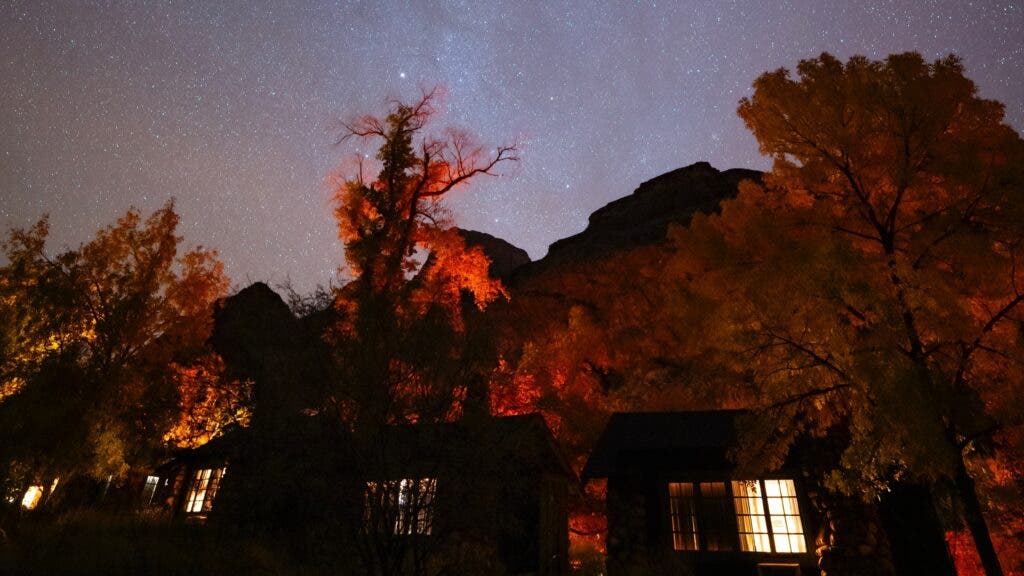
In 2016, light-pollution authority DarkSky International certified the Grand Canyon as an International Dark Sky Park. In the years since, ranger-led stargazing tours have become one of the most popular experiences—and, from my nights of astrophotography here, I could see why, as the park’s efforts to curb light pollution have made sightings of planets, the Milky Way, and even nearby galaxies like Andromeda easily visible to the naked eye. The view gets even more glittery from the remote canyon floor.
ADVERTISEMENT
Details
To book: GrandCanyonLodges.com
Price: From $213.50 for two people per night; additional guests in cabins with larger capacity are $21.50 per night
Address: North Kaibab Trail
North Rim, AZ 86052
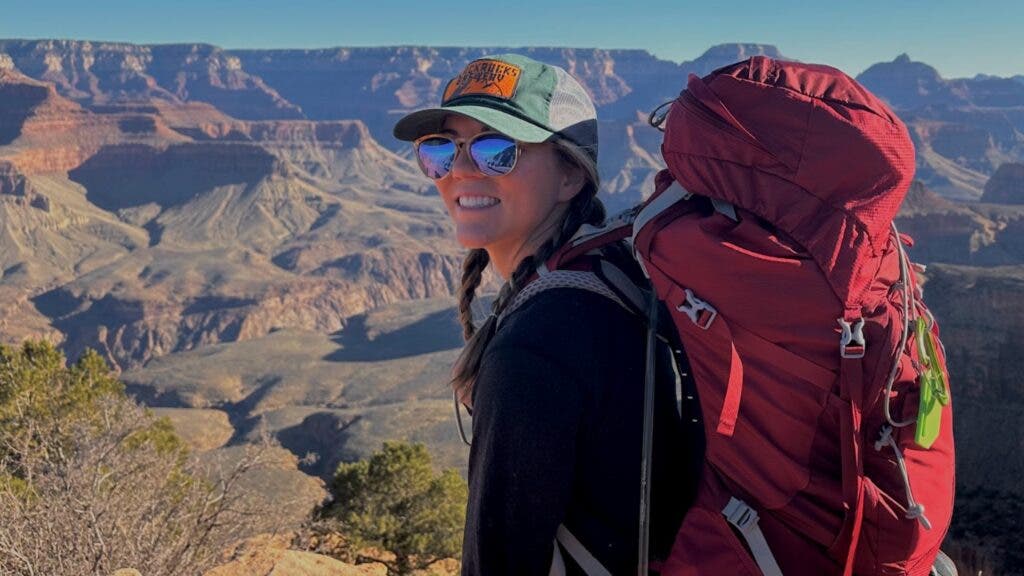
Stephanie Vermillion is a travel writer, photographer, and Outside contributor based in Cleveland, Ohio. Her mom, who once worked at Grand Canyon National Park and raved about the below-rim adventures, inspired her to visit Phantom Ranch. The best part of the trip, she says, was sharing the trail with a bighorn sheep on the early-morning ascent.
