Published November 4, 2015 12:00AM
Sponsor Content:
Shooting Stars
Five tips for photographing the nighttime sky
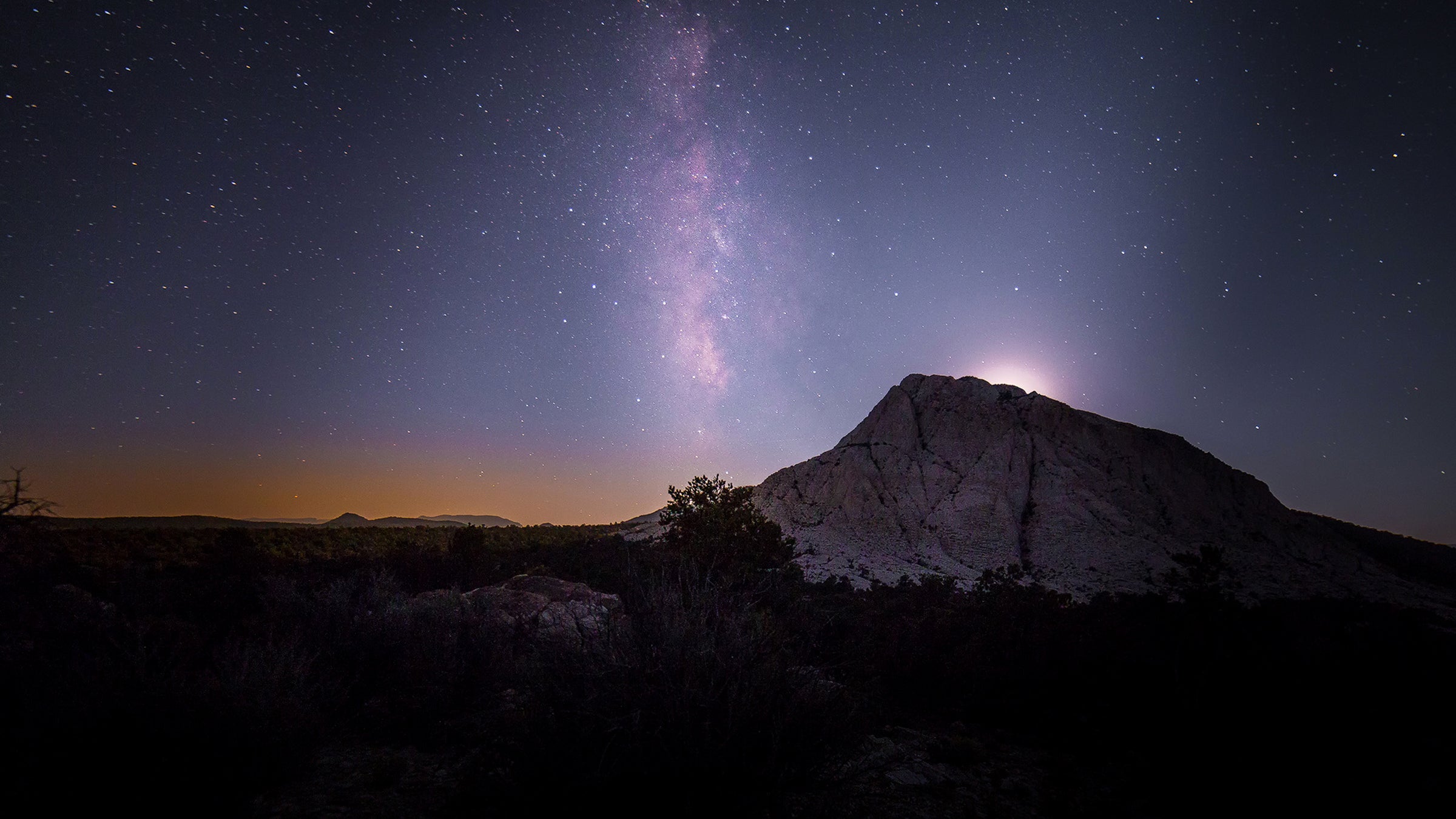
Moonset over the volcanic tuff mountain of Crystal Peak, Utah.
As park ranger Kelly Carroll developed his astronomy chops, he began photographing the skies at Great Basin National Park as a creative outlet that appealed to his scientist’s technical background. The hobby also enriched his understanding of the park. “I’ll spend six hours in a single spot to capture a time-lapse shot of the night sky. After a while, I start to notice sounds and smells that I don’t experience during the day. You can sense the animals in the area moving around. The night is very much alive.” Assuming you’re up for equaling Carroll’s time commitment to get the shot, we asked him for his top tips on capturing the stars on camera.
1. You don’t need high-end camera gear to capture something wonderful. You can get some nice images off today’s smartphones once you figure out how to use them. And GoPro cameras work amazingly well.
2. You will need a tripod and a remote shutter release no matter what camera or smartphone you use.
3. Understand that any moonlight produces a very different image than what you might expect. In short: More moon equals fewer stars.
4. You’ll need a working knowledge of f-stop and shutter speed if you’re working with a camera.
5. A 30-second exposure is usually about as long as you’ll need to capture the full impact of the stars overhead.