Updated March 24, 2026 10:55PM
Cape Froward Will Be Patagonia’s New National Park at the Edge of the World
At the southernmost tip of South America lies a 400,000-acre wilderness once considered too desolate to survive. Now, a massive new national park will finally invite the public to see the edge of the world.
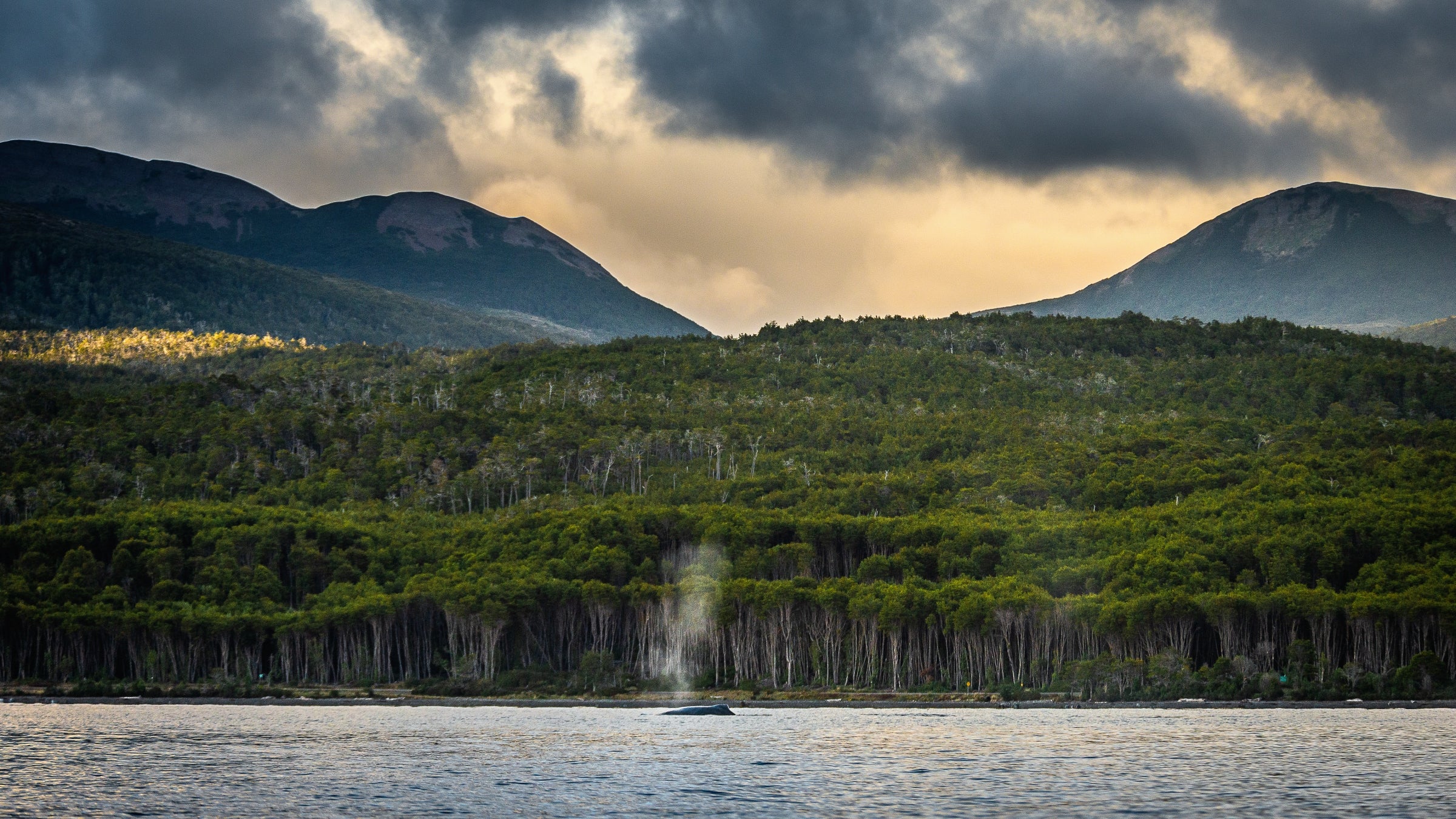
(Photo: Eduardo Hernandez/Rewilding Chile)
Charles Darwin visited the southernmost region in mainland South America in February 1834; he was not a fan. One memorable note in The Voyage of the Beagle describes Cape Froward as a “death-like scene of desolation [that] exceeds all description.” Nevertheless, the British naturalist went on to describe, in detail, a litany of aversions: the moldering tree trunks that trapped his feet; the humidity that cloaked his clothes; the gloomy skies that impeded his studies.
Some 200 years later, the southern end of that peninsula is poised to become a new national park for Chile. In October 2025, I embarked on a four-day backpacking expedition to preview the place that Darwin once despised. I searched for the “death-like” emptiness but found instead a feral world, vibrant and alive.
South America fractures into a puzzle of fjords and channels at the southernmost tip of the continent, the Brunswick Peninsula, in Chile’s Magallanes Region, where the future park will protect temperate rainforests, shrublands, and vast carbon-capturing peat bogs. The nearly 400,000-acre reserve (about the size of Sequoia National Park in California) will be the 18th addition to Chile’s Route of the Parks, as well as the first independent park donation from NGO Rewilding Chile, an offspring of Tompkins Conservation, started by the American philanthropists Doug and Kris Tompkins.
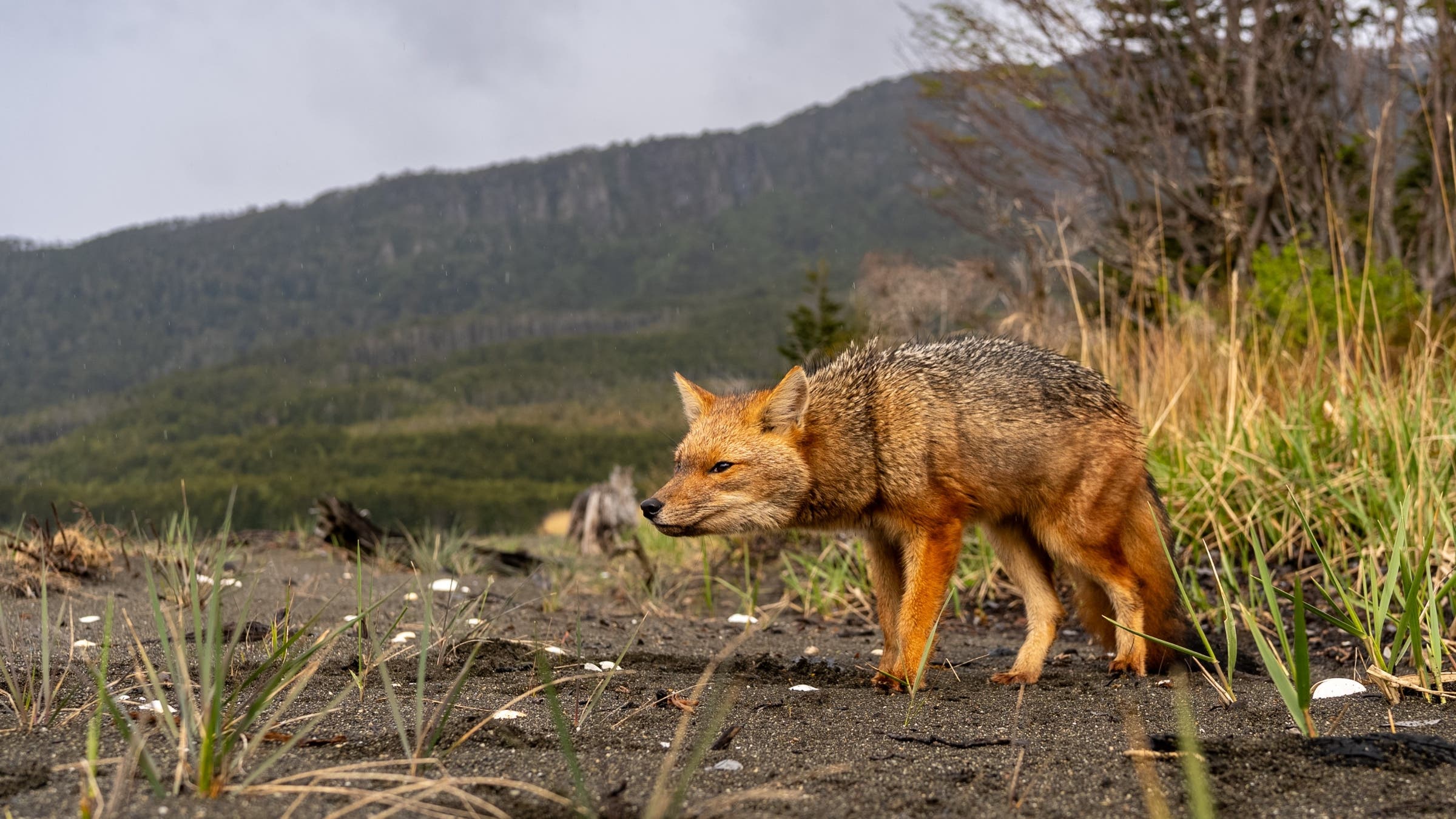
Gabriel Boric, a Magallanes native and Chile’s outgoing president, greenlit Cape Froward in 2024. The national forestry commission is now completing its administrative process, which includes a consultation with the Indigenous Kawésqar people, for whom the land holds significant heritage value. Cape Froward is due to become an official park before Boric leaves office this spring, providing a refuge for endangered species such as southern river otters, huemul deer, and ruddy-headed geese.
My hike through Cape Froward began, like many hikes do, at the end of a winding road. It was, naturally, the southernmost road in mainland South America, which peters out 43 miles south of Punta Arenas into a trail that, 24 miles later, culminates at the Cross of the Seas, a monument marking the end of the continent. The trail was, like many trails in forlorn places, a concept as much as a reality. When there was a path, it generally followed the Strait of Magellan across pebbled beaches, over squishy peatlands, and into subantarctic forests, where trees are bent like elbows by incessant winds.
ADVERTISEMENT
“It sounds horribly corny, but this territory was my first love,” marine biologist Benjamín Cáceres told me as I set off on day one toward the squat San Isidro Lighthouse, where he and his brother Miguel are building a natural history museum. The pair spent their childhood summers camping here, collecting whale bones and learning from their father about regional folklore, including tales from the nearby whaling station at Bahía del Águila, which processed 4,000 cetaceans between 1906 and 1920.
“I like it when you have to make an effort to see something—when you have to bend your body around fallen trees, take your backpack off to squeeze through trunks, and get completely muddy and wet.”
Rewilding Chile has plans for infrastructure in this sector, about four miles from the trailhead, including an enhanced footpath, side trails up Mount Tarn and Cerro Foca, ranger stations, and camping facilities. Beyond Bahía del Águila, Cape Froward will likely remain a playground only for intrepid backpackers—those capable of wild camping, carrying heavy loads, and navigating the tide charts needed to cross narrow coastlines and three broad rivers.
“This trail is for people who really hike,” Gonzalo Fuenzalida, founder of Chile Nativo, said as we walked together on this four-day exploratory mission (Fuenzalida hopes to pioneer guided hikes through the park). “It’s a rude place,” he joked that evening as we huddled over a campfire, smelling of smoke, toasting soggy boots on trekking poles. “But I like it when you have to make an effort to see something—when you have to bend your body around fallen trees, take your backpack off to squeeze through trunks, and get completely muddy and wet.”
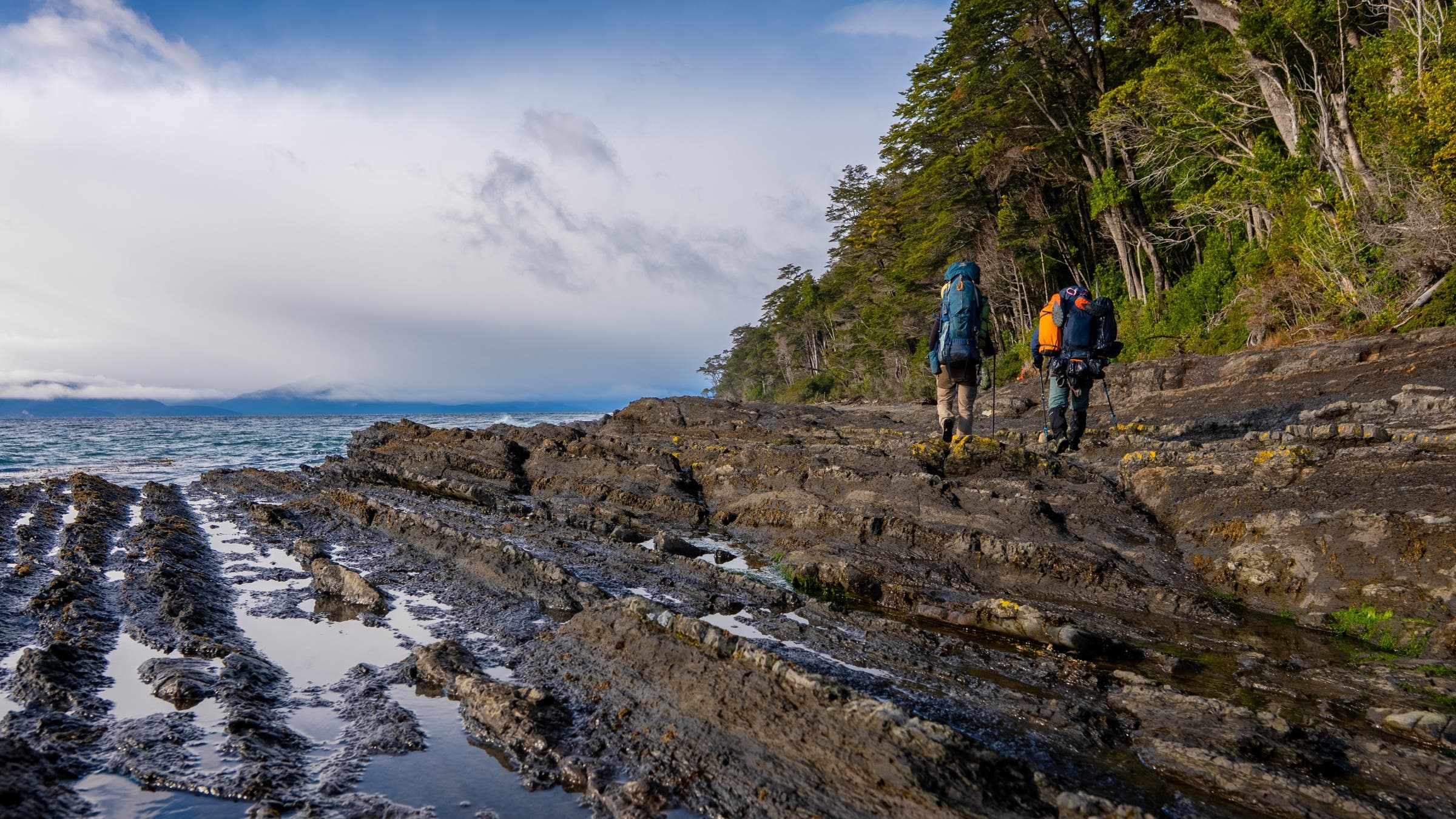
Over the next days, I did just that. My body went numb forging frigid rivers while hurricane-level squalls wicked moisture out of my eyes. I encountered fluffy snowstorms, thrashing rains, aggressive sunbeams, broody clouds, and miraculous rainbows, which seemed to appear out of nowhere to apologize for the storms. And yet, I still couldn’t channel Darwin’s anger for the place.
ADVERTISEMENT
On day four, I waited with Fuenzalida not far from the Cross of the Seas for news out of Punta Arenas. The high winds could shut the port, he said, and without a boat transfer, we’d be walking back. His satellite radio was silent, so we stared at the steely sea, kicking a king crab claw down the gray pebble beach. An hour passed. The snow-capped Cordillera Darwin glistened off in the distance. Steamer ducks waded in the foreground. Finally, a ship normally used for salmon farming puttered into view.
Two days later, seated in a warm café in Puerto Natales, not far from Patagonia’s famed Torres del Paine National Park, I met with Kris Tompkins and Carolina Morgado, executive director at Rewilding Chile. “Torres del Paine is marvelous,” Morgado said between sips of coffee, “but Cape Froward is marvelous in a different, more savage way.” The fact that you will have a well-developed park there will make it even more attractive and educational to visit, and it will support the economy of neighboring communities, she explained.
Tompkins—who’s already helped create or expand 16 national or provincial parks across Chile and Argentina—recalled how she first dreamed about protecting Cape Froward on a fly-over in Doug’s plane in the mid-2000s. “We could see that it was really wild, really beautiful, and largely intact with no roads,” she said.
ADVERTISEMENT
Rewilding Chile moved fast when terrain went on sale, purchasing vast stretches of the Brunswick Peninsula in 2021 that, when combined with existing federal lands, will become the future park. Next comes what Tompkins refers to as long-term active intervention. Or, as the NGO’s name implies, rewilding. “It’s looking at a territory or a marine area and asking yourself, ‘Who’s missing?’” For Cape Froward, that might mean amplifying local populations of huemul deer, or restoring forests of pilgerodendron, the southernmost conifer in the world.
“A lot of the national parks in the United States are scenically beautiful, but ecologically, they’re left wanting tremendously,” she said, gazing out the window at the Last Hope Sound. “These national parks in Chile can’t just be beauty strips; they need to be fully functioning ecosystems. Because a landscape without wildlife is just scenery—and we never consider ourselves being in the scenery business.”
This article is from the Spring 2026 issue of Outside magazine. To receive the print magazine, become an Outside+ member here.
