Published March 13, 2026 04:00AM
It's Not Too Late to Catch a Superbloom. Here Are 5 Must-See Spots.
Death Valley National Park isn't the only place to catch this year's rare botanical phenomenon. Here are five other sites worth visiting.
(Photo: Getty)
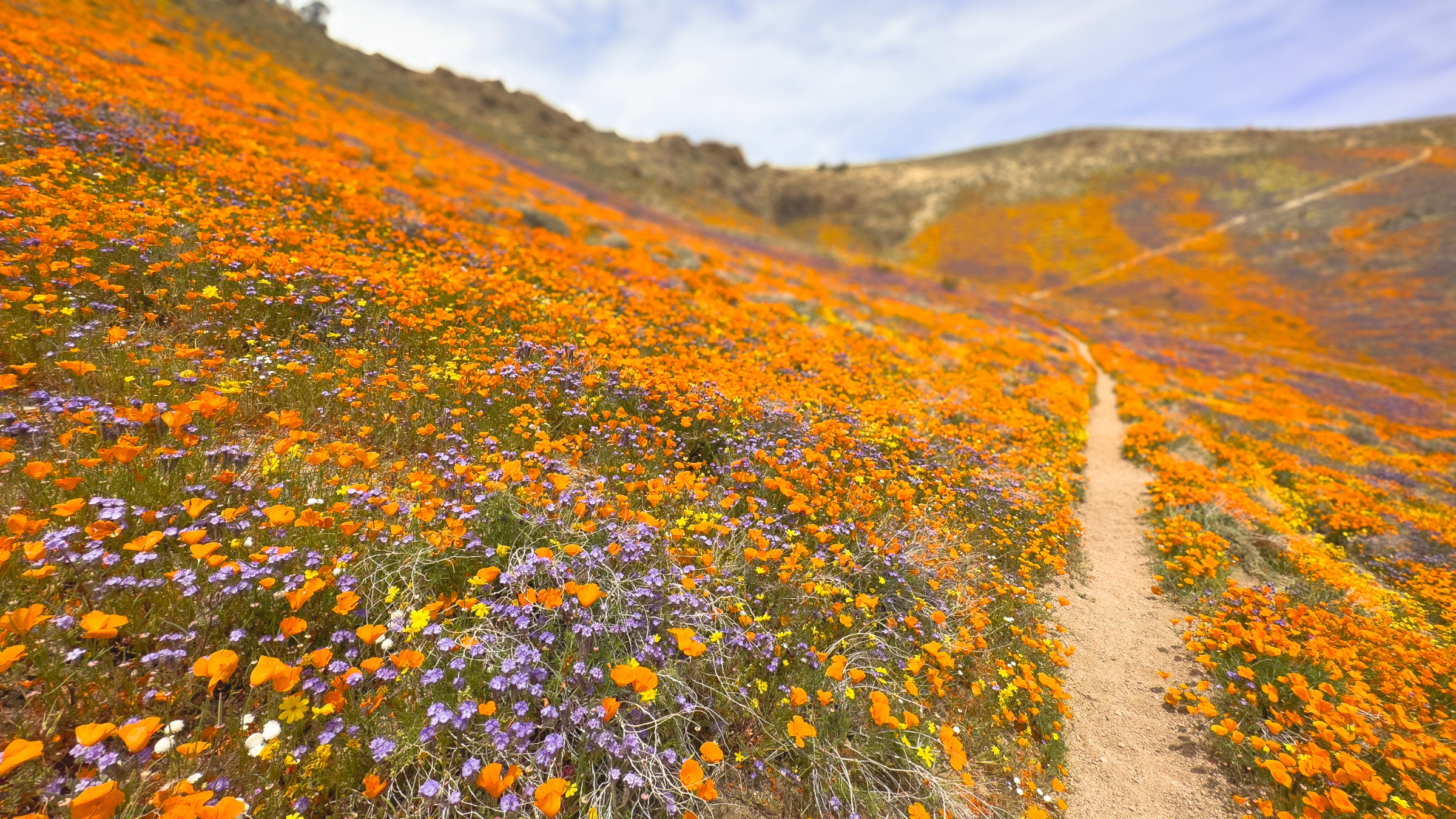
For the first time in a decade, a superbloom is spreading wildly across Death Valley National Park in California and in bordering Nevada. Death Valley and its harsh, desert climate experienced a 202 percent increase in rainfall from November through January compared to 2025 levels, and the region surpassed its annual average in just three months.
While there are still several hillsides at low elevation with good blooms, it’ll soon be time to spot them in higher elevations, according to the National Park Service. Visitors to Death Valley can expect to catch them from April through June. The wildflower Desert Golda, a vibrant, yellow flower native to the Mojave, Sonoran, and Colorado Deserts, will be the most prominent flower blooming in the park.
Death Valley National Park isn’t the only place to catch this rare botanical phenomenon, though. Here are five other must-see spots in California and Arizona, worth a visit this spring.
Anza-Borrego Desert State Park
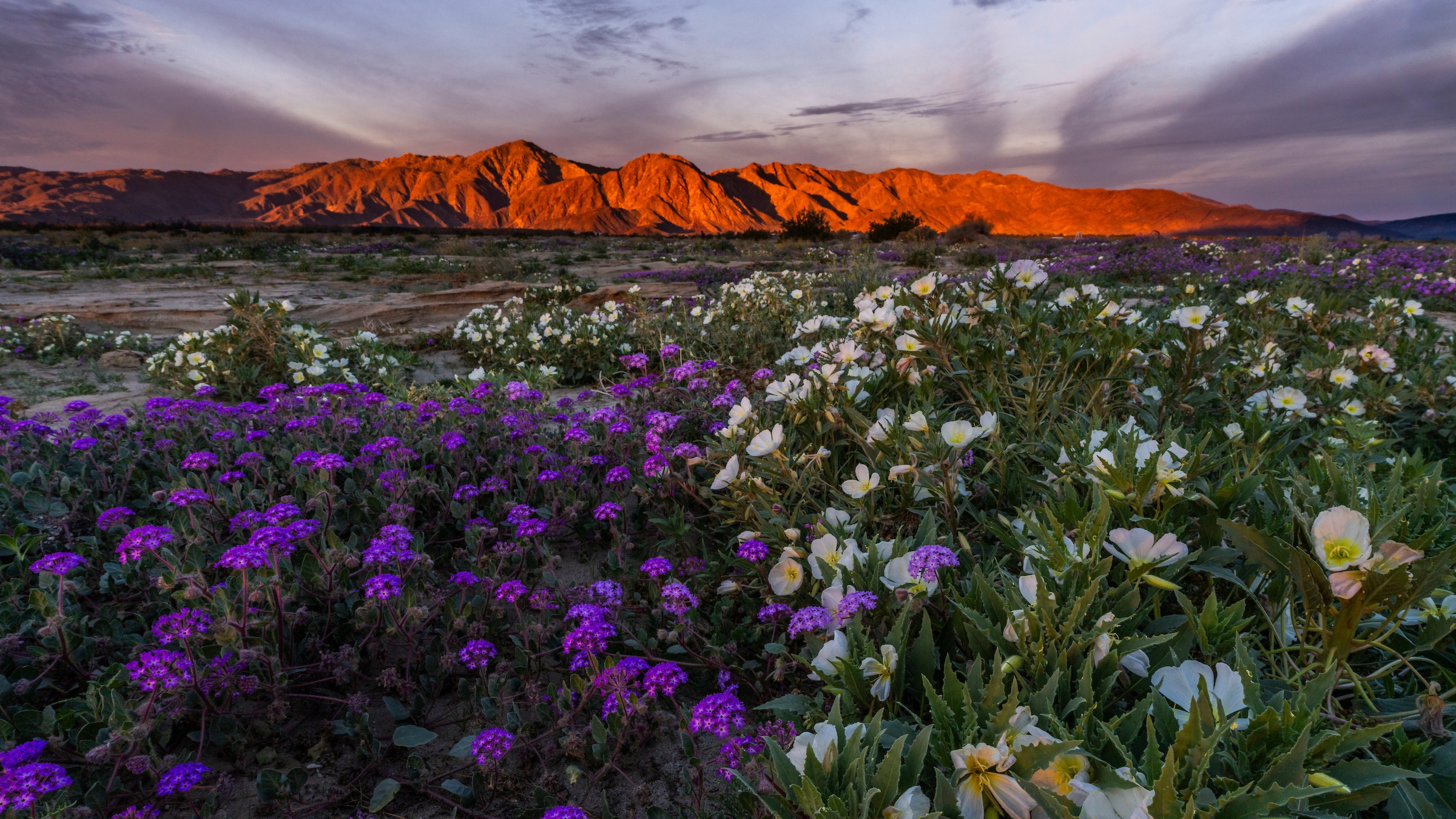
Thousands of people flood to California’s Anza-Borrego Desert State Park each year to try to catch a glimpse of the superbloom, and to capture stunning images of their own, of the gorgeous wildflower spread containing hundreds of species. The park is located 95 miles east of San Diego.
According to the California State Parks Department, Anza-Borrego is one of the top locations heading into a strong superbloom year, thanks to a series of storms. The beautiful arrays of purple, orange and white flowers are still vibrant since first appearing in January. Though their brilliance is peaking right now, they will remain a site to see through April.
The Parks Department created an interactive map that highlights all wildflower blooms in the state right now. In Anza-Borrego, specially, you can find the spots with the most blooms by checking this interaction map.
Important to note: It’s tough to predict how desert plants and flowers will respond week-to-week. It depends on rainfall and on the fluctuations of temperature, but the Parks Department updates the public often.
How to prepare:
- Entrance is $10 per vehicle
- Dogs are allowed
- Leave no trace
ADVERTISEMENT
Antelope Valley Poppy Reserve
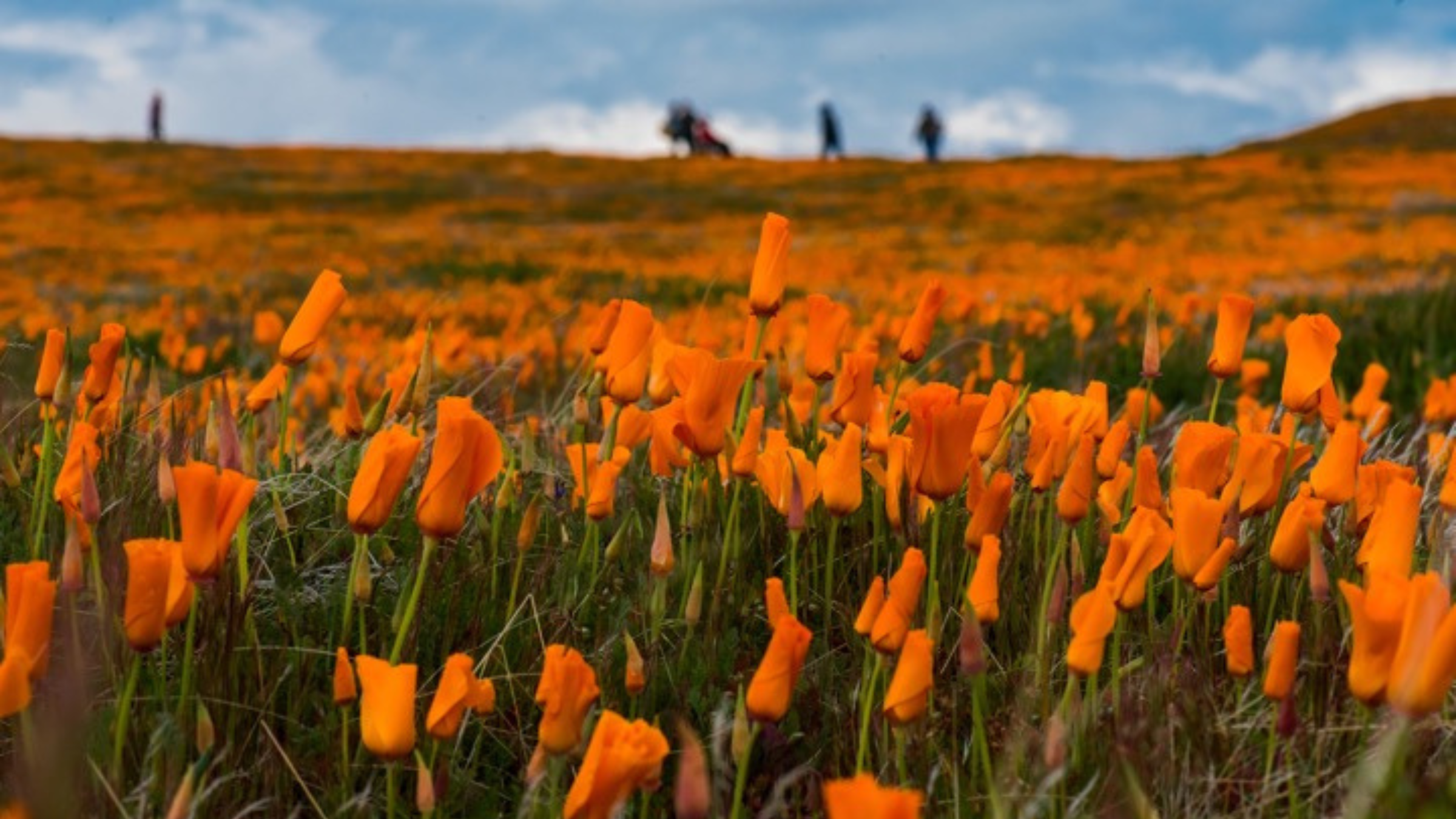
Antelope Valley Poppy Reserve is specifically know for its—you’ve guessed it—poppies. This wondrous park in the western Mojave Desert is the only area of California with this specific flower spread as vast as it is. The reserve is located 70 miles north of Los Angeles.
Antelope Valley wildflower season typically lasts from mid-February to the end of May here. According to California State Parks, the mosaic of color you see changes daily, though. With this in mind, the Parks Department set up a live feed called the “PoppyCam.”
Important to note: The Jane S. Pinheiro Interpretive Center in the park is open through Mother’s Day, with wildflower and wildlife exhibits, and botanical watercolor paintings on display.
How to prepare:
- Entrance is $10 per vehicle, with discounts available for seniors and those with disabilities
- Know that you cannot pick wildflowers
- Dogs aren’t allowed
- Be prepared to encounter strong winds
- Watch out for rattlesnakes
- Leave no trace
ADVERTISEMENT
Diamond Valley Lake
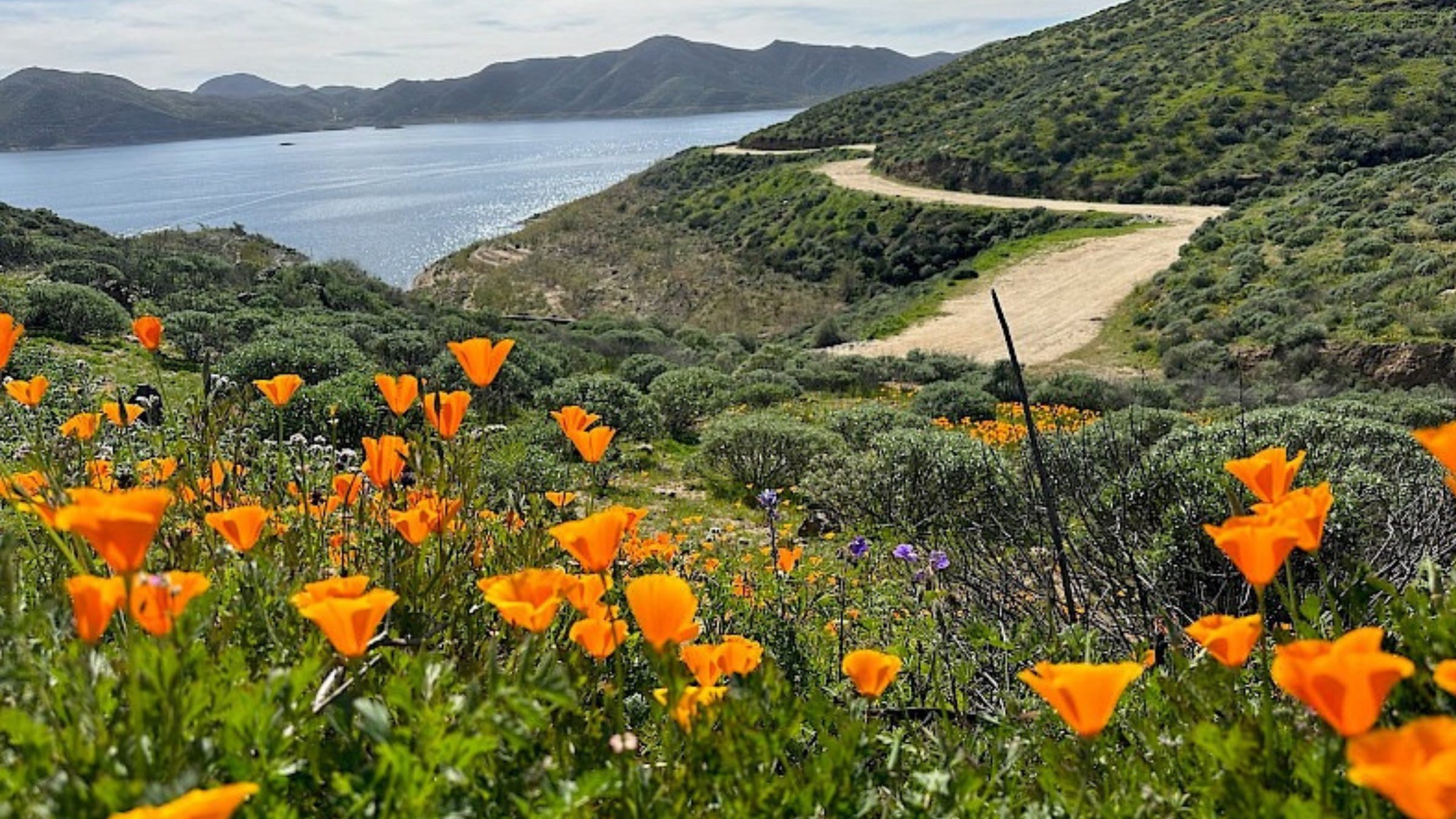
Diamond Valley Lake, a water storage facility for SoCal near Hemet, about 90 miles east of Los Angeles, is a massive man-made lake popular for its trails in the surrounding hills that birth magical wildflower blooms each spring.
There is a specific trail for viewing the superbloom, called Wildflower Trail, usually open from March to May, but Lakeview Trail is open year-round for hikers and bikers, too.
ADVERTISEMENT
Important to note: Diamond Valley Lake is special for its blue Arroyo Lupines and California Poppies.
How to prepare:
- Entrance is $10 per vehicle, with discounts available for active duty and military veterans, as well as seniors
- If solely on foot, the entrance fee to Wildflower Trail is $4
- Only park at the Marina
- Dogs aren’t allowed
- Leave no trace
Chino Hills State Park
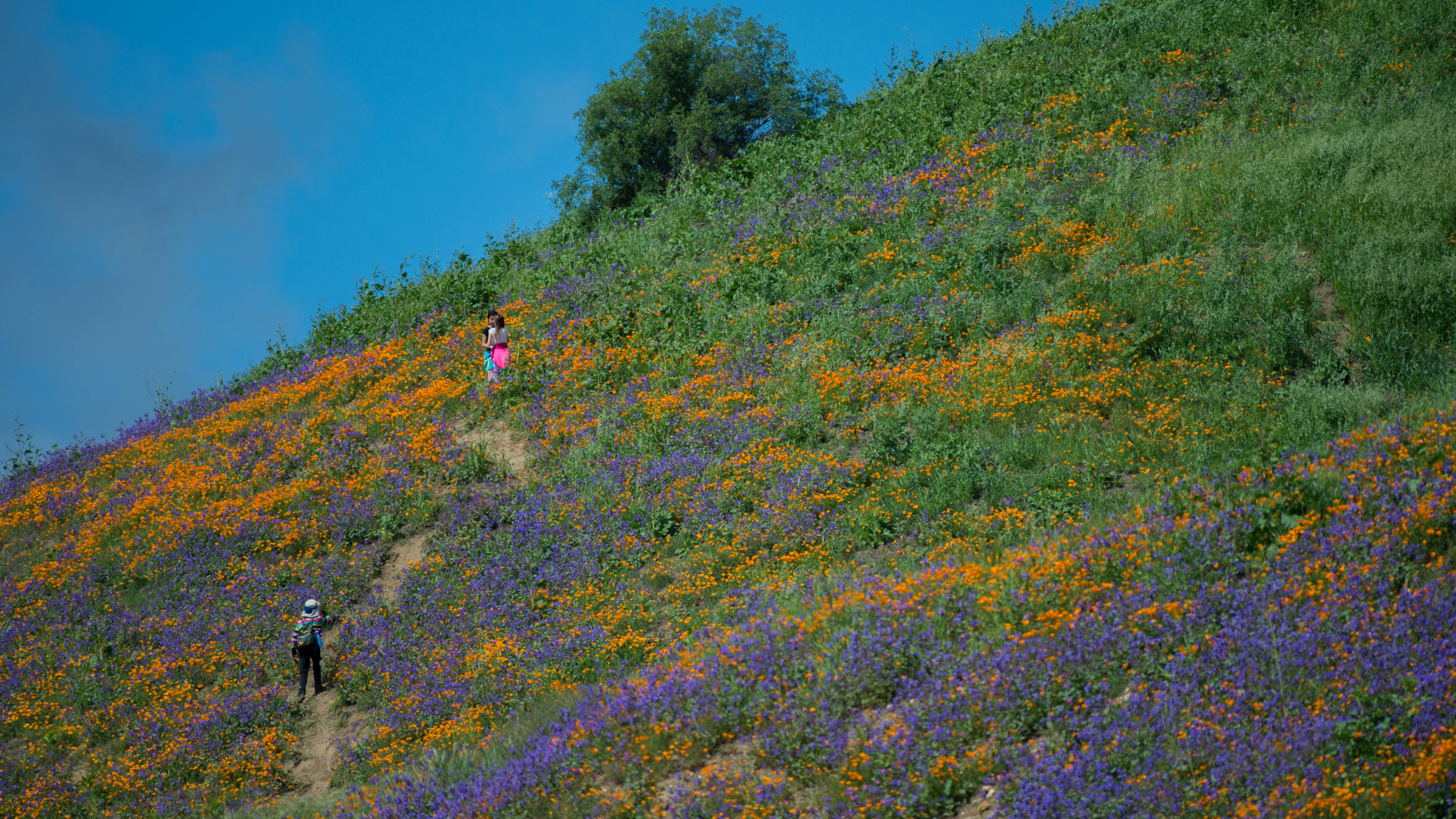
Chino Hills State Park is 14,000 acres of rolling hills in Santa Ana Canyon, about 40 miles east of Los Angeles, where three counties meet: Orange, Riverside, and San Bernardino. From March to May it attracts visitors for its lively displays of thousands of different kinds of wildflowers like Redmaids, Canterbury bells, Poppies, and Arroyo Lupine.
Several factors play into when and where they will bloom. So ensure you plan your visit right by following the current conditions of the park. Chino Hills State Park can be accessed through multiple trailheads: Brea, Yorba Lina, Anaheim, and Corona.
Important to note: The most popular trail for wildflower viewing is Bane Ridge Trail. Enter through the east entrance of the park to the trailhead.
How to prepare:
- Entrance is $10 per vehicle
- Choose trail routes that match your comfort level— check maps!
- Rattlesnakes are active
- No dogs allowed
- Leave no trace
ADVERTISEMENT
Saguaro National Park
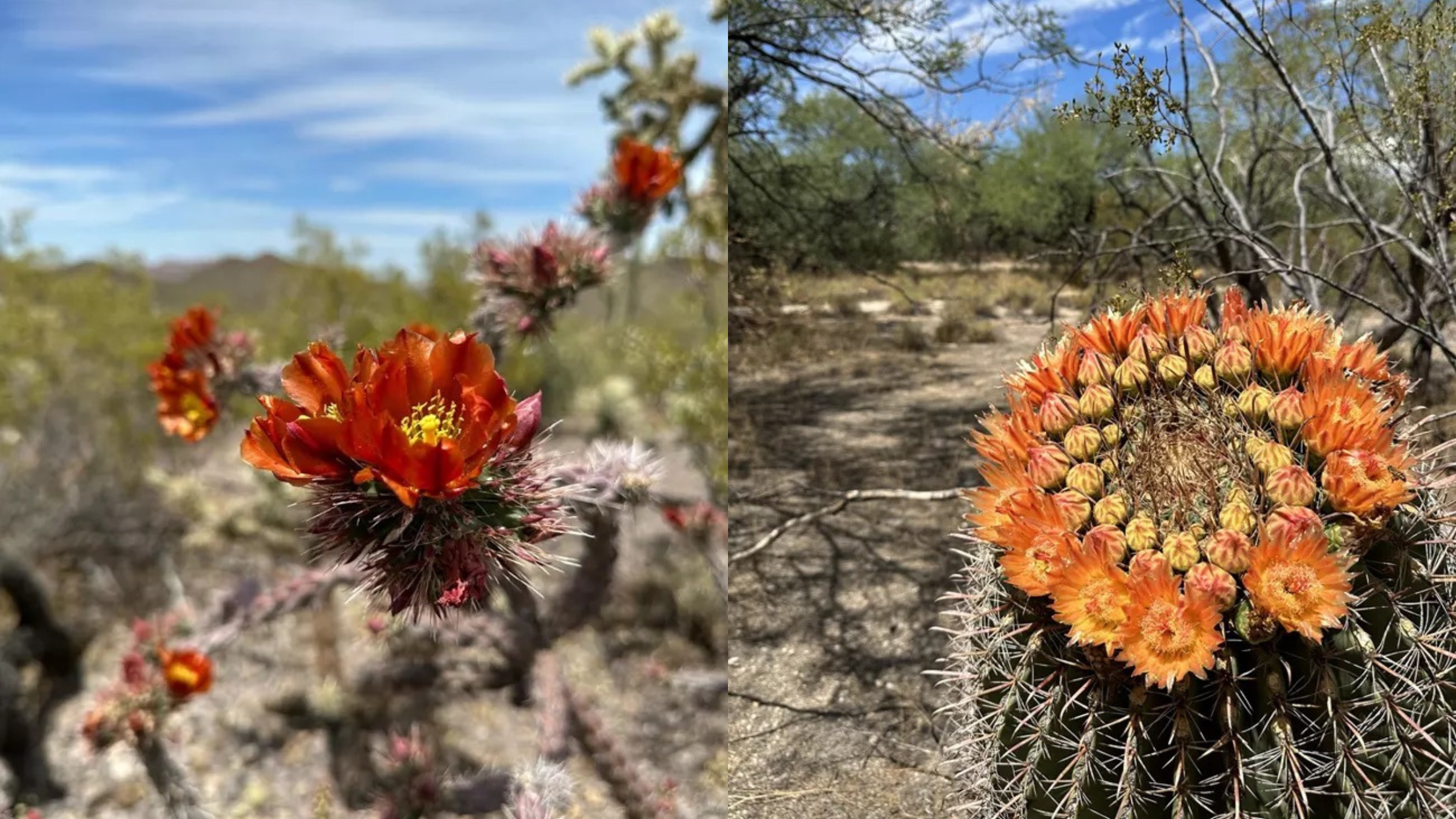
Last, but certainly not least, we’re leaving California for the Sonoran Desert: Saguaro National Park in Arizona. Unique to this park, are the saguaro cacti that bloom towards the end of May. It’s located 15 miles west of Tucson.
More things have to go right in this Arizona desert, than in the parks of lusher California. Soil terrain conditions won’t allow large displays of flowers to grow, still the Saguaro experiences three blooming seasons: spring flower season, cactus flower season, and summer flower season.
Spring flower season is coming to a close, and features purple Desert Verbena, pink Fairy Dusters, blue Larkspurs, and more. Cactus flower season blooms April through May and features stunning red Claret Cups, magenta Strawberry Hedgehogs, green Teddy Bear Cholla, and more. Summer flower season (June to September) sees less action, but still features blooms like Desert Sennas, Broom Snakeweed, the vibrant orange Barrel Cactus, and more.
ADVERTISEMENT
Important to note: Rabies has been confirmed in the Tucson area, including in the park. The Arizona Department of Health Services cautions visitors to avoid contact with wildlife and report any odd behavior in animals. Tick-borne spotted fever is also present in Arizona.
How to prepare:
- A standard pass must be purchased (around $25) and covers everyone in a vehicle for 7 days
- Note: this park does not accept cash
- Dogs are allowed, but have to be kept on a leash
- Check the conditions before heading out
- Leave no trace