Published February 25, 2026 09:23AM
What to Know About Traveling to Mexico Right Now
Many travelers are rethinking their spring break plans after violence erupted across Mexico this week. Here’s the latest news, and what to consider before canceling a trip.
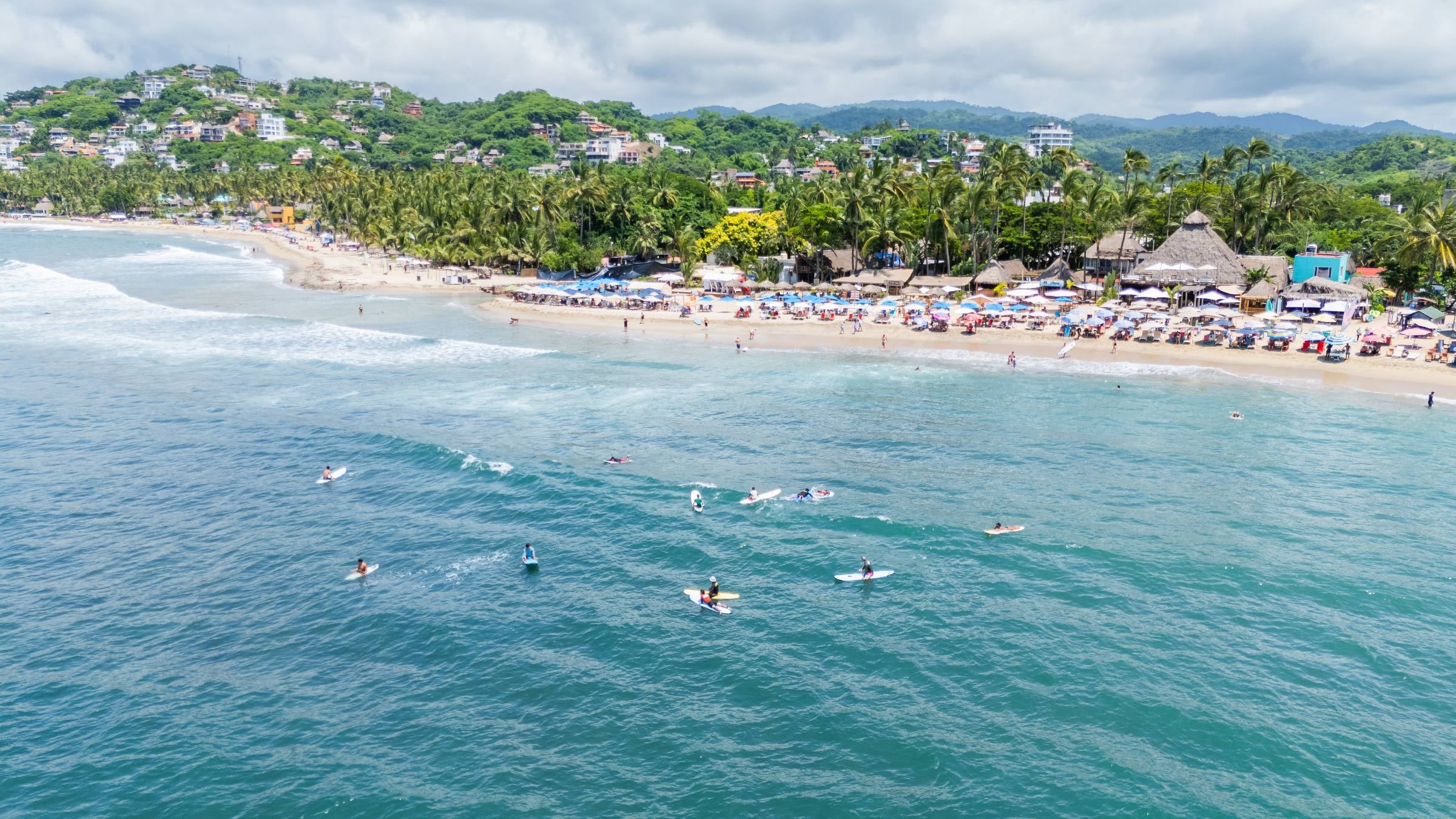
Surfers at Sayulita Beach, in Nayarit, Mexico. (Photo: Carlos Flores / Getty)
Many travelers are rethinking their spring break and summer World Cup plans after violence erupted across Mexico this week. On Sunday, February 23, the killing of Mexico’s most-wanted cartel boss, Nemesio Oseguera Cervantes, known as “El Mencho,” triggered a wave of deadly retaliatory violence, including fires and gunfights, across 20 of Mexico’s 32 states. At a press conference the following day, Mexico’s President Claudia Sheinbaum tried to assuage fears, as she told reporters, “The country is at peace. It’s calm.”
A spate of travel advisories, flight cancellations, hotel lockdowns, and images of unrest in news headlines suggested otherwise. Cervantes, the head of the powerful Jalisco New Generation Cartel was killed at his mountain retreat in Tapalpa, Mexico, about 250 miles east of Puerto Vallarta in the state of Jalisco, but retribution attacks flared up across the country. While tourism is usually unaffected by drug cartel violence, this time was different, with incidents in popular tourist destinations including Puerto Vallarta, Cancún, and Playa del Carmen prompting shelter in place warnings from the U.S. government that finally lifted the morning of Tuesday, February 24.
With spring break just weeks away, and East Coasters seeking respite from back-to-back winter storms, the recent upheaval in Mexico has left travelers concerned about whether visiting the country is safe right now.
ADVERTISEMENT
“Travel to Mexico is not risk-free under current conditions,” said Kent Webber, a former Pentagon officer and a senior manager at Global Rescue, a U.S.-based travel safety organization. “Anyone with upcoming plans should closely monitor developments as their departure date approaches, avoid areas that have not stabilized, and be prepared to postpone travel if the security environment does not improve within the next one to two weeks.”
On Monday, Mexico’s president, Claudia Sheinbaum stated in an address to members of the media that flights to tourist destinations were expected to resume normal operations by Tuesday. And as of Tuesday, Puerto Vallarta Airport (PVR), which experienced some of the worst flight disruptions from the unrest, was back to 90 percent of typical flight operations, according to an email from Alejandra Cornejo, director of tourism for Puerto Vallarta.
What to Do If You Have Upcoming Travel to Mexico
People with upcoming travel plans for Mexico should look closely at their destination’s security situation. The U.S. Embassy and Consulates in Mexico have been updating the security alerts on its website daily with the status of flights, roads, and other safety measures. For the last few years, the U.S. Department of State (DOS) has classified Mexico under its second-lowest Level 2 travel advisory, recommending American travelers “exercise increased caution” in the country. The last update in August 2025 added terrorism to the risks. Overall, the country has retained its Level 2 status, even in light of the recent unrest.
Mexico is a massive country—three times the size of Texas. This map on the State Department website breaks down which states are more at risk. Much of the country remains Level 2, including Mexico City, Baja California Sur, and Quintana Roo.
As of late February, tourism operations in Baja California Sur, where adventure travel hotspots La Paz and La Ventana are located, were uninterrupted. In Quintana Roo, a state that is home to popular spring break spots such as Cancun, Playa del Carmen, and Cozumel—about as far from Jalisco as Milwaukee is from Miami—was also largely unaffected.
ADVERTISEMENT
“Tourism activity across the Mexican Caribbean continues to operate normally, including airport operations, ground transportation services, hotels, and tourism experiences,” Quintana Roo’s secretary of tourism, Bernardo Cueto, tells Outside via WhatsApp.
The state of Nayarit is also considered a Level 2, but a spokesperson at Tropicsurf, a high-end surf tour company, said it had a client decide to play it safe and postpone an upcoming trip by one month. The company ran two surf lessons on Tuesday, February 24, for guests in San Pancho, a town in Nayarit, and said the clients didn’t seem concerned or panicked in the slightest.
“We also had a family depart today to fly back to California, who were completely relaxed regarding their transportation from the resort to the airport,” said the spokesperson. “The biggest issue now seems to be loss of business from people feeling scared and cancelling or not booking.”
While other parts of Mexico are currently under strict safety alerts due to security incidents, Baja California Sur remains stable and is not part of the active, localized travel restrictions impacting other states.
ADVERTISEMENT
However, there are six states under the higher Level 4, or “do not travel” warning, including Colima, Guerrero, Sinaloa, Tamaulipas, Zacatecas, and Michoacán, which is home to a large swath of Mexico’s UNESCO-listed Monarch Butterfly Biosphere Reserve.
Talk to Your Hotel or Local Tour Operator
Beyond spring break, which in the U.S. typically spans late February to mid-April, February and March coincide with peak butterfly migration months and tourist visitation. Many local businesses in Michoacán, including the Monarch Reserves, closed for the day on February 22. U.S.-based tour operator Natural Habitat Adventures leads trips in the Monarch Reserves in the far eastern portion of Michoacán and cancelled all departures in the area through February 24, out of an abundance of caution, according to Davis English, the company’s senior vice president of guest experience. They will resume trips beginning March 1.
“While the State Department’s continued warning of visiting eastern Michoacán is warranted for some parts of the state, we no longer believe it to be an accurate reflection of the risks for the areas we visit,” English told Outside, noting that many times travel advisories are blanket statements for very large areas. “It can be like saying there was an incident in Albany, so don’t travel to New York,” he shared.
Mauricio Miramontes, Adventure Travel Trade Association (ATTA)’s ambassador in Mexico, told Outside that as of Tuesday, he had touched base with tour operators of the Mexican Association of Adventure Travel and Ecotourism (AMTAVE) from Jalisco, Sonora, State of Mexico, and Nayarit and received positive feedback regarding the safety situation.
“There is no evidence of consistent risks connected to the last incident on Sunday nor evidence that violence is targeted at visitors or tourists,” he said. “I would recommend connecting with travel professionals with local relationships within the destinations you are traveling to ensure the best experience possible.”
ADVERTISEMENT
If you’re currently in Mexico or have travel plans in the coming weeks for areas that were recently experiencing unrest, Webber, at Global Rescue, highly recommends preparing for contingencies. “Ensure passports and travel documents are accessible and valid, register with your embassy, confirm you have the financial resources to shelter in place or secure unscheduled transportation, and reduce exposure by limiting tourist activities until conditions fully stabilize,” he said.
Ahead of travel, Americans can sign up for the State Department’s free Smart Traveler Enrollment Program (STEP), which allows officials to more easily locate and contact them in an emergency. “Complacency is the greatest vulnerability in a fluid security situation,” said Webber.
Jen Murphy is a regular contributor to Outside and regularly travels to Mexico. She was in Michoacán last November. She previously reported on safety in Mexico last summer and in the fall of 2024 for Outside.


