Published March 16, 2026 08:45AM
I Spent More than a Decade Chasing the World’s Darkest Nights. Here’s Why Dark Sky Tourism Is More than Just a Trend.
From stargazing to aurora hunting, travelers are chasing an increasingly rare resource: natural night.
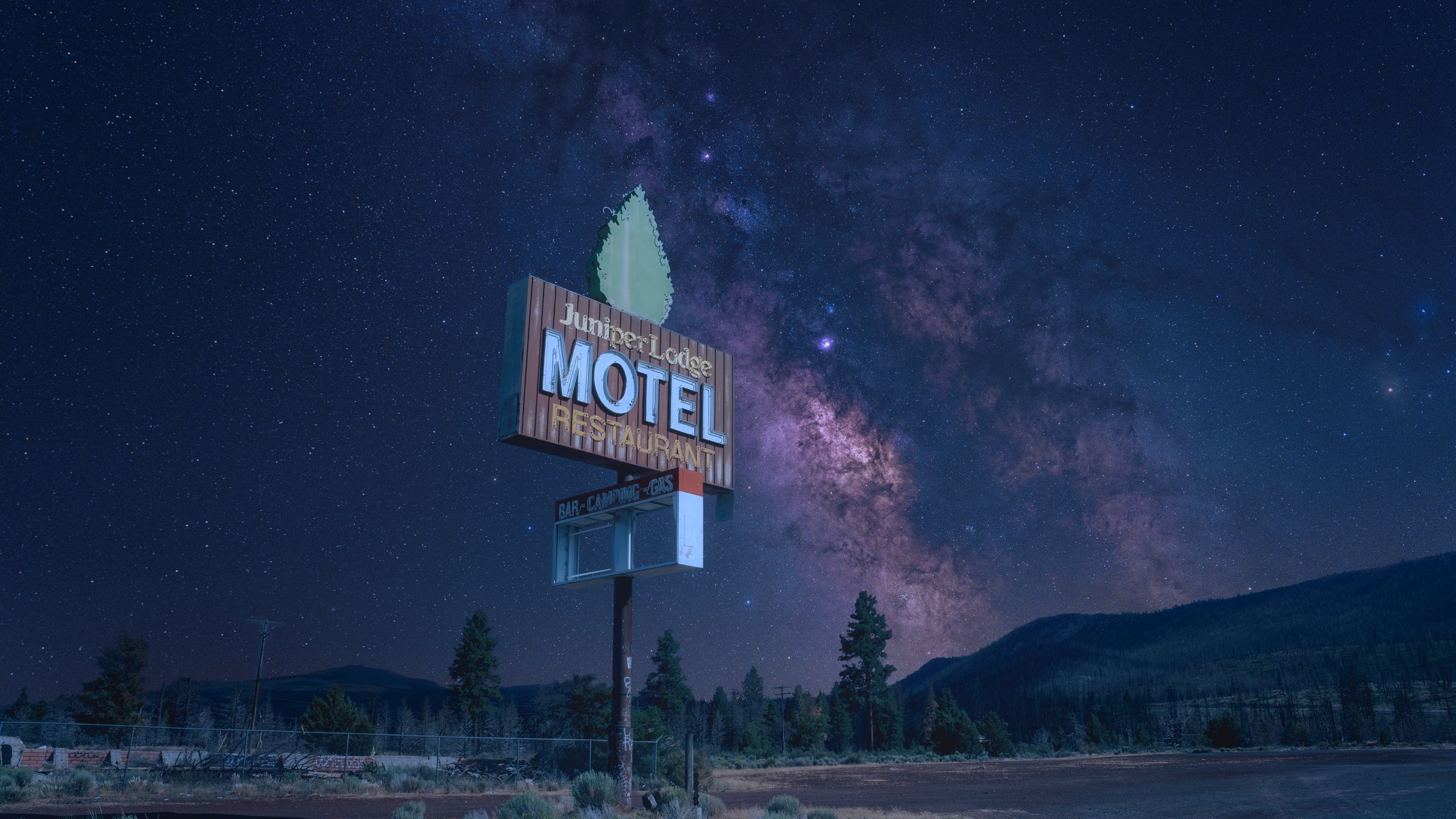
An abandoned motel in Northern California. Dark-sky tourism, now a $10 billion industry, may be worth $20 billion in another decade. (Photo: Jay Clue)
I shrieked as a star zipped overhead, then another. “What was that?” I whispered to my friend, Stephanie, who was sky-watching in the sand beside me.
At the time, I was a college junior from Dayton, Ohio. I had no clue that the shooting stars I’d just witnessed were actually specks of space rocks igniting in our atmosphere. I also had no idea that this cosmic night in the Sahara Desert, part of a summer abroad in Morocco, would inspire my future career as a night-sky writer, photographer, and author.
Yet that remote camping trip opened my eyes to what suburban lights had long kept hidden from me: a jewelry box of constellations, nebulae, and galaxies, including the sparkly stripe of our own Milky Way. I was hooked, and increasingly, I’m in good company.
ADVERTISEMENT
Interest in astrotourism—traveling for the sky’s wonders—has soared in the United States since the pandemic. Stargazing is now the Grand Canyon National Park’s most popular programming, and it’s a lucrative one. Analysts say the global nighttime tourism market, now around $10 billion, could double by 2035. In the Colorado plateau alone, it’s been estimated to generate more than $2 billion per year. Popular “SpaceTok” videos on TikTok are even inspiring new Gen Z stargazers, to the point that one-quarter of the generation’s travelers are interested in jet setting specifically for astrotourism, according to a 2024 survey by trip-planning website Priceline.com.
RELATED: The World’s Best Destinations for Astrotourism in 2026
This skyrocketing interest has introduced inventive night tours, from twilight canoeing and Indigenous-led aurora hunts to turtle-tracking treks and cultural stargazing. If planned responsibly, in cooperation with local people and naturalists, experiences like these could support conservation and communities. After-dark travel also fulfills the growing demand for novel adventures, because these days, a pristine night sky is especially rare.
Around 80 percent of Americans can’t see the Milky Way’s glittery band at home. Many of us live under light pollution so severe that we can only spot around a dozen sky dots each night. Between 2011 and 2022, the night sky’s brightness grew 9.6 percent annually.
ADVERTISEMENT
“It’s basically doubling every seven years,” says Ruskin Hartley, CEO and executive director of global light pollution authority DarkSky International. This trajectory leaves fewer stars for sky-watchers, including Indigenous cultures that pass down lessons and histories through the local nightscapes. It also hinders wildlife, from migrating birds and turtles to fireflies and moths, as much of the animal kingdom relies on inky nights for hunting, mating, and movement.
As light pollution climbs, so, too, does a countermovement to curb it. Around 20 U.S. states have enacted laws to reduce unnecessary illumination; dozens of local communities have instituted their own dark-sky ordinances, too. Astrotourism plays an important role. “People want to protect the things they care about,” says Hartley. “Dark-sky tourism is something people care deeply about.”
In fact, in a 2024 survey from Booking.com, more than half of tourists said they planned to globe-trot for the night sky last year. Many astrotourists organize their trips around DarkSky International’s map of more than 250 certified stargazing-friendly destinations. Hartley attributes much of this interest, and a desire to protect Earth’s nightscapes, to the popularity of astrophotography.
“If you think back to the start of the national parks in the U.S., what helped spur a nationwide movement to protect the parks was these incredible, iconic photos,” he says. Today, night-sky photographers are using imagery to showcase the unspoiled night sky—a scene many didn’t even realize was possible.
ADVERTISEMENT
“We’ve met young people today [who] have always lived in cities or suburbs where the Milky Way is a distant memory, but they’re seeing it on social media,” he says. “First, they’re like, ‘What is that thing?’ then ‘Oh, I’d like to go see that.’”
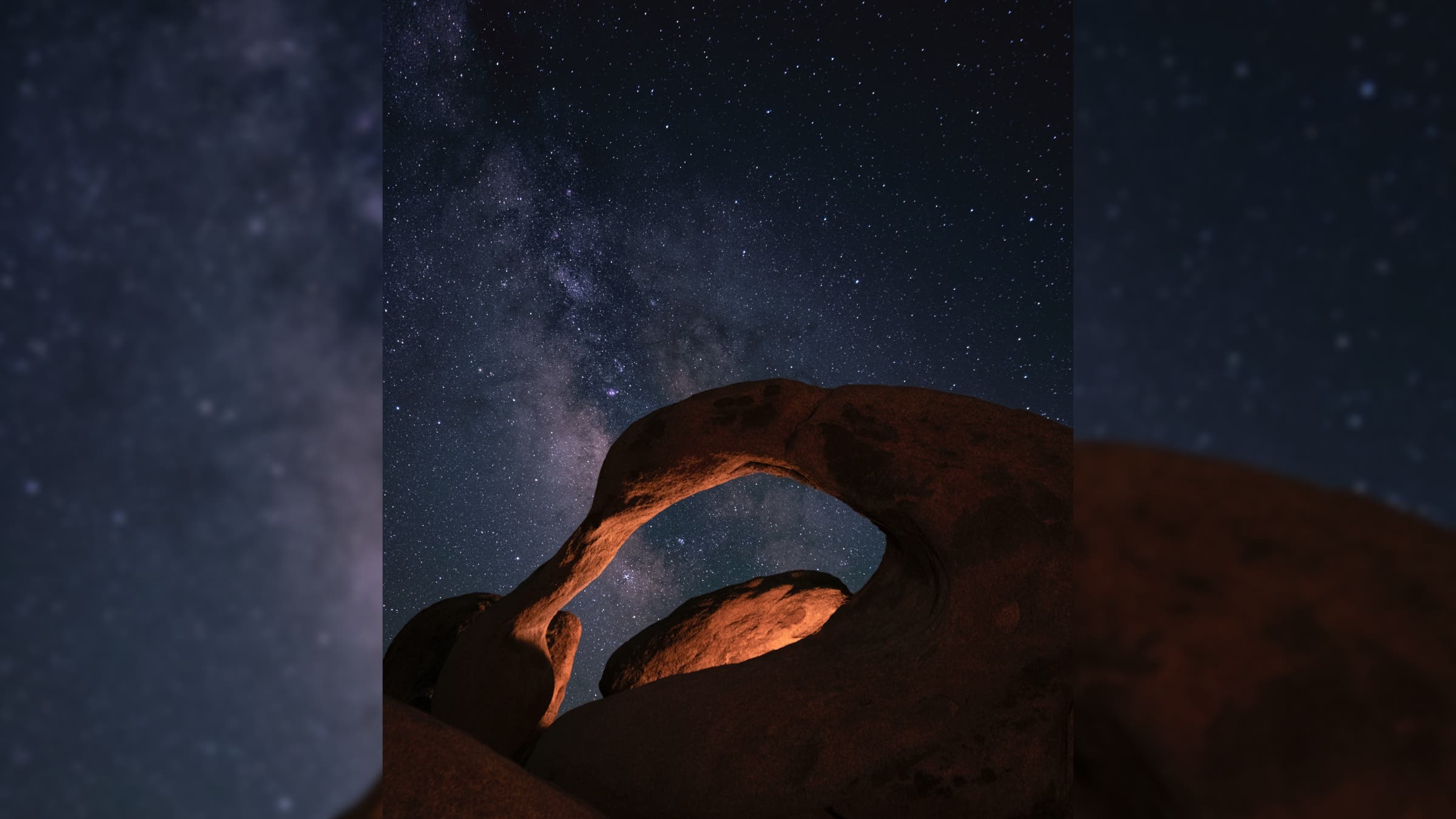
My career followed a similar path. After witnessing the cosmic magic in Morocco in 2010, I joined an astronomy class back on campus and learned about many wonders, including the aurora borealis. I was fascinated by the spectacle’s origin—the lights we see are sparked by charged particles from the sun—and I knew I had to witness it firsthand. But I didn’t catch it until nearly a decade later, when I decided to leave my nine-to-five communications job to become a travel writer and photographer.
In December 2019, I talked my mom into an Iceland aurora hunt. I photographed the sky swirls and fell in love with the result, then came home and pitched articles to help other astronomy enthusiasts witness this kaleidoscopic phenomenon firsthand.
ADVERTISEMENT
I’ve since chased those lime-colored swirls all over the world, from sheep farms in Greenland and igloos in Alaska to frozen ice-fishing lakes in Canada’s Yukon territory. I’ve even caught them over Lake Erie from my home in Cleveland, Ohio.
The latter was part of a global show that bolstered the dark-sky movement. In May and October 2024, the sun’s roughly 11-year peak in activity brought bright auroras far south, to places like Florida, Texas, and the Bahamas.
This widespread spectacle, and the social media buzz surrounding it, piqued even more astrotourism interest. Google searches for the term “northern lights” reached an all-time high in May 2024, and then spiked again when the aurora reappeared in low latitudes that October. Citizen science platform Aurorasaurus, which invites the public to share sightings for space-weather research, reported unprecedented user activity with thousands of lights reports following these events, too.
RELATED: The Ultimate Guide to Aurora Borealis Hunting
The buzzed-about total solar eclipse over North America in 2024 further cemented astrotourism’s popularity while proving its potential for good. Instead of just watching the moon slide between Earth and the sun, nearly 36,000 spectators logged observations for NASA-led citizen science projects, such as recording air temperatures to help researchers understand how the event affects our atmosphere.
ADVERTISEMENT
One of these NASA-backed initiatives, Eclipse Soundscapes, invited space enthusiasts to capture and submit day-of audio to help scientists analyze how animals, particularly crickets, respond to the marvel’s eerie minutes of false dusk. This project symbolizes my favorite part of the astrotourism trend: it’s a portal to the nocturnal world’s wonders.
The night brims with awe-striking phenomena—not just stars and auroras but glowing mushrooms, sparkly plankton, bustling night markets, and shimmery fireflies. In fact, nearly three-quarters of mammals are most active at night, as are many insects. Trip offerings now abound to help travelers admire this magic for themselves, and this presents both a challenge and an opportunity. Nocturnal tourism done poorly, with bright spotlights that blind animals, off-trail moonlit ambles that destroy foliage, or unnecessary hotel illumination, can decimate local ecosystems.
“Lights, or even lasers, can be intrusive to the surrounding environment and the people who live there,” says Kenya-based astrotourism consultant Samyukta Manikumar. “I could also see a situation, because it’s happened with daytime tourism, where [guides] take cultural sky knowledge and use it in a commodified and disrespectful way.”
ADVERTISEMENT
Like Manikumar, I’ve experienced some of these negatives myself. On a night safari in Botswana, for example, my heart broke as guides used mega-watt flashlights to show us hyenas, lions, and bush babies. This illumination can temporarily blind the animals, leaving them more vulnerable while disrupting their natural habits.
Yet through my nocturnal tourism reporting, I’ve also witnessed tour operators experimenting with new, animal-friendly technologies. At Usangu Expedition Camp in Tanzania, for example, guides have replaced bright spotlights with thermal cameras so guests can observe critters with minimal disturbance. On one particularly special night, we used this technology to watch a teenage leopard—contrasted from its forest background via heat mapping—stalk its prey and approach our vehicle out of curiosity.
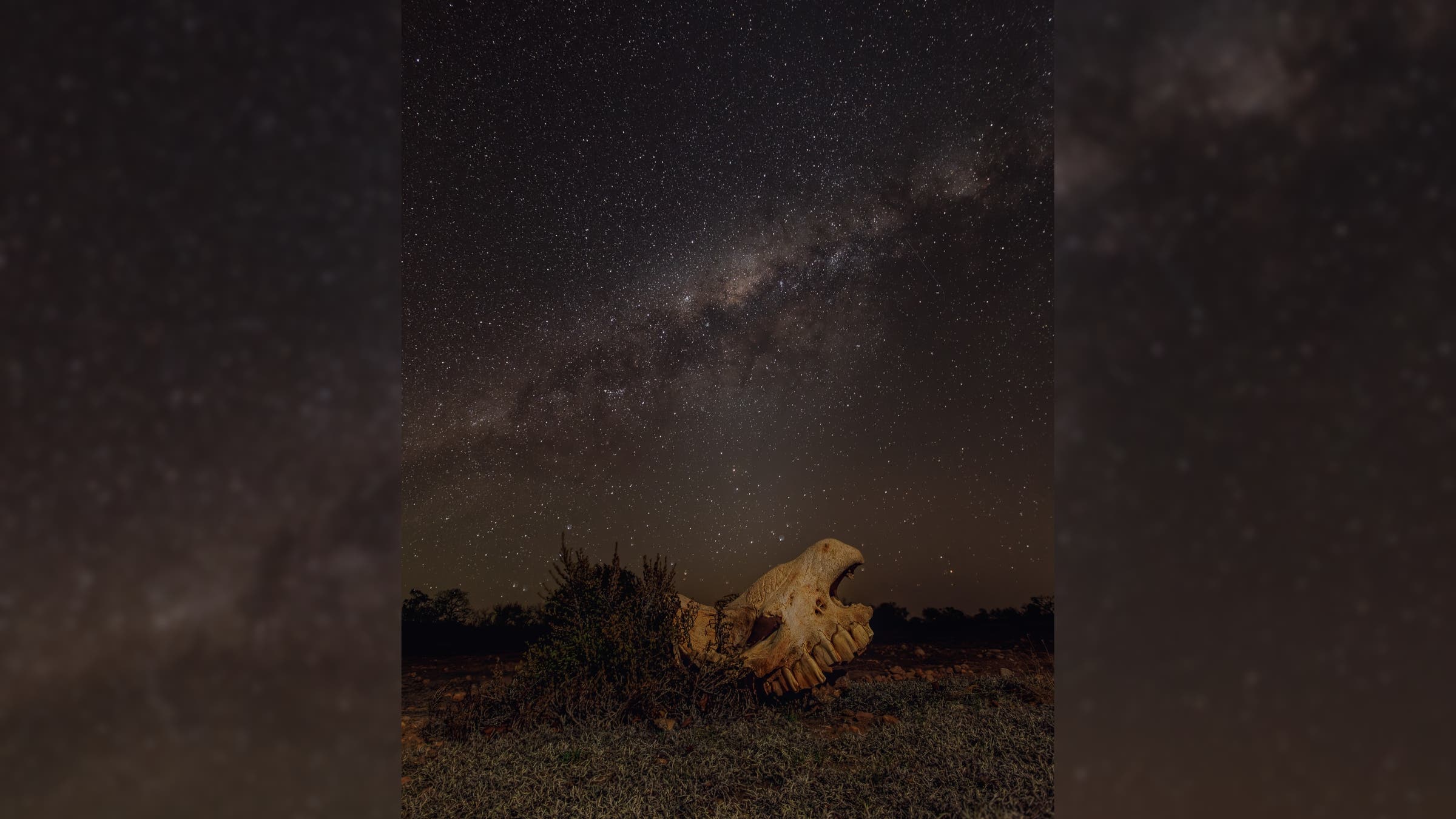
In late 2024, I turned my night-travel knowledge into a book for National Geographic: 100 Nights of a Lifetime: The World’s Ultimate Adventures After Dark. During the research phase, I uncovered numerous instances where nocturnal outings can drive positive change.
In the Himalayas of Ladakh, India, a group of rural villagers runs a homestay-meets-stargazing package known as Astrostays. Space enthusiasts come here for the exceptionally dark and high-altitude skies, which range from 11,000 to 14,000 feet in elevation. In turn, guided sky-watching supports villagers’ sustainable livelihoods. Since its 2018 launch, Astrostays has funded a community greenhouse and solar water heaters, while giving sky guides, predominantly women, increased economic opportunities.
For wildlife-rich areas, a night tourism presence can also help prevent poaching. In Isla Cañas, Panamá, a community-based sea turtle initiative has turned a biologically critical stretch of shoreline into a tourism-supported conservation project. This area is one of just a few places on the planet to experience the arribada, when thousands of Kemp’s and olive ridley turtles simultaneously inch ashore to nest. Community eco-police patrol the waterline during this time to monitor the reptiles and watch for illegal activity. Guides also lead tourists to observe the reptiles, which provides an anti-poaching presence and shows the local people that turtles are more valuable alive.
ADVERTISEMENT
And enchanting night outings can do wonders for humans, too. People who feel strongly connected to the night sky report feeling happier and have better mental health, according to a 2024 study in the Journal of Environmental Psychology. That’s one reason the International Astronomical Union’s Office of Astronomy for Development works to bring stargazing’s therapeutic effects, such as awe, calmness, and grounding, to vulnerable groups like refugees. The greatest awe comes from admiring the cosmos from a dark-sky location, but I’ve found that even watching a handful of stars in my backyard each night can elicit peace, mindfulness, and a better life perspective.
Enjoying the sky’s wonder together with others, like my first night of stargazing in Morocco, provides even more enrichment. “There’s nothing like being out under a canopy of stars to feel that [connection],” says Hartley. “You feel connected to something much bigger than yourself.”
Never have I felt this more than in Great Sand Dunes National Park, while photographing the nightscape for a new book project in 2025. There on the sand, it felt like a full-circle moment; I fell in love with the sky in the starlit Sahara. Now, I’ve made it my career. I ran around for hours snapping night-sky images, and this time, when a colorful meteor streaked through the sky, I wasn’t the only one shrieking. The entire park erupted in cheers and hollers—a reminder that no matter our background, we can all find connection through the cosmos.
This article is from the Spring 2026 issue of Outside magazine. To receive the print magazine, become an Outside+ member here.
