Published February 19, 2026 02:55PM
How Gen Z Athletes Are Changing the Olympics Forever
Today’s athletes aren’t just chasing medals. They’re prioritizing mental health, training with AI, challenging gender norms, and broadcasting it all from inside the Village.
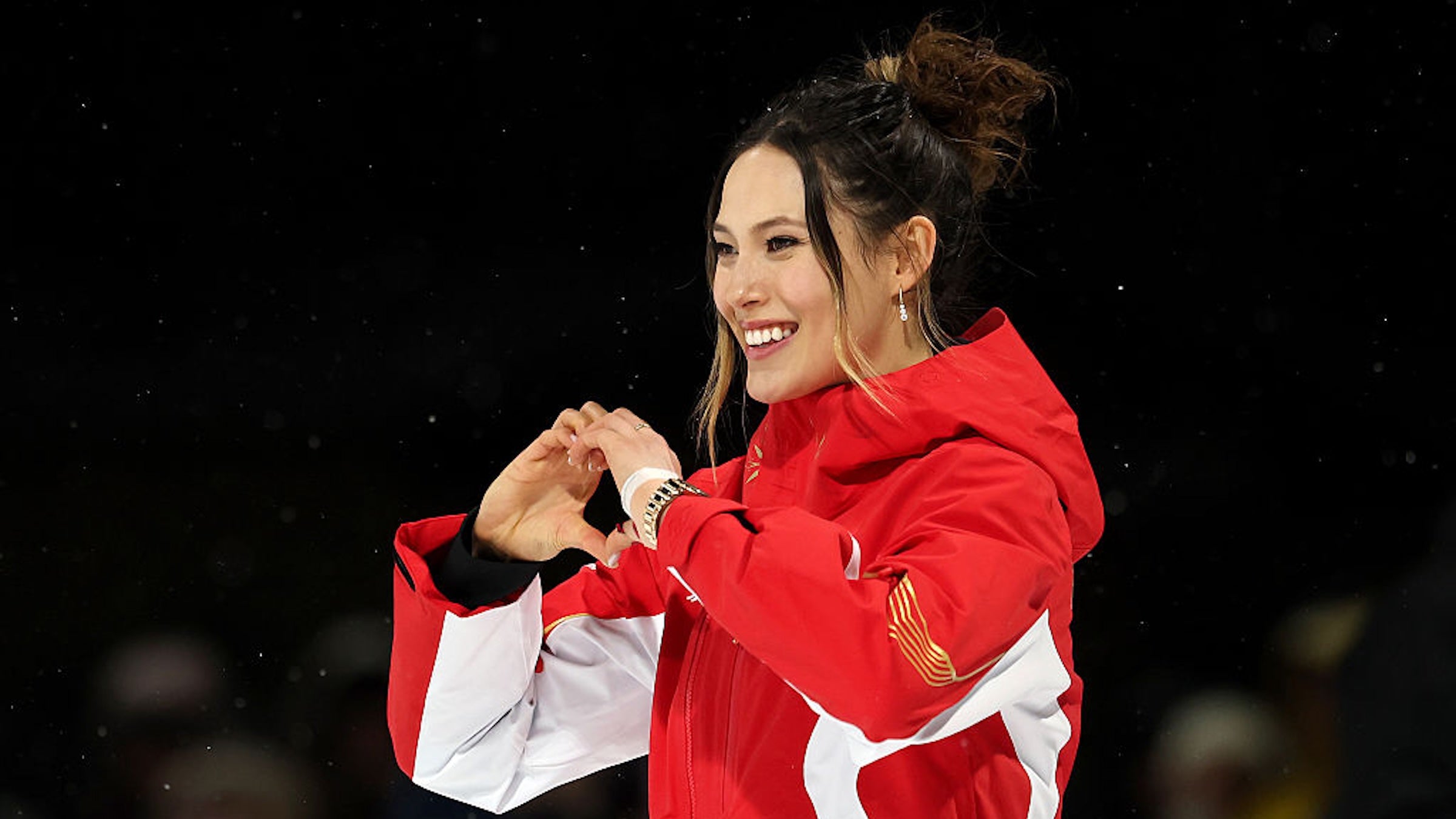
Silver medalist Eileen Gu of Team People's Republic of China celebrates prior to the medal ceremony for the Women's Freeski Big Air (Photo: Cameron Spencer / Getty Images)
As a kid, I remember sneaking downstairs to the living room to catch glimpses of the Nagano 1998 Winter Olympics on my parents’ TV. Everything felt so distant; so lofty; so polished. Tara Lipinski’s bangs were just as enigmatic to me as the new Olympic sport that year: curling.
Fast forward to the 2026 Winter Olympics, and I’m now getting my updates on the Games via Instagram as I’m out running errands or binge scrolling in bed. This year I watched Emilea Zingas take the ice with her boyfriend and partner Vadym Kolesnik, and, not only did I know exactly what Zingas was whispering to Kolesnik before skating out (“You got this”), but I knew what brand of mascara she was wearing. That’s because Zingas, like many Gen Z athletes competing in Milan, has been posting reels and stories that pull back the curtain on Olympic life.
But Gen Z athletes have been doing more than just bringing the Olympics into the digital realm—with countless Olympic Village food reviews and room reveals—they’ve been changing the Games themselves. The Olympics are more culturally relevant than ever before, and we have Gen Z Olympians to thank for that. From challenging gender stereotypes and incorporating AI into training to reframing mental health into a competitive advantage, these are the many ways Gen Z is redefining the Olympics.
Focusing on Mental Health
Everything changed when a 24-year-old Simone Biles withdrew from the finals during the Tokyo 2020 Olympics, mentioning her mental health struggles. Now, putting mental health first has (thankfully!) become the standard. Gen Z athletes are quick to speak out about what they do to protect their headspace, from therapy sessions to meditation to journaling. Amber Glenn, the 26-year-old figure skater on Team USA, added neurofeedback sessions to her regular training schedule, and Chloe Kim, Team USA’s 25-year-old snowboarder, credits her therapist as crucial to her success. For others, mental health has become the new competitive advantage. “Preparing for the Milan Olympics requires more than physical strength,” German bobsledder Johannes “Hansi” Lochner told Outside. “It demands mental precision, emotional stability, and absolute focus. At the Olympic level, the difference between silver and gold is often not physical ability, but mindset.”
ADVERTISEMENT
Being Wholesome
In years past, the Olympic Village has veered toward the um, hedonistic side, but this year, Gen Z showed up with everything from knitting needles to ukuleles to occupy their time. Team USA cross-country skier Ben Ogden, 26, has been posting his knitted creations on his Instagram, and other athletes have been doing the same—at least the ones who aren’t tending to their adopted plants or starting jam sessions.
Defying Gender Stereotypes
This generation couldn’t care less about what their boomer aunt thinks of how they compete. No more trying to appear to be dainty or toughing it out on the slopes when what you really need is a good cry. Gender stereotypes are a thing of the past in modern Olympics, and it’s now about athleticism instead of whether or not it’s a cis male or cis female on the podium. “There is a saying in ice dance that the man is the frame, and the woman is the painting,” Emilea Zingas, 23, Team USA ice dancer, who finished fifth in the Winter Olympics alongside Vadym Kolesnik, told Outside. “I want to be both! I think that the attack and strength I bring to the ice sets us apart, and I want to continue to grow stronger and faster.”
Integrating AI
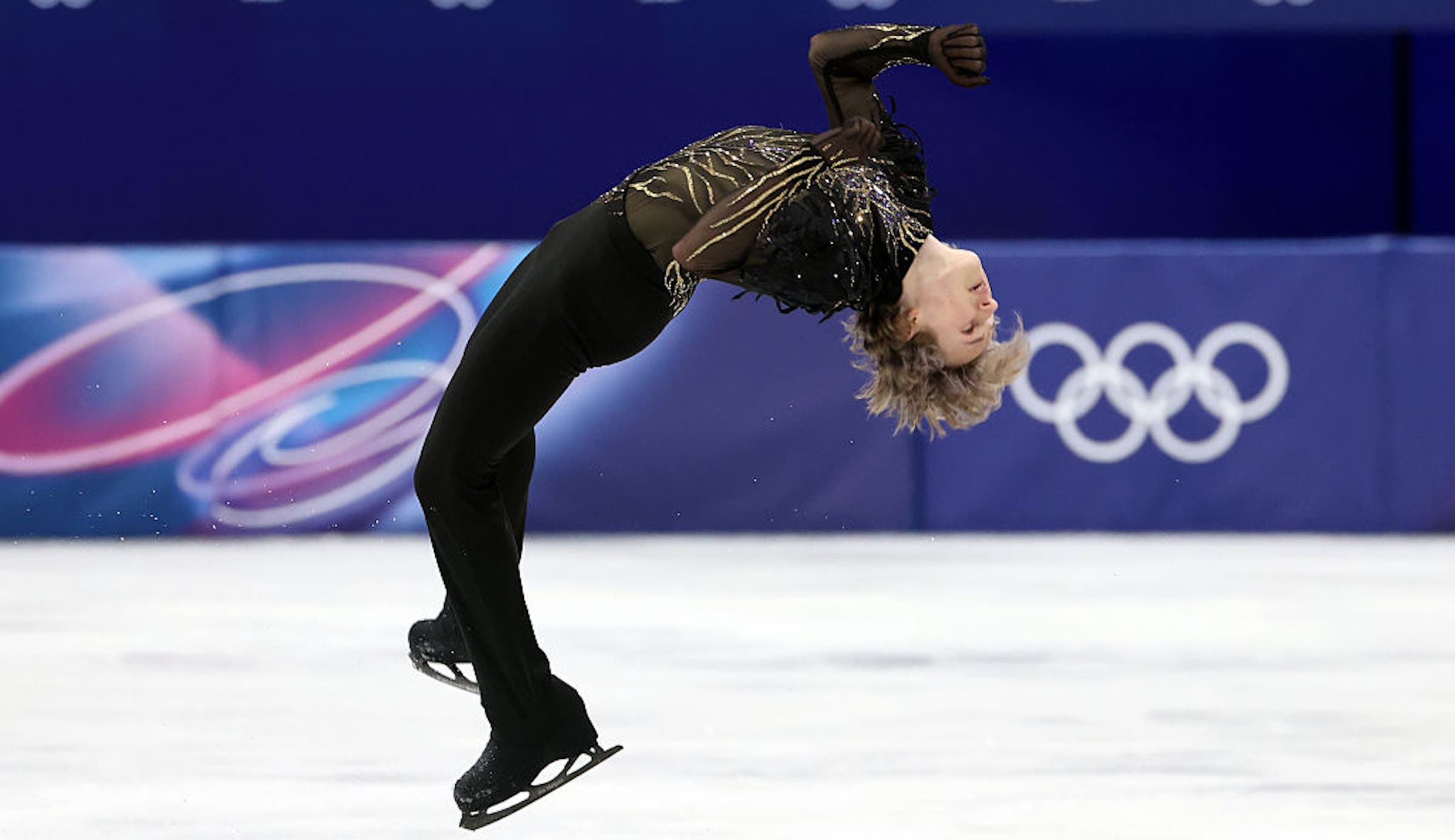
Even before the International Olympic Committee (IOC) created its own AI Agenda, many Gen Z athletes were already training with AI coaches and using the technology to help improve their times and performance. Now Team USA snowboarders, figure skaters, and even curlers have incorporated AI into their training. Ilia Malinin (a.k.a., the Quad God) uses OOFSkate to help flag micro-imbalances in his Quadruple Lutz, while Georgian Pairs skater Anastasia Metelkina now turns to ChatGPT to nail down hair and make-up looks to match her music and on-ice outfit.
ADVERTISEMENT
Promoting Social Justice
The Olympics have always been political to some degree, like when the U.S. boycotted the 1980 Moscow Olympics or when U.S. runners Tommie Smith and John Carlos were sent home from the 1968 Mexico City Olympics for raising a gloved fist during the National Anthem. This year, more athletes than ever are risking their medals for the chance to speak out on geopolitical issues. Team USA freestyle skier Hunter Hess, 27, made headlines about his “mixed emotions” for representing the United States under its current administration, and Ukrainian skeleton racer Vladyslav Heraskevych was disqualified for wearing a helmet featuring images of Ukrainian athletes killed during Russia’s invasion.“For me, the sacrifice of the people depicted on the helmet means more than any medal ever could,” Heraskevych wrote on his Instagram, “because they gave the most precious thing they had. And plain, simple respect toward them is exactly what I want to give.”
Owning Their Own Narratives
No one is going to tell a Gen Zer who they are. Cover stories and documentaries were once the only way non-Olympians could get to know these elite athletes, but now, the gatekeepers are gone and it’s the athletes themselves telling the world their stories through personal Instagram reels and TikTok posts. Team USA’s Sophia Kirby, 24, competing in Women’s Double Luge, turned her IG into a dating miniseries, while the Team USA Hydro Flask Snowboarding Team has been setting themselves up for careers in entertainment over on their team Instagram.
Not Taking Shit from Anyone
One of the most Gen Z moments of the Olympics happened during a press conference, when a reporter asked American-born Team China freestyle skier Eileen Gu, 22, whether she considered her Olympic medals “two silvers gained or two golds lost.” Gu responded with a self-assured laugh and the most iconic response: “I’m the most decorated female freeskier in history. I think that’s an answer in and of itself,” she said. “How do I say this? Winning a medal at the Olympics is a life-changing experience for every athlete. Doing it five times is exponentially harder, because every medal is equally hard for me, but everybody else’s expectations rise, right? The two medals lost situation, to be quite frank with you, I think, is kind of a ridiculous perspective to take.” Mic drop.
