Published August 25, 2015 12:00AM
Graham Agassiz Is Reborn in ‘Ashes to Agassiz’
After a terrifying brush with death two years ago forced the Canadian free-rider to confront his inner demons, a new film seeks to chronicle his spiritual journey
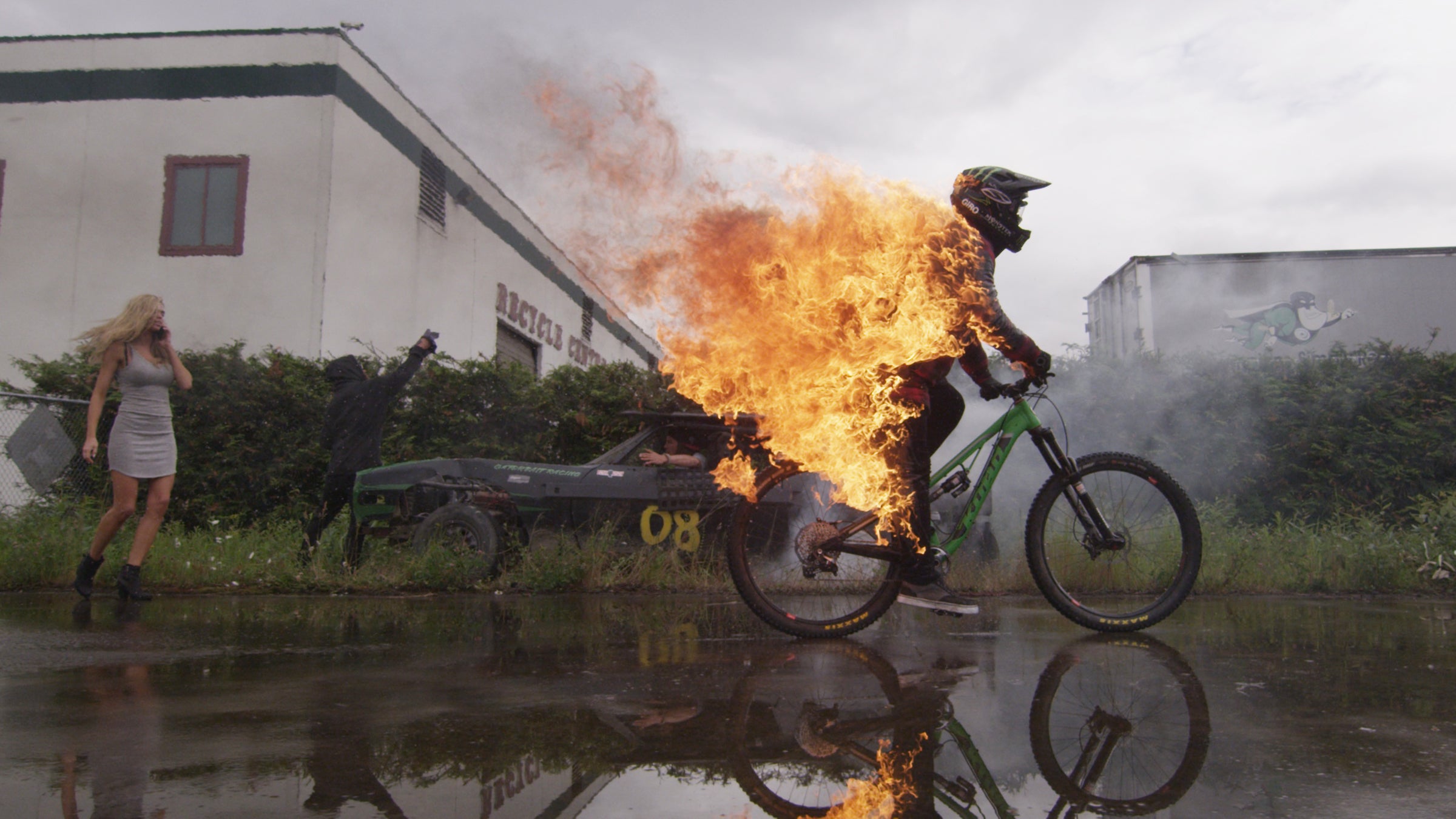
"I feel like I was given a second chance," Graham Agassiz says, "which just added fuel to the already burning blaze inside of me."
It was a routine ride for mountain biker Graham Agassiz. He’d done it 100 times. It was 2013, in British Columbia, when the then 23-year-old pro free-rider charged down a steep, scrubby single track that would change the trajectory of his career.
He clipped a sagebrush plant and suddenly tomahawked off his bike. He landed hard on the ground, face-first, rolled over and remained still, struggling to catch his breath. His lung had collapsed, and his neck was broken.
The freak accident could have been a career ender—or worse. Instead it marked the start of a battle in which Agassiz would need to do more than fix his body to return to the top of the sport. He’d have to reconsider his lifestyle. The spirit of his four-month recovery is depicted in Ashes to Agassiz, a narrative-documentary concept film from Sherpas Cinema that launched today on iTunes. With riveting, surrealist visuals, the film aims to convey a total reconstruction of self. “I feel like I was given a second chance,” Agassiz said in an email, “which just added fuel to the already burning blaze inside of me.”
Agassiz grew up in Kamloops, British Columbia, considered the birthplace of free-ride mountain biking. He follows an incredible lineage of mountain bikers the city produced and has been hailed as the latest great rider from the area. He started racing BMX at 7 years old, mountain biking at 14, and went pro at 18. Two years ago, just months before his injury, Agassiz wowed his fellow competitors at the Red Bull Rampage. By all accounts, Agassiz is an amazing athlete, says Eric Crosland, film director and a co-founder of Sherpas Cinema. “He's a style master.”
But skyrocketing to stardom in extreme sports can lead to extreme lifestyle choices. Before the broken neck, Agassiz had fallen into a world of partying and drinking.* Coming back wouldn’t just mean healing physically, it would mean coming to terms with the temptations and distractions—demons, as they're called them in the film—that haunted the rider during the early years of his career.
ADVERTISEMENT
“It’s what a lot of young riders in action sports struggle with,” Crosland says. “There is this sort of rock star status that comes along with these young pro athletes. It’s not a conventional sports system,” like in pro football or baseball, for example. “There’s such a huge lifestyle component.”
That kind of narrative is what drew the interest of Sherpas, Crosland says. It’s deeper than the “athlete recovers from injury” narrative. “I want to grow the culture of the sport, so I found it very natural to explore the things based around the sport that’s not just the riding.”