Published July 12, 2022 12:05PM
In HBO’s ‘Edge of the Earth,’ the Best Athletes Attempt the Craziest Feats in the Most Remote Places
The four-part Teton Gravity Research series, premiering this week, captures incredible footage of terrifying expeditions, but it succeeds because of the compelling human stories at its heart
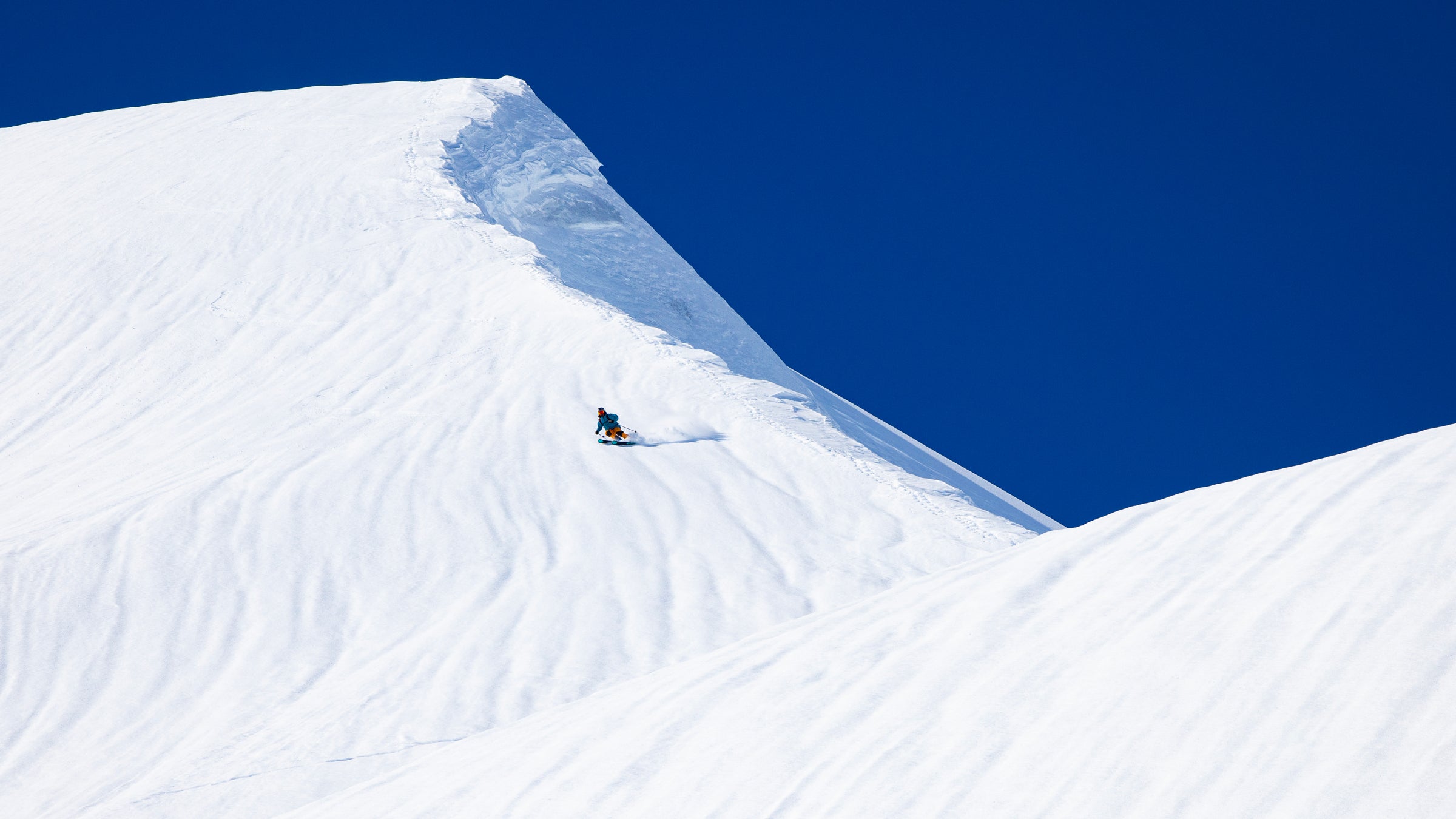
Griffin Post skiing a line in Alaska's Glacier Bay National Park (Photo: Courtesy of Teton Gravity Research)
I don’t envy adventure filmmakers in 2022, tasked with the nearly impossible job of delivering a story that their audience hasn’t seen before. Back in the day, when Warren Miller first started releasing shred flicks, all a filmmaker had to do was point a camera at someone skiing a steep face, overlay the footage with some peppy music, and voilà, the audience was impressed. Now you can’t open Instagram without seeing a mountain biker riding across a slackline 2,000 feet above the ground or a climber free soloing a glass skyscraper. How many clips of gnarly Alaskan ski descents have you seen this year alone? In 2018, the entire world watched a pro climber achieve the pinnacle of his sport on camera in an Oscar-winning film. How do you follow that if you want to make a climbing movie? It’s become increasingly hard to stand out, as adventure films continue to infiltrate mainstream media and audiences.
Nobody is more aware of this challenge than brothers Todd and Steve Jones, the founders and co-directors of Teton Gravity Research (TGR), which has been on the forefront of adventure media for nearly 30 years. TGR has made iconic ski films full of big lines, and visually groundbreaking mountain biking features. They’ve also produced nuanced, narrative documentaries about legends, like surfer Andy Irons and skier Lindsey Vonn. They’ve ridden the evolutionary wave of adventure media from scrappy short films for hardcore fans to large productions intended for mainstream audiences. This week they’re releasing a four-part docuseries on HBO and HBO Max called Edge of the Earth (the first episode premieres tonight, July 12, at 9 P.M. Eastern). It seems to speak directly to the storytelling conundrum modern adventurers and filmmakers are facing in creating something people will pay attention to—the Jones brothers found the most elite athletes in their respective sports and followed them to the furthest corners of the world to accomplish feats that no person has attempted before. In the end, though, the superhuman feats aren’t what made the series worth watching.
In the first hour-long episode, snowboarding legend Jeremy Jones leads a team to Alaska to grab the first descent of Mount Bertha in Glacier Bay National Park. In the second installment, world-class expedition kayakers Ben Stookesberry, Nouria Newman, and Erik Boomer try to run the ridiculously remote Chalupas River through the heart of Ecuador. Next, all-time-great rock climber Emily Harrington and her husband, alpinist Adrian Ballinger, attempt the first individual free ascent of a vertical granite wall in Kyrgyzstan. (A group of four completed the first free ascent of the wall, Pik Slesova’s Northwest Face, in 2019.) And in the final film, big wave surfers Ian Walsh and Grant Baker track down massive swells on the west coast of South Africa. The locations are nearly impossible to get to and each adventure is mind bendingly difficult.
In the first hour-long episode, snowboarding legend Jeremy Jones leads a team to Alaska to grab the first descent of Mount Bertha in Glacier Bay National Park. In the second installment, world-class expedition kayakers Ben Stookesberry, Nouria Newman, and Erik Boomer try to run the ridiculously remote Chalupas River through the heart of Ecuador. Next, all-time-great rock climber Emily Harrington and her husband, alpinist Adrian Ballinger, attempt the first individual free ascent of a vertical granite wall in Kyrgyzstan. (A group of four completed the first free ascent of the wall, Pik Slesova’s Northwest Face, in 2019.) And in the final film, big wave surfers Ian Walsh and Grant Baker track down massive swells on the west coast of South Africa. The locations are nearly impossible to get to and each adventure is mind bendingly difficult.
“It’s probably one of the harder projects I’ve ever worked on,” says Todd. “All of the missions were first attempts, so we were really pushing the boundaries. We were deep off the grid, with very little beta on these wild, raw places. It took all of the skills we had developed over the last 28 years to pull this off.”
ADVERTISEMENT
I believe it. Watching screeners of the first three installments, I lost count of the number of times I wondered how the hell the camera crew captured such incredible footage. In the first episode, you watch Jones, former U.S. Olympic snowboarder Elena Hight, and The North Face-sponsored big mountain skier Griffin Post take a boat deep into Glacier Bay National Park, only to hike 15 miles to basecamp through a blizzard while toting their gear on sleds. And that’s just the approach. After the snowstorm lifts, they sit at basecamp and watch 200 separate avalanches fall over the course of 12 hours on the very mountain they were hoping to ski, a sketchy line with 7,000 vertical feet of no-fall-zone turns. “The main character of this expedition was Mother Nature,” says Jones. “We were forced to deal with one historical weather event after another. The trip was my most ambitious to date due to the remoteness and scale of the objective.“
The athletic feats are almost a sideshow in this series. The films are at their most compelling when they focus on the human element of the expeditions.
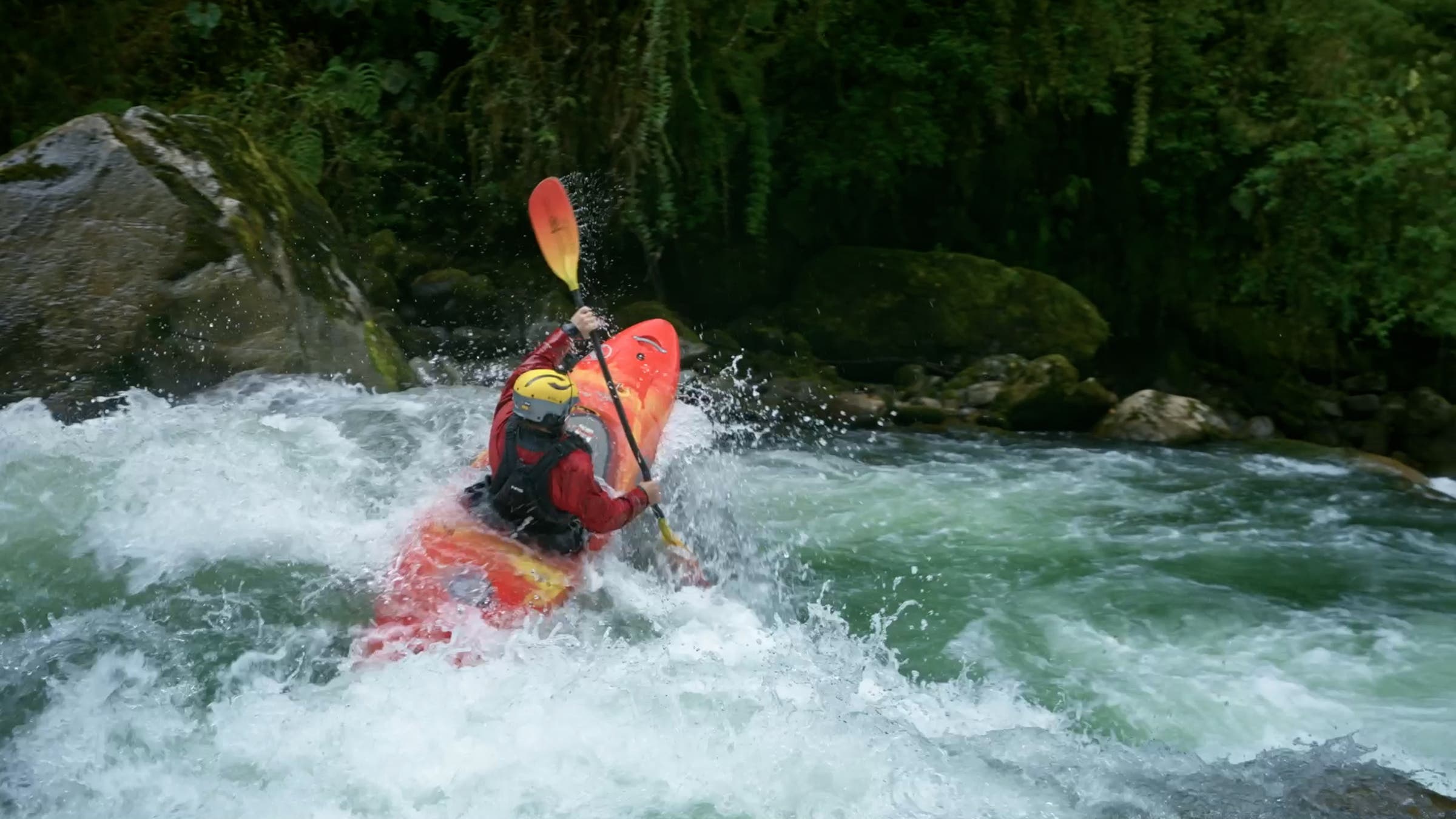
For my money, Stookesberry, Newman, and Boomer’s river descent in the second installment is the standout. The expedition itself is nuts: the three paddlers are attempting the first descent of the Chalupas River, which drops 10,000 vertical feet in 50 miles, creating one of the steepest, most technical whitewater rivers in the world. And it’s set inside a national park so remote, it doesn’t even have a ranger on staff. I can tell you that nothing goes well without giving too much away. The athletes have to schlep loaded kayaks through the dense jungle on multi-day portages. There are machete accidents and jungle rot. At one point, it takes them a full day to move a mile down river. As their situation gets more intense, watching how each of them wrestles with the ratio of risk and reward, and discovering whether they’ll pull through as a team, makes it more than a good adventure film. It makes it a good film, period.
And therein lies the real secret of this series. Yes, the athletes are the best in the world at their respective sports, and the expeditions they’ve chosen are almost stupid in their difficulty. And yes, the cinematography is mind-blowing. But the athletic feats are almost a sideshow in this series. The films are at their most compelling when they focus on the human element of the expeditions. What happens when you and your partners disagree on the amount of risk ahead of you? What happens when you’re half way through a 43-mile donkey-supported approach hike, nearing the big wall you’ve spent years planning to climb, and someone tests positive for COVID-19? As viewers, we might start one of these films because of the dramatic scenery and athletic accomplishments, but we’ll keep watching because of the people and their relationships on the screen.
ADVERTISEMENT
The Jones brothers understand this. “It’s an evolution of our documentary filmmaking,” Todd says. “Because we’re making these films for a mainstream audience, as opposed to a core action sports film audience, we have to tell the story in a more in-depth way, so you can suck a viewer in who knows nothing about these sports.” In 2022, athletic prowess and cool camera angles are a dime a dozen. TGR succeeds with Edge of the Earth because they’re able to mine the human aspect of these expeditions for storytelling gold.
07/25/2022 An earlier version of this story misstated that Emily Harrington was attempting the first free climb of Pik Slesova’s Northwest Face in Kyrgyzstan. In fact, the first free ascent of the wall was completed in 2019 by a group of four climbers. Harrington was attempting to be the first person to individually free each pitch on the route. Outside regrets the error.
Add Outside as a preferred source on GoogleAdd