Published March 3, 2026 03:10AM
How Chicago’s Premier Ice Carvers Make Frozen Art
At Nadeau’s Ice Sculptures, the oldest carving factory in America, a team of former archaeologists and butchers creates ephemeral art designed to be licked, touched, and eventually, lost.
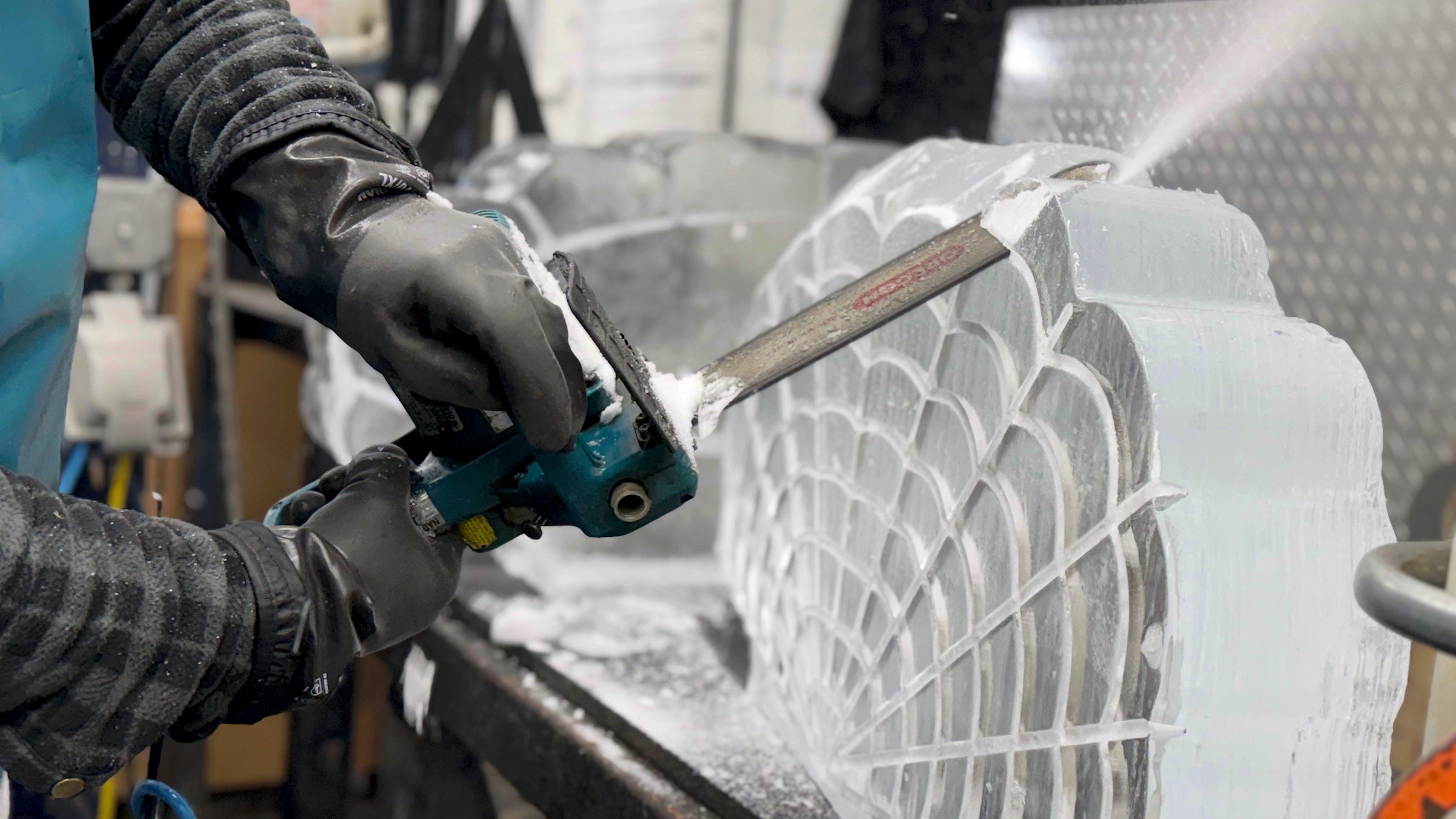
Max Barajas, the owner of Nadeau’s Ice Sculptures, carves a shell (Photo: Blair Braverman)
Wherever Max Barajas, the owner of Nadeau’s Ice Sculptures in Chicago, Illinois, takes his carvings, people lick them. It doesn’t matter what the sculptures are—20-foot logo walls, life-size train cars filled with Nutter Butters, blocks with money or merch or a four-foot octopus frozen inside, hookahs, plinko machines, a working air hockey table, a squirrel sipping a martini with a giant dick that streams alcohol. It doesn’t matter if the audiences are at a baseball game or a corporate retreat, Lollapalooza, a bar mitzvah, or a wedding, where they take more pictures of the sculpture than the bride. The people surround the ice. They stick out their tongues. They make handprints. They put their fingers on the sculptures for as long as they can, and then they touch their freezing hands to the back of their friends’ necks.
Ice sculptures are sensory play; they turn grown-ups into kids again. Max sees his work as delightfully retro, the kind of art that most people don’t know still exists, a throwback to the days when folks used to carve frozen blocks out of lakes with saws and store them in barns full of sawdust so they’d have ice through summer—or maybe the days when European chefs shaped centerpieces for banquets out of hard sugar, or the tallow left from rendering a cow.
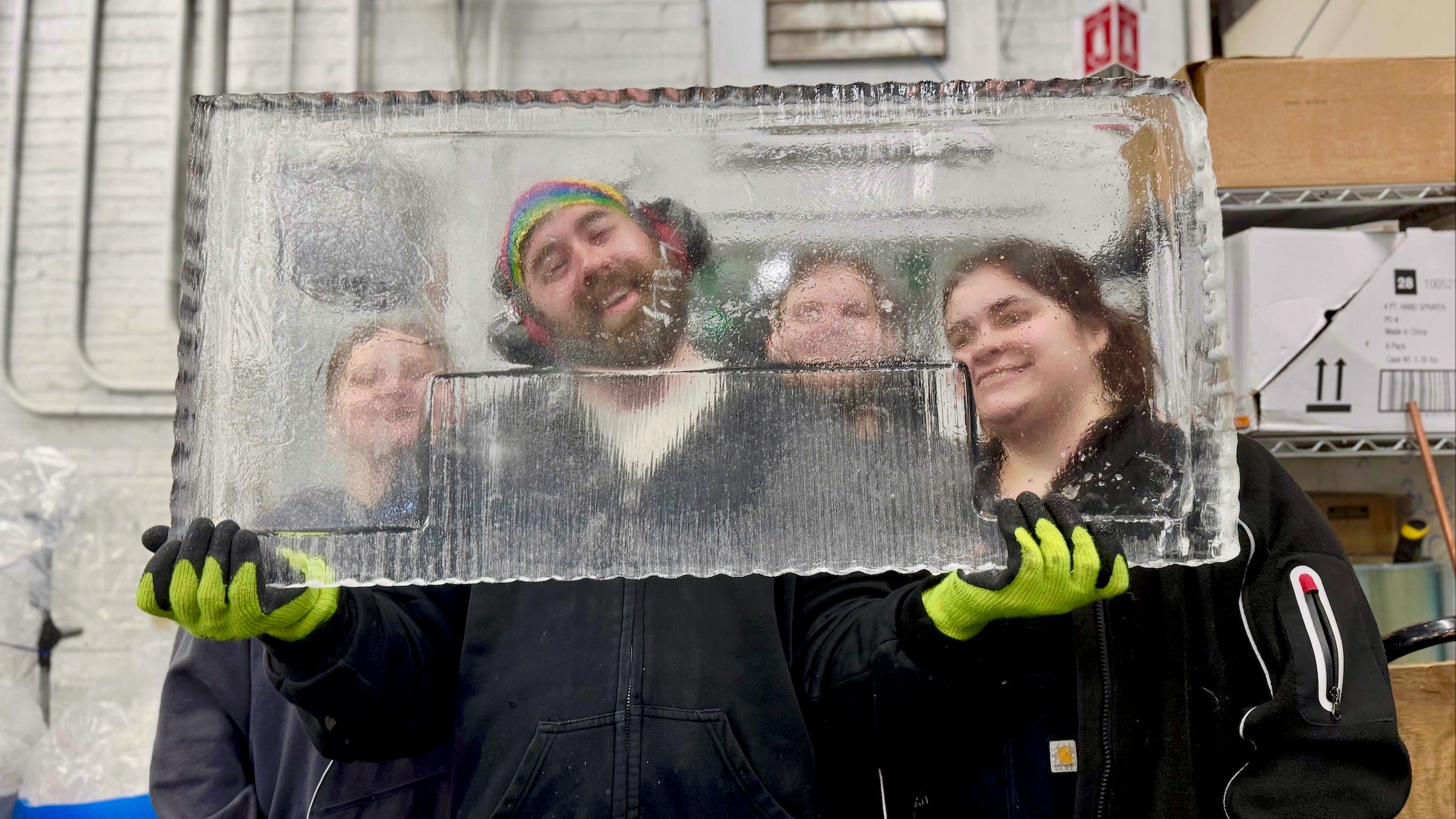
Like many sculptors of ice—which needs to be food safe—Max has a culinary background himself. He used to be a chef and a butcher. “I didn’t want to stay in an industry of death,” he tells me. Now he’s 39 years old, and still carving, but his medium sparkles in the light. When I meet him at Nadeau’s factory near O’Hare Airport, his busy season—the month around the holidays, when the company does a third of its annual business—has recently concluded, and the vibe is relaxed. The common room is lined with artwork and fake flowers (real flowers die, Max explains, when they’re frozen in ice); two little black dogs wag underfoot. A handful of cheerful staff in sweatshirts and snow pants swing by for pizza, then pass through a metal doorway into the freezer to work.
ADVERTISEMENT
The first step in carving is “cooking ice”, as it’s called in the biz. Nadeau’s employees grow and harvest around 50 large blocks a week, using a special machine that keeps water moving as it freezes from the bottom up. The movement keeps soluble minerals afloat until the end, making a perfectly transparent block with a “rind” on top from the mineral-rich dregs. Carvers can cut off the sandy rind after it’s frozen, or siphon out the last few gallons of water, which is “potable but gross,” before it has a chance to freeze. To show me, Max reaches a metal pick into a tank of clear water and scrapes a white line that seems to hover in the center of the tank. It turns out that the water’s half-frozen, but the ice is so clear that it’s impossible to tell where it starts or ends. The effect is uncanny. I squint at the floating line, trying to make my brain understand.
Max introduces me to the team’s production manager, Jordan, who has a great smile and a rainbow bandana in his long hair. Jordan used to be an archaeologist, doing salvage archaeology for construction projects in Austria and the Mediterranean. (Archaeology and ice carving, he says, have a surprising number of cross-applicable skills; both involve the “slow exhuming of material”.) He first came to Nadeau’s for some odd jobs, then hit it off with Max and the crew. “We accumulate our weirdos here because they’re all artists,” he tells me; other staff have backgrounds in theater set design, miniature paintings, and blowing glass.
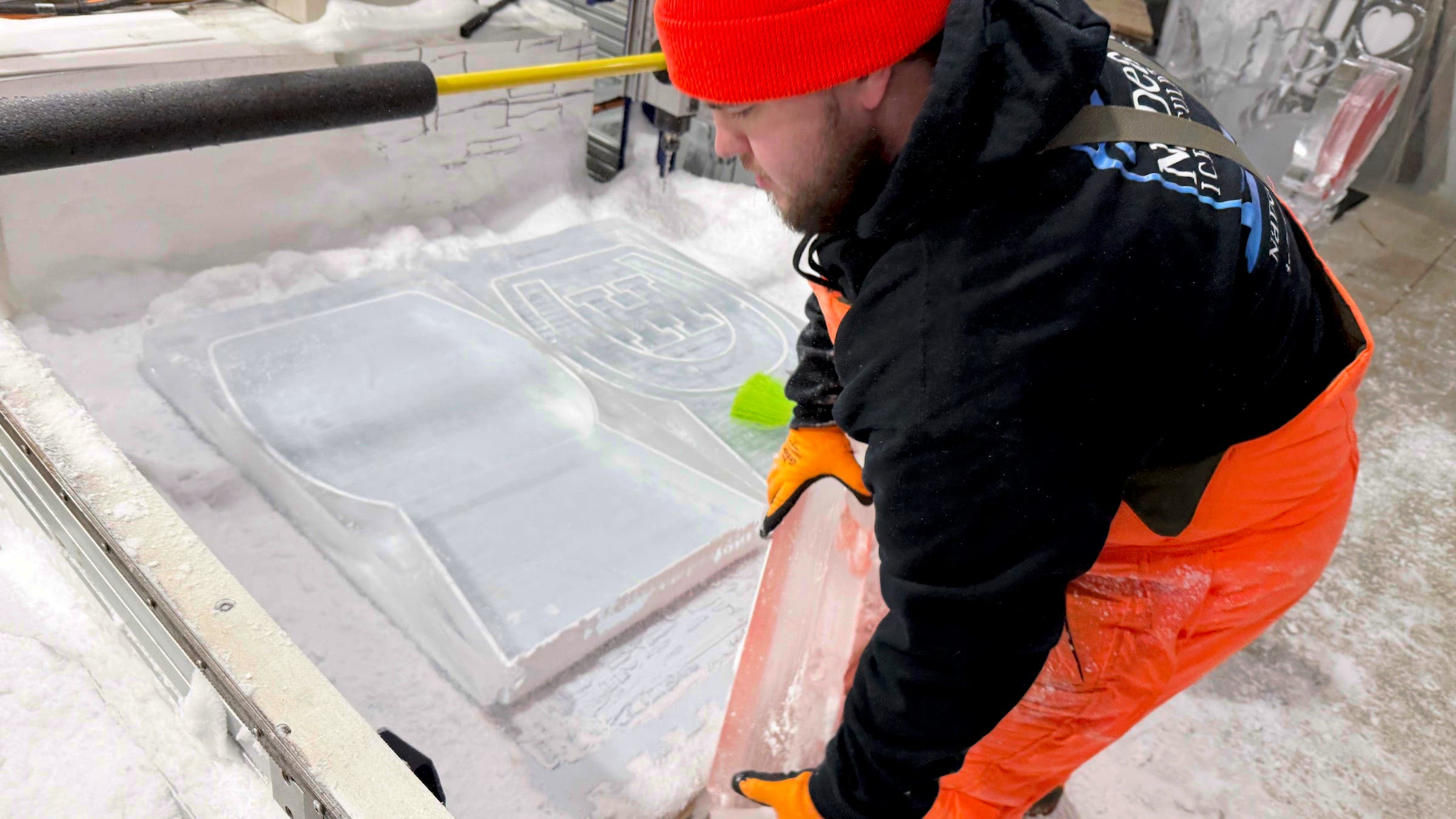
Jordan leads me into the multi-room freezer, which glitters with stacked ice and hums with the movement of Computer Numerical Control (CNC) machines. The machines engrave writing and logos; the staff carves bigger shapes with chainsaws, chisels, and other handheld tools. “Over here,” Jordan says, “we have some of our bereavement,” leading me to a collection of ice blocks with flowers frozen inside. They’ll be displayed, mostly, at funerals. I see the resonance there, the ephemerality of the art mirroring the fleeting beauty of a human life, although the block with a skull inside seems a tad macabre. “Oh no,” Jordan reassures me. “That’s not a bereavement piece. It’s just leftover from Halloween.”
ADVERTISEMENT
Past the freezer, we enter what Max calls the “great room”, where ice is carved by hand. It resembles a warehouse, but wood toboggans hang overhead, forming a series of paths for the shop cat, Mittens, who moved into the factory one day of her own accord. (“She’s polydactyl,” four different staff tell me separately.) Today Max is making two large clamshells, which will hold seafood at a party. He carves the grooves with a chainsaw, careful strokes at different angles, sending out sprays of white as Mittens preens overhead. The shells, as they emerge from the block, look satin, almost liquid. They’ll draw a crowd, people oohing and aahing, touching them with their fingers, squinting up close at the ice. For a brief time, the carvings will be the center of attention. They’ll be beautiful. And then they won’t exist at all.
