Published August 1, 2017 12:00AM
If you buy through our links, we may earn an affiliate commission. This supports our mission to get more people active and outside.Learn about Outside Online's affiliate link policy
How to Make a Great Camp Meal
Pro chef and cookbook author Nikki Fotheringham on the number one recipe you should have in your arsenal, plus other camp tips
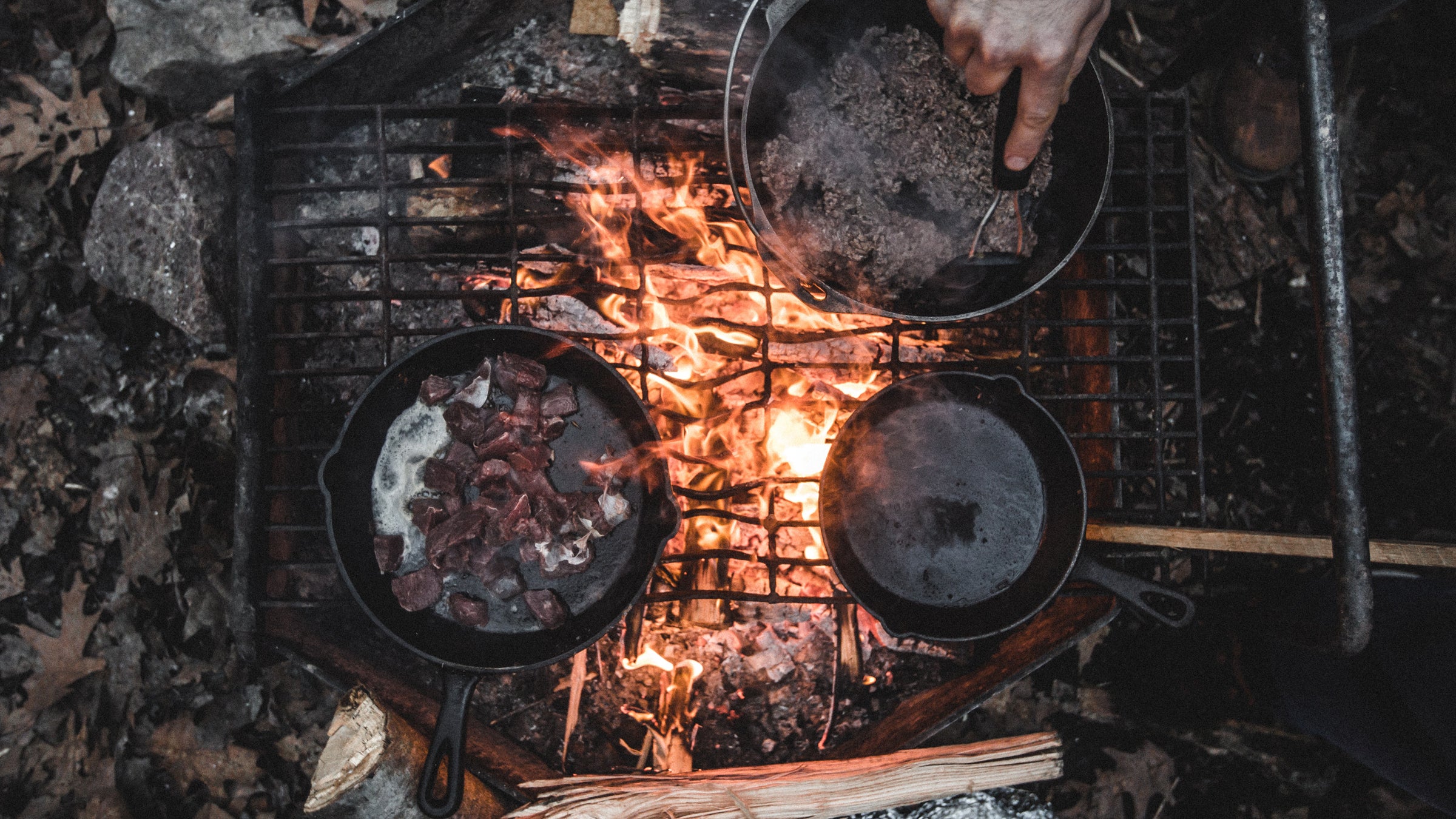
Focus on the planning, the packing, and the storing.
Nikki Fotheringham, editor of Green Moxie and author of The Flaming Marshmallow’s Guide to Campfire Cooking, wants to help campers make flavorful foods easily, many miles into the backcountry. Here’s what she suggests.
#1. Divide Your Fire
To get a fire going quickly, Fotheringham suggests using birch bark, because it’s coated in a highly flammable oil. Toss the newspaper used for wrapping ingredients into the fire alongside the birch bark to strengthen it.
Fotheringham suggests dividing the fire pit into two sections. Designate one side only for cooking. This allows you to regulate the fire’s temperature and ensures you won’t run out of coals before your food is fully cooked. The fire won’t lose its heat because you can scrape more coals to the cooking side if necessary, and it won’t get too hot because you can easily push excess coals away from the food.
#2. Create Your Menu
Whole foods like meat and vegetables won’t spoil if you know how to plan your meals and properly store your food. “You can eat as well as or better than at home,” says Fotheringham of cooking while camping. With planning and the right ingredients, backcountry adventurers can make their own bread, pizza, and much more.
- Plan your meals. At a minimum, plan what you’ll cook every night for dinner. If you can plan two to three meals a day, that’s even better. “Plan dinners so you have leftovers for lunch,” says Fotheringham. “You may not always be able to stop for that meal.”
- Properly store your food. “Cheese can last for three days if you freeze it first,” says Fotheringham. Wrap frozen cheese and meat separately in newspaper, pack it in the middle of your pack surrounded by clothing, and keep it out of sunlight for maximum refrigeration. Chicken keeps for two days, and most other meats last for three. Be strategic with your fruit and vegetable purchases as well. “Pack green tomatoes so by the time you eat them they’ll be ripe,” says Fotheringham.
- Individually bag dry ingredients. Fotheringham puts ingredients like pancake mix and powdered milk for pancakes or flour and salt for pizza dough into individual Ziplocs for every meal. This helps campers keep track of how many meals they brought and makes it easy to organize ingredients when it’s time to prepare a meal.
- Pack versatile foods. Pack fruits and vegetables that double as snacks and dinner ingredients. Eat carrots plain, or use them for coleslaw or in a stew. Use potatoes in potato salad; roast them in foil; or clean, fry, and add salt to the skins for a satisfying snack. Don’t forget your fruit. “Nothing is more efficient than eating an apple or orange while on the move,” says Fotheringham.
ADVERTISEMENT
The One Recipe You Need: Camp Bread
Campfire Bannock
Ingredients
- 2 1/2 cups flour
- 2 teaspoons baking powder
- 1/2 teaspoon sugar
- 1/2 teaspoon salt
- 3 tablespoons oil
- 1 cup water
Mix dry ingredients. Add oil and enough water to form a firm dough that doesn’t stick to the hands. Let it rest for 30 minutes. Divide into six portions, and flatten each with your palm to form disks. Select a long, thin stick and clean off the end with a knife. Form the dough around the stick.
ADVERTISEMENT
Scrape some of the coals from the fire onto the edge of your fire pit. Hold the stick over the coals, turning frequently until your bannock is brown and cooked through.
You can also fry the dough in lard, bacon fat, or oil in a pan and sprinkle with sugar as a treat.
(Courtesy of Nikki Fotheringham/Green Moxie)