Published January 1, 2026 03:28AM
What Happens When Your Brain Is 22 and Your Body Absolutely Is Not
On aging, denial, and the injuries that come from believing you’re still invincible.
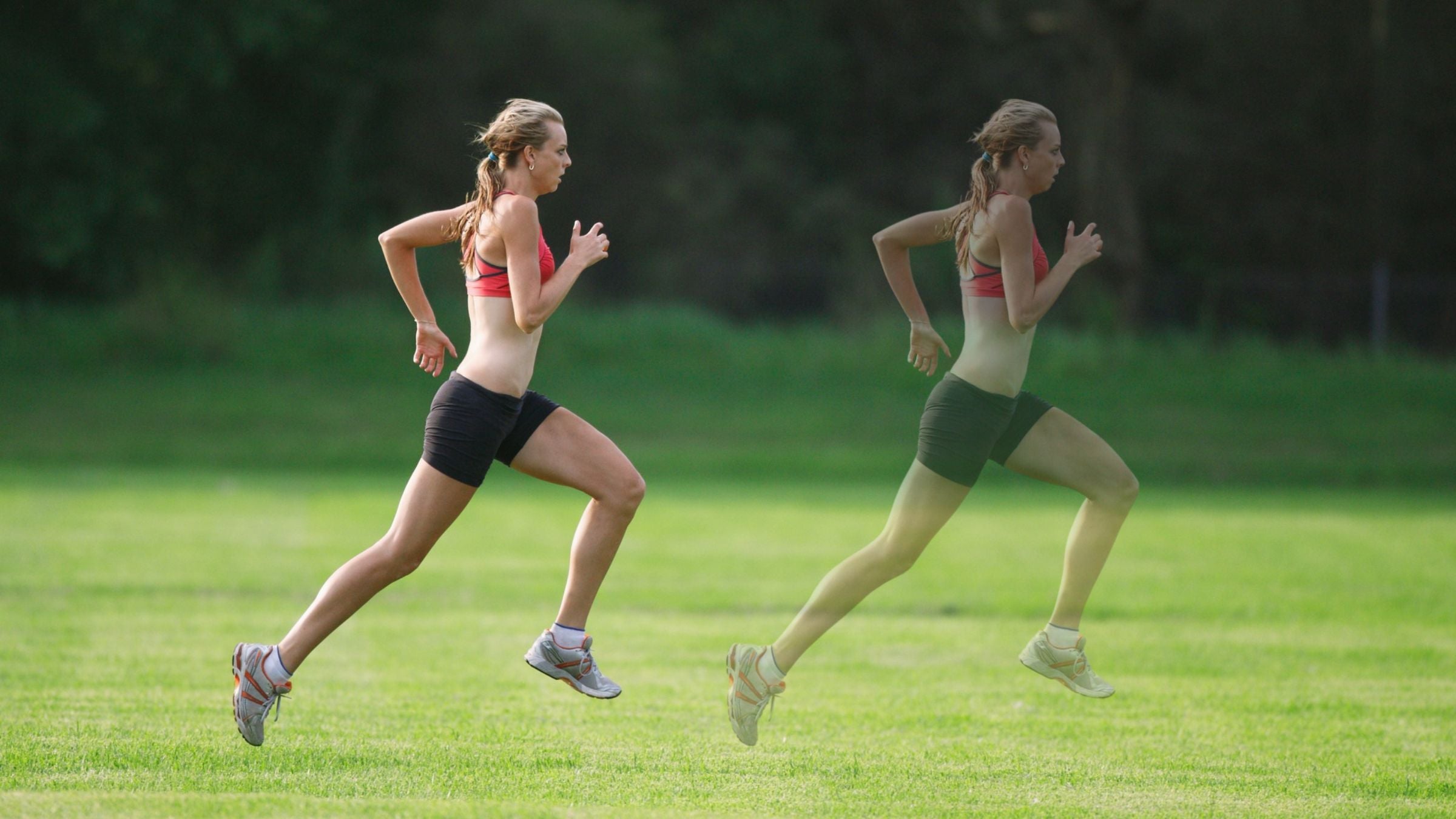
(Photo: Canva)
I’m playing right-back, like I have for 25 years. This time, I’m playing in a seven-on-seven post-work recreational soccer league, with short fields and half-size goals. All the players have fine lines etched into their foreheads and firm memories of 9/11, if not the Bronco chase. And for each ex-soccer star on the bite-sized pitch is a ghost of her former self, out-running, out-dribbling, out-playing each and every player on the field.
I reached the peak of my soccer career circa 2001, when I made a travel club soccer team and thus latched onto an identity of Good At Sports. At the time, my skill entirely stemmed from my having grown taller and faster than the rest of my cohort. I could therefore, due to sheer size, outrun opposing forwards with a breeze, wrestle the ball from their feet, and boot it down the field, away from me. Whatever happened next was none of my business. This worked for me until high school, when I realized I’d developed near-zero dribbling skills and only a hazy understanding of what a “strategic pass” might be (something about triangles?). I took my two brain cells and horse legs to track and field, where they belonged.
And so, my gameplay has been consistent since the first Bush administration: sprint, shoulder-check, then boot the ball somewhere the fuck away from me.
ADVERTISEMENT
Decades later, my opponents have a goal kick. Their sweeper whacks the ball and it comes sailing towards me, just a few steps to my left. It bounces and I step to it, cutting in front of my mark, barely quicker than her, and just as I get my foot on the ball to settle it—
“ARGH!”
I feel like my spine has been cracked like a whip and twisted like a corkscrew all at once. Just as I hauled my body weight to the left, my mark grabbed my right arm and yanked me back towards her. I shout a choice expletive (OK fine. It’s “fuck,” I say “fuck”), but it’s too late. My mark scores. I attempt to play for another couple plays. But each time my cleat hits the ground, I feel a horrible yank through my entire back, like my spine is being zippered with blades. If I twist my shoulders to the left or the right, white hot pain sears down my posterior chain. I won’t be able to walk pain-free for several weeks.
My back is officially fucked.
The particular bodily plights of the thirty-something jock don’t stem simply from the inherent risk imbued in competitive sports. They’re brought about by the delusion that we can still play as hard as we could when we were 22.
ADVERTISEMENT
Mine is just one of countless horror stories in the canon of washed-up thirty-somethings’ recreational sports injuries. I once witnessed a friend on that same soccer team slam to the ground and fracture her shoulder. A coworker once showed up on some random Wednesday with a broken finger from a flag football game the evening prior. A finger injury (right, ring) of my own all but ended my nascent bouldering career (R.I.P.). I’ve seen hamstrings pulled between home and first, ankles twisted landing needless jump-shots, and an ACL tear requiring surgery and months of recovery from a casual (albeit highly competitive) Sunday afternoon pickup basketball game.
Yes, athletics beget injuries, no matter the age or level. But I’m talking about something specific here. The particular bodily plights of the thirty-something jock don’t stem simply from the inherent risk imbued in competitive sports. They’re brought about by the delusion that we can still play as hard as we could when we were 22.
They were brought about by Rec League Dysmorphia.
ADVERTISEMENT
Rec League Dysmorphia (otherwise known as the Jock-Induced Brain-Body Disconnect or Varsity Denial Syndrome) is the phenomenon wherein the grown-ass adult body (GAAB) still believes itself to be in prime athletic shape. It’s most commonly found in millennials, who are equally famous for a) partaking in co-ed sports leagues and b) batting away the creeping tendrils of mortality at every turn. Rec League Dysmorphia can occur in the bodies of washed-up athletes (formally) of any level, from JV to Division I. It can occur with full knowledge of one’s bodily status, including current mile time (solidly 90 seconds slower than lifetime PR) and back condition (haggard from years of desk work).
The second I step onto a soccer field, a switch flips in my brain. In the same way I revert to teenage moodiness in my childhood bedroom, I revert to adolescent hyper-competitiveness between two goals. I could be merely cutting across an empty soccer pitch in a public park, and the second I step across that white chalk line, I hear an amalgam of nightmarish soccer coaches of early-aughts yore screaming at me: GET THERE. BEAT HER. IT’S YOURS. TAKE THE SPACE. FASTER. GO. Then that ghost of my former self shows up on the field. She’s faster than I am, with more endurance than I have, and my brain can’t not try to match her step-for-step.
That switch-flip? That’s Rec League Dysmorphia. On the pitch, my body thinks it can go as hard as it could and fight as dirty as it could half a lifetime ago—it tries to match what my brain believes is simply how I play soccer. The result in that one game, of course, was jagged pain every time I stood up or sat down for weeks on end.
But Rec League Dysmorphia begins before the ref blows the first whistle. That soccer game where I threw out my back, I didn’t warm up before it. I don’t warm up for soccer, my lizard brain thought, believing I’m 16 and with pliable, Gumby muscles that can go from sitting to sprinting at the blow of a whistle. Rec League Dysmorphia can occur when it’s not even game day. See, that fateful game wasn’t even the first time I’d thrown my back out. The first time was on a whim on vacation in Mexico City, where inflammation was so close to a nerve that I thought I was passing a kidney stone. I assumed this was a fluke, and nothing to do with the years-long career I’ve made crouching over a laptop. I’m too young for back problems, my lizard brain thought. I was otherwise healthy and in shape. I played soccer, I surfed, I climbed, I ran. Surely, back pain had not come for me yet. That delusion? Rec League Dysmorphia.
A few weeks and zero medical assistance later, my back was healed (felt fine) and I returned to Monday night soccer. But I felt hesitant and tender. I was scared to surf, what with all that paddling in Sphinx pose, and was horrified by the thought of feeling that same searing shot down my spine while in the Pacific Ocean. Climbing was a no-go, as every time I jumped off the wall—even just a few inches onto the big, cushioned mats—I felt a rattle in my lower back, threatening me. Within a few months, I found my back crippled again—this time, from simply “sitting in a car weirdly” for a few hours and then “sleeping on my back weirdly” for a few more hours. Really pathetic stuff. And this time, the pain was more intense and more enduring. I became fixated on the thought that these back problems were inevitable, that by 40 I’d be taking slow walks around the block as exercise, spine too tender to risk the competition-induced endorphins I so craved.
ADVERTISEMENT
But it wasn’t aging that prevented me from playing competitive sports. Rather, the denial that I was aging prevented me from playing competitive sports.
I hit a major athletic goal last year: I didn’t throw my back out in 2025. That’s the first calendar year since 2021. And it’s what a PR looks like for me at 36, so I’ll take it.
Here’s where I break a hard truth to you: Rec League Dysmorphia is incurable. That switch-flip—that voice in your brain that says you’re still 18—for me, it’s all but impossible to prevent. There’s a profound sense of grief in that. While I still love to play sports, the athlete I once was no longer quite exists. The condition is, however, manageable. Long, happy, and fruitful athletic careers can be lived with Rec League Dysmorphia.
So, first: I had to admit I have an age. This is particularly devastating and challenging as someone who lives in Los Angeles.
Next, the mindset shift: I had to think of playing the sport not as the workout, but as the reward.
ADVERTISEMENT
In my mid-thirties, if I want to play sports—not just team sports, but run, or bike, compete in any manner—I literally can’t not pair it with a whole lot of off-field tune-up work. So I did just that. I started lifting, specifically to strengthen my core and back. I ice, I foam roll, I rest when something feels weird. I hang out in child’s pose, a low squat, and hip flexor stretches as much as possible. Athletic performance is no longer a given, but something that must be scaffolded in a million little ways. The trick is finding joy and energy in that scaffolding. I don’t know what your bodily ailments are. But if you can sing the chorus to “One Week” by Barenaked Ladies on demand, I know your body is atrophying somehow, and I know that ignoring your Weird Knee Thing will only make it worse.
But such diligent injury prevention doesn’t address the root cause of Rec League Dysmorphia. I think the ghost of my adolescent self will always be there, beating me to the ball, sprinting faster than me, unencumbered by such concepts as “paying for your own health insurance” and “biweekly all-hands meetings” and “Microsoft Teams.” If this is you, own it. See the ghost; recognize the ghost; tame your own inclination to prove you’re still just as good, if not better than the ghost.
This, of course, is easier said than done. And if that switch still flips for you—if you can’t not compete with the ghost—perhaps it’s time to pick a new athletic obsession. It can be squash or triathlons or hiking, as long as you never did it when you were younger and hotter and bursting with energy. The discomfort of trying something new is the only known long-term treatment for Rec League Dysmorphia. The uncertainty of newness is actually probably better for my back than the denial has been.
ADVERTISEMENT
Thanks to properly managing my Rec League Dysmorphia, I’m starting out the new year with a cocky, jock swagger in my step. I hit a major athletic goal last year: I didn’t throw my back out in 2025. That’s the first calendar year since 2021. And it’s what a PR looks like for me at 36, so I’ll take it.
I’m on a break from soccer, but I’ll play it again someday. I’ve gone from fearing my mobility ends at 40 to looking forward to joining the fifty-something women’s soccer league in a couple of decades. And when I do, I’m confident my gameplay will look just as it did in ’01: sprint, shoulder-check, then boot the ball somewhere the fuck away from me.
