Published May 25, 2009 12:00AM
The Real Heal: Overcoming Athletic Pain
Turns out your old PE coach was right. Yes, it hurts, but the new thinking about athletic pain is clear: Keep moving.
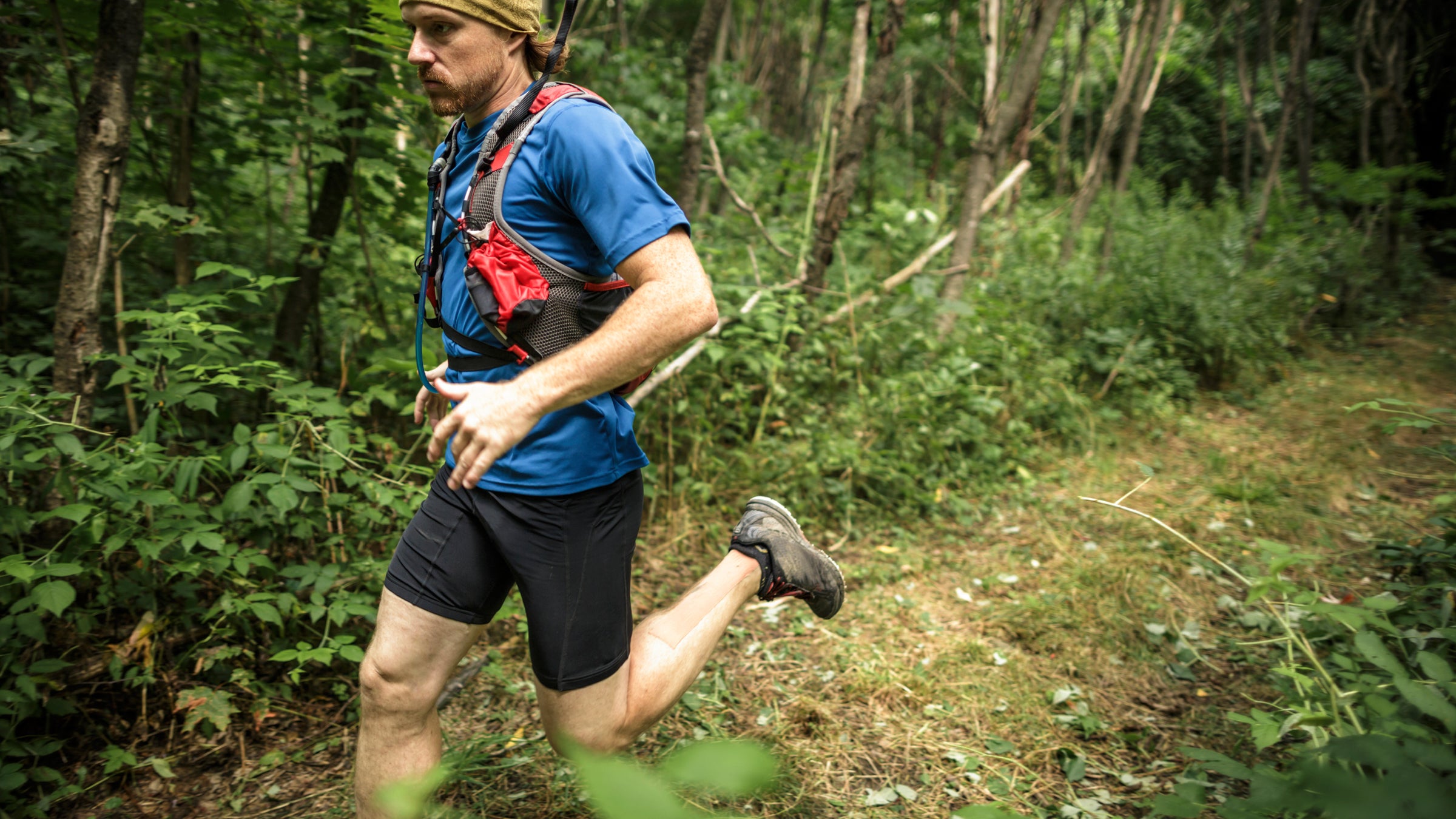
Treat your joints right—or they'll give up on you when you need them most. (Photo: PLBernier/iStock)
Last August, I had a run-in with some local pavement when my bike slid out. There was a pop in my knee, which I treated by ignoring. Having grown up in baseball cleats, I don't put much stock in noisy joints. So I did what came naturally: I rested for two days, then went hiking, bricked my way through pickup basketball, and stomped around a trade show in flip-flops.
Soon my knee resembled overripe fruit and was moving like an old VW gearshift: clack. An MRI showed nothing, but a physical therapist provided a grim diagnosis: The fall had caused my patella to track improperly, leading to a mean case of tendinitis, or inflammation of the connective yarn under my kneecap, i.e., a burr that refused to relent, no matter how diligently I settled into my couch and inhaled Advil.
It turns out my belly-up approach was dated. New research is proving that the best way to treat nagging pain is to eschew pampering in favor of tough love. Doctors at the University of Pittsburgh are doing ongoing research showing that stretching irritated tendons actually reduces inflammation. And the principle extends beyond rickety wiring. Every expert I spoke with told me variations of the same thing: “Rest and ibuprofen cure few injuries,” said Dr. Jeanne Doperak, a sports-medicine physician at the University of Pittsburgh. “During rest you're in a non-healing zone,” offered Dr. Phelps Kip, an orthopedic surgeon and U.S. Ski Team physician. “The body was designed to move.”
ADVERTISEMENT
This is a radically simple and promising solution for lingering athletic injuries. Difficult to diagnose and tougher to mend, recurring aches usually arise in one of three ways: mechanical injury, such as my tumble; repetitive microtrauma (think running in shoddy sneakers); or imbalances in the body's kinetic chain of movement (a weak core can cause lower-back pain). When athletes ignore nagging pain, it sticks like credit card debt.
And it just so happens that tendinopathy chronic tendinitis is the most diabolical of recurring injuries. Give me a broken foot over tendon trouble any day when something snaps, at least you know what you're in for. My injury dragged on into winter, deep-sixing my mood. This is not uncommon: The link between pain and depression is so well established that sports psychologists use a tool called a Profile of Mood States to monitor injured athletes. (This is a graph evaluating tension, depression, anger, vigor, fatigue, and confusion. People in pain score extremely high in every category except for vigor.) I was five years removed from being a college athlete and I was Long John Silvering it up stairs at work. Strange questions crept into my head: Could I consider gardening exercise?
After four months of occasional physical therapy, plus lots of resting and regressing, I finally began a strict therapy regimen. Lunges taught the kneecap to track properly; stretching loosened up my knotted glutes. Every day I did 30 single-leg squats eccentric moves that strengthen the tendon and break up scar tissue. This hurt which meant I was doing it right. “There's going to be soreness from remodeling the tendon,” Dr. Ed Laskowski, co-director of the Mayo Clinic's sports-medicine center, explained later.
ADVERTISEMENT
Two months in, I'd built up to plyometric exercises like box jumps and cariocas and felt ready to test the patella with some three-on-three hoops. The knee continued to click still does but after a thorough warm-up, it didn't hurt.
I called next, drove right, and pulled up for a jumper. The ball clanged off the rim, short, and rolled out of bounds. I was back.
Just Beat It
Six steps to relieve nagging athletic pain.
- Stay Active: Extended rest masks pain without fixing the source and can lead to scar-tissue buildup. “It's been shown irrefutably that if you exercise at a very low intensity, it stimulates healing,” says Fabio Comana, exercise physiologist with the American Council on Exercise./
- Get Help: A physical therapist will give you exercises that mildly stress the problem spot, repairing damaged tissues. Example: For patellar tendinitis, nothing beats the single-leg squat, which strengthens the tendon by lengthening it while lowering weight on an elongated glute muscle. Look for certified sports PTs at www.apta.org./
- Find the Culprit: The body is a chain, and the area that hurts is most likely not the source of your pain. Sore knees, for example, are often caused by weak hips. Treating the symptom of a cranky joint means zilch if you jump back into activity without identifying the pain's source./
- Look Beyond the Screen: Don't rely on magnetic-resonance-imaging exams for nagging injuries. MRIs reveal significant damage to tendons and ligaments but often miss the soft-tissue imbalances that lead to nagging and chronic pain. Your physical therapist can help you spot the hidden problems and fix them.
- Sweat the Technique: “You can fix the symptoms for tennis elbow,” says the Mayo Clinic's Dr. Ed Laskowski, “but if you keep swinging the racket wrong, the problem's coming back.” A sports trainer certified in “corrective exercise” can tell if your form is causing problems. (Get info at nasm.org.)
- Gear Up: Ill-fitting shoes, bikes, ski boots, etc. mean trouble. If your gear doesn't fit your body, your body will try to fit your gear by stretching, bending, and breaking.
ADVERTISEMENT
Improve Your 'Tude
Chronic pain doesn't always relent. The key to staying active? Build your tolerance.
Pain threshold—the point in the shower at which uncomfortably warm turns to painfully hot—is a finite physiological limit. But you can manipulate how much pain you can handle after that point. According to Stanford's Dr. Brooks Rohlen, pain tolerance is a cognitive interpretation of discomfort. This means you can train yourself to tune pain out. The key to rewiring your tolerance? Think positive. Sports psychologists rely on cognitive behavioral therapy, which involves elaborate visualization techniques. But the philosophy is simple. “Think, 'How much can I do despite pain?'” says Rohlen. “I firmly believe you can be in pain and not suffer.” Here's one trick to keep you moving: Tap your foot five times and say “Click” with each foot strike. “When you say 'Click,' you're blocking negative thoughts,” says Dr. Aynsley Smith, sports psychologist with the Mayo Clinic. Repeat the exercise until the “Click” becomes second nature. Next time you go for a run, your brain will focus more on the word than your pain.
ADVERTISEMENT
Words of Hurt
The three types of athletic pain.
- Acute: The sensations that arise when, say, you twist your ankle are healthy. “Acute pain prevents us from getting into worse situations,” says Dr. Brooks Rohlen, of the department of anesthesia at Stanford. (The few people who don't get the message, those suffering from a rare condition called congenital insensitivity to pain, are usually dead by their thirties.)
- Nagging: Acute injuries that fail to heal properly, or aches caused by overuse, bodily imbalance, and improper athletic technique.
- Chronic: Nagging injuries that last more than six months and can eventually be debilitating. “I have chronic lower-back pain,” says Rohlen, “and if I could fix it with a power drill, I'd do it.”
Case Study: Runner's Knee
ADVERTISEMENT
A weakness in one part of the body can wreak havoc in another. One of the most common examples: Pain around the patella (runner's knee) caused by weak hip abductors. Here's an easy test to see if you're at risk:
Do a single-leg squat in front of a mirror—arms parallel to the ground, raised leg straight. If your support knee caves inward, your hip abductors may need strengthening.
The Fix: Lie sideways on a table, legs straight, and slowly raise and lower the upper leg ten times. Do three sets. Easy? Ask your PT for a light ankle weight.
Use Wisely
There are plenty of cutting-edge, mind-numbing, and alternative pain treatments out there. But some of the most powerful tools are also the most accessible. “People think ice, Tylenol, and ibuprofen aren't effective because you can get them from your freezer and 7-Eleven,” says Stanford's Rohlen. “That's a tragedy. If used correctly, they can do wonderful things.” Here's what you need to know about popular pain meds.
ADVERTISEMENT
Tool: Ibuprofen (Advil, Motrin)
Best For: Reducing swelling, pain, and post-exercise stiffness
How To Use It: Use in conjunction with ice; rotate with acetaminophen to mitigate risk of stomach trouble
Tool: Acetaminophen (Tylenol)
Best For: Temporary pain relief. Doesn't reduce swelling; easier on the stomach than ibuprofen
How To Use It: Rotate with ibuprofen to mitigate possible risk of liver damage
Tool: Opiate-Based Meds (Vicodin, Demerol)
Best For: Post-surgical pain or broken bones not sports pain
How To Use It: Don't. These can cause nausea, constipation, and addiction and lower pain tolerance
The Three Types of Athletic Pain
- Acute: The sensations that arise when, say, you twist your ankle are healthy. “Acute pain prevents us from getting into worse situations,” says Dr. Brooks Rohlen, of the department of anesthesia at Stanford. (The few people who don't get the message, those suffering from a rare condition called congenital insensitivity to pain, are usually dead by their thirties.)
- Nagging: Acute injuries that fail to heal properly, or aches caused by overuse, bodily imbalance, and improper athletic technique.
- Chronic: Nagging injuries that last more than six months and can eventually be debilitating. “I have chronic lower-back pain,” says Rohlen, “and if I could fix it with a power drill, I'd do it.”
