Published June 7, 2019 12:00AM
If you buy through our links, we may earn an affiliate commission. This supports our mission to get more people active and outside.Learn about Outside Online's affiliate link policy
A Beginner's Guide to Surfing
Don't be a kook. Here's a crash course in surf etiquette.
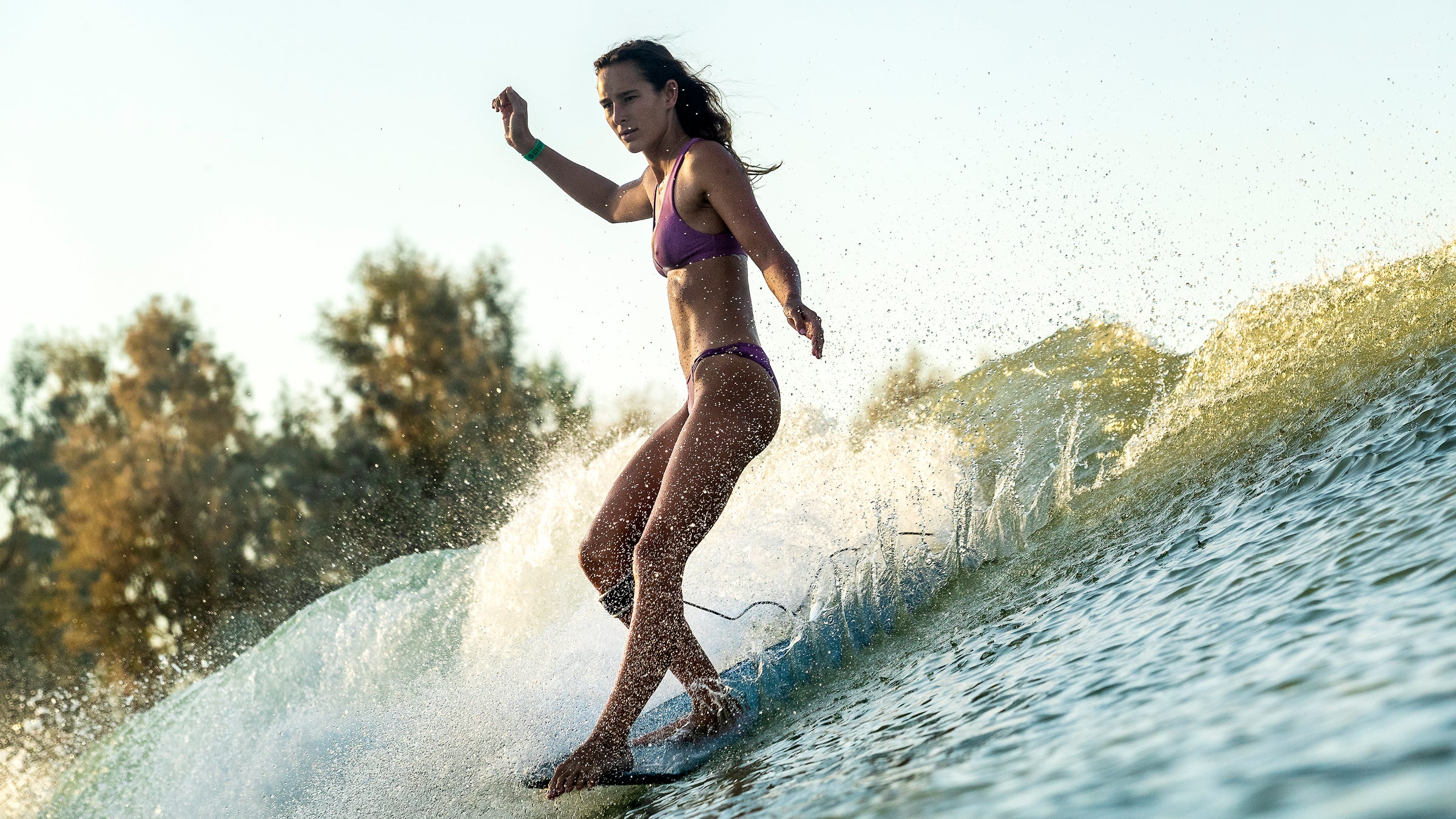
New to the waves? Here’s your crash course in surfer etiquette.
I won’t sugarcoat it: most surfers don’t want you to pick up their sport. Surfers can be territorial, aggressive jerks—especially to newbies. Though I’m not excusing that behavior, the instinct is partly for good reason: a beginner wielding a sharp surfboard they can’t control in waves they don’t understand puts everyone in danger. And unlike many other outdoor pursuits, the resources (waves) are limited. Every wave you catch is one less wave for me.
But there is a right way to partake as a beginner, all while staying safe and not pissing people off. It involves surfing in the right places for your ability level, choosing the proper equipment, being respectful of locals, and knowing the rules of the water. Let’s start with the essentials.
How to Be the Good Kind of Beginner
- To start, surf only at beginner spots. (See Where to Surf, below.)
- Before paddling out, spend at least 30 minutes watching the surf. You’ll want to watch where other surfers paddle out, where the waves are breaking, and the ability level of the people in the water. Are they all very advanced, or are there beginners as well? You need to make sure that the waves are a comfortable size for you—and sometimes it takes 30 minutes or more to see how big the bigger sets are. Once you paddle out, sit off to the side and watch for a little longer, noting where people are catching waves.
- Be respectful. As with any outdoor pursuit, the locals know the area best and feel a sense of ownership. Be polite, don’t yell (most lineups are surprisingly quiet), and try not to get in anyone’s way.
- Understand the rules. Generally, one person surfs per wave. The person who is closest to where the wave breaks (also known as “deeper”) has the right of way. Imagine a wave is coming in and you and another surfer turn toward shore to catch it. Let’s say it’s going to break on the left side of you and peel toward your right. If the person is to your left, they have the right of way, so you need to stop paddling and wait until the next wave. If a wave is peeling in both directions, one surfer can ride the wave in each direction. You might hear someone yell “going left” or “going right” to indicate their direction, and that they have the right of way. If you’re at a break with one takeoff spot, wait your turn, slowly moving toward it as others take their turn—it’s bad etiquette to paddle around them.
- Stay out of the way when paddling out. If there is a channel (a deeper area where the waves don’t break), paddle out there. Never paddle out through the surf or through the lineup if there is another way. This not only keeps you and others safe, but it also saves energy. If there is no other way out than through the whitewater, it’s your job to stay out of the way of a surfer riding a wave. If someone is riding a wave coming toward you, paddle in the opposite direction of where the surfer is headed. Lastly, always hold on to your board.
Where to Surf
After etiquette, the second most important element of an enjoyable surf experience is finding the right waves at the right spots. Ideally, you’ll want to find a spot where waves break slowly over a semi-shallow (waist- to chest-deep) sandy bottom.
ADVERTISEMENT
When you’re just beginning, you don’t need perfectly peeling waves; look for long rows of knee-high whitewater rolling toward the shore. Keep your ego at bay, and don’t be afraid to go where kids are learning. The key is finding someplace that’s not too crowded, where you can catch lots of waves and master the art of paddling into waves and popping up.
You can search online for the best beginner surf spots in your area or see where local surf schools run their lessons. Stay away from famous spots—they’re crowded, not welcoming to beginners, and usually not the best conditions for newbies.
What to Ride
When you first start, get yourself on a big board. I’ve seen so many beginners on brand-new, expensive shortboards that are really cool but lack the volume and length for the rider to catch enough waves to actually improve their skills. There is no shame in starting on a ten-foot soft-top longboard that’s easy to paddle and stable to ride. By doing this, you’ll get lots of practice learning to read the ocean and popping up with ease. Then, when you’re more skilled, you can get your first serious board. Here’s a brief breakdown of the options:
Shortboard: Generally six and a half feet or shorter, with very little volume, usually with a tri-fin setup, designed for high-performance surfing with faster turns and more speed in larger waves.
Mini Mal, Mini Tanker, Funboard, Fish, Egg, Bonzer: These are all names of boards that are on the shorter side (smaller than eight feet and as small as five feet) but usually have a little more volume to make it easy to paddle into smaller waves, while being more maneuverable than a longboard.
Gun: Generally seven feet and above, designed for big-wave surfing.
Longboards: Generally nine feet and up, these either have a single-fin setup (best for nose riding and a classic style of surfing) or tri-fin setup (can be easier to turn and facilitate a more high-performance style of longboarding).
ADVERTISEMENT
Other Important Gear
The beauty of surfing is that, besides a board, you need very little gear. Here’s what else to have:
- A swimsuit that will stay put, a snug rash guard to keep from sunburning your back or chafing your stomach, and potentially a wetsuit for cold locales. Evo has a helpful guide to choosing a wetsuit.
- A leash. Get one that’s the length of your board, and put it on the back ankle of your riding stance.
- Wax, which keeps you from slipping. Cover the area where you’ll stand while riding.
How to Catch a Wave, Stand Up, and Ride It
ADVERTISEMENT
Evan Valiere is a professional surfer and the owner of Hanalei Surf School on Kauai, where he has taught thousands of beginners to surf. We asked him to break down the basics.
Step 1: At home or on the beach before paddling out, practice popping up by pressing your hands into the ground or board beneath your chest and, in one burst, jumping to your feet. (If your left foot is in front, you have a “regular” stance. If your right is in front, you’re “goofy-footed.”) This will get you comfortable with the motion.
Step 2: Paddle out to the lineup, using the tips outlined above (How to Be the Right Kind of Beginner).
Step 3: When you see the wave you want to catch, turn around and face the nose of your board toward the shore, then lay down and begin paddling. Make sure the nose of your board is not underwater or too high in the air—it should just graze the surface.
You’ll slowly get some momentum going with the same direction of the wave. It’s important to conserve a burst of energy for just the right time: get in position, and line up the wave using about 30 to 50 percent of your paddle power. When the wave starts to draw on your tail and lift the back of your board as it rolls under you, kick it up to 80 percent and then save the last few strokes for 100 percent effort.
ADVERTISEMENT
Step 4: After a few strokes, look back over your shoulder to gauge where the wave is behind you, but continue paddling forward. The crucial part is that you’re not too far in front of the wave and not too far outside, but this comes with practice and experience in understanding the waves.
You also need to make sure that the tail of your board is perpendicular to the wave as you paddle toward shore. The swell does not always come in parallel to the beach, so looking back and lining up with the wave is key.
Step 5: Look forward, and use your peripherals to sense where the wave is. When you feel a burst of speed and momentum, it’s the right time to stand up. Dropping in feels like a mini roller-coaster slope. That’s when you stop paddling and get ready to stand up.
Step 6: When you pop up, calmly look ahead and fully commit. Try to hop up all in one motion. (You can practice on the beach or at home beforehand.) Hesitation creates instability. Always keep your eyes up and forward. Never look down at your feet, back at the wave, or at the nose of your board.
Step 7: Keep your knees bent, with slightly more weight in your back foot. Hold your arms out to your sides to balance. And… you’re surfing.
Valiere’s additional safety tips:
- Never hold your board between you and the waves.
- Always fall flat on the surface of the water like a leaf, rather than dropping straight down. The deeper you drop, the greater the chance you’ll collide with something under the water.
- Cover your head when you fall, particularly when you are separated from your board.
- Never reel in or hold your board with your leash string or cord.
- Stretch, hydrate, and warm up before your session, and hydrate and stretch afterward, too.
- If you experience any serious pain, especially in your back or neck, stop immediately.
ADVERTISEMENT
Training for Surfing
During your first couple of sessions, you’ll be surprised at how quickly you get tired and how sore you are in new places. “Surfing is a pretty unique sport—paddling requires muscles that a lot of people wouldn’t normally use,” says Crystal Walsh, a professional surfer and certified personal trainer. “It requires core control, as well as muscular endurance of the arms and back, plus strength in your legs, all while laying or standing on an unstable surface.”
She says that surfing often is the best way to get stronger, but that interval training and yoga—for balance and flexibility—are helpful, too. “Since surfing isn’t a steady-state workout, interval training is an awesome way to get you ready for surfing,” she says. “I usually design circuits that alternate between an upper-body exercise and a lower-body exercise and short rest period. It’s like catching a wave, surfing the wave, and resting while waiting for another wave.”
She also recommends these three exercises to strengthen your surfing muscles:
ADVERTISEMENT
Dumbbell Front-Lateral Raises
What it does: Strengthens deltoid muscles for paddling.
How to do it: Start with your feet hip-width apart, and brace your core by drawing your belly button into your spine. Inhale and raise both dumbbells overhead. Keep your shoulder blades down and your back and arms fully extended overhead. Keeping your arms straight, slowly lower one dumbbell to your side while keeping the other dumbbell overhead—four seconds down, one second up. Alternate sides (to simulate paddling). Exhale on the way down, inhale on the way up. Use light to moderate weight, and aim for three sets of 15 per arm.
Barbell Romanian Deadlifts
What it does: Strengthens posterior chain muscles (glutes, hamstrings, back) for generating power while doing turns.
How to do it: Start with your feet hip-width apart. Push your hips back (as if you were trying to touch a wall with your butt), and keep your knees stacked over your ankles. Reach down and grip your barbell about a thumb’s length in front of your knees. Keep your shoulders down and back and your back flat. Push through the floor with your feet while driving your hips forward to stand upright. Slowly return to the starting point. Use moderate to heavy weight and aim for three sets of ten.
ADVERTISEMENT
Core Rotations on a Swiss Ball
What it does: Strengthens core in a rotational movement for doing powerful turns and cutbacks
How to do it: Sit upright on a swiss ball with your feet planted firmly on the ground. Your knees should be at 90 degrees. Draw your belly button into your spine to brace your core. This can be done with or without weight—a medicine ball works well. Holding onto the weight with both hands, extend your arms out in front, keeping your shoulders down and back. Lean back until your body is at a 45-degree angle. Rotate to one side while keeping your hips level. Alternate sides. Use light to moderate weight, three sets of ten per side.
