Published July 15, 2025 03:17AM
Triceps Exercises You Can Do at Home with Just a Set of Dumbbells
Even a light weight can give you results
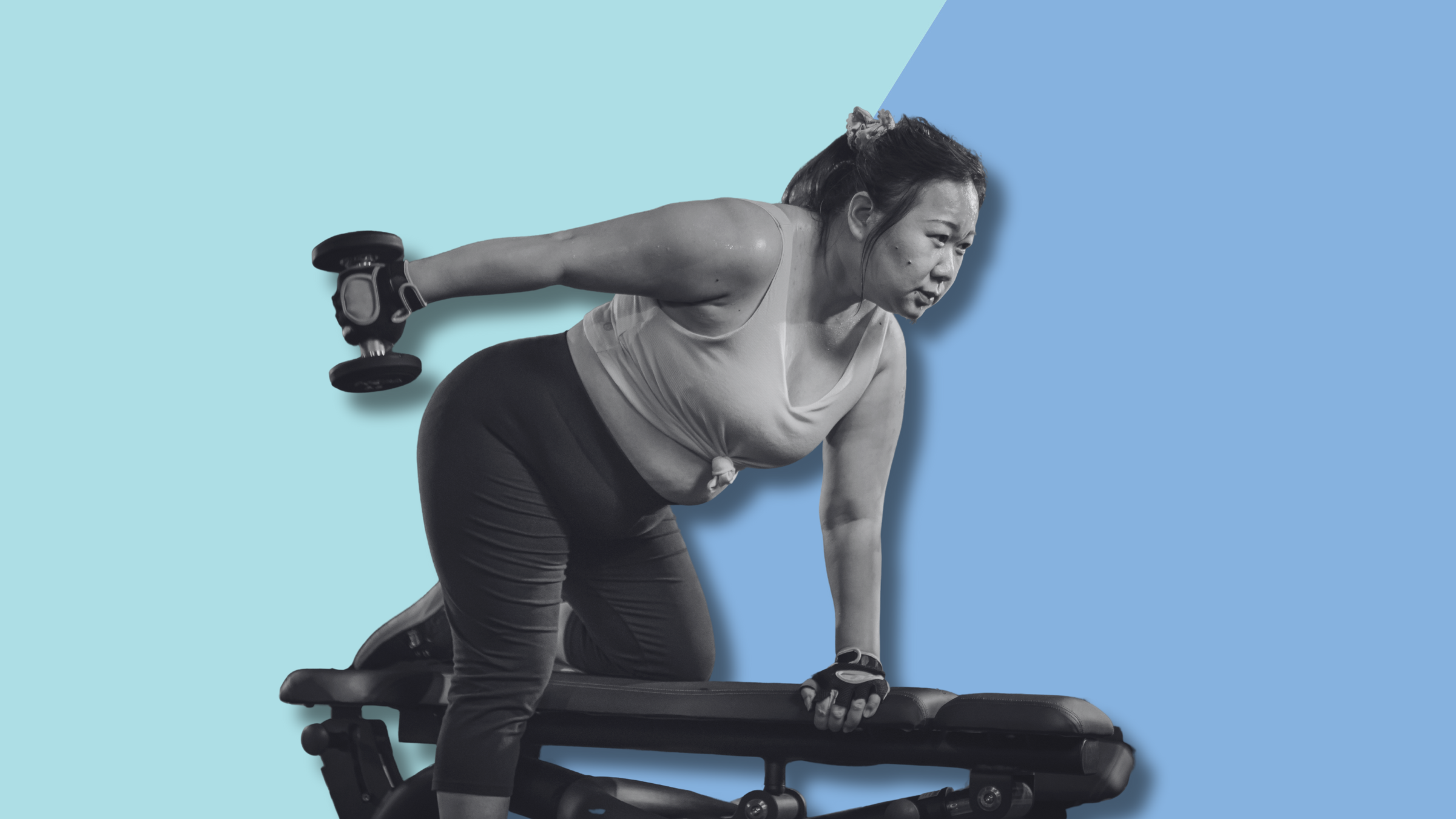
(Photo: Triceps exercises: Edwin Tan/Getty; Collage: Ayana Underwood/Canva)
Your triceps are tiny muscles that are responsible for a major movement. While your biceps help your elbow bend, your triceps, those horseshoe-shaped muscles towards the top of your arm, help your elbow extend. Though we tend to think of training these muscles primarily for aesthetic purposes, we also need them to be strong to perform basic daily functions like pushing a grocery cart or stroller, reaching for an item on a high shelf, or pulling on a pair of pants.
The triceps have three heads: long, lateral, and medial. All three work together for elbow extension and shoulder stability, but the long head, the strongest of the three, is also responsible for extending the arm at the shoulder. When your shoulder is elevated, the medial head tends to take over.
You can train your triceps muscles as part of a compound movement, which challenges multiple muscle groups and joints at once (think: pushups, overhead presses), or in isolation as outlined below.
To make these exercises more challenging as you progress, you can add weight, slow down the lowering phase (the eccentric portion) of the movement, or add a pause at the end range.
ADVERTISEMENT
3 Dumbbell Triceps Exercises
Triceps exercises tend to be done with lighter weights, so you can do a few more reps before hitting failure. Aim for three sets of eight to 12 reps with about 60 seconds rest in between.
To determine your working weight, use the Reps in Reserve (RIR) scale. Start with the lightest dumbbells and aim for a set of eight reps. At the end of your set, if you feel like you could do three or more additional reps without compromising your form, add a bit more weight. When you reach the end of a set and feel like you can only do one or two more repetitions, that’s a good working weight.
If you are doing these exercises as a finisher to a routine of compound movements, you can also take the last set of each exercise to full failure, as long as you don’t feel any pain during the final reps.
ADVERTISEMENT
1. Pulsing-Arm Kickbacks
- Stand with your feet hip-width apart, holding a light weight in each hand.
- Hold your arms straight by your sides with your palms facing behind you.
- Hinge at the hips and allow your knees to bend slightly.
- Press your arms behind you as far as you can without bending or locking your elbows.
- Pause at your end range, then slowly return to your starting position.
2. Skull Crushers
- Begin by lying on your back on a flat bench with the top of your head in line with the edge of the bench. (If you don’t have a bench, you can do this on the floor.)
- Hold a light weight in each hand.
- Raise both arms up so they are fully extended and in line with your shoulders.
- Bend your elbows and slowly lower the weights down so the top of the dumbbell is in line with your ears.
- Pause, then slowly return to your starting position.
- Move as slowly as possible through the lifting and lowering phase of this exercise.
3. Alligator Mouth Flies
- Stand with your feet hip-width apart and a light dumbbell in each hand with your palms facing towards your body.
- Hinge at the hips and bend your knees slightly.
- Let your arms hang down by your sides.
- Keeping your arms straight, bring your left arm forward and swing your right arm back at the same time.
- Pause at the top, then slowly return to your starting position with control.
- Switch sides so your right arm goes forward and your left arm goes behind you, then continue alternating.
Want more Outside health stories? Sign up for the Bodywork newsletter.
