Published December 29, 2025 03:31AM
Commit to an Adventure Day Every Few Months and Reap the Longevity Rewards
Big trips are rare, but adventure doesn’t have to be. A case for local, low-stakes adventures that keep the body challenged and the mind young.
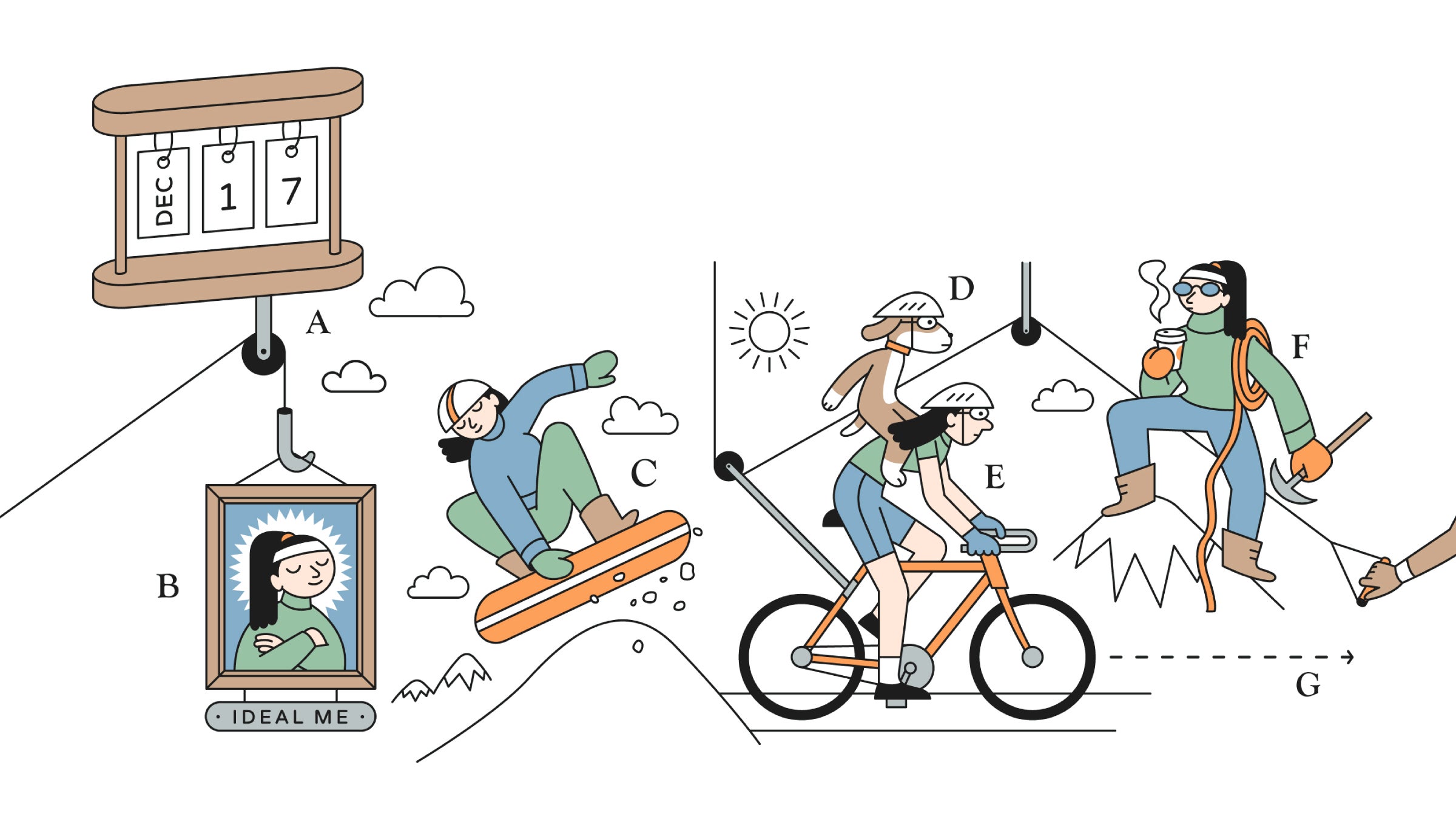
(Photo: Greg Clarke)
It’s easy, scrolling through social media or leafing through traditional media, to think that adventure always exists somewhere “out there:” surfing the Mentawais, bikepacking across South America, peak-bagging in the Dolomites. Those are all eminent pursuits, ones I would happily take on. But between the cost, the lack of white space in the calendar, and the random dice throws of the thing we call life, they are typically fleetingly rare events, more dreamed about than done.
But that is no reason to let the questing spirit atrophy. “Adventure doesn’t always have to be about climbing K2,” Alastair Humphreys writes, in his book Microadventures. “Just getting out there and doing something is good enough.”
Which is why, every few months, I like to designate an “Adventure Day,” a chance to do something that is not only an escape from my normal work routine, but my normal leisure routine. It might involve a bit of travel—never more than a full tank of gas—but it could also be as simple as attempting a very long walk in the woods from your front door (a bit tricky when you live in New Jersey, but the mapping itself will be an adventure).
An Adventure Day scrambles your brain and body in all kinds of good ways. Take, for example, a recent one-day hike in the Catskills with my brother-in-law, our first such outing. I set the alarm for 5 A.M. but woke at 4—the first sign things were out of joint. By the time dawn broke I was pulling into a McDonald’s in Saugerties, New York, for a bathroom break and coffee (on an Adventure Day, even usually banal activities make you feel curiously alive).
At the trailhead we read the warning signs and dutifully put our names in the register. We walked, we talked, me occasionally stopping to identify birds with my Merlin app, my brother-in-law doing the same with mushrooms and ShroomID. We got lost once or twice, we almost got hurt. We clambered up the rocky chutes of the notorious Devil’s Path and were rewarded with an expansive view of yet more peaks. We sensed a new tradition, to hike all the Catskills “3500s,” had been launched. I was back in my driveway by dinner time.
Could we have made it even more adventurous—could we have camped, summited more peaks, maybe foraged for food? Sure. But every uptick in complexity is another invitation for something not to happen; don’t let, as Voltaire once counseled, the perfect be the enemy of the good. The best adventure is the one you are on.
Misadventures are often the best adventures.
That simple day unlocked any number of things that science, if we didn’t already suspect such things ourselves, has found are good for us. There was novelty, there was learning (wait, what does that upside-down-pyramid trail marker mean again?), there was the endorphin energy bar of forest bathing, there was the flow state of picking your way through the puzzle of ankle-breaking rocks while simultaneously trying to spot blazes on the trail ahead, there was the oxytocin-releasing act of doing something hard with someone—and the warm glow afterward. And physically, the trail worked my entire body (as my muscles and joints gravely informed the next morning) in entirely new ways.
One of my inspirations for squeezing out local adventure is my friend Brian Gatens, a fellow Garden Stater who is deep into adventure racing (which typically involves traversing wilderness by various means) and hosts The Dark Zone podcast. We first met years ago doing hard bike events like the infamous D2R2, but he’s taken it up a few notches. Brian will routinely do things like ride his mountain bike 30 or some miles from his house to a train station, carrying a packraft in a backpack. He’ll ride that train 20 miles north, deploy the raft in the Hudson River (no docile trickle, that), journey downriver, and ride back to his house. It doesn’t always go to plan, but then again, misadventures are often the best adventures.
When I asked him about the “why” for such undertakings, he had several responses. “Like many of us, I spend a lot of time working with and caring for others,” he says. “A local mini-epic enables me to put all to the side for a moment and tap into that childlike sense of adventure in which you aren’t sure quite where you’re going or what will happen.”
ADVERTISEMENT
And he has learned, often the hard way (when the most learning often happens), about how to successfully pull off mini-epics. While some preparation is necessary, he says, “I don’t overplan, or make it feel like work.” Perhaps the most important aspect is simply to get it on the calendar. “My friends and I have long meandering text message threads about logistics, locations, timing, and activities. The talking and planning is almost as much fun as the actual event.”
Lastly, he says, try to maintain a general fitness. “Not every adventure is months away, and it’s good to be strong enough to respond quickly to an immediate invitation to do something big,” he says. If chance favors the prepared mind, then adventure favors the prepared body. Any day, after all, can be an Adventure Day.
