Published December 29, 2025 03:29AM
Reset Your Brain in 60 Seconds with These Nature Rituals
Why you need to go outside and touch grass. Literally.
(Photo: Greg Clarke)
I’ve tried wellness routines around the world, from lunar meditations in Bali to sunrise yoga on the Great Barrier Reef. Yet one of the most soul-stirring practices took shape in my backyard in Cleveland, Ohio—and it requires half the time it takes me to brush my teeth.
The ritual is simple: every night, I spend at least 60 seconds in my backyard admiring the stars and planets. This process has led to something I didn’t know I needed: awareness. Dedicating time each night to looking up, even in a light-polluted city, helps me shirk the day-to-day doldrums and really notice the world, and my place in it.
“When you look up at the night sky, your perception of yourself in the world changes,” says Christine Norton, a licensed clinical social worker and leader in the field of wilderness therapy. Research also suggests that when our vision is diminished by darkness, other senses may kick into overdrive. In my case, I’m much more sensitive to sound when I’m outside at night.
“That kind of novelty is right-brained engagement, and that’s where a lot of healing can take place. We’re not just thinking, we’re feeling, we’re perceiving, we’re sensing,” Norton says.
ADVERTISEMENT
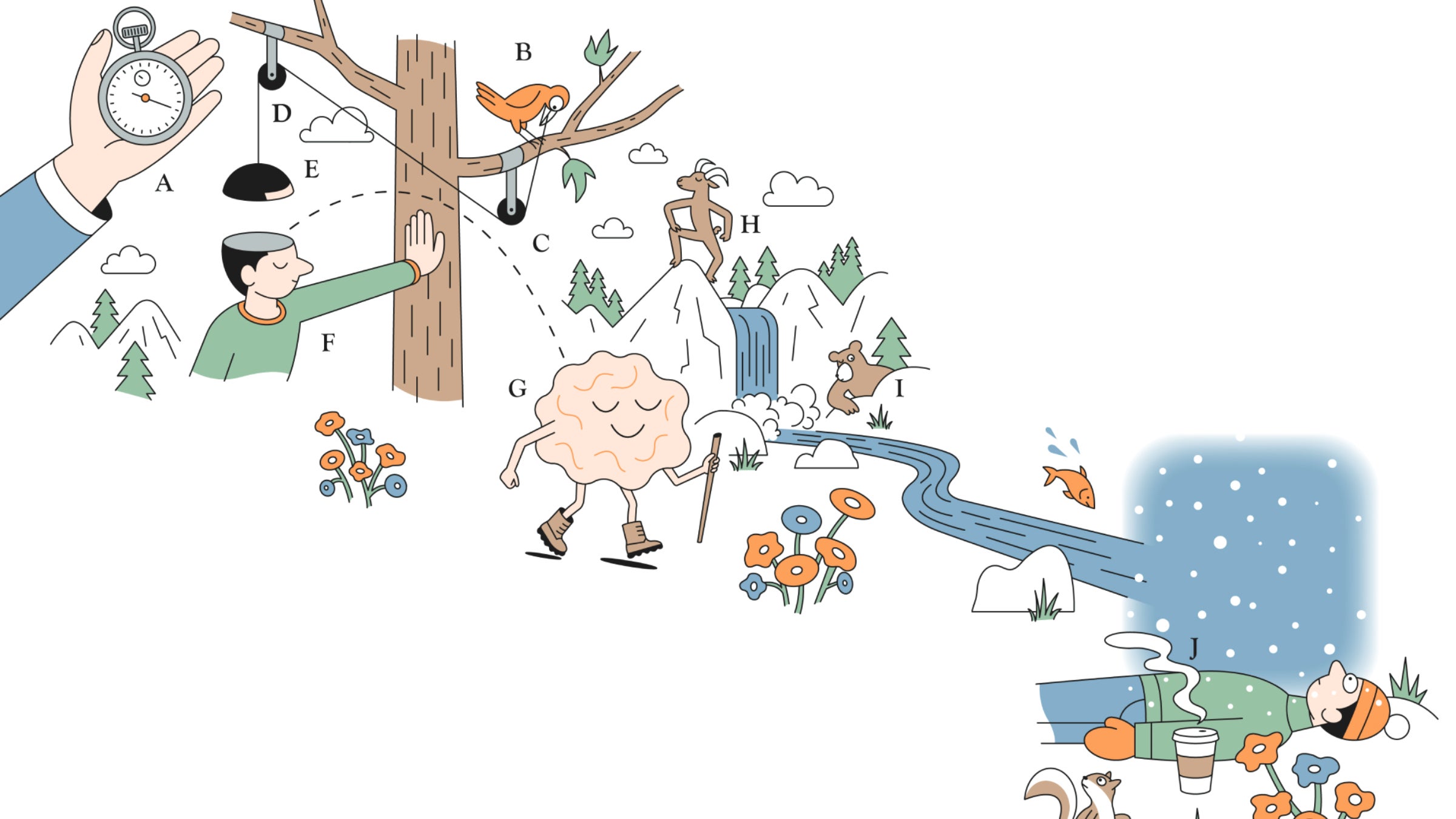
And it’s not just sky-watching. Other 60-second nature rituals, such as resting your bare feet in the grass, touching bark, or sitting in a forest, can foster mindfulness and healing.
“It’s like microdosing nature,” Norton says, noting these practices can enhance the immune system, slow the rate of respiration, lower blood pressure, and calm the nervous system. Practitioners see the greatest benefit after ten minutes, she says, but one minute is a good starting point. I’ve enjoyed feelings like enhanced mindfulness and calm, even in that short time.
My stargazing ritual started as an informal experiment in early 2025; as a seasoned travel writer, I wanted to see if I could re-create the awe and magic of travel while back at home. My journeys lean heavily on outdoor adventure and astrotourism. I enjoy hours upon awestruck hours in nature and beneath the stars on the road—then I come home, sit at my desk, and let the wonder slip away.
Snow-watching elicits a sense of calm and amazement. That awe awakens my inner child, and now I zip outside after each snow-day meditation.
I’m also in a life stage that’s too busy for daily hours outside. Instead, I fit city skywatching into my daily routine; I pair it with my dog’s nightly bathroom break so I can’t skip it. I’ve enjoyed it so much that I’m now looking up at least five minutes per night, instead of just one. I’ve also picked up a new, 60-second daytime winter ritual that makes me feel like a kid again: watching snow.
Where I grew up, people often saw snow as a nuisance, especially after the holidays. It disrupts commutes and adds tasks, like exhaustive shoveling, to to-do lists. But as a kid, I saw the snow as confetti; I ran outside at the first flake.
As with stargazing, I want to rejuvenate that childlike wonder. Whenever fresh powder’s in the forecast, I spend at least 60 seconds watching the sparkles fall. Just like my star-bathing ritual, snow-watching elicits that sense of calm and amazement. That awe awakens my inner child, and now I zip outside after each snow-day meditation, just like I did when I was a kid.
Whether it’s stargazing, watching snow fall, or touching grass, this dedicated time in nature stirs me awake, and helps me to not just look at the world but actually see it.
ADVERTISEMENT
“When we’re [working], we have very hard focus, but when we’re looking up at the night sky or snow, we have what’s called soft fascination,” says Norton. “It’s a softer way of taking in stimuli, and that allows our brain to calm and reset, almost like rebooting a computer.”
