Updated August 9, 2024 02:59PM
How Wildfire Smoke Affects Your Body and Mind
Wildfire seasons are getting worse. The increase in smoke is harming heart, lung, brain, and skin health.
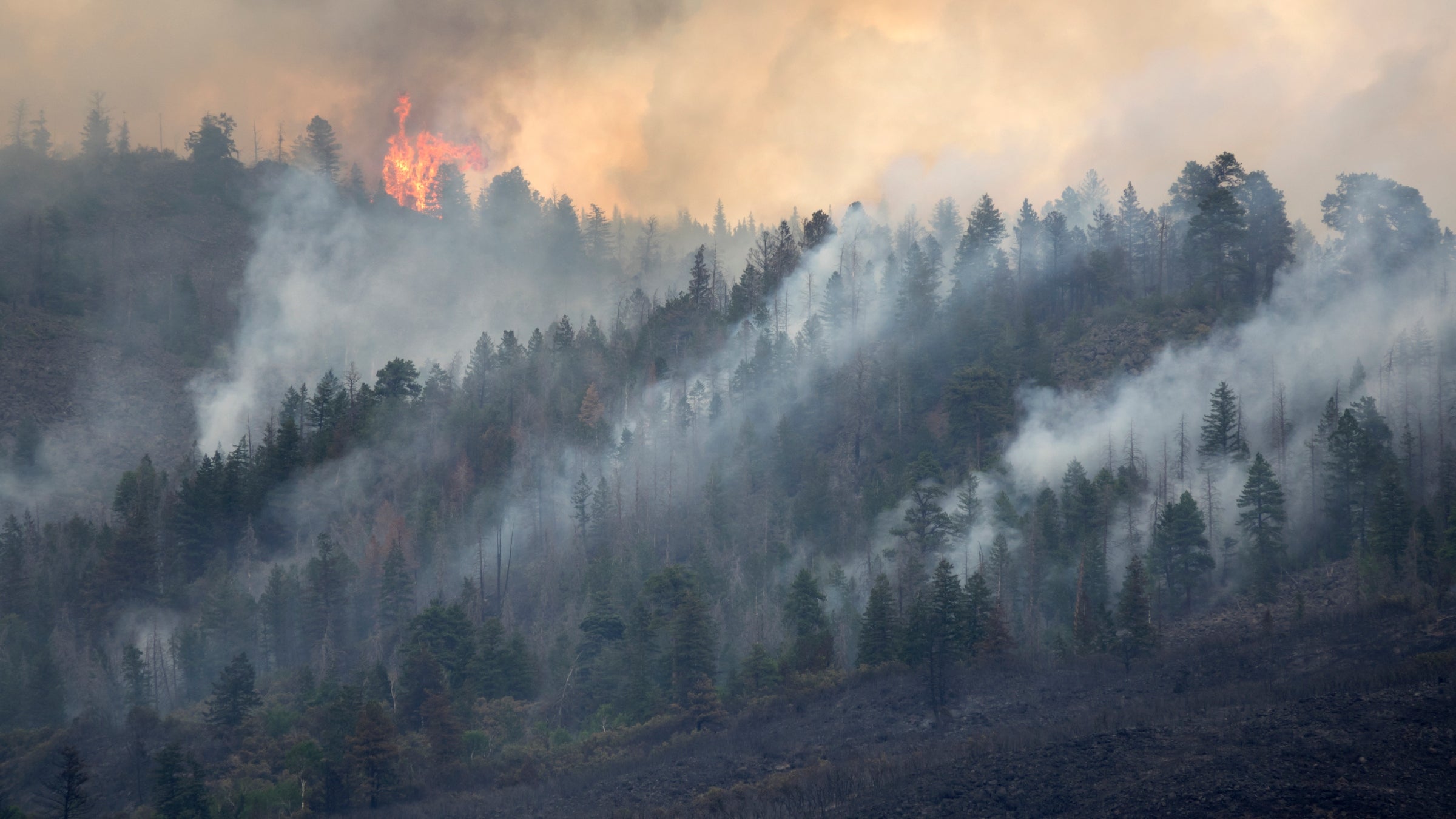
Persistent smoke pollution is becoming a new public health threat, with wide-ranging impacts to our minds and bodies. (Photo: milehightraveler/Getty )
In recent years, wildfires in the western U.S. have grown larger and more intense, stoked by factors like climate change and the build-up of dense trees and dry brush from past fire suppression. These powerful blazes generate smoke that can travel hundreds of miles, compromising air quality in distant towns and cities. California’s Park fire, which began on July 24 and exploded into the fourth largest in the state’s history, sent smoke to neighboring western states. In 2021, smoke from Western wildfires made it all the way across the country, and according to one NPR analysis, one in seven Americans were impacted by wildfire smoke in 2020.
Is Wildfire Smoke Bad for My Health?
Persistent smoke pollution is a public health threat, with numerous impacts to our minds and bodies. Tiny soot particles are capable of breaching the barriers of the lungs and skin, and can cause wide-ranging damage. One recent not-yet-published study announced at the Alzheimer’s Association International Conference even found an increased risk of dementia in older adults affected by wildfire smoke.
“Air pollution that comes from wildfires affects every organ in our body,” says Aaron Bernstein, director of the CDC’s National Center for Environmental Health. Here’s an overview of the concerning health effects researchers have uncovered so far.
What Are the Health Effects of Breathing in Wildfire Smoke?
Lung and Heart Damage
Wildfire smoke contains fine particulate matter, called PM 2.5, which poses a risk to our lungs. (Other forms of combustion, including gas- and diesel-powered car engines, also produce PM 2.5.) These tiny smoke particles, which include soot and a variety of chemical compounds, are 2.5 micrometers in diameter or smaller. More than 30 could fit across a single human hair.
ADVERTISEMENT
Their miniscule size is precisely why they’re dangerous. As many studies focused on air pollution from burning fossil fuels have found, fine particles can fly past the body’s respiratory defenses deep in the lungs, where they can cause serious damage.
Wildfire smoke exposure is especially problematic for respiratory health. Recent studies have linked it to increased hospital admissions for conditions like asthma, chronic obstructive pulmonary disease, bronchitis, and pneumonia. Smoke exposure is also correlated to a higher risk of early death and cardiac issues, including stroke and heart failure.
Even fires hundreds of miles away can trigger acute health concerns. In a study of fire season hospitalizations on Colorado’s Front Range, researchers found smoke from long-distance fires tended to result in more hospitalizations than local ones. Sheryl Magzamen, lead author and epidemiologist at Colorado State University, believes this could be because people tend to be more aware of nearby fires and are therefore more likely to take protective measures. Another possible reason is that as smoke ages, its chemistry changes in a way that causes a stronger inflammatory reaction in the body. When organic airborne pollutants react with sunlight, sometimes they form secondary compounds that are more toxic when inhaled. But research on the toxicity of aged wildfire smoke is limited, Magzamen says.
Fires also launch live microbes into the air. The air above wildfires is like a bubbling pot, lifting up fungi and bacteria and sending it high into the sky, says Leda Kobziar, a wildland fire scientist at the University of Idaho. Kobziar has found that the concentration of microbes in smoky air can increase to roughly four times that of background levels. Some of the fungi in smoke include known allergy-causing organisms, but more research is needed to determine whether the microbes could cause respiratory infections in people living near a fire.
ADVERTISEMENT
Inflammation and Increased Infections
The tiny particles in smoke also set off an inflammatory response in the body, which weakens its defenses to other infections. This effect has long been demonstrated for urban air pollution, and researchers are now finding that it also holds true for wildfire smoke exposure. In a 2020 study, researchers performed a statistical analysis using data on fine particulate matter levels and weekly flu cases in Montana from 2010 to 2018. They found that the more wildfire smoke a person inhales over a summer, the greater their chances of contracting the flu the following winter. Particles from smoke also seem to exacerbate the transmission and mortality rate of COVID-19. One study estimated that in 92 counties in Oregon, California, and Washington in 2020, wildfire smoke resulted in an additional 19,742 COVID cases and 780 deaths.
There’s also growing evidence that particulate matter in wildfire smoke might be even more dangerous than regular urban air pollution. Especially when a massive blaze ignites buildings and cars, the resulting smoke often contains toxins like lead.
Pregnancy Risks
Tiny smoke particles can even impact the womb. In a study of hospitalizations near the 2018 Camp Fire, a week of heavy smoke exposure was linked to a nearly four percent increase in the risk of preterm births. “When you get the days that are much worse [for smoke], even a few of those days can have really large impacts,” says Sam Heft-Neal, a researcher with the Stanford University Center on Food Security and the Environment. He adds that while the study was the first to link wildfire smoke to pregnancy risks, other research has established a connection between particulate matter from other sources and preterm births. Another study of newborns in Brazil, published in 2022, linked exposure to wildfire smoke during pregnancy to low birth weights.
If smoke is bringing pollution to the “unhealthy for sensitive groups” Air Quality Index range (101 to 150), Heft-Neal suggests that pregnant people consider precautions like staying inside or wearing an N95 mask outdoors.
ADVERTISEMENT
Itching and Irritated Skin
When ash from the Camp Fire rained down 175 miles away in San Francisco—a city that normally enjoys fresh, seaside air—dermatology researchers wondered whether the sudden blast of soot would have an impact on skin. In an analysis of more than 8,000 clinic visits for eczema and itching (during the Camp Fire and during a previous year when the air was clear), the team found that smoke sparked an eczema-related appointment increase of 50 percent in kids and 15 percent in adults. Clinics also saw increases in visits for itching—up 80 percent for children and 30 percent for adults. “The effect is immediate and it’s kind of severe,” says senior author Maria Wei, a dermatologist at the University of California, San Francisco.
The findings suggest that brief periods of smoke can be enough to disrupt our largest organ. Even people without an eczema diagnosis—a condition in which the skin barrier may not function effectively—experienced irritation. That could mean that either the wildfire smoke is unmasking previously undiagnosed skin disease, or that smoke can even affect skin that doesn’t have a deficiency in its barrier, Wei says.
ADVERTISEMENT
While there hasn’t yet been research specifically testing interventions for skin health and smoke, Wei says that wearing long-sleeved clothing and applying emollients may help.
Poor Mental Health
Smoke particles can be directly toxic to the brain. Numerous studies on urban particulate matter pollution indicate that long-term exposure to PM 2.5 can lead to cognitive effects, including increased risk of neurodegenerative conditions like Alzheimer’s, Parkinson’s, and multiple sclerosis. And recently, researchers reported that wildfire smoke is linked to a greater risk of dementia diagnosis than other types of pollution, based on air quality data and the health records of more than one million Californians ages 60 and older.
Smoky weather can also spike anxiety and depression. “On air pollution days, we see evidence that people who have mental health symptoms, may be more likely to have more severe symptoms,” Bernstein says. There hasn’t been much research specifically on wildfire smoke, but one study found that even people who didn’t directly experience losses from the Camp Fire reported a significant increase in symptoms of PTSD, anxiety, and depression. It’s unsurprising that mental health would decline in the immediate aftermath of a fire, but “when one sees these symptoms six months out, it really becomes more of a disorder,” says author Jyoti Mishra, a neuroscientist at the University of California, San Diego.
How Can I Stay Safe from Wildfire Smoke?
While these findings are worrisome, public health researchers still have limited information to go off of. People with respiratory conditions like asthma and COPD are more likely to experience impacts from smoke exposure, and other factors like age and fitness can also influence the effect of smoke. But, especially for people who are generally healthy, it’s hard to say what the cut-off is for air quality that you can, say, run in without having to worry about toxic particles lodging in your lungs. “Do I not run at all? Or do I just make my run shorter? … At this point, we don’t have really strong quantitative answers for that,” Magzamen says.
ADVERTISEMENT
Check the Outdoor Air Quality—and Check in with Yourself
A good place to start, though, is simply making a habit of checking the air quality during hazy summers, she adds. Limiting outdoor activity on days when AQI levels are above the “moderate” category can reduce your exposure, but ultimately the trade-off between exercise and smoke exposure depends on the individual. “You have to pay attention to yourself,” says Matthew Strickland, an environmental epidemiologist at the University of Nevada, Reno. “There’s some people who can do vigorous exercise on an orange day and not feel any worse for it. And there’s other people that go out and they can really feel it in their lungs.”
Choose Shorter or Less Vigorous Activities
If you’re keen to go outside, you can reduce smoke risks in a few ways. Consider how many particles you’re inhaling over the whole day, says Michael Koehle at the University of British Columbia, a kinesiologist who has prepared guidelines for reducing air pollution effects during exercise. A long day hike might not have you breathing as hard as stair interval training, but you will inhale a lot more smoke particles than you would in a 30-minute workout.
Consider an Air Purifier
Also consider your indoor air quality; especially if you spend most of your day inside, you may be unwittingly exposed to more smoke indoors than outside over the course of the day. Using an air purifier in the room you spend the most time in can significantly reduce how many soot particles you inhale.
ADVERTISEMENT
Manage Other Physical Stressors, Like Heat—and Bring a Mask
Heat adds stress to your body, so—assuming the smoke levels are about the same over the day—a morning outing is a safer bet than a midday one, adds Strickland. Heat is also problematic because it increases the formation of ozone air pollution, adding to the health risks of smoky air. A well-fitting N95 mask will also effectively filter out smoke particles.
That said, once the air quality moves into the “very unhealthy” and “hazardous” categories, the benefit of exercise is likely outweighed by the risks of smoke, says Strickland. The NCAA also has advice for how athletes should interpret air quality scores.
Support Policies that Mitigate Wildfires
Medical professionals might also have a role to play in limiting smoke’s health impacts. Raj Fadadu, a medical student at UC San Francisco who led the skin disease study, says doctors need to be comfortable advocating for climate policy and talking to patients about climate change. “That’s one of my aspirations as a future physician: to be able to have dialogue with patients about the climate crisis, not only how it’s affecting their health, but different actions that they could take with regards to sustainable living practices to mitigate the crisis.”
