Published August 5, 2022 04:00AM
7 Half-Baked Ideas that Could Spice Up the Tour de France
After decades of sticking to tradition, the Tour de France is trying out new things. Articles editor Fred Dreier has seven ideas for the race that, admittedly, may not be ready for prime time.
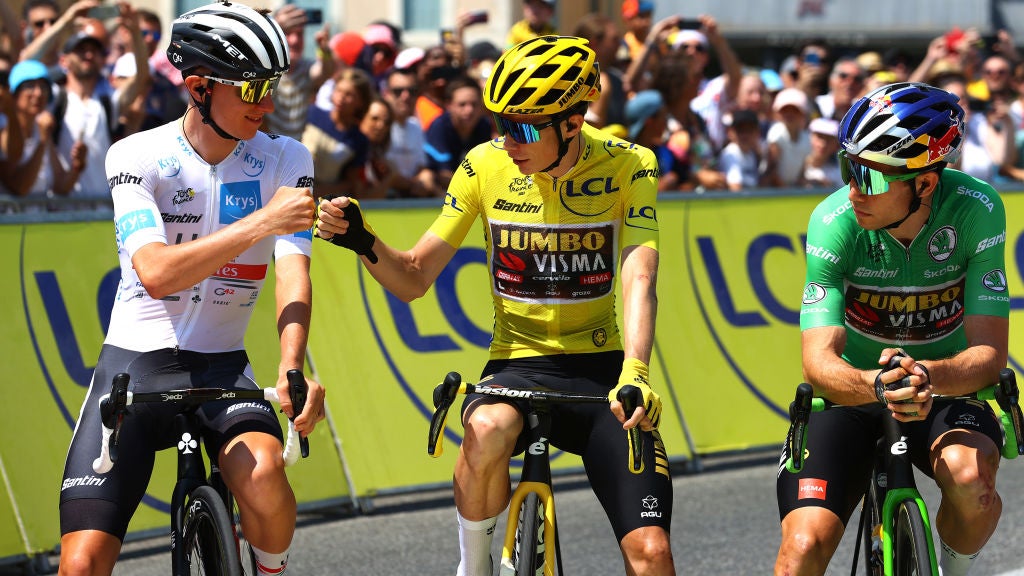
The Tour de France has broken from tradition in recent years. We think the race should break further. (Photo: Michael Steele / Getty IMages)
The Tour de France has broken from tradition—and I couldn’t be happier.
For decades, the race’s ownership group, Amaury Sport Organisation (ASO), kept the Tour preserved in time, like Han Solo frozen in carbonite. The rules, regulations, stage distances, and the presence of podium girls all felt like holdovers from a bygone era. At best, this reverence to the race’s 100-year history felt quaint, like watching a baseball game at Wrigley Field. At worst, it was problematic, and watching the race sometimes felt like reading your Uncle Dave’s Facebook posts.
Then, a few years ago, ASO officials started trying out bold and sometimes bizarre experiments to freshen things up. First, they ditched the daily 120-mile stages for shorter and punchier ones, and the shift breathed new action and aggression into the race. Then, they replaced the podium girls with men and women “presenters.” The Tour even tried out a Formula One starting grid during a stage back in 2018, and it backfired in hilarious fashion. Now, there’s even talk of the Tour ditching the final stage in Paris for one along the French riviera.
Of course, the biggest change happened this year, when ASO officials finally launched a bonafide Tour de France for women—and let us all commend them for doing so.
My take: these sudden changes are a sign that the Tour de France is no longer beholden to its own history, and that its organizers are open to innovation, no matter how wacky or weird the idea may be. ASO officials want to spice things up and bring the Tour de France into the 21st century. Well, lucky for them, I have a handful of half-baked ideas.
ADVERTISEMENT
King/Queen Of Social Media Jersey
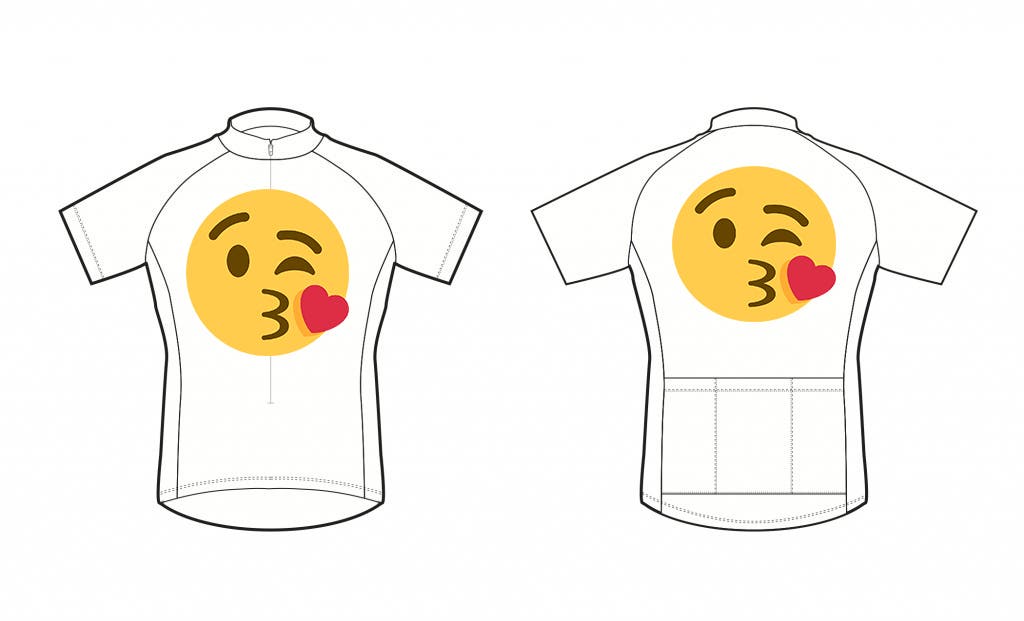
Perhaps the most challenging concept for casual fans to grasp about the Tour de France is that there are multiple races going on within the event—yep, the fight for the different colored jerseys. There’s the white jersey, given to the fastest rider under 25 years old, the green jersey, awarded to the best sprinter, and the polka-dot jersey—called the King/Queen of the Mountains—given to to the best climber. To win these jerseys, riders must chase points that are available at seemingly arbitrary zones along the course each day. Following the races within the race often requires the use of a calculator (or, for those Tour traditionalists, a slide rule).
Here a basic concept for a jersey competition that any casual fan can understand: the King/Queen of Social Media Jersey, awarded to the rider who generates the most likes, retweets, shares, and comments on Instagram, Twitter, and Facebook (sorry, I’m not on TikTok yet). To honor this award, I propose the Kissy Face jersey (see rendering above).
ADVERTISEMENT
I predict the battle would heat up as the Tour headed into its second and third weeks, and riders became hungry for likes. Perhaps they would resort to tweeting out theories about Stranger Things, or voicing their hottest takes on Tom Brady, or producing their own music videos in order to win. Who am I kidding—Colombian Rigoberto Uran and Italian Letizia Paternoster would generate the most engagement every year.
Podium Critters
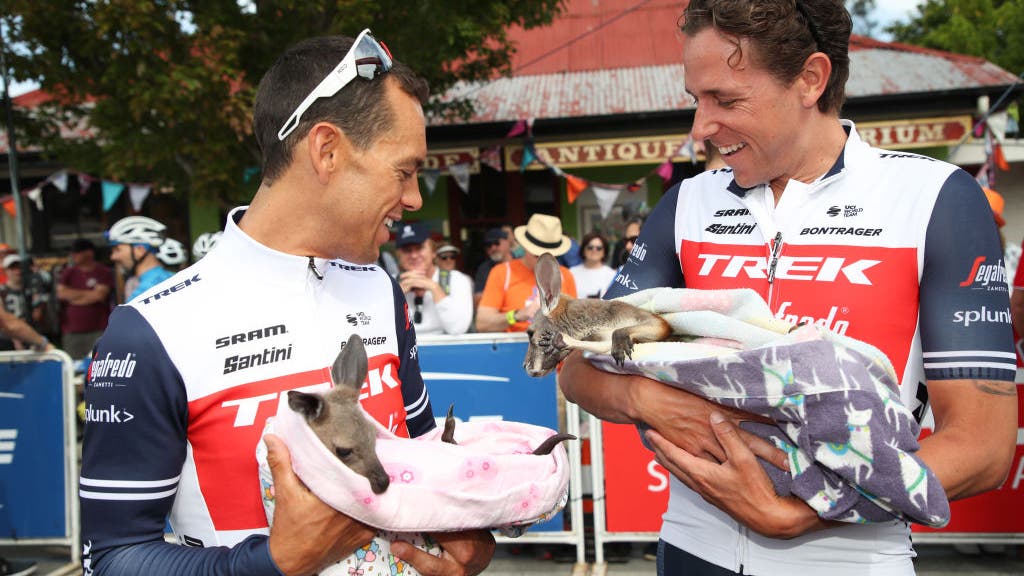
I’m not the first person to propose swapping out the podium presenters for friendly animals like pooches or kitty cats. Look, I understand the pushback here. Podium presents do play a role in the daily awards ceremony—they show riders where to stand, and then direct whichever sponsor executive, or local politician, has been chosen that day to hand out the jerseys and medals.
Let’s replace them with animal handlers, and then bring in a few critters that best represent the local fauna. Australia’s Tour Down Under gives riders cute baby kangaroos to hold prior to each stage (see above). I’d love nothing more than to see Peter Sagan accept his ceremonial wheel of cheese from a Mouflon, and for Wout van Aert to receive his green jersey from a Chamois.
Bikepacking de France
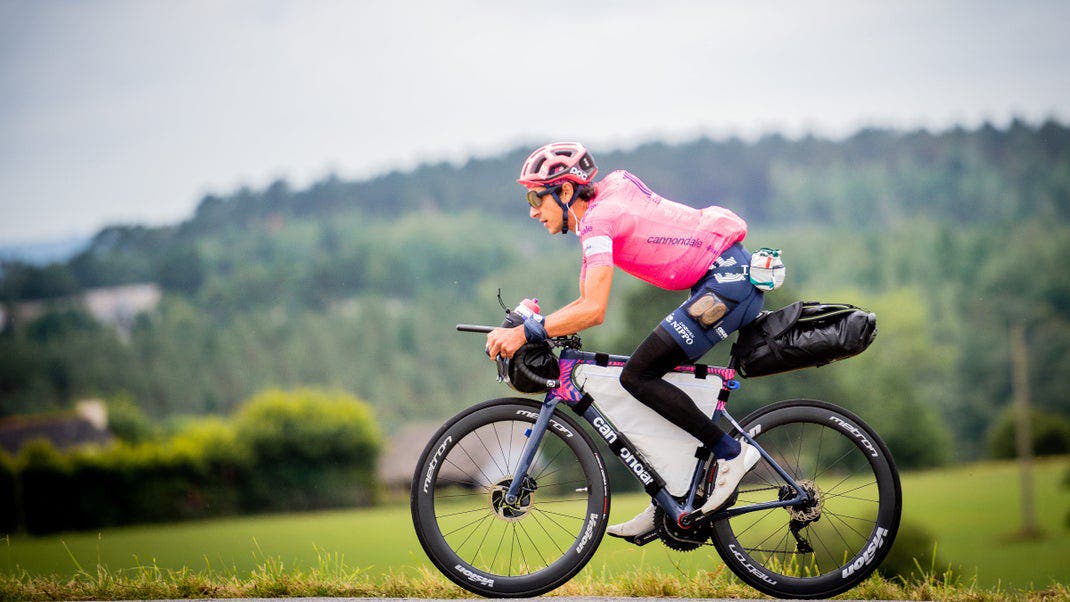
Last summer, Australian pro cyclist Lachlan Morton generated headlines far and wide by riding the entire Tour de France route as a bikepacking voyage. Morton covered huge distances by day, and slept in campgrounds or alongside the road at night. He even completed the lengthy transfers between each stage that the riders cover by bus or plane. In total, Morton rode 3,424 miles and finished late at night in Paris. The whimsical ride was called the Alt Tour, and Morton did much of it wearing sandals.
I was Editor-in-chief of VeloNews at the time, and I marveled at the online traffic generated by our coverage of Morton’s ride. Some stories overshadowed the actual Tour de France. I was surprised when team, which never shies away from attention, didn’t tap him to do it again this year.
Anyway, in lieu of the Alt Tour’s absolute success, I suggest staging an unofficial and highly non-competitive bikepacking challenge along the Tour route each year. Note: invite retired pros, Instagram influencers, mustache aficionados, unicyclists, Ultra Romance, and other quasi-famous internet cycling celebrities to ride it, and just sit back and watch the global media footprint swell. People love bikepacking content.
ADVERTISEMENT
Domestique Skills Challenge
My idea: designate one stage each year to be the official “domestique skills challenge,” which would basically be cycling’s answer to the NHL All-Star skills challenge, in which hockey players compete to see who is the fastest skater, hardest shooter, and best at flinging a puck into manmade islands in a fountain. For cycling, I envision events like the water bottle carry (see above), the teammate pee push, and the race caravan obstacle course.
Coed Relay Race
ADVERTISEMENT
Weirder Time Trial Helmets
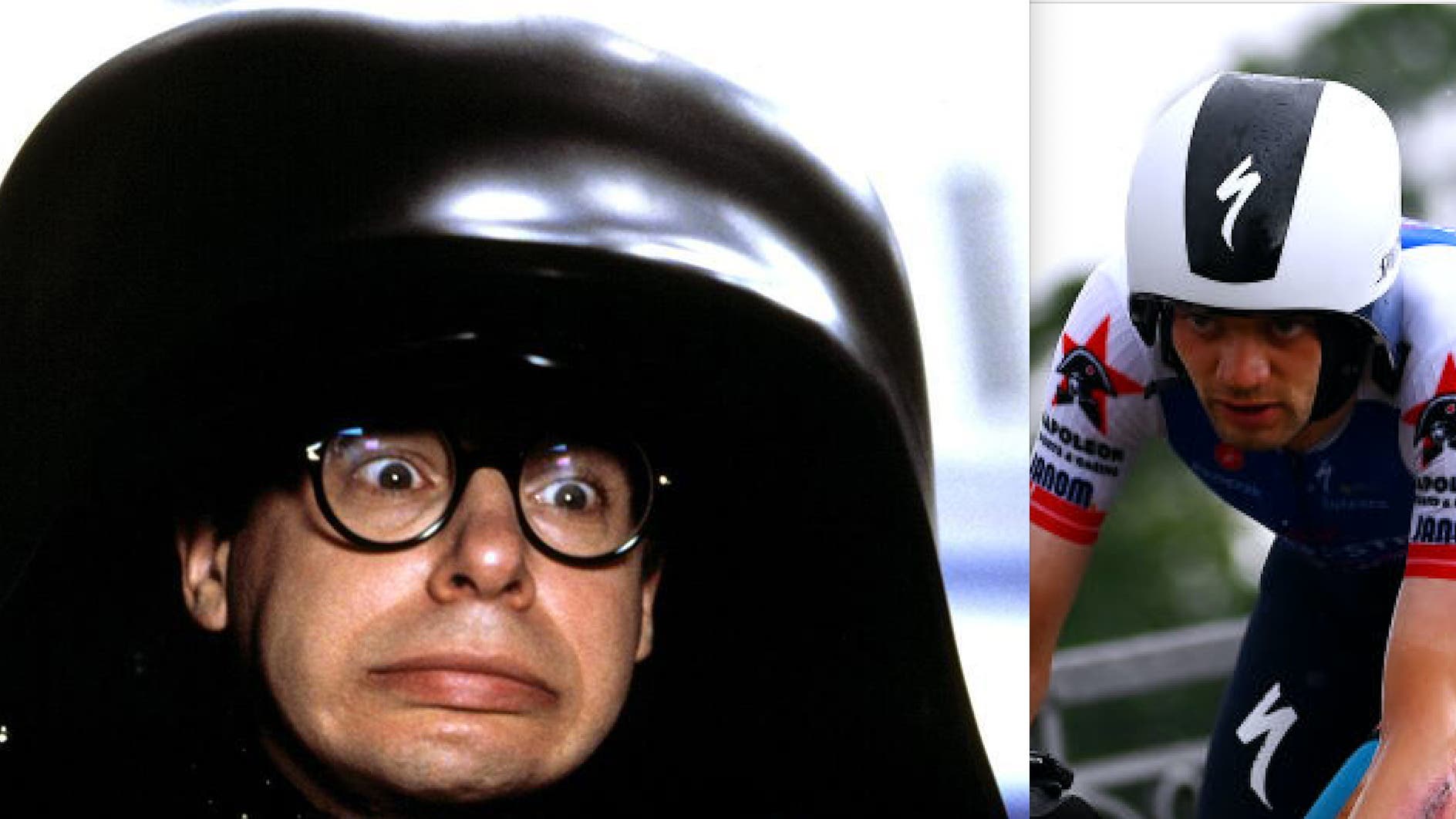
Last month my colleague Caley Fretz demanded that the UCI ban the awkward and downright ugly new time trial helmets made by bike brand Specialized. I totally disagree with this take. As a fan of the film Spaceballs, I feel that the strange headgear is the closest our sport will ever get to aping Rick Moranis as Dark Helmet. Sorry, Gen Z readers, this reference may be before your time.
VIP Soigneur
The staffers who hand out bottles are called soigneurs, and they also massage the riders after each stage, wash laundry, haul food, and complete dozens of other tasks. My idea is to invite a handful of paying VIPs into the race’s sogineur ranks, to give them the ultimate behind-the-scenes Tour de France experience. Sure, maybe massage duties are off-limits. But if handing out water bottles is fun for Valtteri Bottas, it’s gotta be something a CEO would love to do as well.
