Updated December 20, 2024 07:59PM
Originally posted onVelo
7 Tips to Make Indoor Cycling Actually Fun
A necessity or a nicety, there's ways to improve your indoor ride experience. Here's my tips, tricks, and accessories to make indoor cycling enjoyable
It’s that time of year when cyclists in many parts of the world are putting the summer bikes away. Depending on where you live it’s cold, it’s wet, it’s frozen, or it’s some combination of all three.
If you feel like venturing out into the elements, enjoy. I’ve done it and I can tell you exactly how to make it more tolerable but these days, you might not want to. There are incredible options for staying fit and having fun riding a bike that doesn’t move. I’ve already shared the foundation in our smart trainer buyer’s guide, but there’s more to it.
I’ve seen a number of cyclists get a nice smart trainer then barely use it. Many people will tell you that indoor cycling is awful but I think it’s a matter of finding what works. Indoor cycling can actually be fun with only a few small changes. I’ve spent tens of thousands of miles going nowhere over the years and I regularly sit for 3-8 hours at a time on a trainer during the winter. This is how I do it. These are my tips, tricks, and accessories to make indoor cycling fun.
1. Start with a Goal
Spoiler, there’s going to be things to buy in this article. We aren’t making any money on it but there are accessories that will help. Still, instead of starting there, I want to start with something that’s simple and free. Before you buy anything, first start with a goal and make sure it’s something other than merely existing for a period of time on a bike. That won’t be enough.
ADVERTISEMENT
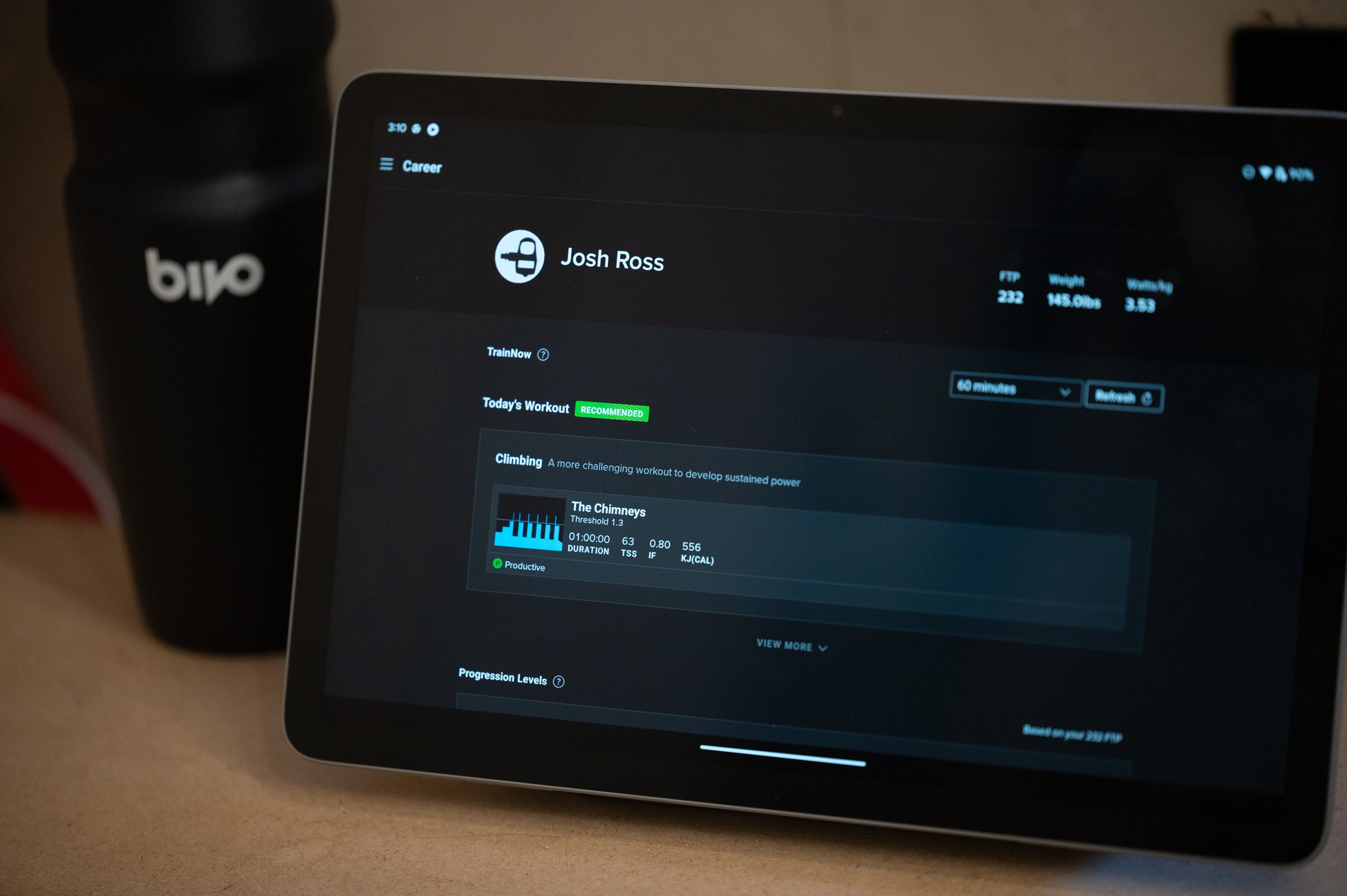
The primary indoor riding software options include Zwift, Wahoo Systm, and TrainerRoad with each offering different goals. Of those, TrainerRoad and Wahoo Systm are more straightforward. The goal is to improve fitness and when you log in both offer a workout for the day that reflects your recent riding. TrainerRoad describes it as “Get faster with a structured workout. These selections are automatically chosen just for you, based on your recent training history.”
If that sounds like it works for you, perfect. You can adjust the time you want those workouts to last and both software platforms will offer you something with a beginning, a middle, and an end that pushes towards a short time goal of finishing and a long term goal of getting faster.
It’s a very viable way to train and more or less the way cyclists always trained. Both platforms also have small tricks, like the progressions that Trainerroad shows after each workout, to help keep you motivated in the short term.
The only problem is not everyone thrives on structured training and intervals. For some people riding a bike isn’t about trying to be as fast as possible and the inherent suffering of a hard interval doesn’t feel like much fun. I’ve played with Startona lately, which is a free game that disguises intervals, but for most people that’s where options like MyWhoosh, Rouvy, and Zwift come into play.
Of those, Zwift is the most popular so it’s often the one that people have trouble with. New riders get dropped into a Zwift world where they start riding with no particular aim. The clock is ever present and the plan is to try and outlast the time you’ve given yourself for a workout. It’s torture.
ADVERTISEMENT
Focusing on the clock is the most difficult thing you can do. There’s an element of that in an interval workout but at least then there’s a coming rest block to look forward to.
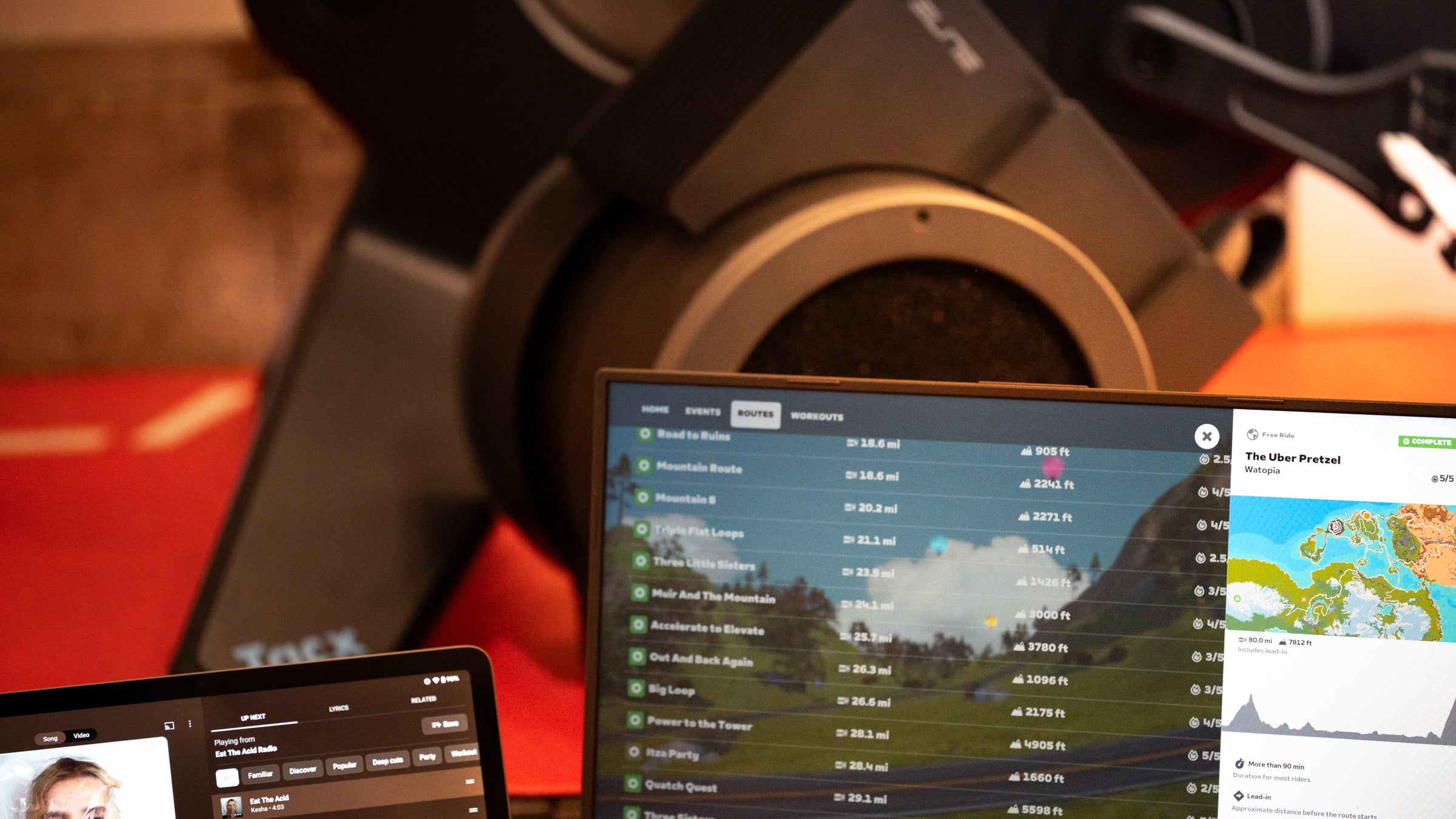
Instead, make your goal on Zwift about completing something. I’ll talk about things with other people down below but if you are by yourself, pick a route and ride until you finish. If you ride faster you can finish faster, and when you finish you’ll get a badge. This alone makes a huge difference and you won’t run out of options soon. Zwift knows this works so even if you are a long time user, there’s always a new challenge.
You can also ride a route using most bike computers paired with a smart trainer. I’ve done that to prepare for an event and I’ve done it to give myself something to do. There’s something sort of interesting about picking a famous route and completing it even if you don’t have much in the way of visuals. I once duplicated a 120 mile, cutty, local ride indoors basically because someone said I couldn’t. Motivations are fickle but finishing something is powerful.
ADVERTISEMENT
Speaking of visuals, I should also mention that you can distract yourself with a podcast or video of some kind. It works well enough but I find it hard to find new content on a regular basis. If that works for you, it’s a big component of Systm so Wahoo might be a good platform to dive into.
2. Treat Indoor Rides like Outdoor Rides
This is another one that’s free and it’s something even experienced riders tend to miss. There’s a lot of talk about how you absolutely must have movement in your trainer. I cover that in the buyers guide but I personally don’t need it.
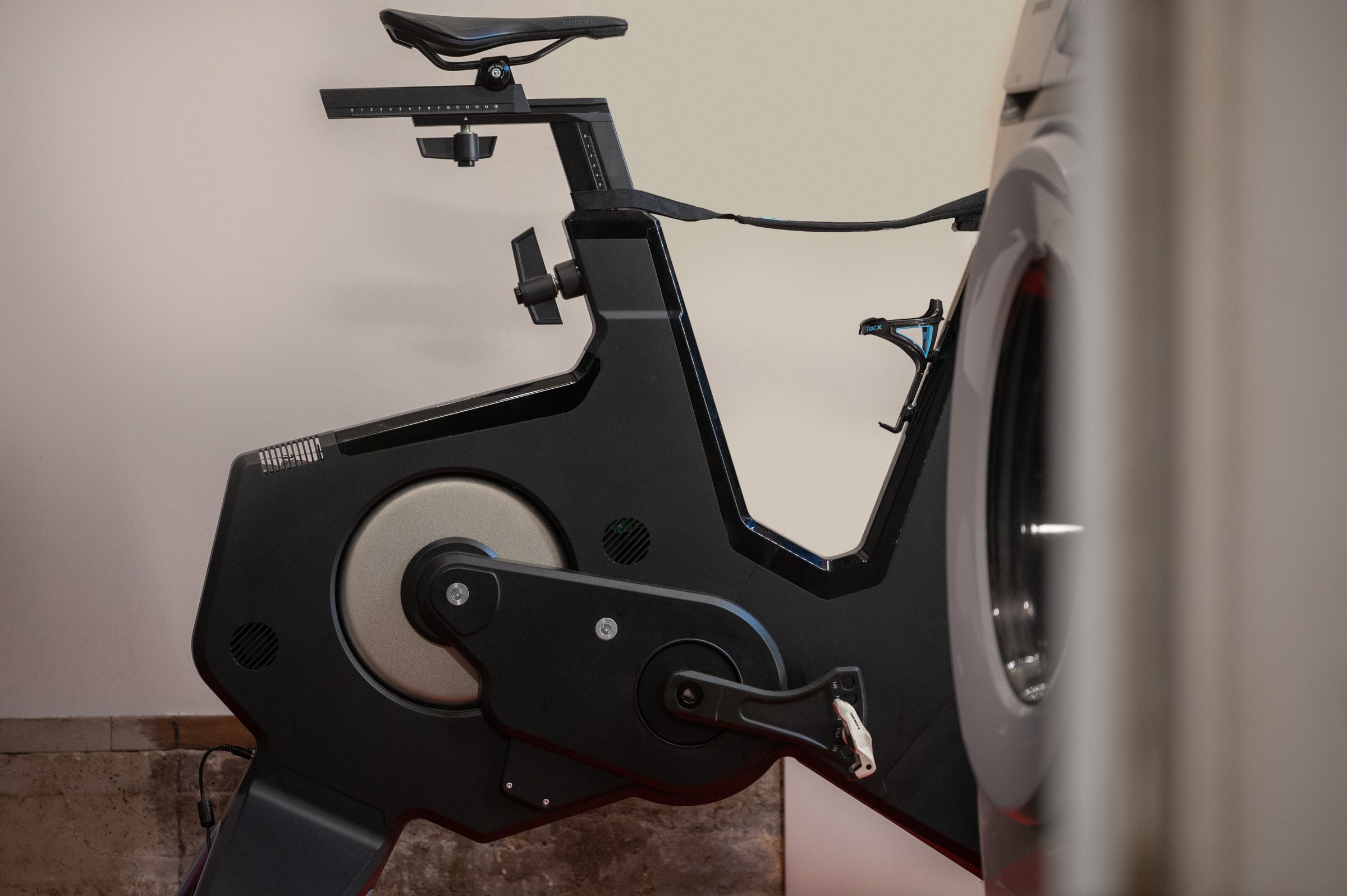
I ride a Tacx Neo Bike Plus and one of the things I love about it is how rock solid it feels. Over the years I’ve had it I’ve shied away from telling people this but it’s true. I like it because there’s no movement, not in spite of it. It works for me because I treat indoor rides like outdoor rides and I move.
Indoors it’s possible to stay almost completely motionless, aside from your legs, for as long as you are able. Nothing external will ever happen that causes you to move. Pretty soon that will feel like torture. It’s also unnatural, do you ever ride outside like that?
ADVERTISEMENT
Given that intervals tend to last for less time, and are difficult enough that standing is more common, this is mostly an issue for simulation software options. Simply stated, if you are riding on something like Zwift you have to take breaks.
Just like outside, when you get to the top of the hill step off your bike. You can decide if it’s cheating to do that while your bike is coasting downhill but step off anyway. Stretch, go to the bathroom, check out the virtual scenery. This is also an excellent time to eat.
Remember, nutrition is an important part of how you need to treat indoor rides like outdoors. It’s also an important part of how you can make indoor cycling fun or quickly turn it into torture. Over and over I’ve seen experienced riders, who know how to fuel outdoor rides, suddenly decide it doesn’t matter inside. I’ve been that person myself. Don’t be that person.
ADVERTISEMENT
You won’t find yourself hours from home when you bonk but you will still bonk. When it happens on a trainer you’ll simply step off and be done. You will still feel terrible and it’s actually more difficult to overcome ending your ride when you don’t have to get home. Instead of facing that dilemma, make sure you eat and drink on the trainer.
3. Ride with a Group
While you are treating your indoor ride like an outside ride, you might consider riding with people. One of the things that makes Zwift dominate in the indoor ride space is the community.
The obvious aspect of this is racing. Zwift racing is incredible and one of my favorite things to do. When there’s longer races I always take advantage and even an hour flys by if you are racing against real people. I once did a team TT race with an ear piece and it was the most pro I’ve ever felt. There’s a lot more to community than racing though.
ADVERTISEMENT
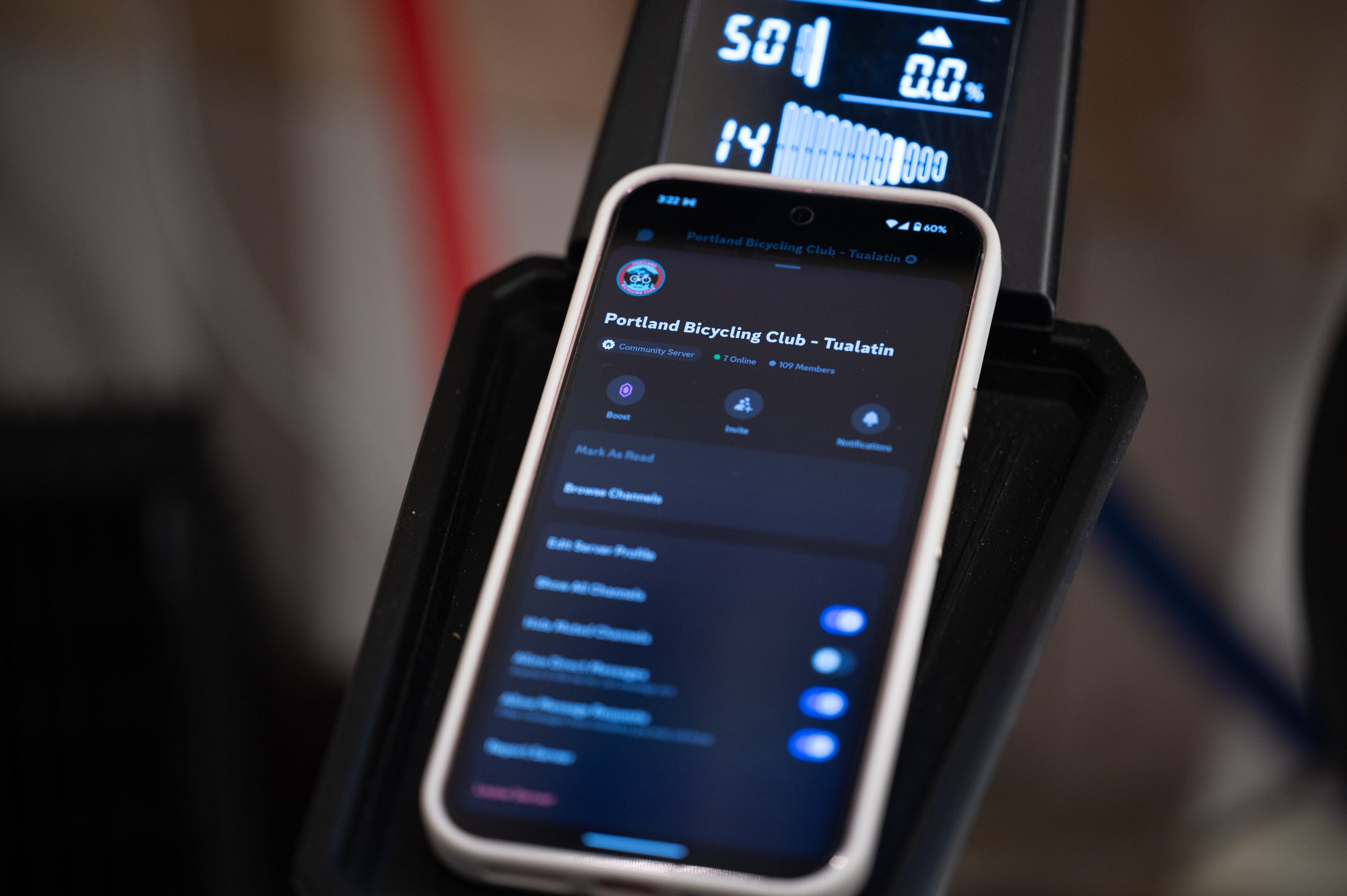
Discord, Reddit, and Facebook all have active communities of people from all over the world that ride together indoors. You can also just find rides through the Zwift companion app that aren’t races. There’s many I join and we chat via text while riding. It’s great but there’s another aspect too. What’s especially great about indoor riding in this respect is that it’s not like riding outdoors.
If you want to ride with people, you don’t need to be in the same place in the world or doing the same thing. I ride with a local group but they are just a bit too far for connecting in person. I’ve never met them in real life even though we ride together often.
I also don’t always do the same thing as them. Sometimes they ride in Zwift while I do intervals on TrainerRoad. It doesn’t matter as long as you meet up and get online at the same time. We use Discord to talk.
Protect Your Bike
This is a tangent but it’s important to say. Your sweat will destroy whatever bike you have on a trainer. It’s one of the reasons an old bike, or an indoor bike, are good ideas but even then you need to think about it.
ADVERTISEMENT
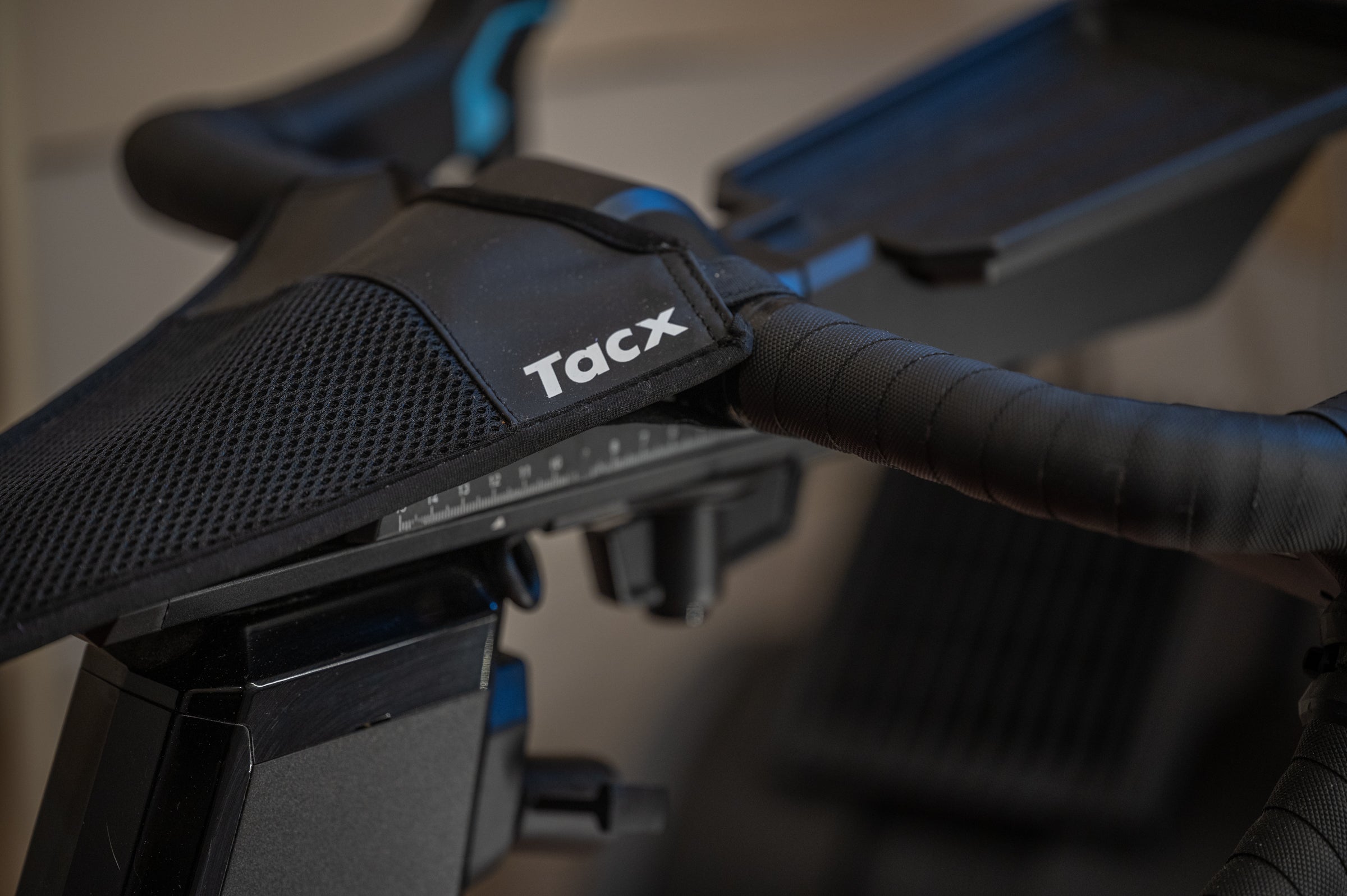
The first thing you will want is a simple frame sweat protector. These stretch between your seat post and your handle bars. I happen to use the Garmin Tacx sweat cover but if you are shopping something that goes a bit higher, over the steerer tube bolt, might be worth searching out.
These aren’t enough on their own though. You also want to spray something on the frame. I’ve heard WD40 works but Muc-Off has a sweat protection product that costs about the same. Might as well go with the dedicated option and spray it over the headtube and downtube in all the little crevices. If you are using a bike with the front wheel on I also like to put a towel over the front wheel making sure to cover the brake if it’s a rim brake bike. Don’t forget to remove this towel after every ride.
4. You Need Fans. Lots of Fans.
At this point we’ve arrived at the part of the article where I really start telling you things to buy. I won’t deny that but I’ve got options and this is what I actually use.
ADVERTISEMENT
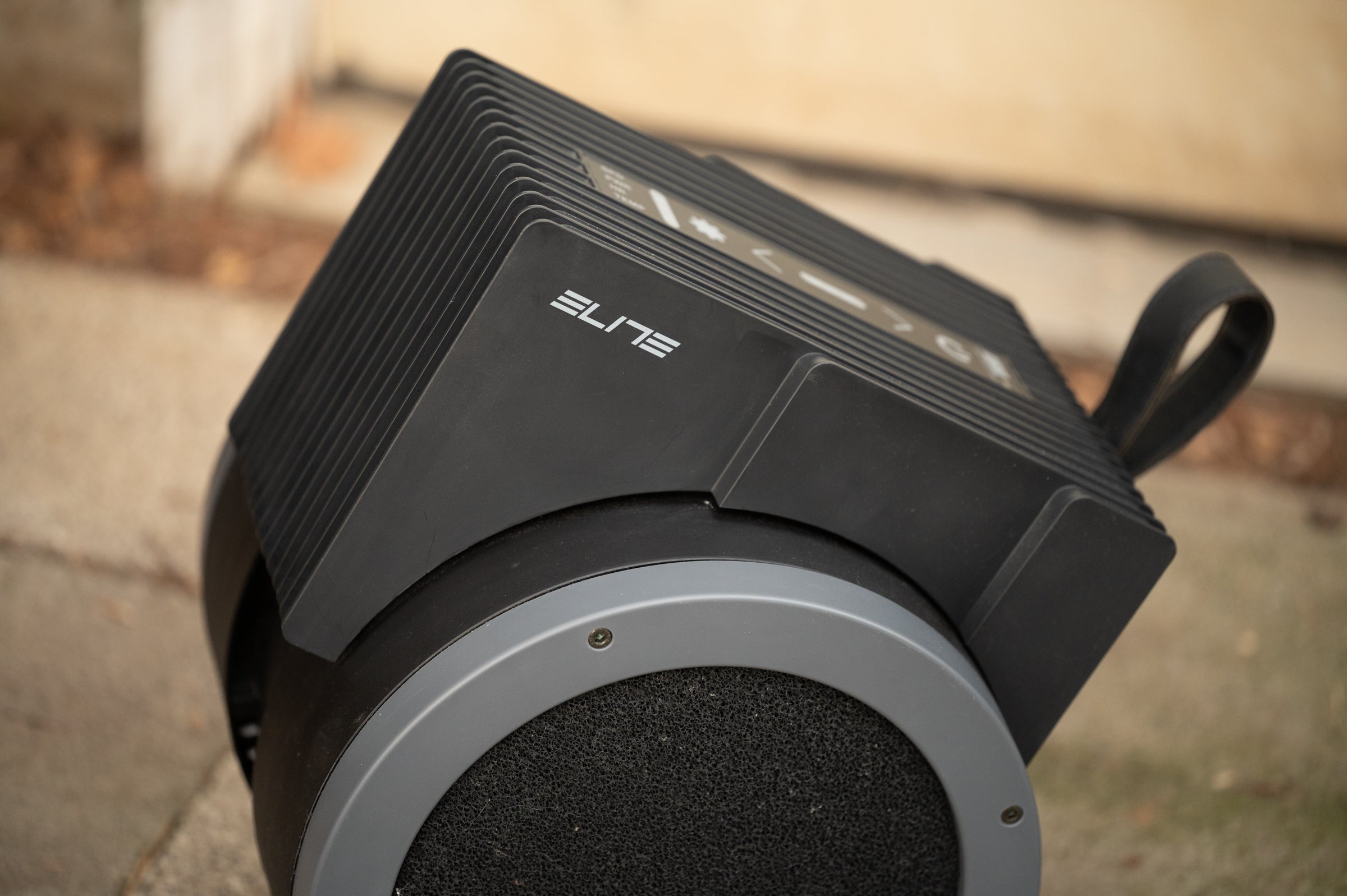
For fans, I use two. The primary fan is a smart fan called the Elite Aria. This is hardly brand new, we talked about the Aria back in 2022, and most people at this point know it costs $350 and competes with the Wahoo Kickr Headwind.
I’ve used both the Wahoo and now the Elite but the Elite works better for me because of the packaging. The area where I ride indoors is ridiculously tight so there’s not much room between the front of the bike and the wall. The Elite Aria is a more compact form factor and it rotates up. That lets me shove it right up against the wall, on top of a highly decorative paint can, and still get the air at my face. The filter seems kind of nice too since it reduces dust.
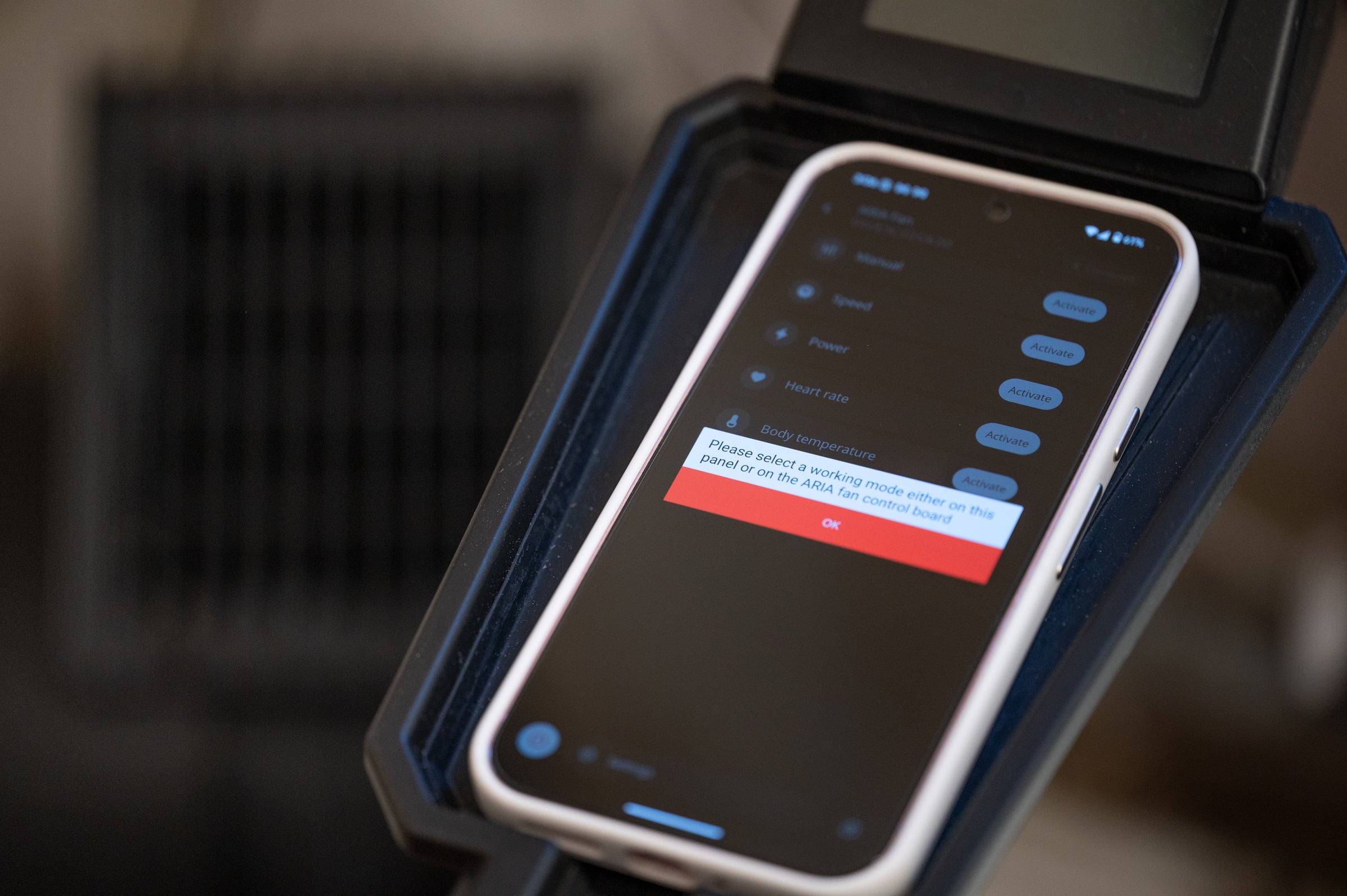
That still leaves the question of a super expensive smart fan. On that front, it works for me because my trainer space is cold in the winter. The Elite Aria connects to a Core temperature sensor, power meter, or heart rate monitor (plus a few other things) and that lets me adjust when it blows.
ADVERTISEMENT
At this point I’ve settled on HR for controlling the fan. I get on and at low HR it doesn’t do much. When I start working hard it ramps up. As temperatures have gone down, I’ve adjusted the range so it starts later and ramps up slower.
Still, as powerful as this fan is, I’ve found it isn’t enough. I think it would work on its own if I had the room to get it centered in front of me but I don’t. It’s on the paint can off to the side instead leaving my right hand to sweat far too much.
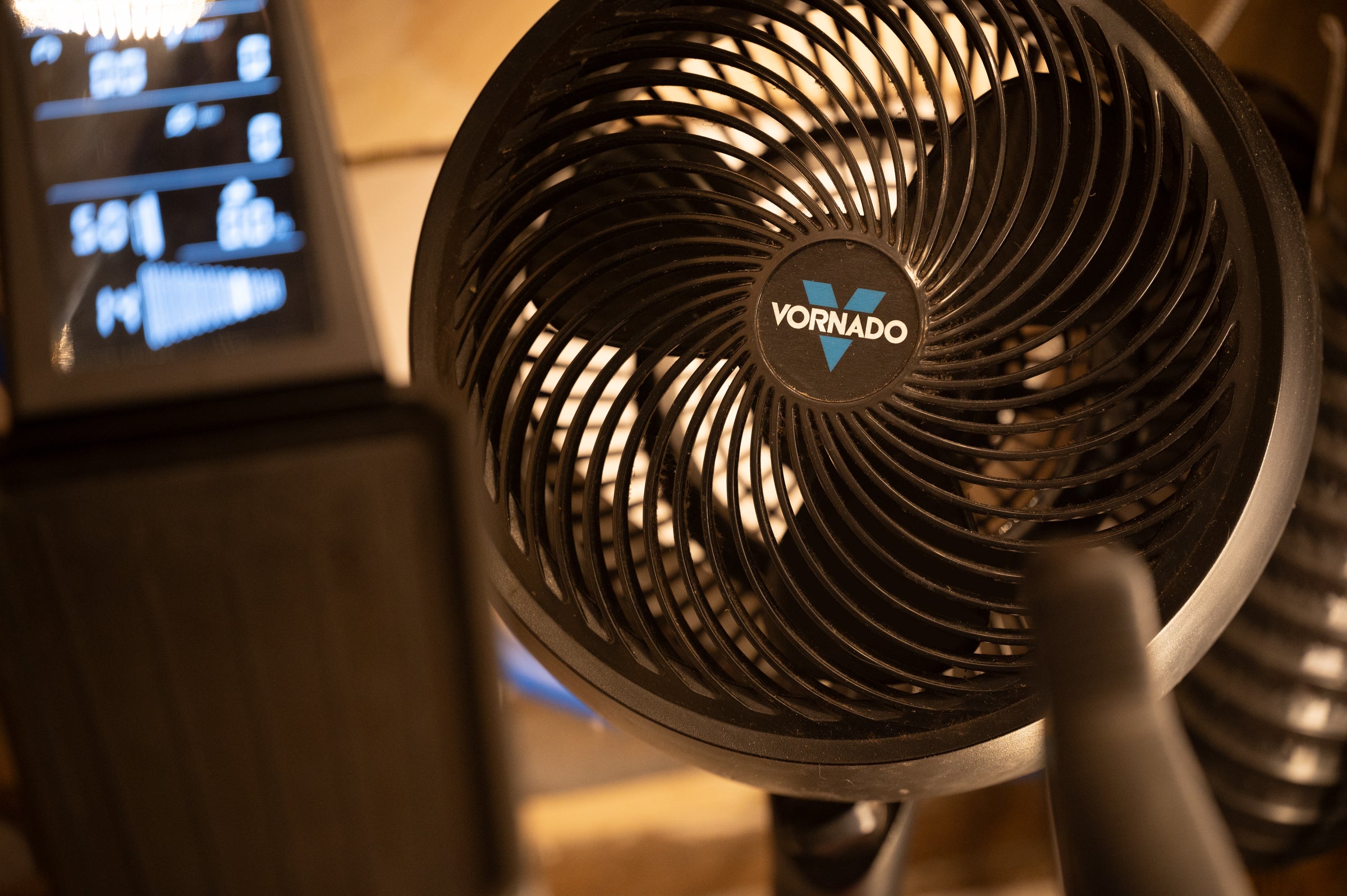
To solve this I have a Vornado 7803 on the opposite side. It’s not the cheapest out there, but it’s powerful enough on its own (if you don’t want/need a smart fan) and I’ve had it for 6 or 7 years with no issues. At some point a few years ago I further upgraded it.
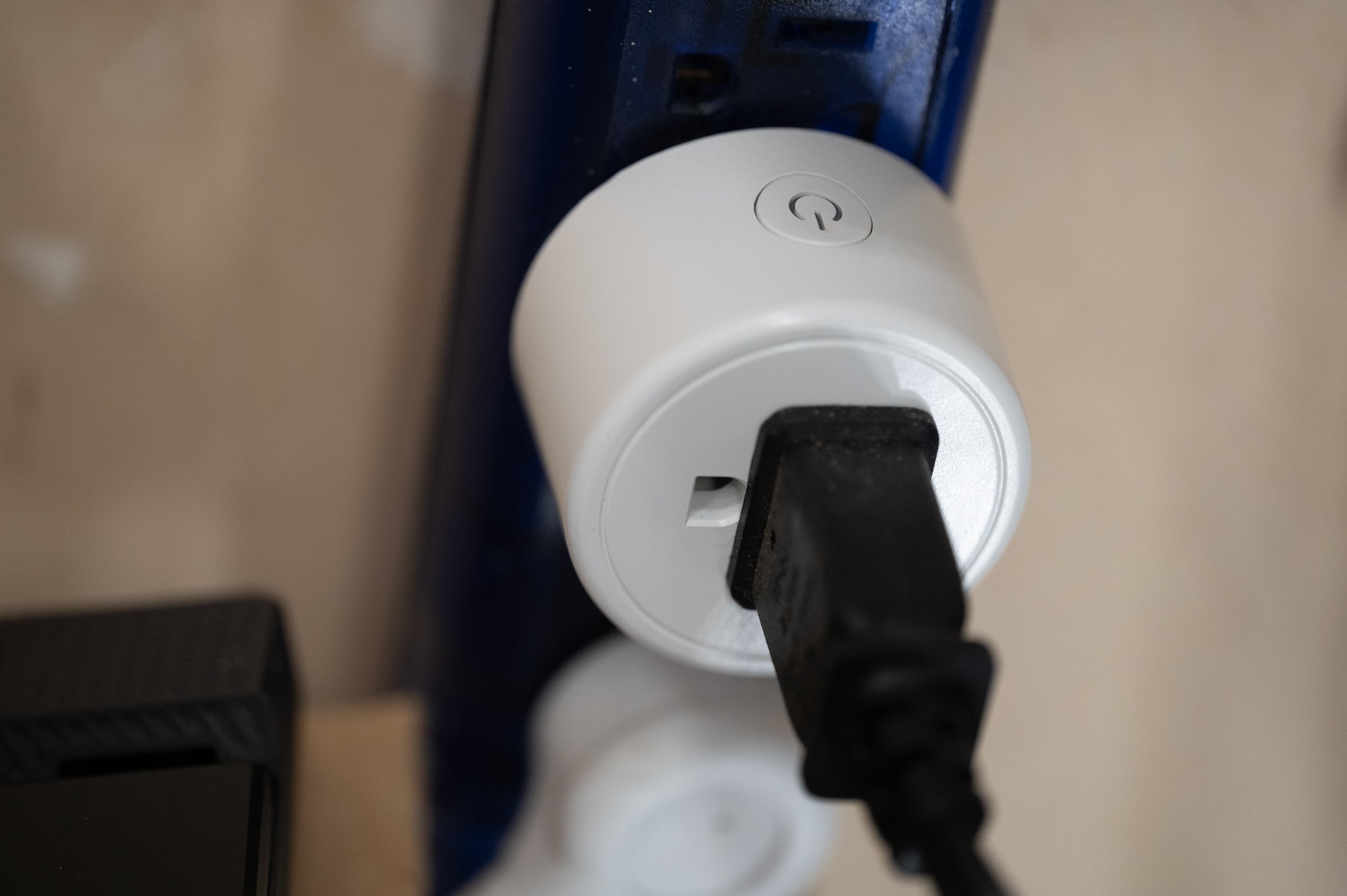
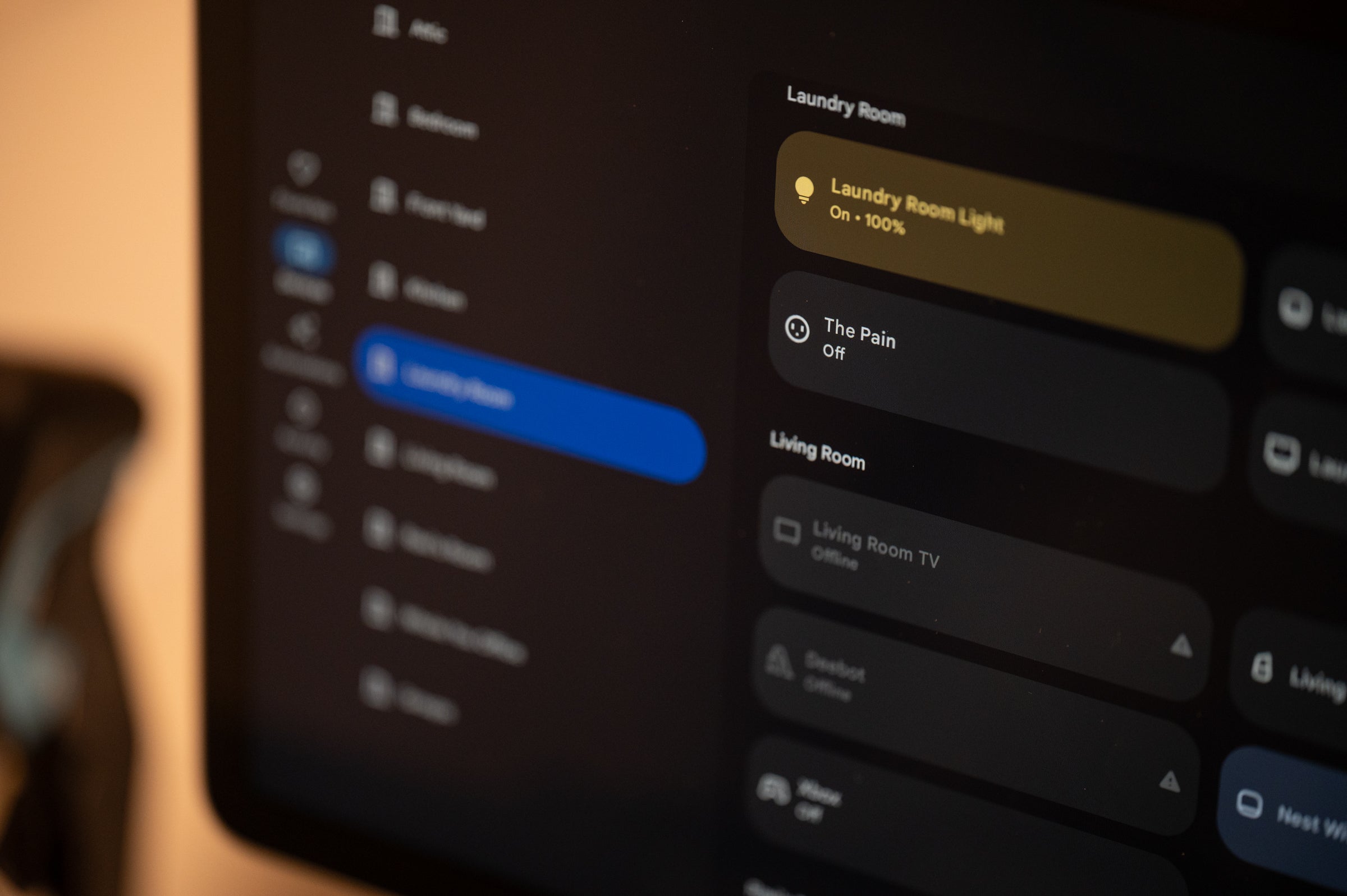
The upgrade I added was a smart plug. I then called that smart plug “The Pain” so that when I’m racing, or doing a hard interval, I can say “Hey Google, turn on The Pain.” Now we both get to enjoy my clever joke… or not but it does work well.
ADVERTISEMENT
Whatever you end up doing for airflow, just know it’s important. Even in a cold room when there’s no airflow, it’s miserable. You need powerful fans and probably more than one.
5. Get a Pair of Good Headphones
You might be doing the math on this and realizing I recommended talking to people while also recommending a bunch of fans pointed at your face. This isn’t a good combination for being heard and a solution has taken a lot of testing.
Outside I always recommend bone conduction headphones. It’s not the point of this article but I’ve been testing the Shokz Openrun Pro 2 (12 hour battery and a standard USBC charge port), I wrote about the Suunto Wing in my 500DNF article, and I often ride with the Suunto Sonic. All are good options outside for listening to music and staying safe. Unfortunately none of them keep you intelligible when trying to ride and talk indoors or outdoors.
I’ve also tested the Sennheiser Momentum Sport which is an interesting option with the inclusion of temp and HR tracking. They also sound good and are quite usable in a wide variety of situations (unlike bone conduction). I couldn’t use the tempo sensor to connect to the Aria though and they aren’t amazing at being heard over a fan either.
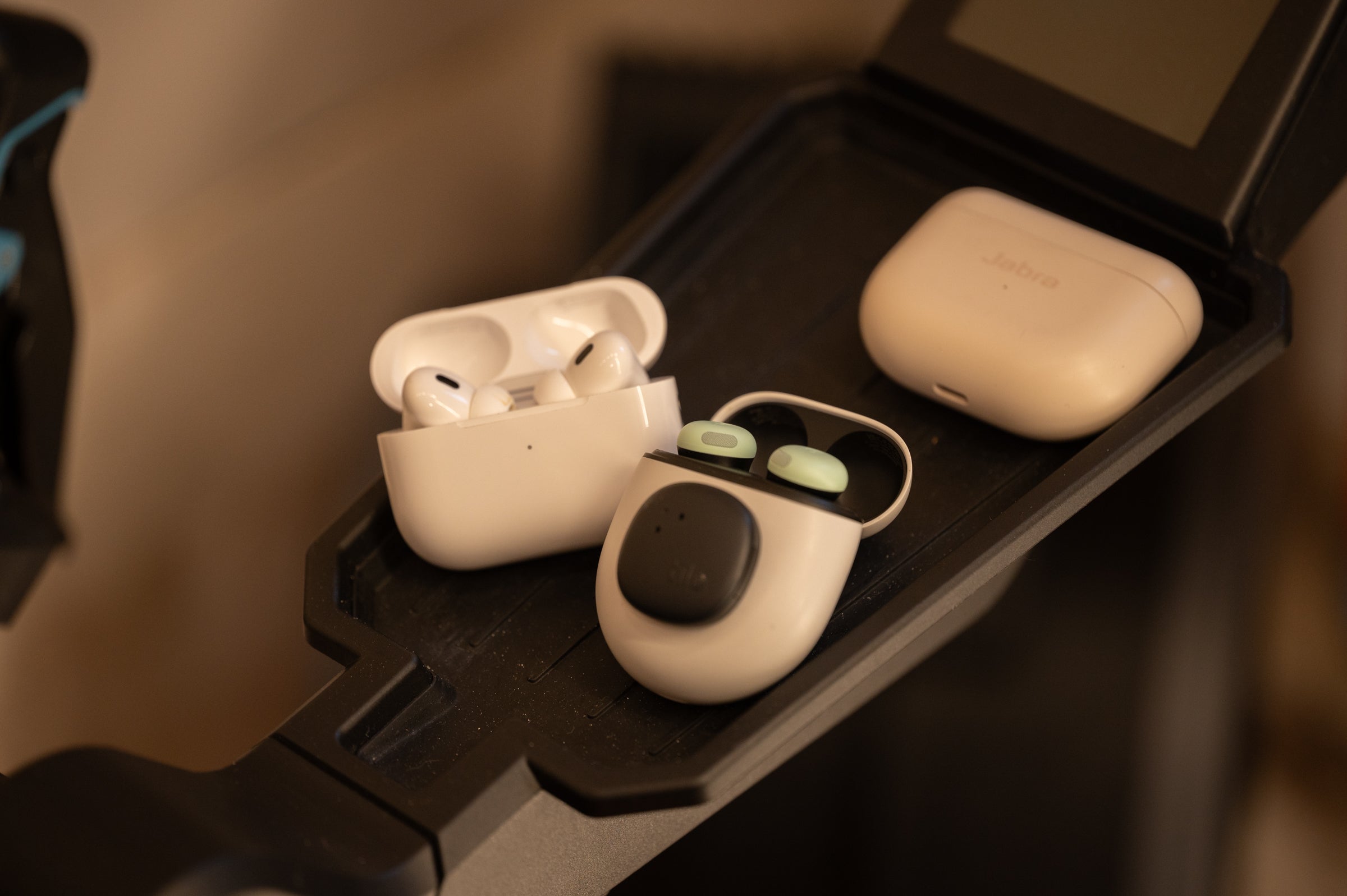
Out of all the headphones I’ve tested, and there’s way more not worth mentioning, I landed on three that do the job. I used to always recommend the Jabra Elite 10 as they were the first pair of headphones that really worked with fans pointed at my head. People could hear me clearly and it was a revelation. Unfortunately, despite shining in a lot of situations, they do get a little slippery from sweat when riding indoors.
Which leaves me with my current recommendations. If you are an Apple user then the Airpods Pro 2 is my suggestion and if you are an Android user then the Google Pixel Buds 2. Neither will work while you ride outside at full speed, or with the Aria at full blast, but indoors you can have fans pointed at your face and remain understandable.
I know it seems cliche to recommend these two but they are the best I’ve tested for this use.
ADVERTISEMENT
6. Computers or Tablets Are Mandatory
This is another weird category where I’ve done a ton of testing to find something that works. Whatever software you decide to use, you’ve got to see it while riding and there are some considerations. Depending on your software there are also some differences.
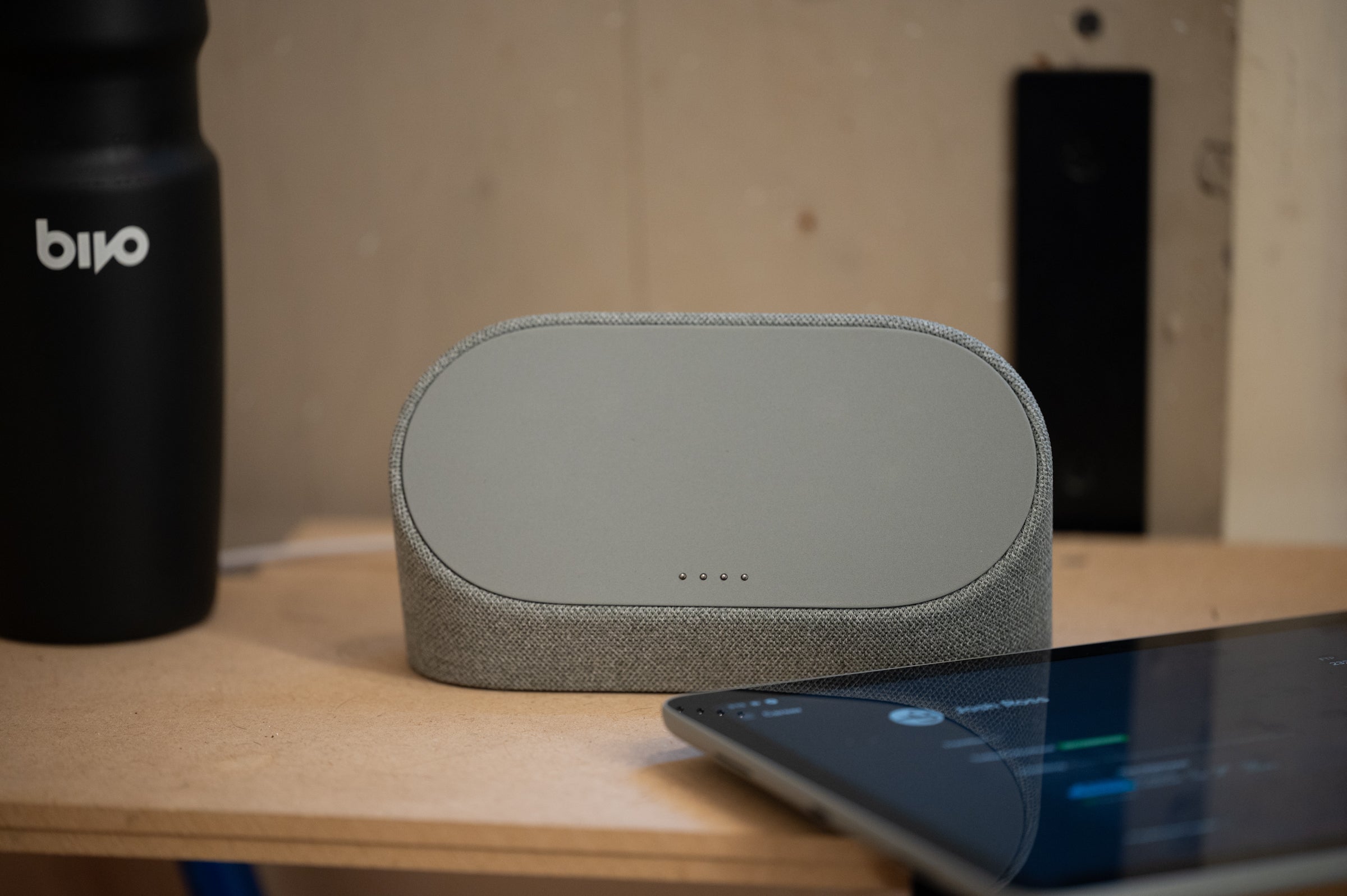
Bottom line, interval software doesn’t take much. You need something to look at and most things will work. For that use, I’ve settled on a Google Pixel Tablet and stand.
I’m not here to tell you this is the best tablet on the market but it solves a particular set of needs and I think that might be true even for Apple users. The reason it works so well for indoor riding is that it’s a multifunction product. I mentioned earlier I yell at my smart fan to turn it on and now I do that with the Pixel tablet instead of a tablet and a Google Home.
The Pixel tablet also has an excellent speaker, when paired with the stand, that always stays connected and keeps the tablet charged. If you want to listen to music without headphones you can yell at it to start something and you can hear it over the fans. The angle is perfect for visibility and sweat hitting the front (it happens) won’t bother it. You can also split screen it for YouTube/Netflix next to your intervals. What it does not do well is handle Zwift.
ADVERTISEMENT
Running Zwift on the Pixel tablet is possible but not ideal. The graphics leave a lot to be desired. I actually still use it for Zwift but it’s off to the side playing music or videos.
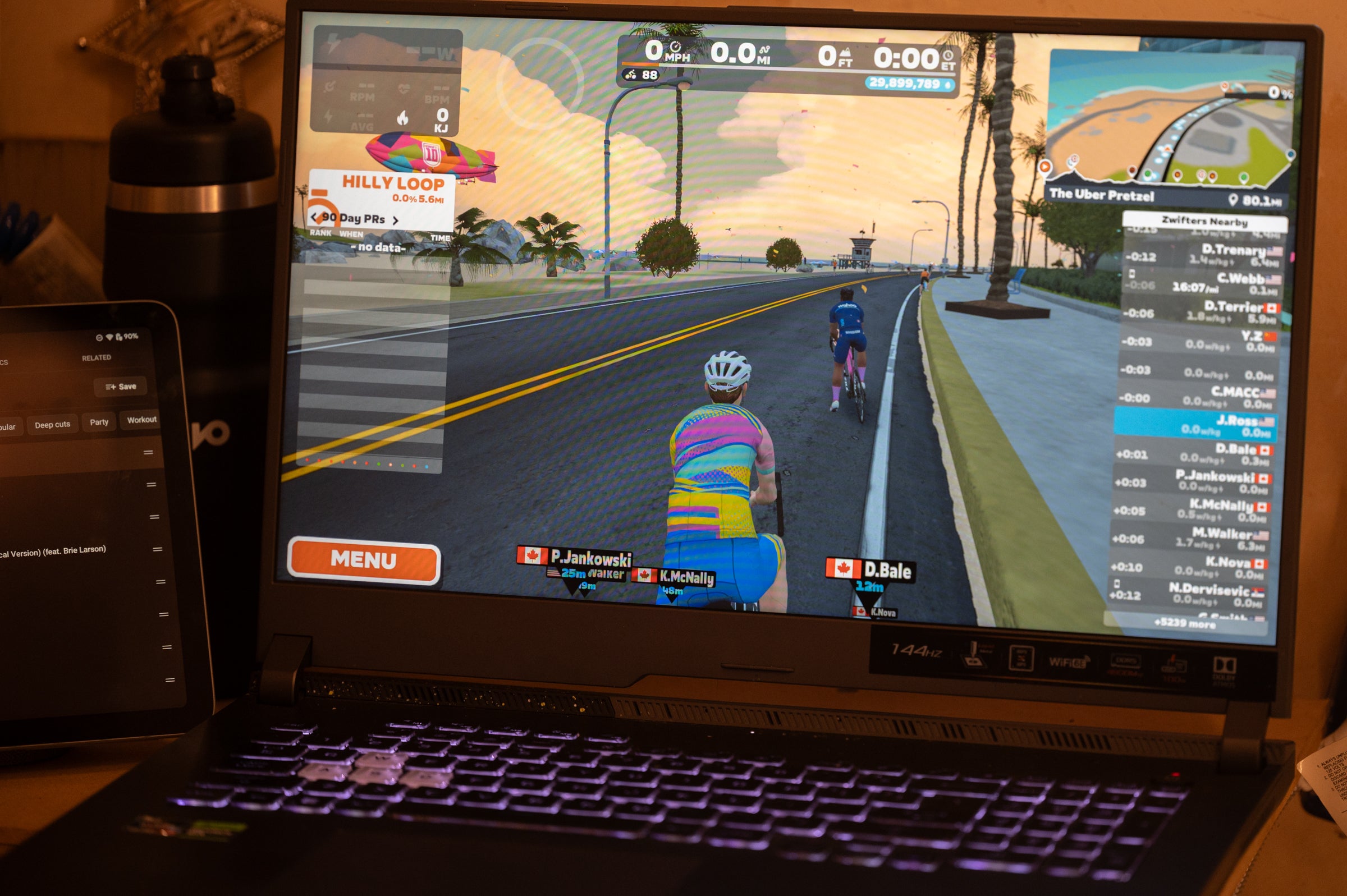
For Zwift I recommend a computer with a dedicated graphics card. I use a relatively inexpensive Asus ROG (gaming) laptop with a 17-inch screen but there’s a lot of ways you could go about solving that equation. If I had a bunch of space I’d probably try to connect something to a small-ish TV. Whatever you decide on though, you need decent graphics hardware.
Zwift is actually quite beautiful and it loses a lot when the graphics are at the lower settings. The other bonus of running Zwift on a computer is that you’ll get new features first.
7. So Is Furniture
For a few of these categories I’ve gone the expensive route. This time I’m going cheap and DIY. Wahoo, Saris, and Elite all have trainer desks that are well made and thoughtfully designed. They also aren’t quite right for me and might not be for you either.
ADVERTISEMENT
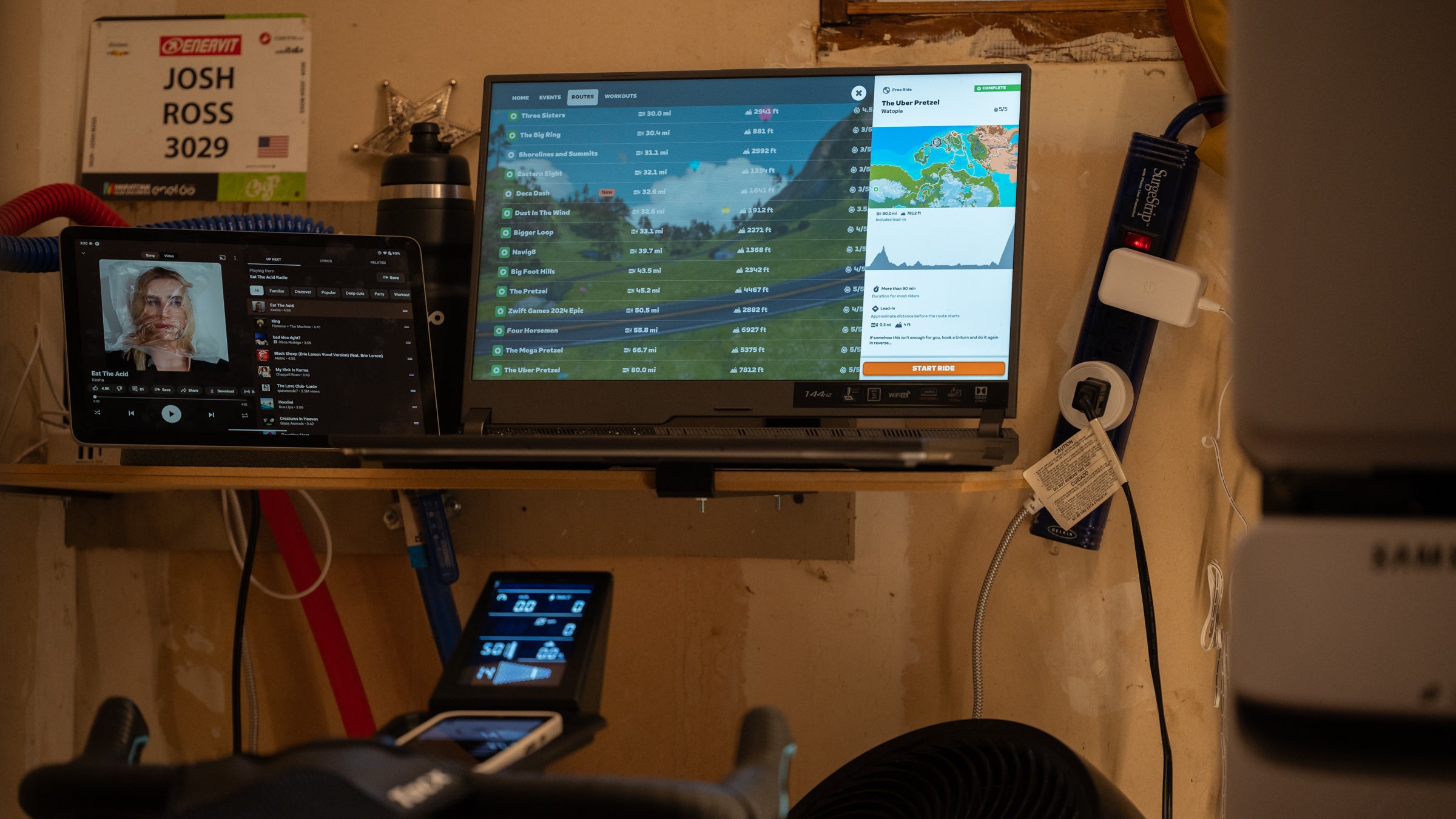
The problem with all of those options is that they sit over the front wheel and are too high. I like to keep my trainer matched to my outside bike position so I don’t get soft over the winter (only half kidding). That means I like something nice and low to look at.
I used to have a computer on a desk and it was perfect. The front wheel touched the desk and the viewing angle was great for an aggressive bike fit. These days I don’t have that much room so I built a shelf on the wall. It’s far from pretty but it dodges the pipes coming out of the wall and it’s as low as workable in the space I have. Doesn’t hurt that it was basically free.
Whatever you end up doing, my suggestion is consider your bike fit. If you are on a mountain bike with an upright fit, one of the fancy desks might be great. For road cyclists you might consider a little below eye level.
What about the Elite Rizer, Wahoo Climb, or the Zwift Play?
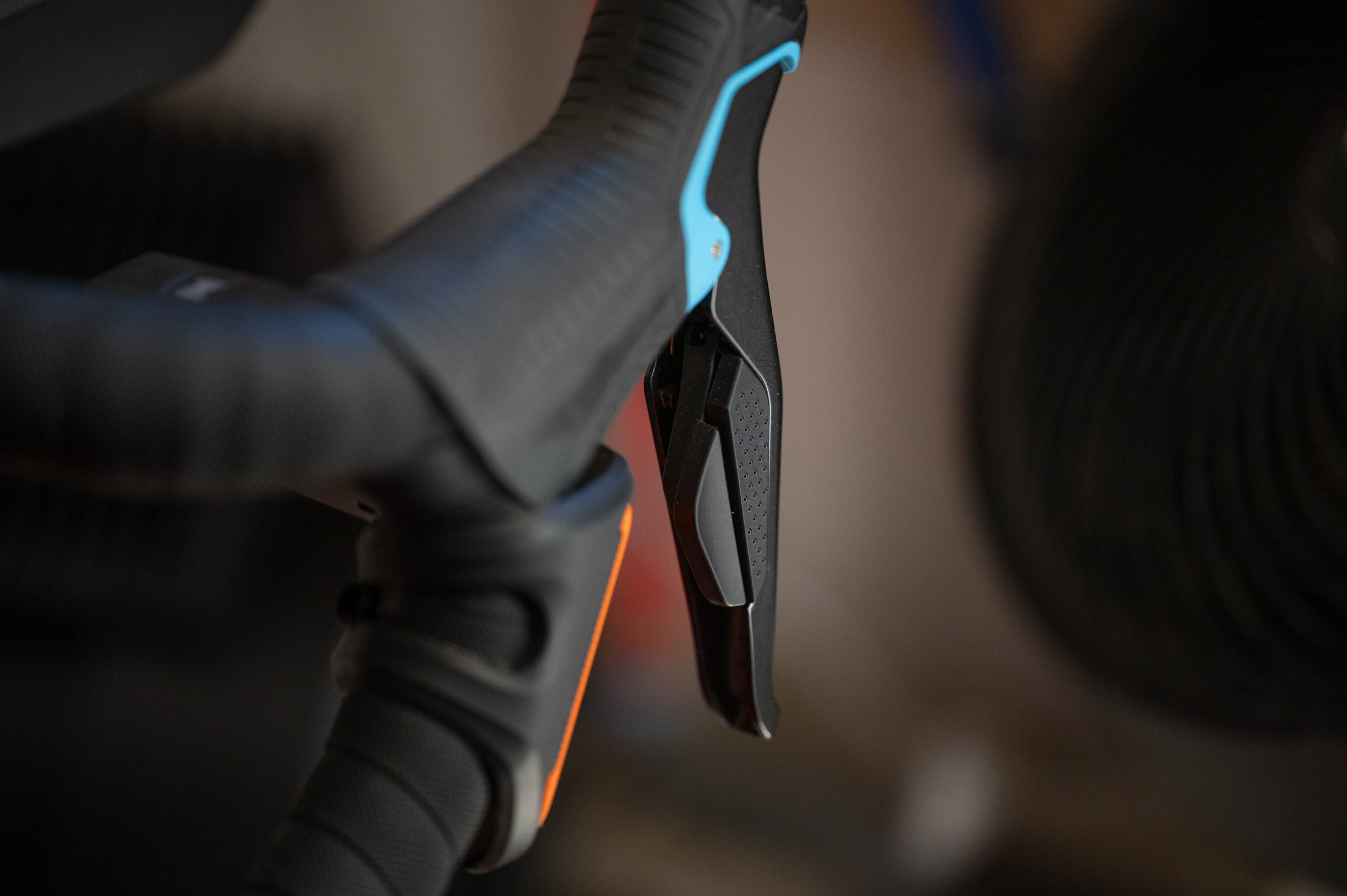
I love all of these. The Elite Rizer is better than the Wahoo Climb but it’s also more expensive. Both options do help with more natural movement, if that’s something you still want, and it feels very immersive to go up and down as you ride. I’m not using either currently only because the Garmin bike doesn’t allow it.
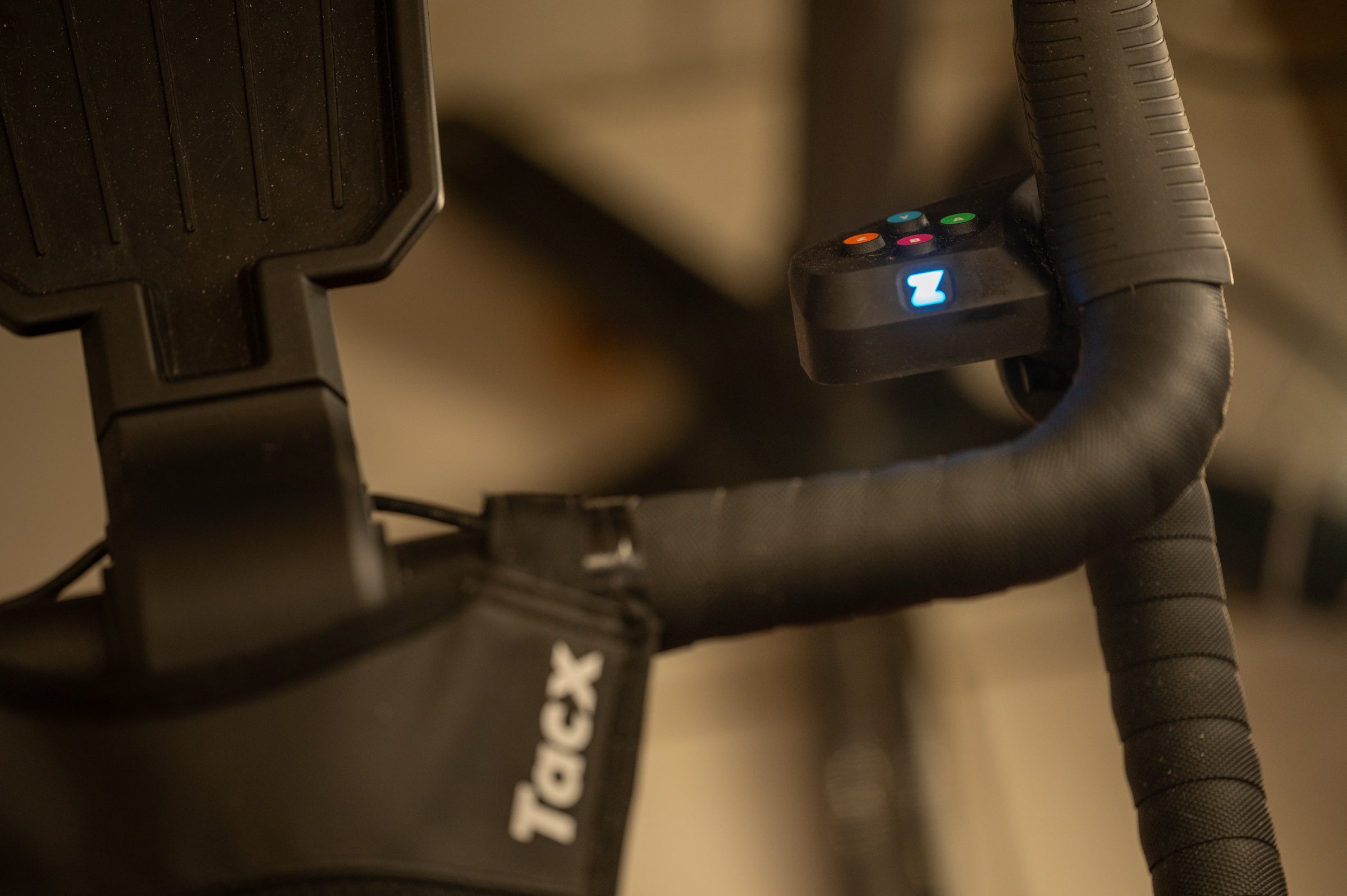
In terms of the Zwift Play controllers, I do use them. I have the system strapped to the handlebars on the Garmin bike and I use it to interact with Zwift. It adds a lot to the experience of racing and it’s useful for interacting with the HUD too.
All of these products are tough in this article. They do fit the “make indoor cycling fun” brief but they don’t make it easier to ride longer inside. That leaves it up to you. All three of these will make your experience in Zwift more immersive and more fun. I don’t find that they make it easier for me to ride five hours but they might for you.
ADVERTISEMENT
It’s okay to make the choice to ride inside
There’s a big part of the cycling world that loves to shame people for riding inside. There’s no bad weather, just bad clothes. Or something along those lines mixed with how terrible indoor riding is.
I’m telling you, forget this. Indoor riding is a blast and there’s no badge of honor for riding outside. Seven to nine hours in rain just above freezing is doable. I’ve done it and I can tell you how. It won’t be cheap and it’s more survivable than enjoyable.
ADVERTISEMENT
If type 2 fun is your jam, have a blast. That’s a very valid way to spend time on a bike but it’s not the only way.
For anyone else, there’s nothing wrong with choosing to ride indoors when the weather is bad. Have you seen the prices of cycling jackets? Even if you buy a fancy indoor setup it might be cheaper. I’ve also had frostbite and mild hypothermia. Maybe avoid that with an inside ride?
There’s also nothing wrong with choosing to ride indoors when you want to. Even when the weather is nice your workout can be so highly focused that many choose to do intervals inside throughout the year. Parents can stay fit without leaving kids alone no matter the weather. There’s no cars in Zwift, the sun never goes down, etc. This list continues and no one should feel bad about riding a bike. Riding outside is fun and it’s possible to make indoor cycling fun as well. Enjoy.