Published November 1, 2023 09:18PM
The Kaitlin Armstrong Murder Trial Has Started in Austin
Here’s what to know about court case against Armstrong, who authorities say killed professional cyclist Moriah Wilson in 2022
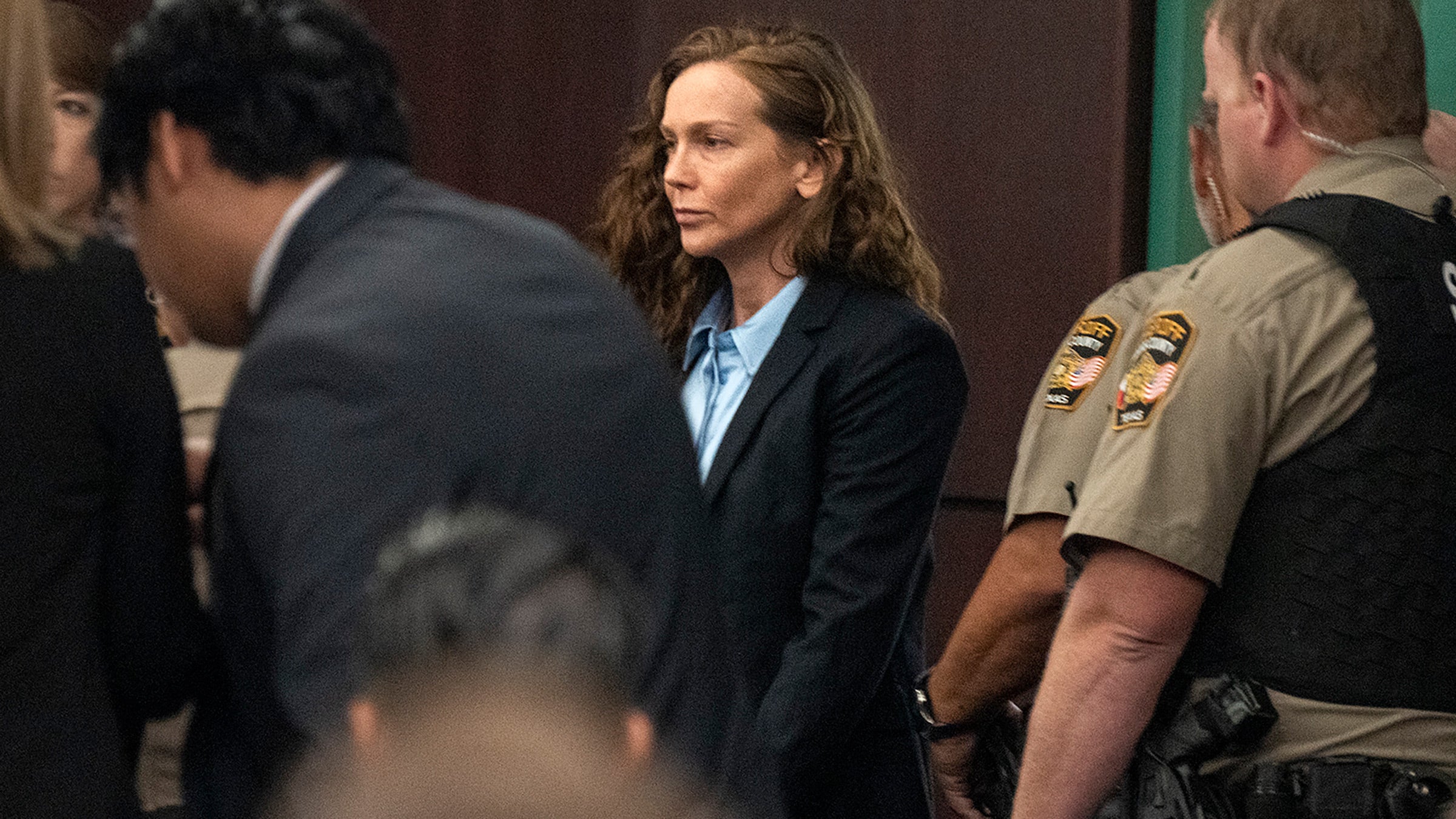
Kaitlin Armstrong was in an Austin, Texas courtroom on Wednesday. (Photo: Mikala Compton/Associated Press)
The trial for Kaitlin Armstrong, who stands accused of murdering professional gravel racer Moriah Wilson, began on Wednesday, November 1, at the Travis County courthouse in Austin, Texas.
Outside the court building, two movie crews jockeyed for camera position. Inside, friends and family of both the victim and the accused sat in the rows closest to the judge’s bench. National and local news outlets, true crime podcasters and a handful of curious members of the public occupied the benches toward the back of the room, seated shoulder-to-shoulder. Armstrong, 35, who faces a first-degree murder charge, was in attendance alongside her lawyer, Rick Cofer.
The jury of eight women and six men, which was selected on Monday, October 30, also sat in the room.
ADVERTISEMENT
Wilson had arrived in Austin on May 11, 2022, in the days preceding Gravel Locos, a 155-mile off-road bike race, and was staying with a close friend. That night, Wilson had gone swimming and eaten dinner with fellow professional gravel bike racer, Colin Strickland, 36. The pair had been romantically linked in the fall of 2021.
At the time of Wilson’s death, Armstrong, a real estate agent and former yoga instructor, and Strickland were in a relationship, and they lived together in south Austin. The two also managed a business together—a firm that restored antique motorhomes called Wheelhouse Mobile. Strickland had lied to Armstrong about where he was and who he was with that evening. Shortly after Strickland drove Wilson back to the east Austin garage apartment where she was staying with a friend, authorities allege that Armstrong arrived and shot Wilson.
After Wilson’s death, Armstrong fled to Costa Rica where police claim she underwent plastic surgery to change her appearance. She was finally arrested on June 29, 2022, after spending 43 days on the run. In the weeks preceding her trial, Armstrong made another escape attempt during a medical transfer in Austin. She has entered a plea of not guilty to the murder charge.
ADVERTISEMENT
On Wednesday, both the prosecution and defense presented their opening statements for the trial. The Travis County District Attorney’s office outlined the evidence the prosecution intends on presenting during trial, including evidence not yet made public. Prosecutor Ricky Jones told jurors that they would hear audio of Wilson’s last moments, which were picked up by a nearby surveillance camera, followed by two immediate gunshots and finally a third.
Armstrong’s defense, led by Cofer, outlined a plan to debunk the State’s DNA and ballistics evidence, and claimed the State’s case consisted entirely of circumstantial evidence. According to the defense, no eye witness or video footage can place Armstrong at the scene of the crime. In reminding the jury of the burden of proof beyond a reasonable doubt, the prosecution elicited multiple objections for straying beyond the evidentiary outline of an opening statement.
If convicted, Armstrong could serve life in prison. The trial is expected to last two to three weeks, and here’s what the jury is expected to see.
Direct Evidence Against Armstrong
- During the initial investigation, Austin Police detectives obtained home security video of a vehicle closely resembling Armstrong’s Jeep Grand Cherokee at the scene of the crime, near the time Wilson was killed. The vehicle in the video evidence is a dark paint color, has chrome trim, and a hitch-mounted bicycle rack—just like the one owned by Armstrong. But the license plate of the vehicle is not visible, nor is the driver. These factors may prevent prosecutors from proving the vehicle belonged to Armstrong, and she was the driver.
- Prior to Wilson’s death, Armstrong and Strickland purchased handguns from an Austin gun store. The bullets from the crime scene matched ammunition found at Armstrong’s home. A ballistics report issued by the Austin Police Department “positively identified” the handgun belonging to Armstrong as having shot the bullets that killed Wilson. While ballistics analysis—methods used to link bullet casings from a crime scene to the weapon that ostensibly fired them—is routinely used in court, the practice has come under scientific scrutiny. Critics contend the process lacks peer review and repeatable results. Armstrong’s attorney, Cofer, has called the methodology a “pseudo-science.”
- DNA evidence likely won’t play a role in the case. Because Armstrong and Strickland lived together, DNA belonging to Armstrong would have been present on Strickland when he was with Wilson. The presence of Armstrong’s DNA in the apartment where Wilson was staying is not evidence of her having entered the apartment. This is known as indirect DNA transfer.
Circumstantial Evidence and a “Conscience of Guilt”
Prosecutors will attempt to show that Armstrong’s actions leading up to and following Wilson’s death further establish her as the individual responsible for the murder. In a pre-trial document introducing “evidence of extraneous conduct,” the Travis County District Attorney outlined ten incidents prosecutors believe support their case against Armstrong:
- Less than a day after Austin Police issued an arrest warrant for Armstrong, she allegedly boarded a flight using her sister Christine’s passport. A Federal felony, prosecutors may still charge Armstrong for fraudulent use of a passport. Prosecutors also allege, in her “attempt to avoid arrest and prosecution for murder,” that Armstrong assumed a false identity while living in Costa Rica and received cosmetic surgery under the alias Alison Paige. Since her capture in the Pacific-coast surf and yoga community of Santa Teresa, Costa Rica, Armstrong has been held in a jail outside of Austin. On October 11, Armstrong ran from guards in what authorities are calling a planned escape attempt. An affidavit for escape causing bodily injury, a second-degree felony, states that Armstrong worked out vigorously in the weeks leading up to a medical transfer to a south Austin orthopedic center. Because Armstrong claimed she’d sustained an ankle injury, she was not put in customary leg restraints, and allegedly ran about a mile as she tried to evade capture, including an effort to scale a roughly six foot high wall. Two guards suffered injuries to their arms and knees after falling during their pursuit of Armstrong. While jurors are reminded that a variety of reasons may lead a defendant to flee prosecution, such acts can be admissible at trial. The Travis County DA will aim to convince the jury that Armstrong suffered from a “conscious of guilt” after killing Wilson.
- It appears prosecutors will also introduce testimony from two cyclists who were friends with Armstrong prior to Wilson’s death. Armstrong allegedly told graphic designer and bike racer Nicole Mertz that if Strickland engaged in a serious romantic relationship with another woman, Armstrong would “kill” that person. Armstrong also allegedly told another cyclist, Jacqueline Chasteen, that she had a desire to kill Moriah Wilson. Armstrong had no history of violent conduct, and her friends were not initially compelled to report the statements. However, following Wilson’s death both Chasteen and Mertz contacted the police. Whether such statements constitute premeditation will be up to the jury to decide.
ADVERTISEMENT
Potential Defense Strategies
A Travis County judge issued a gag ordered shortly after Armstrong retained Cofer as her legal counsel, and the defense has issued only a handful of witness subpoenas ahead of the trial.
However, in two pre-trial motions Armstrong’s defense challenged every facet of the affidavit to throw out the case, and argued an Austin Police detective’s questioning of Armstrong should be excluded as evidence, since Armstrong asked authorities if she needed an attorney present. While the presiding judge denied both motions, the efforts exemplified the aggressiveness with which Cofer and his team are pursuing a defense.
ADVERTISEMENT
Strickland hasn’t been charged with any crimes in connection with the case, and is not considered a suspect by law enforcement. Additionally, Cofer has not indicated he will pursue an alternative narrative in the death of Wilson. His primary strategy is to create reasonable doubt in the minds of jurors.
