Published July 21, 2006 12:00AM
Buzz Factors
Curiosity peaked by mosquitoes and the September feature story, "Itchy" by Jennifer Kahn? Here, some additional facts from the author, and from Andrew Spielman, professor of tropical public health at Harvard University, and author of Mosquito: A Natural History of Our Most Persistent and Deadly foe.
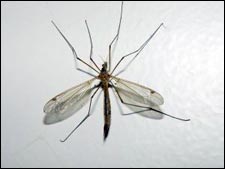
Mosquito Facts:
1. Only female mosquitoesand only a few of the thousands of mosquito species in the worldfeed on humans. Most mosquitoes feed on nectar or other sources of sugar.
2. Before the female mosquito actually draws your blood, she might probe your skin as many as 20 times, looking for a small blood vessel to nick.
3. Mosquitoes don’t whine just to be annoying. The high-pitched sound they make, created by their rapid wing beats (of up to 500 beats per second), helps the males hone in on a mate.
4. The insects have adapted to almost every climate on earth. Some mosquito eggs can survive decades of drought in the Sahara until a brief rainfall permits a hatch.
ADVERTISEMENT
5. A single malarial mosquitoone of the most effective disease transmitters on earthcan infect more than 100 people. By comparison, a typical human suffering from measles can infect about 13 other people; a typical person who is HIV-positive might be able to infect one other person.
6. In recent years, mosquito-borne diseases have been responsible for about one in every 17 deaths on the planet (they cause three million or more of the 55 million annual deaths worldwide). Malaria alone kills one-to-three million people annually, the vast majority of them African children under the age of five.
7. U.S. Army doctor Walter Reed, the man who conclusively proved in 1900 that Aedes aegypti mosquitoes transmitted yellow fever, made his discovery by allowing the insects to snack on yellow fever patients, then releasing the bugs into a tent-full of healthy (and, as it turned out, sacrificial) volunteerswho themselves got deathly ill.
8. Mosquitoes are exquisitely tuned to human motion, heat, and odors. If you’re fighting a swarm, waving your arms frantically can actually help more of them find you.
ADVERTISEMENT
9. Electronic bug zappers don’t work to kill mosquitoes. Ultrasonic devices that supposedly drive them away with sound don’t work well either.
10. What will protect you in a mosquito zone: Wear long sleeves and pants when outdoors, particularly after dusk and in the early morning (prime time for bites from malarial mosquitoes). In areas plagued by dengue fever, take care all day, as dengue-carrying mosquitoes also bite in the daytime. Use Peremetherin-treated clothes and DEET repellent (in recommended doses); install screens on windows (if you’re living in these areas) or try to stay in places that have them; make sure to sleep under insecticide-treated bed nets (especially if your accommodations don’t have window screens.) For details about malaria, dengue, and other ways to prevent mosquito-borne illnesses, consult the Centers for Disease Control, or go to www.cdc.gov/travel/index.htm.