Published April 27, 2015 12:00AM
Photos from the Aftermath at Everest Base Camp
A photographer with 6 Summits Challenge, an international team of climbers lead by Nick Cienski, whom Outside senior editor Grayson Schaffer spoke with yesterday, captured these images during the rescue efforts.
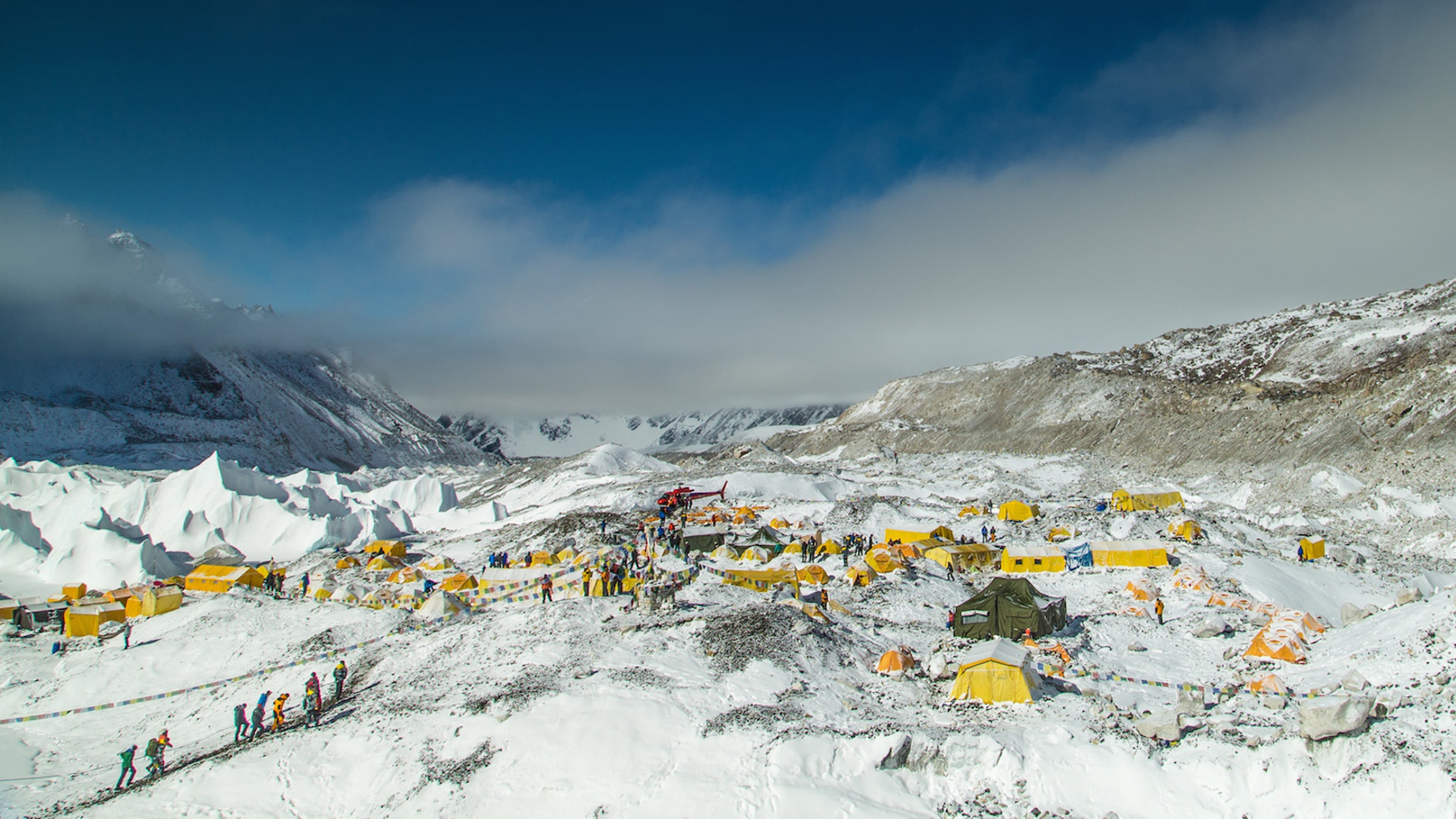
The first rescue helicopters were able to land at Everest Base Camp on Sunday, April 26, and successfully transported more than 50 of the most critically injured people to care in the villages of Pheriche, Lukla, and nearby hospitals. A photographer with 6 Summits Challenge, an international team of climbers lead by Nick Cienski, whom Outside senior editor Grayson Schaffer spoke with yesterday, captured these images during the rescue efforts.
Photo: A rescue helicopter from Fishtail Air lands in Base Camp to evacuate the wounded.
Photo: A rescue helicopter from Fishtail Air lands in Base Camp to evacuate the wounded. (6 Summits Challenge)
ADVERTISEMENT
A scene of the devastation in Base Camp, where strong winds flattened tents and scattered debris.
(6 Summits Challenge)
ADVERTISEMENT
Immediately following the avalanche, snow began to fall, which hampered rescue efforts.
ADVERTISEMENT
Pilots took advantage of a brief weather window early Sunday morning to evacuate injured climbers and workers.
ADVERTISEMENT
Winds generated by the avalanche were forceful enough to roll boulders through Base Camp.
(6 Summits Challenge)
ADVERTISEMENT
The avalanche and ensuing air blast began from the east, on the bordering peak of Pumori, and swept from west to east (left to right) across the north side of Base Camp.
(6 Summits Challenge)
ADVERTISEMENT
Climbers’ belongings were scattered around Base Camp after the avalanche as efforts shifted toward helping those in need.
ADVERTISEMENT
At the time of the avalanche, many climbers were in their tents taking a weather day—resting in hopes of a clear window to begin the climb.
(6 Summits Challenge)
ADVERTISEMENT
Among the camps that were destroyed was the Everest ER headquarters (flattened tent at lower right).
(6 Summits Challenge)
ADVERTISEMENT
The long-standing debate about the appropriate role of helicopters on the mountain will surely reignite as climbers and Sherpas regroup for next year.
ADVERTISEMENT
Tents bearing the logo of Himalayan Experience, which were spared by the avalanche on April 25.
