Published February 24, 2026 01:05PM
3 of America’s Busiest National Parks Just Did Away with Reservations. Here’s What You Should Know.
Timed-entry programs just vanished from three of America’s busiest national parks. Other parks, meanwhile, are keeping them. Here’s what you need to know about national park reservations in 2026.
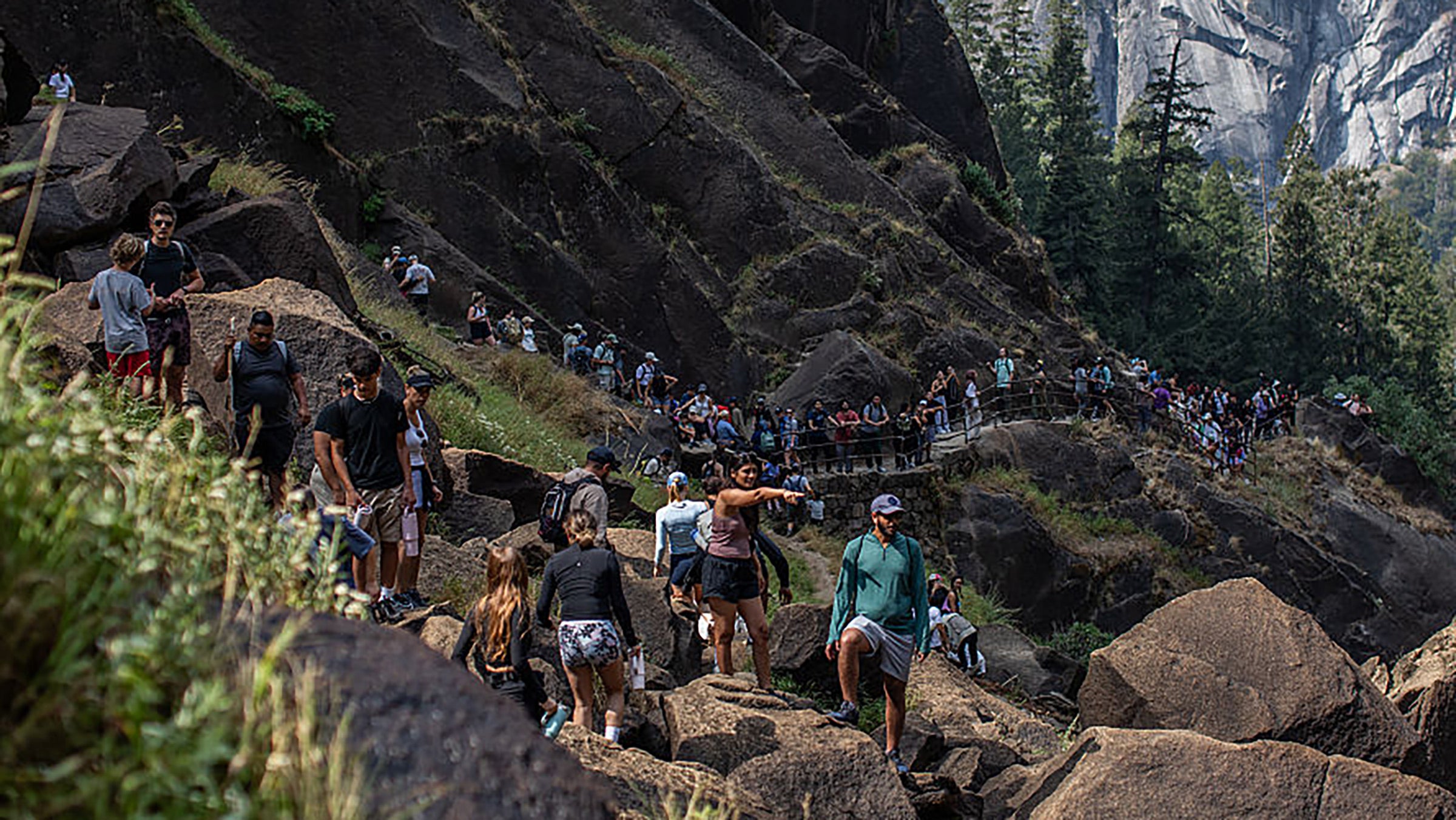
Crowds are about to return to these parks in a big way (Photo: Apu Gomes / Contributor)
If a national park road trip is on your agenda this year, you may want to reconsider when and where you travel. The National Park Service (NPS) announced in February that it has eliminated timed entry systems at some of the nation’s most popular national parks, including Arches, Glacier, and Yosemite, in 2026.
At the height of the Covid-19 pandemic, many national parks adopted time-entry systems to limit the number of vehicles on roads and in parking lots. These programs addressed overcrowding and congestion. But some critics argue that restricting access is too rigid and, in the case of Glacier National Park, may invite more people on the road during dangerous twilight hours.
While some states have done away with vehicle reservation systems entirely, others have updated or revised existing policies. Here’s everything you need to know about national park reservations in 2026.
Yosemite National Park, California
Yosemite will no longer use a timed entry reservation system in 2026. The NPS says the decision follows a comprehensive evaluation of traffic and visitation during the 2025 season.
While the NPS hasn’t released specifics since its February 18 update, it wrote that staffers will manage parking, add additional staff at key intersections during peak periods, and conduct real-time traffic monitoring to respond to congestion.
ADVERTISEMENT
Rocky Mountain National Park, Colorado
From May 22 to mid-October, timed entry is required to enter the park at certain hours. Reservations grant entry between 9 A.M. and 2 P.M., but visitors can enter the park outside of those hours.
These entries are released on a first-come, first-served basis on the first of every month for the following 30 days. Booking requires a $2 processing fee.
ADVERTISEMENT
There are different types of timed entry permits, one of which offers additional access to Bear Lake Road, a popular ten-mile scenic corridor
Haleakala National Park, Hawaii
A vehicle reservation is required to drive into the park between 3 A.M. and 7 A.M. to see the summit sunrise—one of the park’s most renowned attractions. These reservations can be booked up to 60 days in advance, with a small batch of last-minute entries often released two days prior.
The reservation is per-vehicle (not per person) and costs an additional $1 on top of the regular park entrance fee.
After 7 A.M., the park does not require a timed‑entry reservation for vehicles.
ADVERTISEMENT
Acadia National Park, Maine
Between May 20 and October 25, a vehicle reservation is required to drive Cadillac Summit Road, a scenic 3.5-mile paved road leading to the 1,530-foot summit of Cadillac Mountain.
There are two types of vehicle reservations: sunrise tickets, which offer an earlier entrance time, and daytime tickets that start between 6 A.M. and 8 A.M., depending on the time of year
ADVERTISEMENT
Sunrise tickets have a 90-minute entry window, whereas daytime tickets offer a 30-minute window. Visitors can depart the park at any time until 9 P.M., when the road closes to vehicles.
The NPS releases 30 percent of reservations 30 days before the entry date, and the remaining tickets are made available two days before the reservation date.
Glacier National Park, Montana
Northern Montana’s Glacier National Park is piloting a ticketed-only shuttle system in 2026. Those planning to spend more than three hours in the park are required to book a shuttle to the alpine area of Going-to-the-Sun Road from either the west or east entrance. The west side shuttle departs from the Apgar Visitor Center and Lake McDonald, while the east side departs from the St. Mary Visitor Center and Rising Sun.
All tickets are first-come, first-served. A portion of the shuttle tickets will be made available on a rolling basis starting May 2. These reservations can be made 60 days prior to the reservation date. Beginning June 30, some shuttle tickets will be made available at 7 P.M. for next-day entry.
ADVERTISEMENT
Shuttle tickets require a $1 fee and cannot be purchased inside the park.
Drivers of private vehicles are no longer required to obtain a timed entry pass. Beginning July 1, however, private cars now face a three-hour parking limit at Logan Pass, a popular viewpoint at the culmination of Going-to-the-Sun Road. NPS says this is to allow the shuttle system to operate more smoothly.
Overnight parking is not allowed at Logan Pass unless the driver has a backcountry permit or is staying at the Granite Park Chalet.
Arches National Park, Utah
Arches National Park officially dropped its timed-entry reservation system in 2026. NPS says that visitors may enter the park at any time during operating hours. To avoid traffic, NPS recommends entering the park before 8 A.M. or after 3 P.M.
ADVERTISEMENT
Zion National Park, Utah
Zion will limit large vehicles beginning on June 7.
Single vehicles cannot exceed 35 feet and 9 inches in length, weigh 50,000 pounds, or measure taller than 11 feet, 4 inches. In addition to the previous stipulations, combined vehicles, such as those with a trailer, cannot exceed 50 feet in length.
ADVERTISEMENT
Vehicles that exceed certain size or weight limits will not be permitted to drive on the Zion-Mt. Carmel Highway between Canyon Junction and the East Entrance.
Mount Rainier National Park, Washington
The NPS has canceled its timed-entry reservation system to enter the park. This system was introduced in 2024 during peak periods in the spring and summer.
Tips for Trip-Planning at Nonrestrictive Parks
For national parks that still limit vehicle entry, reservations can be made at Recreation.gov or by phone at 877-444-6777. At most of these parks, a portion of the reservations becomes available months in advance, with the remaining being released the day prior. A processing fee of roughly $2 is required for most reservations.
Vehicle reservations are typically not needed if you have a backcountry permit, camping reservation, or commercial tour booking. Be sure to check the specific park page for more information.
NPS offers the following tips for those visiting sites that no longer require timed-entry reservations:
- Plan visits early, especially for weekends and holiday periods.
- Consider weekday trips to reduce congestion and increase parking availability.
- Explore hiking, sightseeing, and recreational options outside the park boundaries.
- Check the park’s specific website for real-time conditions, seasonal updates, and other trip-planning tools.
This year, visitors may be asked for photo identification at some park entrances. Be sure to bring a photo identification and your park pass for entrance.
