Updated July 2, 2025 08:57AM
Why a Ski Mountaineer Is Running for Senate in Utah
Throughout her athletic career, Caroline Gleich has been moonlighting as an activist. This year, she stepped into politics full-time.

(Photo: Natalie Beehive Photo and Video (Caroline Gleich); TylerFairbank/iStock/Getty; spxChrome/Getty; George Frey/Getty; meshaphoto/Getty; Adam Clark (Skiing); Rob Lea (Summit))
Caroline Gleich was 55 miles into the 65-mile trek to base camp on Pakistan’s Gasherbrum II when she started to feel queasy. It was July 2022, and temperatures were in the triple digits. A few minutes later she threw up. The 38-year-old ski mountaineer felt weak and dizzy. Over the next three hours she vomited 30 times.
After a few rough days, she and her husband, 43-year-old realtor Rob Lea, finally made it to base camp at 16,900 feet. This was just the first part of their journey: they hoped to ski from the peak’s 26,362-foot summit, a longstanding shared dream. Then, just as Gleich started to recover, Lea got sick. They languished in their tent for a week, feeling miserable, before calling off the expedition. They’d paid the money, invested the time, flown across the world, and bailed before they even laid eyes on the mountain.
“It’s hard to put your goals out there and to fail,” Gleich wrote on Instagram.
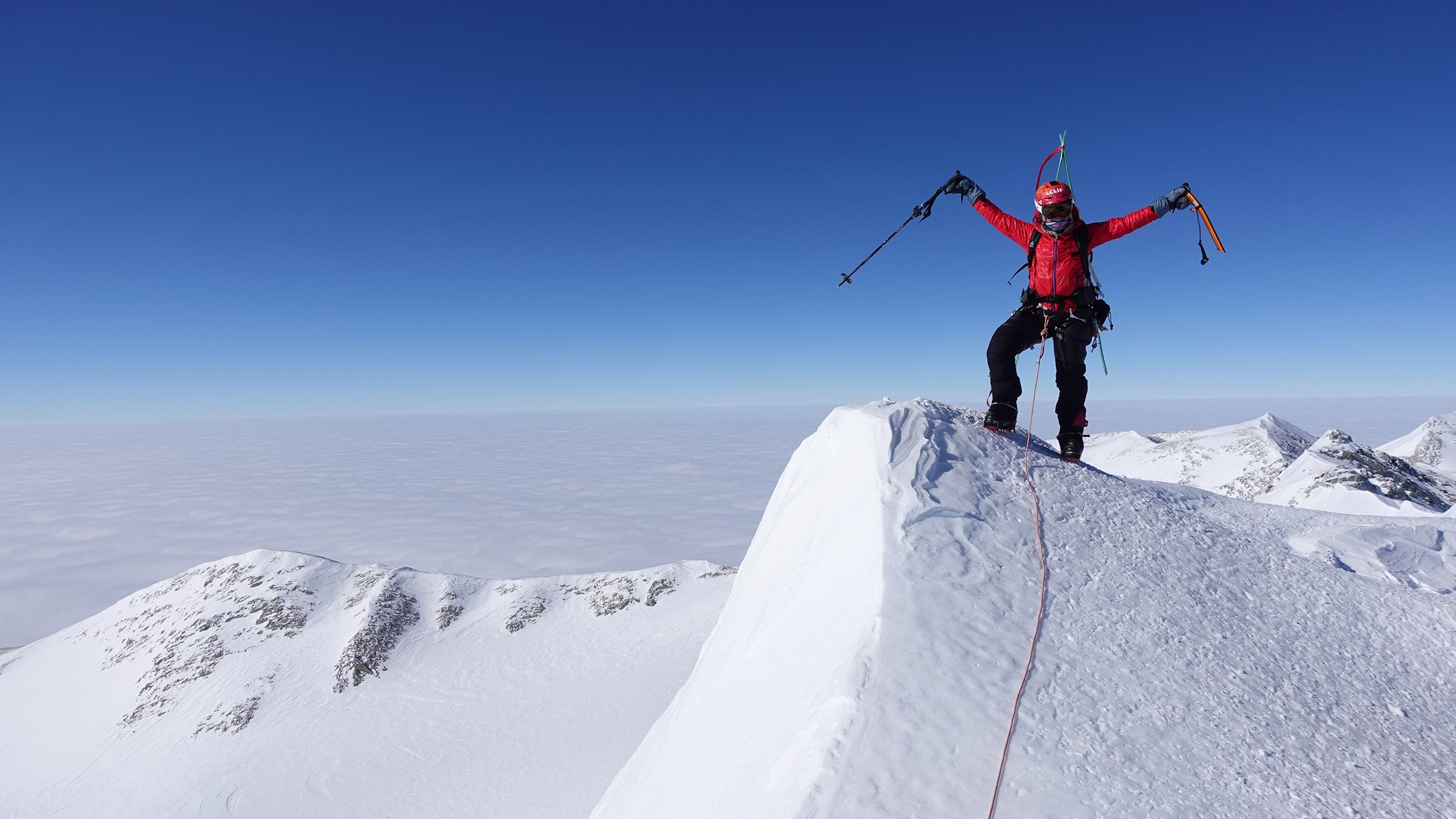
For an athlete like Gleich, part of an alpine objective’s allure is that there’s no guarantee of success. The whole point is to do something hard—like climb Mount Everest, which she did in 2019 (with a torn ACL, no less). This particular ethos might help explain why Gleich is running as a Democrat for a U.S. Senate seat in deep-red Utah, a state that has exclusively sent Republicans to the Senate since 1977 and has never elected a woman to the post.
ADVERTISEMENT
“How many people are so stuck on trying to ensure success that they don’t even show up to the start line?” Gleich says. “You’re definitely not going to win if you don’t show up.”
Gleich’s ski career really took off in 2017, when she became the first woman to ski all 90 lines in The Chuting Gallery, a steep skiing guidebook that chronicles the most coveted, difficult descents in Utah’s Wasatch Mountains. Then, in 2018, she climbed and skied 26,906-foot Cho Oyu, the world’s sixth-highest peak, and solidified her reputation as a talented high-altitude mountaineer. She has appeared on the covers of Powder, SKI, and Backcountry, picked up sponsors like Patagonia, Clif Bar, Leki, and Julbo, and gone on expeditions in Peru, Ecuador, Alaska, Antarctica, the Himalaya, and the Karakoram.
She is also no stranger to Sisyphean political tasks. She has spent much of her professional ski career moonlighting as an environmental activist. As soon as she built an online audience for her skiing—she has 221,000 followers on Instagram—she started using that platform to advocate for protecting public lands and taking action on climate change.
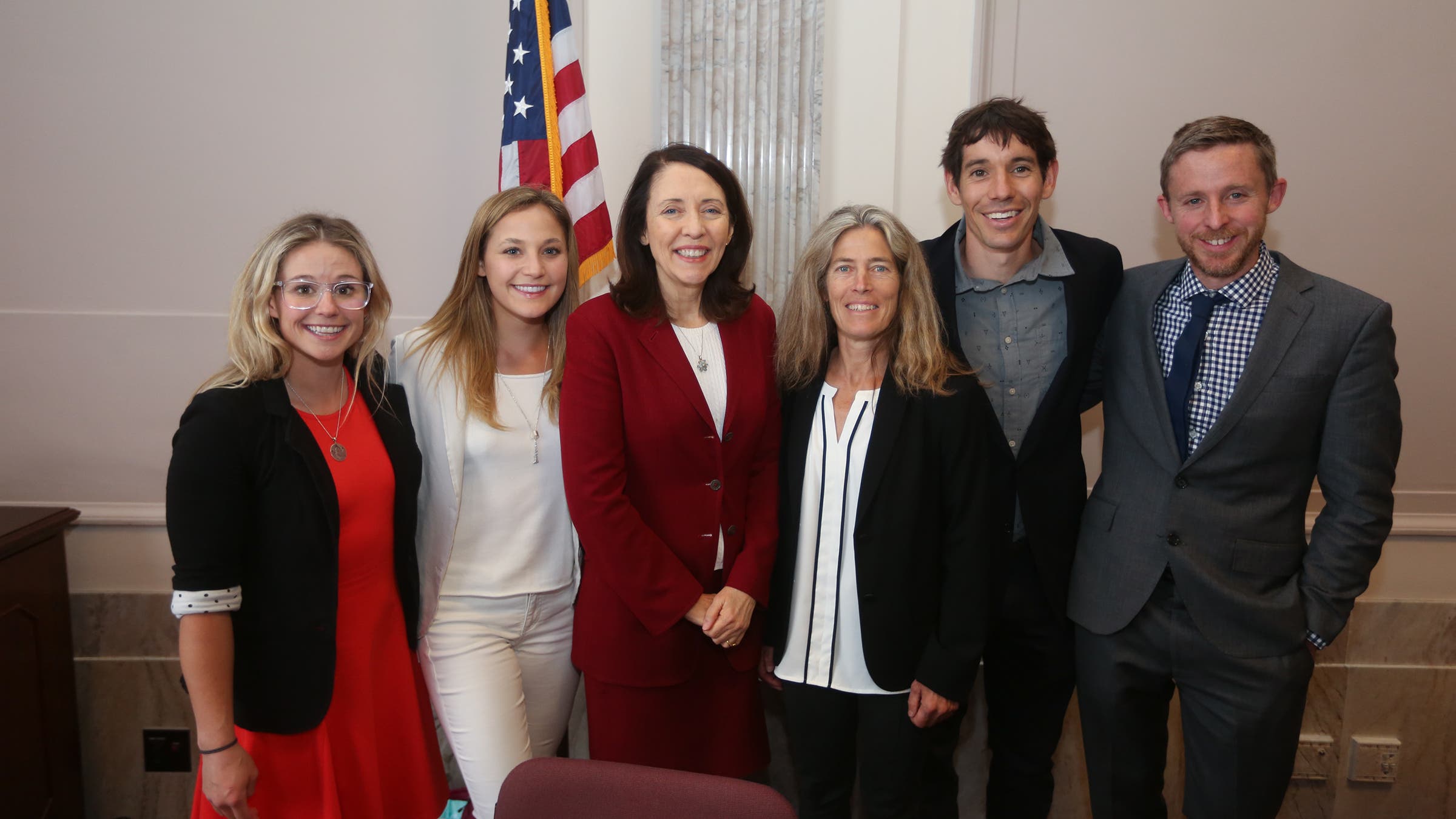
For the past decade, she has gone to Capitol Hill every year to lobby with organizations like Protect Our Winters, Heal Utah, the Access Fund, and the American Alpine Club. She testified before Congress, at a hearing about the climate crisis; spoke at rallies to save the Great Salt Lake; and organized a climate rally at the Colorado State Capitol. In 2022, she was invited to the White House to meet President Biden and Vice President Harris and to celebrate the passage of the Inflation Reduction Act. She also hosts a podcast, The Caroline Gleich Show, where she talks to guests about topics like climate activism, elevating Indigenous leadership, and speaking with elected officials. (Editor’s note: The author works as a video contractor for Protect Our Winters.)
Normally, to win an election in Utah, a politician needs to have certain attributes. They tend to be male, Republican, have the backing of large political-action committees, and belong to the Church of Jesus Christ of Latter-day Saints (LDS). Gleich is not any of those things. Current polling gives her a less than 1 percent chance of beating her opponent, Representative John Curtis (who has served in the House since 2017 and does check all those boxes). In 2018, it cost an average of $15.7 million to win a Senate seat. As of this writing, the Curtis campaign has spent $4 million to Gleich’s $665,000.
“I have always been an underdog for my entire life,” Gleich said in a video announcing her candidacy. “When I told people about my dreams of climbing and skiing the biggest mountains in the world they told me, ‘You’re too small and delicate, you’re not strong enough, you don’t look like a mountaineer,’ so I’m used to doing what people tell me is impossible.”
Gleich hadn’t planned to jump into politics. At least not right now. But on Friday, January 5, she was at home in Park City when an email with the subject line “Very Random Question!” came through. It was from 25-year-old Gabi Finlayson, a founding partner at the political consulting firm Elevate Strategies. Finlayson and Gleich had met the previous summer at a candidate training event hosted by Utah Women Run, a nonpartisan group that trains women to get involved in politics and advocacy.
“I wanted to gauge your interest in running for the U.S. Senate seat this year,” Finlayson wrote. The Utah Democratic Party was looking for a strong candidate for Mitt Romney’s seat. Would Gleich be up for it?
There was one major caveat: the filing deadline was in 72 hours. Finlayson apologized for “such a bold ask with this little lead time.”
Gleich was immediately flooded with what she describes as an “overwhelming sea” of dopamine, adrenaline, dread, and panic. It’s a familiar feeling—one she often experiences right before dropping into a big line or saying yes to an intimidating expedition. She was interested but didn’t think it was the right time. Part of her wanted to ignore the email.
ADVERTISEMENT
She forwarded Finlayson’s note to her parents and her husband to get their thoughts. She reached out to former Utah senator Mark Udall and New Mexico Senator Martin Heinrich, who she’d met on lobbying trips to Washington. Everyone encouraged her to go for it.
The affirmation was helpful, but that initial feeling—the one where terror and excitement twist together into an inextricable bundle—was all she really needed to know. She had to do it.
“I like to go big,” says Gleich. “There was intrigue and excitement, and then the feeling of service and duty.”
Gleich wanted to be able to look at herself in the mirror on Election Day and know that she did what she could to serve Utah and stand up for the planet. So the following Monday, she set aside her usual athletic wear, donned a light-pink pantsuit, curled her long blond hair, and went to the Utah State Capitol to declare her candidacy.
When Gleich was a kid growing up in Rochester, Minnesota, her mother, Kristin Leiferman, told her that she could be the first woman president. Her father saw her as a budding prosecutor, due to her prowess during the frequent, heated dinner-table debates about politics.
In fourth grade, she circulated a petition demanding that her parochial school change its dress code, which required girls to wear skirts even in the dead of winter. The school eventually agreed.
“She was convinced that change could happen,” says Leiferman. “We just had to do something to make it so.”
ADVERTISEMENT
But as a teenager, Gleich couldn’t shake the feeling that society wasn’t built for her. She struggled to learn at school, too restless to sit at a desk all day. She was later diagnosed with ADHD, which helped explain why she felt frustrated and trapped. As a kid, Gleich suffered from depression. She didn’t think she’d make it to 30, and started abusing drugs and alcohol as a way to self-medicate. At 13, she went to rehab. Then, when she was 15, her elder half-brother, Martin, died in an avalanche, and the family moved from Minnesota to Salt Lake City in part to be closer to his widow and child.
Gleich was anxious and depressed, and she was desperate to find a way to transform the dark feelings she had into something else. The Wasatch offered some respite: surrounded by the peaks that Martin loved, Gleich set out to explore them herself.
Spending time outside helped Gleich manage her mental health—she’s said that the outdoors saved her life. During her high school years, she rock-climbed and skied as much as she could. When she started college at the University of Utah, she arranged her schedule to maximize time outside. But when she’d come back down from the alpine, she’d feel overwhelmed by a world riddled with problems she didn’t know how to begin to solve.
“I struggled for a long time to try to figure out the best way to make change,” says Gleich. She hand-made sustainable goods, protested the Iraq War, and distributed condoms with Planned Parenthood.
ADVERTISEMENT
Then, during her senior year of college, a political science professor asked the class how they wanted to interact with the government: “Do you just want to engage when you pay taxes, or do you want to use the institution as a problem-solving tool?” he said. It lit a fire under Gleich. In 2010, her professor encouraged her to apply for an internship with the office of the Republican Governor Gary Herbert. Gleich landed the gig, working with Herbert’s environmental adviser, Ted Wilson, a Democrat and the former mayor of Salt Lake City.
“One of the powerful things I learned was how to bring people together who don’t agree on things by sitting them down and trying to find common ground,” she says.
Wilson became Gleich’s mentor. He was also a skier and climber—he made the first ascent of the Great White Icicle in Little Cottonwood Canyon—and possessed a keen understanding of how Gleich’s drive in the mountains coexisted with her desire to work on issues like climate change and renewable energy.
ADVERTISEMENT
At the end of her internship, Gleich considered staying but was deterred by the governor’s ten-year energy plan. “We have so much renewable energy potential and our air quality is so bad,” she says. “The plan was dominated by fossil fuels.” She decided to try another path. Soon she landed a sponsorship with Patagonia, and started ticking off big mountain objectives while pushing for policy change among her growing online following.
In 2014, on her first trip to Washington with Protect Our Winters to advocate for clean energy, Gleich discovered that she loved lobbying: leading meetings, asking the right questions, and building relationships with staffers. The next year, Gleich pushed the Park City Council at a public hearing to commit to transitioning to 100 percent renewable energy. In 2016, Park City committed to net-zero carbon emissions by 2030. “It was a major win, and that was the kind of systemic change I was hoping I could achieve in Utah,” she says.
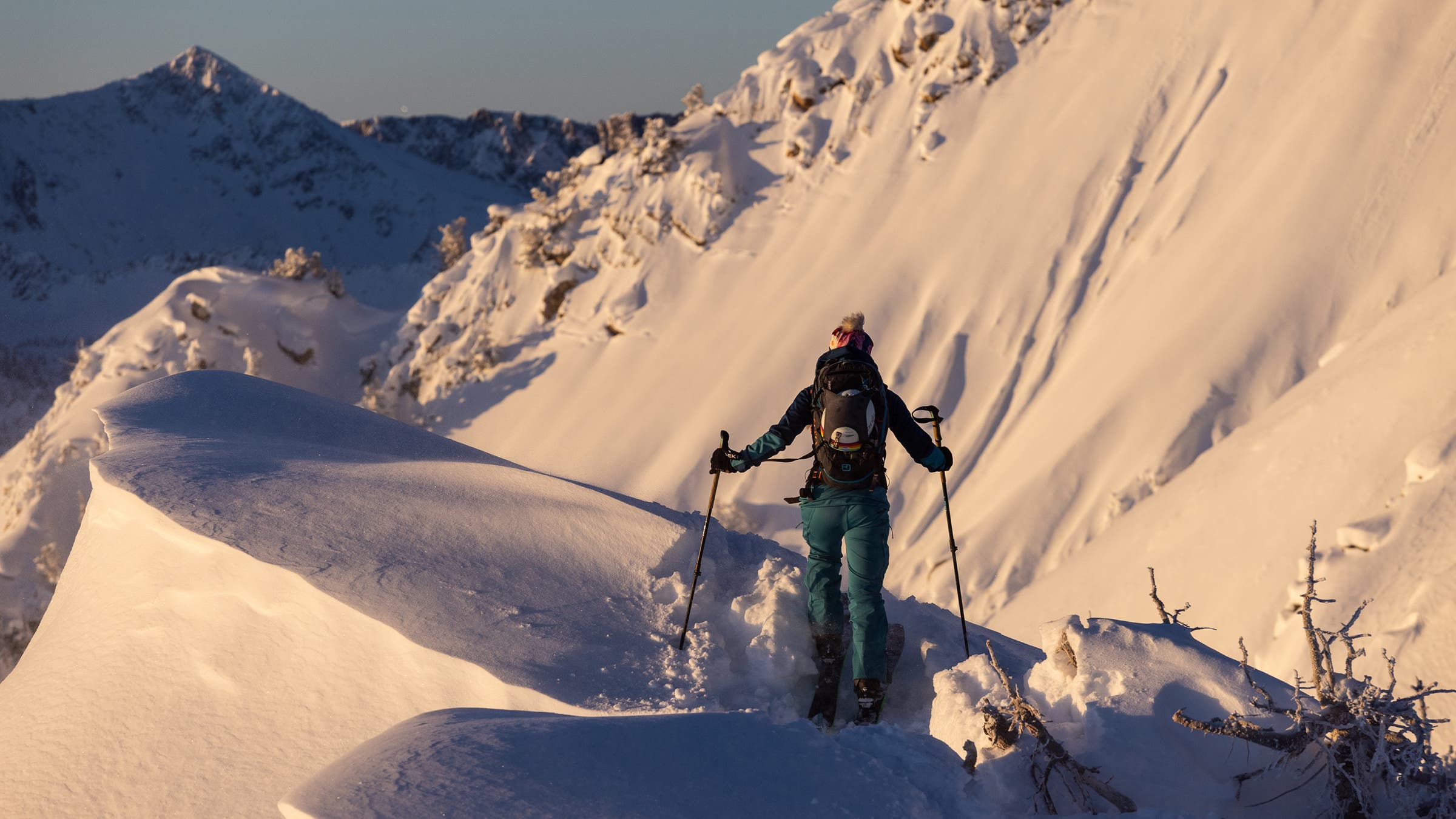
Once she’d announced her candidacy, Gleich was swept into a whirlwind of new commitments. Her calendar became packed with meetings, budget sessions, video shoots, events, and conversations with constituents around the state. She went to 11 county conventions and spoke at all of them. She drove a crane and an excavator with the Operating Engineers Local 3 (“a highlight”), and learned how to shoot rifles and handguns with the Summit County Sheriff’s Office (“very fun”). She still managed to notch 100 days on skis by squeezing in short early-morning outings.
With the exception of Patagonia, Gleich’s sponsors have all paused their relationships with her while she’s running for office. As a result, she says, she’s lost more than 90 percent of her income, which comes from a mix of long-term brand contracts, one-off social posts, and speaking engagements. The brands that dropped her the day she filed her candidacy said they’d reassess their business relationship after the campaign ends—if she loses.
Gleich also can’t interact in her usual way with nonprofit partners, some of which she’s worked with for a decade, because organizations can lose their tax-exempt status if they participate in political campaigns.
ADVERTISEMENT
In addition to the financial strain, Gleich’s dealt with sexism and hate on the campaign trail. She shared a roundup of the disparaging comments she’d received online. Even before her Senate run, Gleich was no stranger to online harassment, and she’s spoken out in the past about experiences with cyberbullies.
But amid the stress and vitriol, the outdoor world has rallied around Gleich. Professional climber Tommy Caldwell posted about her on Instagram, writing: “It takes thick skin and incredible resolve to publicly stand up for your values….I’m so proud of not only what she stands for, but also her willingness to walk into the lions den…And it’s pretty cool to have somebody from our outdoor adventure world running for office.”
Gleich says that the campaign gives her a reason to get up in the morning. “It really goes back to the challenges I’ve had with mental health,” she says. “It can feel really dark sometimes to think about what we’re up against here with this world. If this can make things a little bit better, that gives me peace. It helps me sleep at night.”
The outdoor industry has been called a political sleeping giant, and as the first professional ski mountaineer to run for office, Gleich hopes to tap into its might. In Utah, outdoor recreation generates more than $8 billion per year and accounts for over 70,000 jobs. Nationally, in 2022, it added more to the GDP than motor-vehicle manufacturing and oil, gas, and coal, generating $1.1 trillion in economic output.
For Gleich, the outdoors doesn’t just represent a potential voting block, it represents common ground.
“There are environmentalists who work in the fossil fuel industry. There are a lot of hunters that are also trail runners, and there are a lot of skiers that are Republicans,” she says. “A shared love of the outdoors and inspiration from the mountains is a fun place to start.”
But Gleich’s home state has sometimes had a fraught relationship with the industry, and she’d like to see state policy come into better alignment with the values she considers integral to outdoor recreation. In 2017, Governor Herbert signed a resolution opposing former President Obama’s designation of Bears Ears National Monument and urged President Trump to repeal it. In response, outdoor industry leaders boycotted Salt Lake City’s Outdoor Retailer trade show. The event—and its $45 million in economic impact—was moved to Colorado.
ADVERTISEMENT
At the time, Gleich told the Salt Lake Tribune that it was a “powerful move” and that she was proud of the “industry for doing the right thing.” In 2020, she ran 50 miles through the monument to raise money for the Bears Ears Inter-Tribal Coalition, which was working on developing a land-management plan.
If elected, Gleich says she would push for policies that support the survival of the Great Salt Lake, which is shrinking rapidly and contributing to the area’s poor air quality. It’s an environmental and public health hazard that also affects outdoor recreation: the lake’s diminishing size threatens to disrupt the ski industry’s $2.7 billion in tourist spending and its famous lake-effect champagne powder.
Gleich has also courted young families and people concerned with reproductive rights. “Families are seeing the unintended consequences of the Dobbs decision and the challenges in accessing reproductive health care,” she says, adding that she’s held listening sessions with Utah moms. “A lot of them have gone through miscarriages. When there’s poor air quality, we see a 16 percent increase in the rate of miscarriages,” she says.
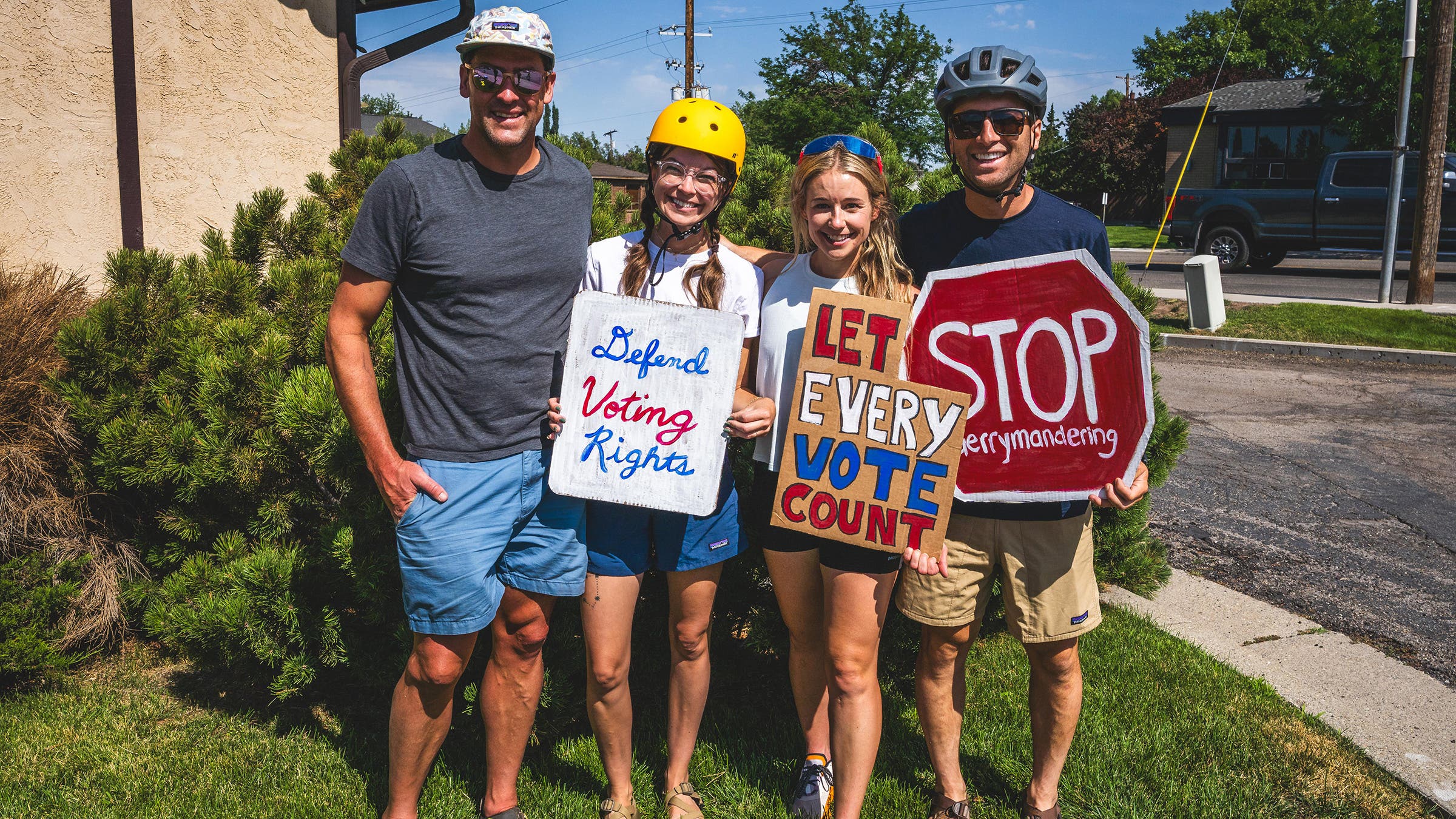
In addition to her support for reproductive freedom, she’s campaigning on policies that would improve housing affordability, raise the federal minimum wage, expand mental health coverage, end partisan gerrymandering, and push for a transition to renewable energy.
ADVERTISEMENT
Utah’s status as a red state can lead to apathy, particularly among young people who feel like their voices aren’t represented in politics, says Ben Anderson, Gleich’s former deputy campaign manager. (At 23, Anderson was Utah’s youngest delegate to attend this year’s Democratic National Convention.)
“The reality is, it’s very hard to win as a Democrat statewide in Utah,” says Matthew Burbank, a professor of political science at the University of Utah. Republican presidents have carried the state since 1968. The occasional Democratic senator or representative would win an election until about the mid-1980s, when Republicans became truly dominant—a fact that Burbank attributes in part to the counterculture, antiwar, and environment movements of the sixties and seventies.
“That did not resonate well with people in Utah at the time. That led to this movement, particularly among LDS people in the state, to being solidly Republican.” The LDS Church is extremely influential in Utah politics, and among church members, 77 percent lean Republican.
However, younger LDS members increasingly vote Democrat—and Gleich wants to make sure these people have a good candidate to vote for.
Gleich is drawing support from more surprising constituents, too. At a fundraiser in Park City, she met a real estate investor and philanthropist named Glenn Goldman. Goldman, 73, says he’s “been known to be conservative on some issues and Democratic on some issues.” At the fundraiser, he wanted to mingle and talk about people’s beliefs and plans. He liked Gleich.
ADVERTISEMENT
“She’s as honest as the day is long. It’s refreshing to see that in politics,” he says. “It’s great to see a young person so committed, and many of the things she believes in I also believe in.” Goldman says he aligns with Gleich on affordable housing, education, and childcare, but he’ll be splitting the ticket in November. He proudly planted a Gleich yard sign next to his Trump flag, and he wears a Gleich T-shirt and hat to his league golf game every Wednesday.
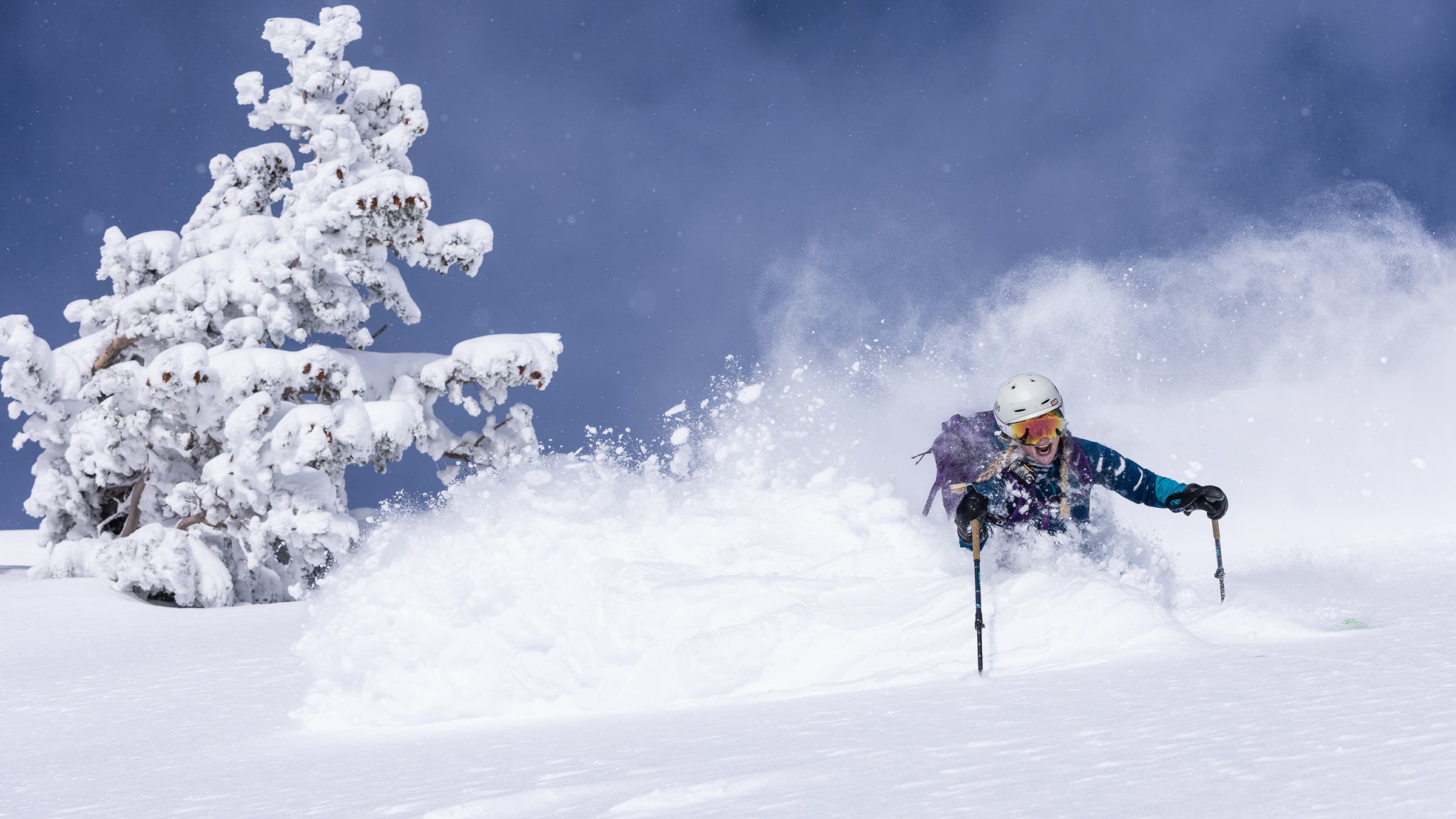
Gleich’s political mentor, Ted Wilson, passed away in the spring. At the memorial service, his son told a story about when Wilson was a teenager and trying to climb the West Slabs on Utah’s Mount Olympus, a nearly 1,500-foot scramble. It took him at least a dozen tries before he finally did it. The anecdote, understandably, resonated with Gleich.
For all her earnestness and optimism, Gleich isn’t naive. “It’s going to be a really hard race to win,” she says. “I get that.”
So if the outcome aligns with the polling, and Gleich loses to Curtis, will it all have been for nothing? “I’ll be proud that I stepped up to serve my community and my country,” she says.
“Sometimes it doesn’t pan out—the high winds move in when you’re at 14,000 feet and you have to bail,” she adds. “You can always go back and try again.”
ADVERTISEMENT
Want more of Outside’s in-depth longform stories? Sign up for the Long Reads newsletter.
