Published October 23, 2019 12:00AM
North America's Best Ski Routes Are Disappearing
Cody Townsend thought his project, the Fifty, would be a mission to descend the 50 best lines in North America. But then climate change started to melt the snow right out from under his skis.
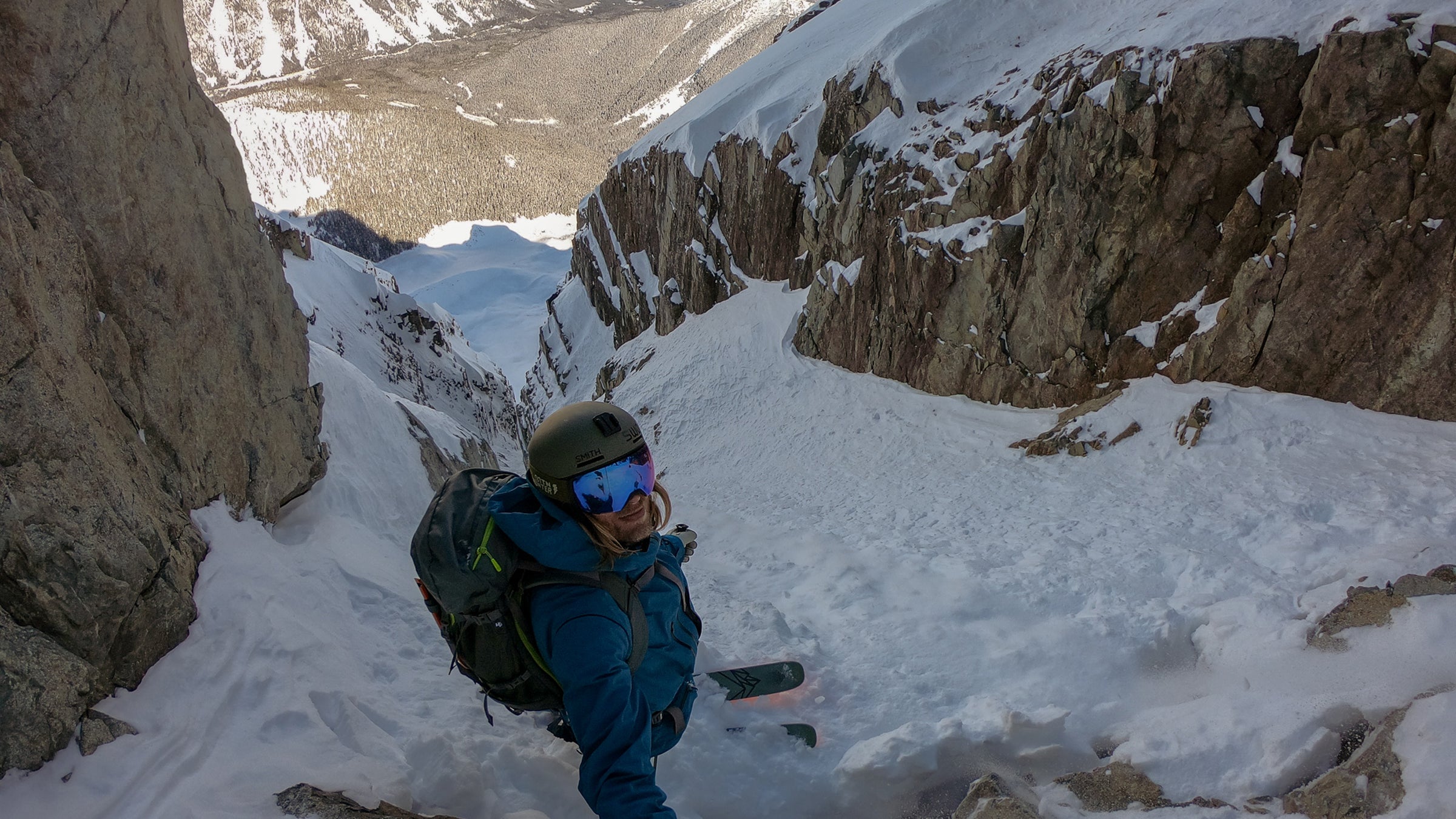
“As it stands now," Townsend says, "I have the last descent on Joffre, because half the mountain fell off. We watched two of the three lines off that peak disappear forever.”
When Cody Townsend set out to ski British Columbia’s 8,927-foot Joffre Peak—part of the Fifty, his project to descend the iconic lines collected in the 2010 book Fifty Classic Ski Descents in North America—he thought he might miss the window of skiability. It was late February of this year, and the unusually thin snowpack and low visibility turned him around on his first attempt. But three days later, Townsend succeeded, sidestepping and jump-turning down the line, despite crummy snow (“Holy shit, this skiing is gonna suuuuck,” he tells his cameraman) and an emergency helicopter rescue for a skier on a neighboring couloir (“Dude, dude, somebody just fell down Central”).
Townsend didn’t know how small his skiing window on Joffre had been. In May, a massive landslide, caused by melting permafrost, ripped off the entire face he had skied. “As it stands now,” he says, “I have the last descent on Joffre, because half the mountain fell off. We watched two of the three lines off that peak disappear forever.”
Townsend didn’t know how small his skiing window on Joffre had been. In May, a massive landslide, caused by melting permafrost, ripped off the entire face he had skied. “As it stands now,” he says, “I have the last descent on Joffre, because half the mountain fell off. We watched two of the three lines off that peak disappear forever.”
The Fifty started out as a personal challenge. In January, the 36-year-old California native launched the project, which he anticipated would take place over three winters. He started a video series, with an episode about each of the peaks. He didn’t realize how much the quest to tick off lines was going to be a race against receding glaciers and a potential eulogy for the ski routes themselves. He didn’t think he was signing up to record last descents.
Last winter, Townsend ticked off 20 of the lines and released 16 episodes. The biggest surprise, he says in the second season of the Fifty video series—which launched this month—has been how quickly the snow is changing. Melting glaciers, landslides caused by warming, and variable snowpacks forced him to change his routes. “This book, which is supposed to be this permanent book and stand a test of time,” he says, “instead feels really temporary. It’s a strange and really, really sad thing.”
Conveying what’s happening in the high country has always been a part of mountain athletes’ jobs. As long as skiers and climbers have been sponsored, they’ve been responsible for returning with trip reports from the roof of the world. Now they’re also on the front lines of change—they have the skills and ability to get into fragile places where even glaciologists rely only on lidar and satellite technology and aerial photos. The IPCC Special Report on the Ocean and Cryosphere in a Changing Climate, which came out in September, painted a dire picture of the future of high-mountain ice. Small-scale glaciers are predicted to lose 80 percent of their current ice mass by 2100. Moving at a glacial pace isn’t an adage that works anymore.
So much of the discussion around climate change happens in the theoretical space of models and what-ifs. Overlaying that science with story, with the eyewitness narrative of a dude just trying to shralp, gives a more complete picture without being preachy or wonky.
When Townsend looks at climbing a peak like Joffre, he does a dissection of the mountain, studying weather conditions, glacial creep, and snow status before he goes. He’ll scour Google Earth, dig through old trip reports, and poll local skiers for details and yearly photos. But he’s found that those historical records don’t line up with the present.
When Townsend looks at climbing a peak like Joffre, he does a dissection of the mountain, studying weather conditions, glacial creep, and snow status before he goes. He’ll scour Google Earth, dig through old trip reports, and poll local skiers for details and yearly photos. But he’s found that those historical records don’t line up with the present.
Take Mount Baker, Washington. Preparing to ski the Watson Traverse in May, Townsend and videographer Bjarne Salen had looked at a friend’s five-year-old photos and picked a seemingly mellow line. But when they arrived, they found that the glacier was broken up and riddled with crevasses. “Bjarne and I skied on a rope the whole way down, because there were giant crevasses and seracs peeling off,” he told me. “It was the scariest 25-degree slope I’ve ever skied in my life. I came away from that being like, At this pace, this line is going to be unskiable in ten years, tops.”
ADVERTISEMENT
In the overwhelming quickening of global climate impacts, it can feel like nothing moves the needle on change, in the outdoor world least of all. As Ethan Linck pointed out in what has become a seminal essay, “Your Stoke Won’t Save Us,” published in High Country News in May 2018, it’s not enough to rip big lines. “Stoke,” Linck wrote, “seems like a shaky bet for effecting the dramatic change necessary to halt accelerating ecological collapse.”
The thing that does feel valuable, I think, is connecting the dots between the field of science and being out in the field itself. Because of climate change, there’s a fundamental shift happening in how we can access places and how we’re going to do so in the future. A last descent is both a hard stop and a story about the impermanence of the places that stoke us up the most.
