Published February 27, 2026 01:02PM
A Wildfire in Florida’s Big Cypress National Preserve Is Burning Out of Control
The National Fire is estimated at more than 30,000 acres and is zero percent contained as of February 27. Extreme drought in the region is contributing to the wildfire’s rapid spread.
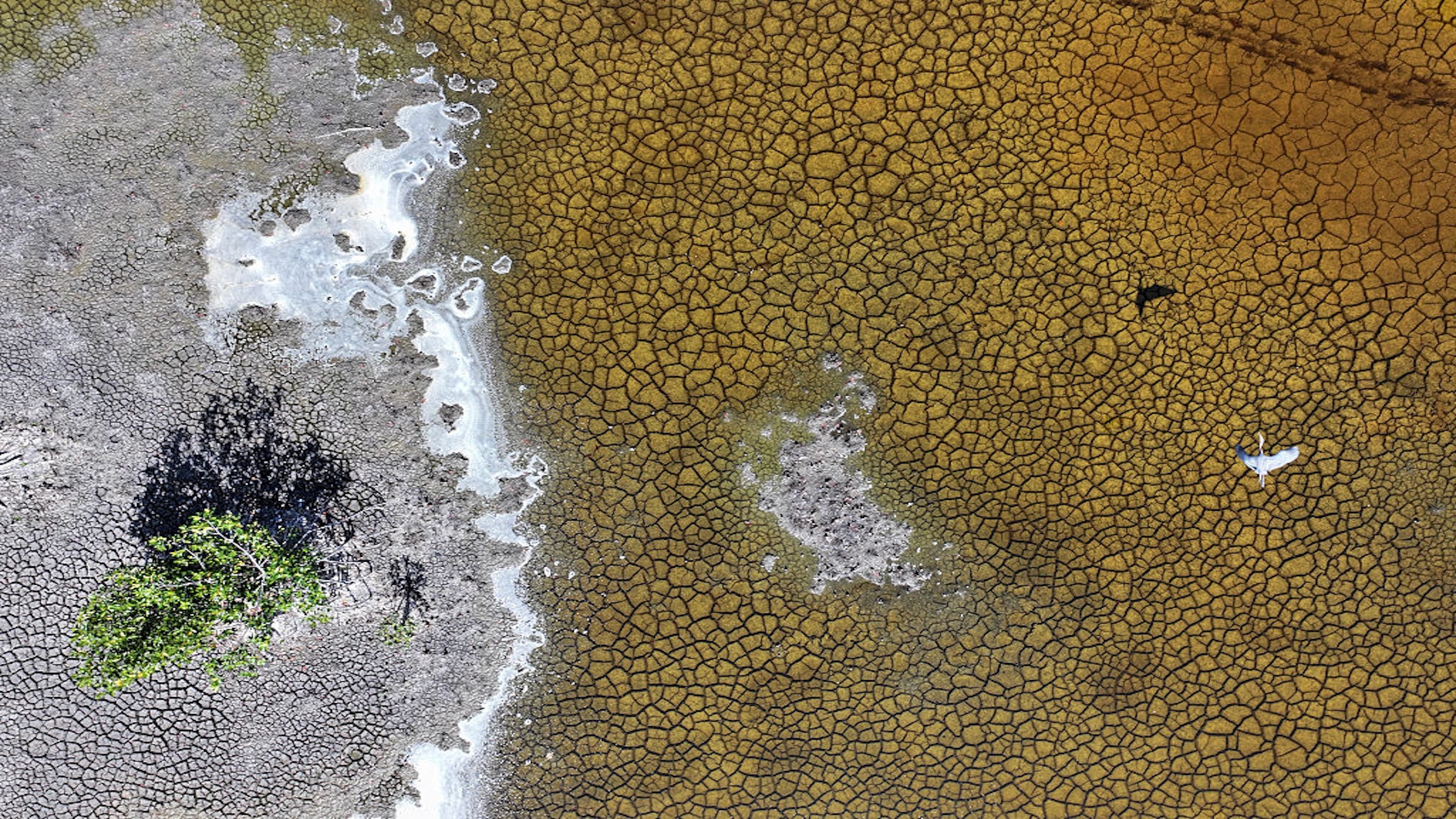
In an aerial view, dry parts of the Big Cypress National Preserve show a severe drought in May 2025 (Photo: Joe Raedle/Getty Images)
A wildfire in Florida’s Big Cypress National Preserve has more than quadrupled in just two days, growing from 5,000 acres to more than 30,000 acres as of February 27.
The wildfire tracking website Watch Duty reports that the newly named National Fire is zero percent contained and encompasses 30,225 acres as of this publication. Responding personnel include 14 engines, three helicopters, and three air tankers.
“The National Fire is burning within the Big Cypress National Preserve, approximately 25 miles east of Naples, Florida,” wrote Watch Duty in a February 26 update. “Area weather and environmental conditions are contributing to the rapid spread and difficulty of suppressing the National Fire.”
Big Cypress National Preserve is a 729,000-acre National Park Service (NPS) site located in southern Florida’s wetlands, about 17 miles north of Everglades National Park. The preserve is famous for its swamps and wet prairies. It was America’s first designated national preserve and earned its protection on October 11, 1974.
In early February, an Arctic blast tore through southern Florida, bringing a deep freeze that killed vegetation. Strong winds and severe drought in the area are further contributing to the fire’s spread.
“Ongoing wildfire activity within Big Cypress National Preserve continues to expand due to persistent drought conditions and recent frost damage that has created an unusually heavy and highly receptive fuel bed,” the NPS wrote in an update. “Dry vegetation combined with accumulated frost-killed fuels is contributing to active fire behavior across the preserve.”
The NPS is advising people driving in the area to exercise extreme caution and allow extra travel time, as the fire is impacting several major roadways, including Interstate 75, State Road 29, and U.S. Route 41. A dense, smoky fog has also impacted all of South Florida, according to the National Weather Service (NWS) in Miami.
“Visibilities may drop to near zero at times making driving treacherous, especially along Alligator Alley where smoke and fog may combine,” NWS wrote on X.
Fire teams working in the area are removing unburned fuels ahead of the advancing fire to reduce risk to infrastructure and public safety. While officials have not yet released the cause of the fire, the Environmental Protection Agency lists it as human-caused.
The fire was first reported on February 22.
