Published January 10, 2026 03:51AM
NPS Staff Instructed to Ask Citizenship Questions at Entrances, Says Internal Directive
According to an internal directive, National Park Service employees at some of the nation’s most popular parks are now instructed to ask visitors questions about their citizenship status.
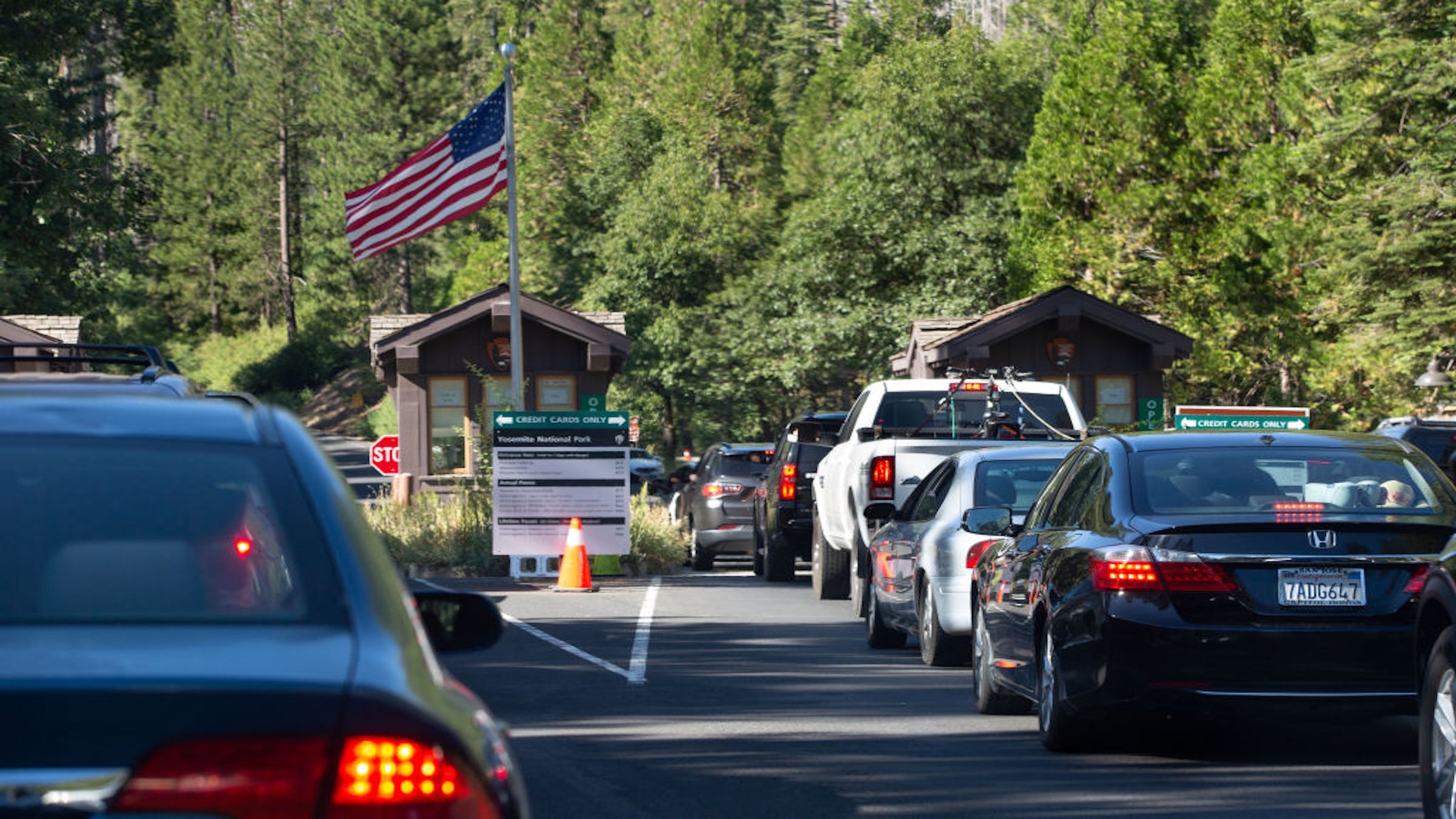
A long line of cars creeps slowly entrance of Yosemite National Park (Photo: George Rose/Getty Images)
Those visiting national parks this year may face additional questioning about their citizenship. According to an internal National Park Service (NPS) directive, park staff have been instructed to ask visitors whether they are United States residents at 11 of the nation’s most popular parks.
The Washington Post obtained a copy of the regulation, which instructs park service staff to ask visitors, “How many people visiting are not U.S. citizens or residents?” The document also says, “the fee collector does not need to check the identification of every visitor.”
In an email to Outside, NPS spokesperson Elizabeth Peace said that park staff are “not checking immigration status, citizenship, or residency beyond what is necessary to confirm eligibility for a specific entrance fee or pass.”
Still, staff have been instructed to ask visitors for proof of U.S. residency.
It’s not unusual for entrance staff to ask visitors for identification in some instances. Previous guidelines required NPS staff to confirm the name on a pass with a user’s valid photo ID.
ADVERTISEMENT
What’s changed now, however, is that visitors at the 11 national parks with what Peace referred to as “resident-restricted passes” must show a U.S government-issued ID. That includes a U.S. passport, government driver’s license or state ID, permanent residency card, or birth certificate.
“Individuals who do not have the appropriate ID will be asked to upgrade to the nonresident annual pass. Visitors will confirm their residency by providing a ZIP code when purchasing a pass online and must present a U.S. government-issued photo ID when using it,” Peace told Outside. She added that the directive is listed on an internal frequently-asked-questions website “meant to assist staff with improving visitor experiences.”
Outside has also requested a copy of the directive for independent verification. We will update the article if we receive one.
It comes after the Trump administration last year issued an executive order raising visitor fees for non-U.S. residents at some of the most visited national parks. In addition to the entrance fee, non-residents over 16 now pay an additional $100 surcharge. The new fee now applies to Acadia, Bryce Canyon, Everglades, Glacier, Grand Canyon, Grand Teton, Rocky Mountain, Sequoia and Kings Canyon, Yellowstone, Yosemite, and Zion National Parks.
America the Beautiful passes, which offer admission to all sites in the National Park system, now cost an additional $170 for nonresidents. It’s $80 for those who live in the U.S.
Some say this new policy mimics tactics used at immigration checkpoints.
ADVERTISEMENT
“It’s meant to make people feel nervous and uncomfortable and make the decision to either stay away or to modify their plans based on their identities,” Mneesha Gellman, a political scientist at Emerson College, who serves as an expert witness in U.S. immigration court, told The Washington Post.
According to the NPS website, purchasers of an America the Beautiful Annual Pass must provide proof of U.S. citizenship or residency. Those who bought digital passes will be required to show a photo ID at the time of use.
There are many different types of immigration status in the United States, and NPS staff aren’t properly trained to distinguish between residents and non-residents. Time spent asking additional questions at park entrances could also add to an already understaffed, overburdened agency.
