Published February 19, 2026 06:14AM
A State-By-State Guide of Known Signs That Have Been Removed or Flagged Across National Parks
In March 2025, President Trump signed an executive order directing federal agencies to review how American history is portrayed at National Park Service sites. Here is the most comprehensive list yet of the signs that have been taken down or flagged for removal since.
Under a directive from Interior Secretary Doug Burgum and the Trump administration, the National Park Service has removed a historical exhibit at Muir Woods National Monument (Photo: Mike Lewis/Getty Images)
A coalition of nonprofit scientists, historians, and advocates has filed a lawsuit against the Trump administration for removing signs at National Park Service (NPS) sites nationwide. The coalition, represented by the public policy research group Democracy Forward, claims the administration removed signs describing slavery, climate change, and history—among other topics—in an effort “to erase history and censor science in America’s national parks.”
The lawsuit, filed in federal court in Boston, includes a list of signs and placards at NPS sites that have been removed.
In March 2025, President Trump signed an executive order directing federal agencies to review how American history is portrayed at NPS sites. The order required officials to ensure that sites do not contain content that “inappropriately disparage[s] Americans past or living.” In the months since, NPS staff have removed or flagged interpretive signs at dozens of NPS sites, from the Stonewall in New York City to Glacier National Park in Montana.
One plaintiff, the National Parks Conservation Association (NPCA), says that the February 17 lawsuit aims to halt the removal of accurate, fact-based NPS signs altogether.
ADVERTISEMENT
“Our legal filing includes accounts of signage and exhibits removed or flagged for removal from national parks due to the administration’s order to erase history and science,” a spokesperson told Outside. “Senior officials at Interior have not been forthcoming regarding the implementation of this policy, leading to confusion at national parks. The Interior Department has a responsibility to be transparent with the public and to come clean about what history and science they have erased or plan to erase from national parks.”
Outside contacted the U.S. Department of the Interior (DOI) to request a list of all signs removed from NPS sites and the reasons for their removal. The agency did not respond to a request for such a catalogue.
“Democracy Forward is funded and run by far-left extremists who tried, but failed, to elect Hillary Clinton. Secretary Order 3431 directed a review of certain interpretive content to ensure parks tell the full and accurate story of American history,” wrote the DOI in an email to Outside.
A spokesperson from the NPCA told Outside that the list included in the Democracy Forward lawsuit represents the “most egregious, publicly confirmed examples” of sign takedowns at NPS sites. The list includes 25 NPS sites.

ADVERTISEMENT
Alabama
Selma to Montgomery National Historic Trail: The NPS flagged approximately 80 items that document key moments in the Civil Rights Movement, including the 1965 voting rights marches led by John Lewis and others.
Alaska
Sitka National Historic Park: A sign referencing how missionaries mistreated Alaskan Native people was flagged.
Arizona
Organ Pipe Cactus National Monument: Descriptions of destructive grazing practices and the accelerating rate of global warming since 1850 were reportedly flagged for removal, as well as a booklet discussing endangered turtles and Sonoran pronghorn.
Sunset Crater Volcano National Monument: A sign describing basalt bubbles was said to have been removed because it included an image of a visitor holding a Pride flag.
Hubbell Trading Post National Historic Site: Aanel discussing Ganado Mucho, a Navajo leader known for settling disputes with ranchers, was flagged for removal.
ADVERTISEMENT
California
Muir Woods in Golden Gate National Park: NPS reportedly altered or removed an exhibit titled “History Under Construction.” The 2021 installation annotated an existing sign with sticky notes that provided previously omitted content on Indigenous history, the role of NPS staff in eugenics movements, and the role of women at Muir Woods.
Death Valley National Park: The Timbisha Shoshone Tribe requested that an exhibit be placed that included the phrases, “these are our homelands” and “we are still here.” The request was to commemorate the 25th anniversary of the Homeland Act, which transferred nearly 7,800 acres to the Tribe. NPS reportedly placed the request under review.
Colorado
Bent’s Old Fort National Historic Site: A sign that reportedly described a family’s “ownership” of enslaved people, as well as content that spoke of the forced removal of a Native Tribe, was flagged for removal or taken down.
ADVERTISEMENT
Florida
Everglades National Park: NPS flagged signage that included descriptions of the impact of industrialization on wetland ecosystems.
Kingsley Plantation in the Timucuan Ecological and Historic Preserve: An exhibit entitled “Freedom Seekers of Timucuan Preserve” was flagged. It reportedly described the stories of enslaved people who “illustrated the perseverance of the human spirit” as they navigated “sites of bondage and of escape.”
Castillo de San Marcos National Monument: Staff flagged language about the imprisonment of Native Americans inside the Spanish stone fortress
ADVERTISEMENT
Georgia
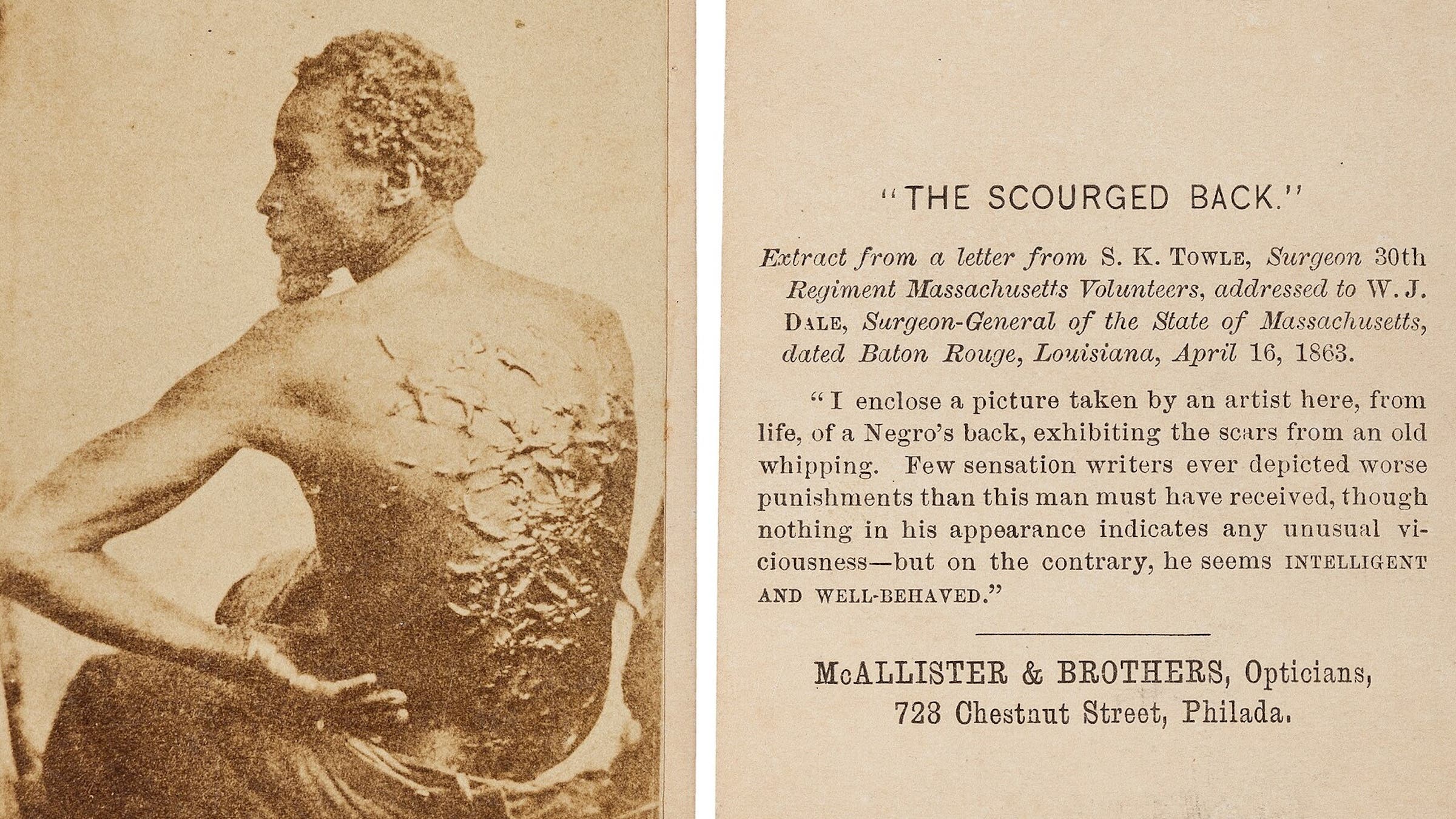
Fort Pulaski National Park: Content flagged for removal or taken down included a reproduction of “The Scourged Black,” an 1836 photo of Peter Gordon, a man who was enslaved in Louisiana, with scars on his back
Kansas
Brown v. Board of Education National Historical Park: A permanent exhibit was reportedly flagged because it mentions “equity.”
Louisiana
Cane River Creole National Historic Park: NPS staff flagged or removed information about slavery, including an exhibit about enslaved people who tried to escape. They were instead captured and publicly whipped.
ADVERTISEMENT
Maine
Acadia National Park: Staff reportedly removed signs that described both history and science. At least one now-removed sign discussed the significance of Cadillac Mountain to the Wabanaki People. Another sign described the effects of climate change.
Massachussets
Lowell National Historical Park: Accounts suggest that park staff stopped showing two films on labor history. Established in 1978, the park commemorates the City of Lowell’s role in the American Industrial Revolution.
Montana
Glacier National Park: NPS removed interpretive materials noting how climate change is affecting the park and driving the disappearance of its glaciers.
Little Bighorn Battlefield National Monument: An exhibit that described the United States being “hungry for gold and land” and breaking promises to Native Americans was reportedly flagged or removed.
ADVERTISEMENT
New York
Jamaica Bay Wildlife Refuge at the Gateway National Recreation Area: An exhibition was removed or flagged that included information about climate change, women’s rights and liberty, and historical accounts of slavery. It also described indigenous killings and the internment of Japanese Americans in wartime camps.
North Carolina
Cape Hatteras National Seashore: A sign titled “The Air We Breathe” that discussed the importance of clean air was flagged or removed.
Pennsylvania
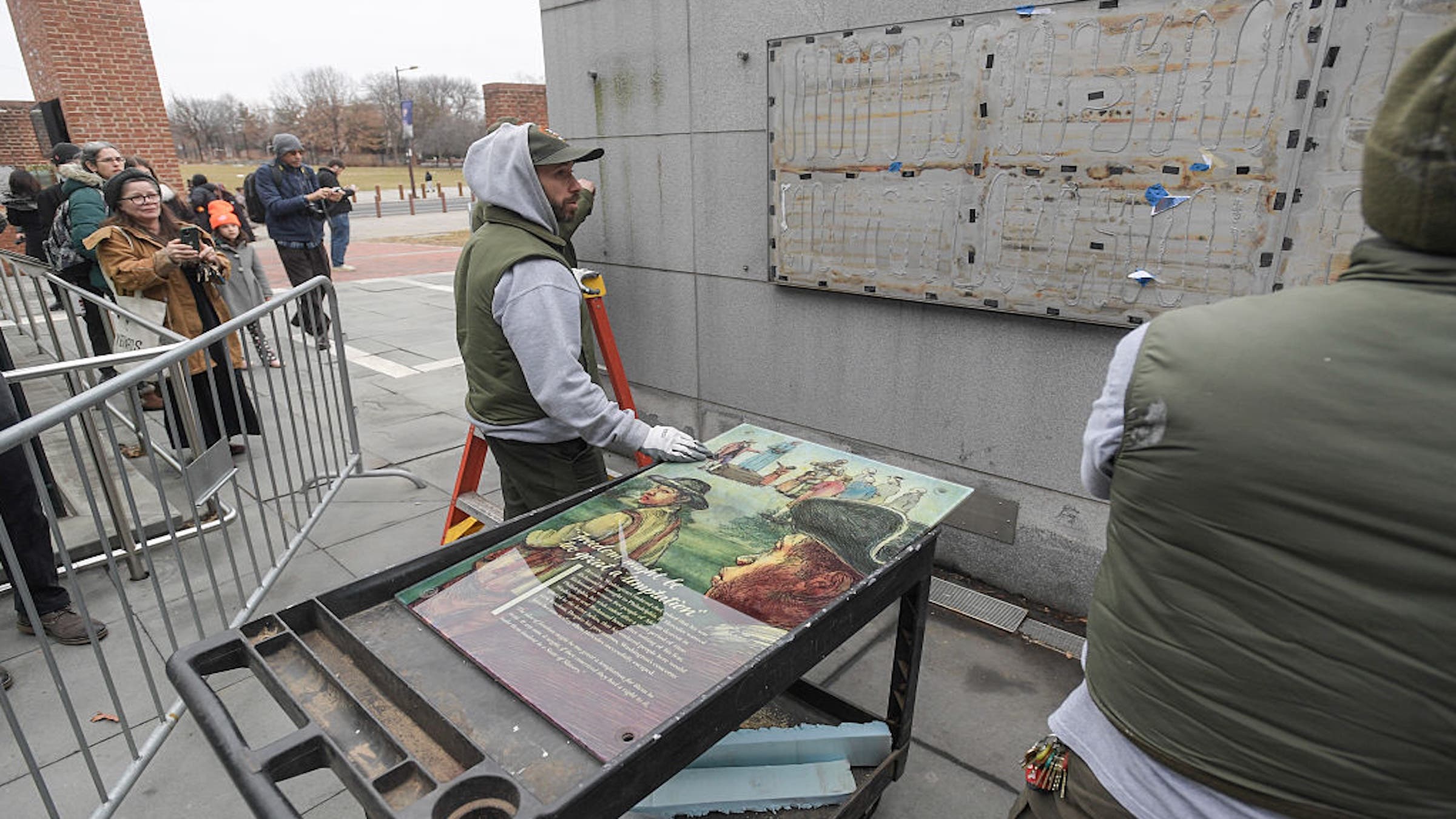
President’s House Site in Independence National Historical Park: Officials removed an exhibit that examined “the paradox between slavery and freedom in the founding of the nation.” It also described the role of enslaved people at the home during George Washington’s presidency. According to Democracy Forward, one of the signs also discussed Ona Judge, a woman and seamstress who NPS said “became Martha Washington’s personal maid as a teenager.” She escaped enslavement and evaded recapture. On February 16, a federal judge ruled that the removal likely violated the law and ordered the NPS to restore the signage. The signs were restored on February 19.
ADVERTISEMENT
South Carolina
Fort Sumter: NPS removed an interpretive display that described how climate change may eventually submerge the historic fortress, which sparked the Civil War. The information displayed was part of research conducted by the NPS and Western Carolina University. It also showed the effects of sea level rise, coastal erosion, flooding, and storm surge on the park.
Tennessee
Great Smoky Mountains National Park: A sign that explained how fossil fuels cause air pollution was flagged or removed.
Virginia
Manassas National Battlefield: A sign was flagged that criticized the 19th-century “Lost Cause” ideology, which denied the central role slavery played in the Civil War.
ADVERTISEMENT
West Virginia
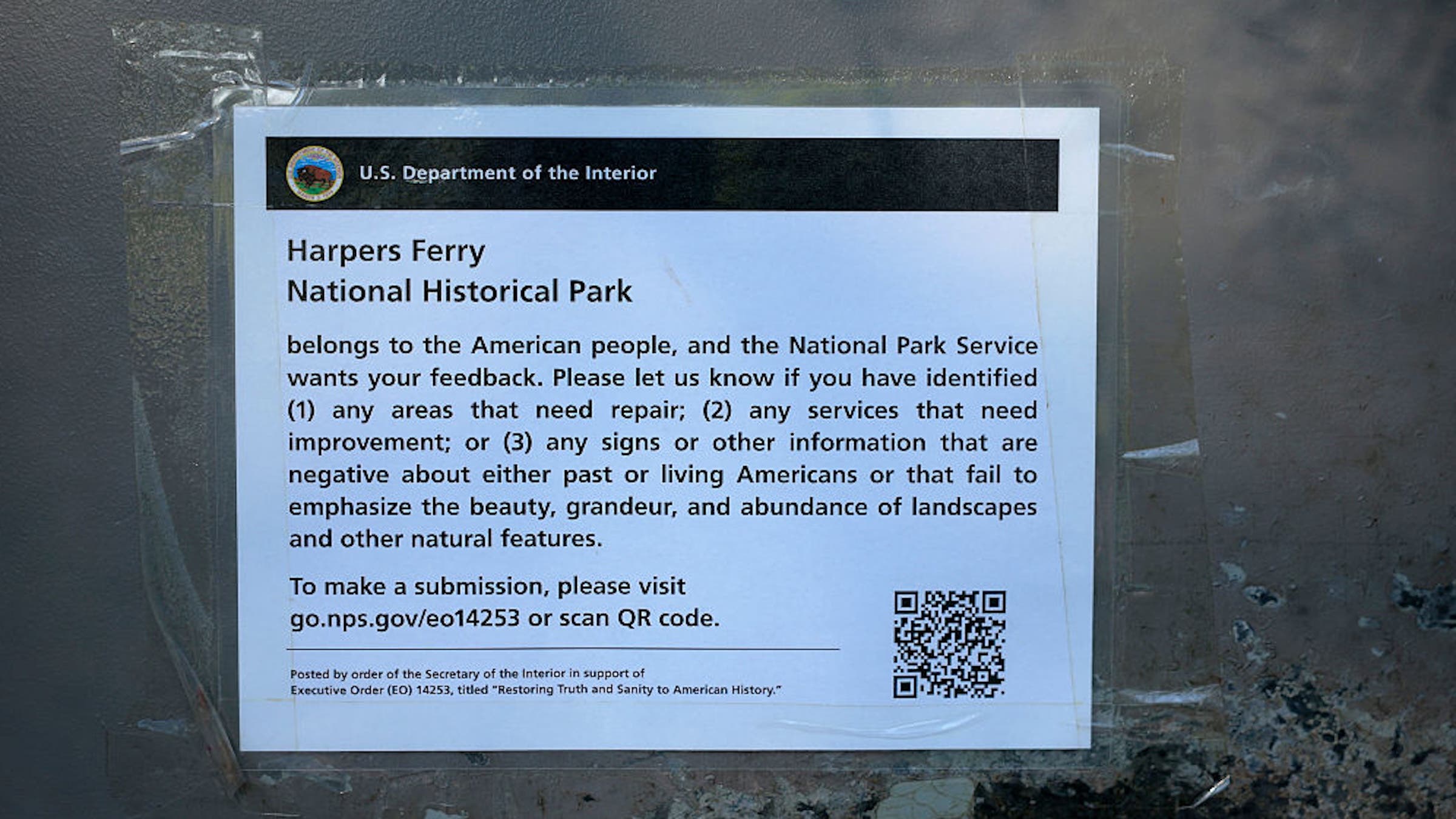
Harpers Ferry National Historic Park: More than 30 signs were reportedly flagged for removal. In 1859, abolitionist John Brown led a raid here to arm enslaved people for revolt.
Wyoming
Grand Teton National Park: NPS removed a sign explaining the history of early Yellowstone expedition member Gustavus Cheyney Doane, who participated in a massacre of Native Americans.
U.S. Virgin Islands
U.S. Virgin Islands National Park: Signs and exhibits that document the territory’s history, including those describing Indigenous life and the forced labor of enslaved Africans who built the colonial economy, were flagged for removal. Archaeological sites belonging to the Taíno people were also targeted.
