Updated September 5, 2024 10:13AM
If you buy through our links, we may earn an affiliate commission. This supports our mission to get more people active and outside.Learn about Outside Online's affiliate link policy
Why You Should Stop Using Laundry Pods Right Now
Save money and go easier on the planet with these tips and alternatives
(Photo: Malte Mueller/Getty)
Oh, the irony. In trying to wash my clothes the green way, I was greenwashed. You might even say I was taken to the cleaners. Or hung out to dry.
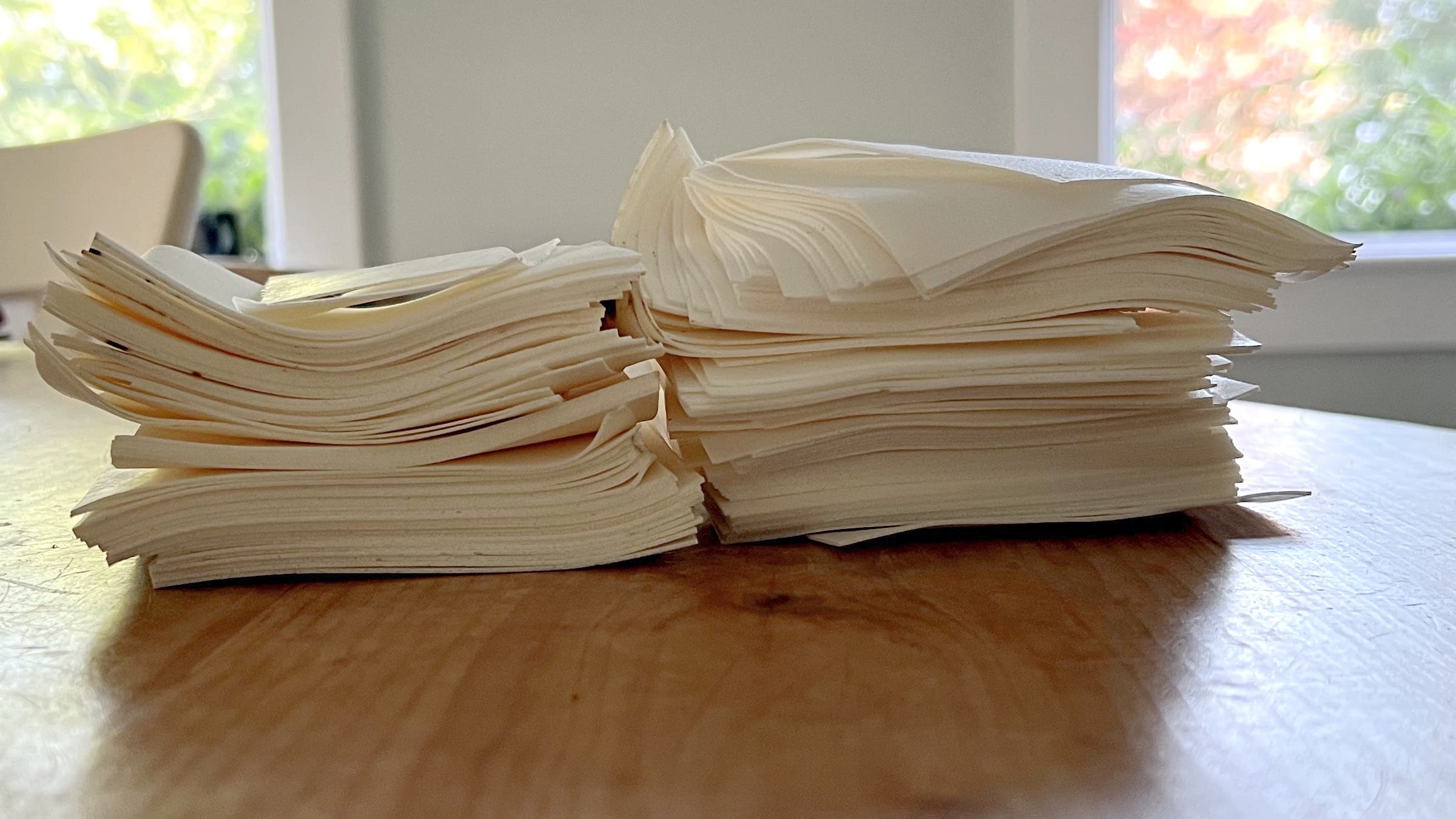
Let me explain: a few years ago, I learned that laundry pods—encased in dissolvable plastic—were bad for the environment. My neverending quest has led me down many rabbit holes—from the bags I use to pick up my dog’s poop to cutting boards—so I was thrilled to come across laundry “eco-strips,” as an easy swap-out. Instead of the typical plastic jug, the thin compressed laundry sheets come packaged in a recyclable cardboard envelope and marketed as plastic-free. I promptly ordered a year’s supply and told everyone who would listen about my new discovery.
Imagine my surprise when I discovered that a sneaky type of plastic called polyvinyl alcohol, or PVA, is actually what holds those laundry strips together. It’s the same exact stuff that encases laundry pods (and dishwasher pods, too), and though it’s designed to dissolve as soon as it hits water, it is indeed plastic. A very controversial type of plastic. To learn more about PVA and come up with sustainable alternatives, I connected with Dianna Cohen, co-founder and CEO of Plastic Pollution Coalition, a nonprofit working towards a world free of plastic pollution and its toxic impacts.
The Laundry Strip Controversy
PVA is a water-soluble synthetic polymer (a fancy word for plastic that readily binds itself to water molecules). You’ll find it on the ingredient list of virtually every laundry pod, dishwasher pod, and even every laundry strip . PVA has excellent barrier properties, so it’s good at holding together liquids and other squishy stuff, like soap. It’s also really good at dissolving. That’s why it vanishes in our washing machines and dishwashers. But does it really disappear? “When you stir a spoonful of sugar or salt into water, it dissolves, but is it gone?” Cohen asks. “Take a taste and you have your answer. It’s the same with PVA.”
ADVERTISEMENT
The dissolved PVA slides right down the tubes and off it goes to the treatment plant with your dirt, suds, and wastewater. What happens next depends on who you ask.
According to the American Cleaning Institute, PVA polymers are “fully biodegraded by microorganisms in water treatment facilities and the environment.” But Cohen, a slew of other leading advocates for clean oceans, and a 2021 study in The International Journal of Environmental Research and Public Health which looks at PVA degradation U.S. wastewater treatment plants, say that is simply not the case.
“There is a serious lack of unbiased research on the human and environmental health effects of PVA,” says Cohen because existing research was funded by companies with biased interests. “We do, however, know that PVA has been found in human breast milk and in fish, which indicates that it does not simply vanish in wastewater treatment plants. It’s making its way into our bodies and our environment.”
ADVERTISEMENT
The Plan to Ban PVA
Plastic Pollution Coalition, as well as many other advocacy groups like like Plastic Oceans, Beyond Plastics, and 5 Gyres, contend that we simply don’t know enough about the effects of PVA—which is why the groups have come together to call on the EPA to conduct an independent study to figure it out.
In 2022, the group submitted the proposal, along with about 24,000 signatures, urging the EPA to study the full ecological and health impacts of PVA and to remove it from the Safer Choice List (a list of chemicals deemed safe). The EPA rejected the proposal in May 2023 and a rebuttal is in the works. You can add your name to the petition here.
Meanwhile in New York in February 2024, legislature introduced a first-of-its kind bill called “Pods Are Plastic” that would make it illegal and finable to sell any laundry or dish pods or sheets containing PVA. I reached out to New York City councilman James Gennaro (on September 5, 2024) to get an update on the bill’s progress, but his office declined to comment.
ADVERTISEMENT
Plastic-Free Laundry Pod Alternatives
So what’s an environmentalist to do? First, avoid buying detergent in plastic containers. Second, check the ingredient list and if you see a lot of long, chemical-ish words, be suspicious. These things are bad: optical brighteners, chlorine, formaldehyde, synthetic nonylphenol ethoxylates, phosphates, phthalates. Third, if you have a refill shop near you, BYO containers and support it. We need the concept of refill shops to catch on in U.S.
Cohen helped me come up with a few green detergent ideas, all of which are quite affordable.
DIY Laundry Soap
Combine 14 ounces of washing soda, 14 ounces of borax or baking soda, with 4.5 ounces of natural castile soap flakes. Store the mixture in a sealed glass jar. Use one to three tablespoons per load, depending on size.
Cost: about .10 per load.
ADVERTISEMENT
Soap Nuts
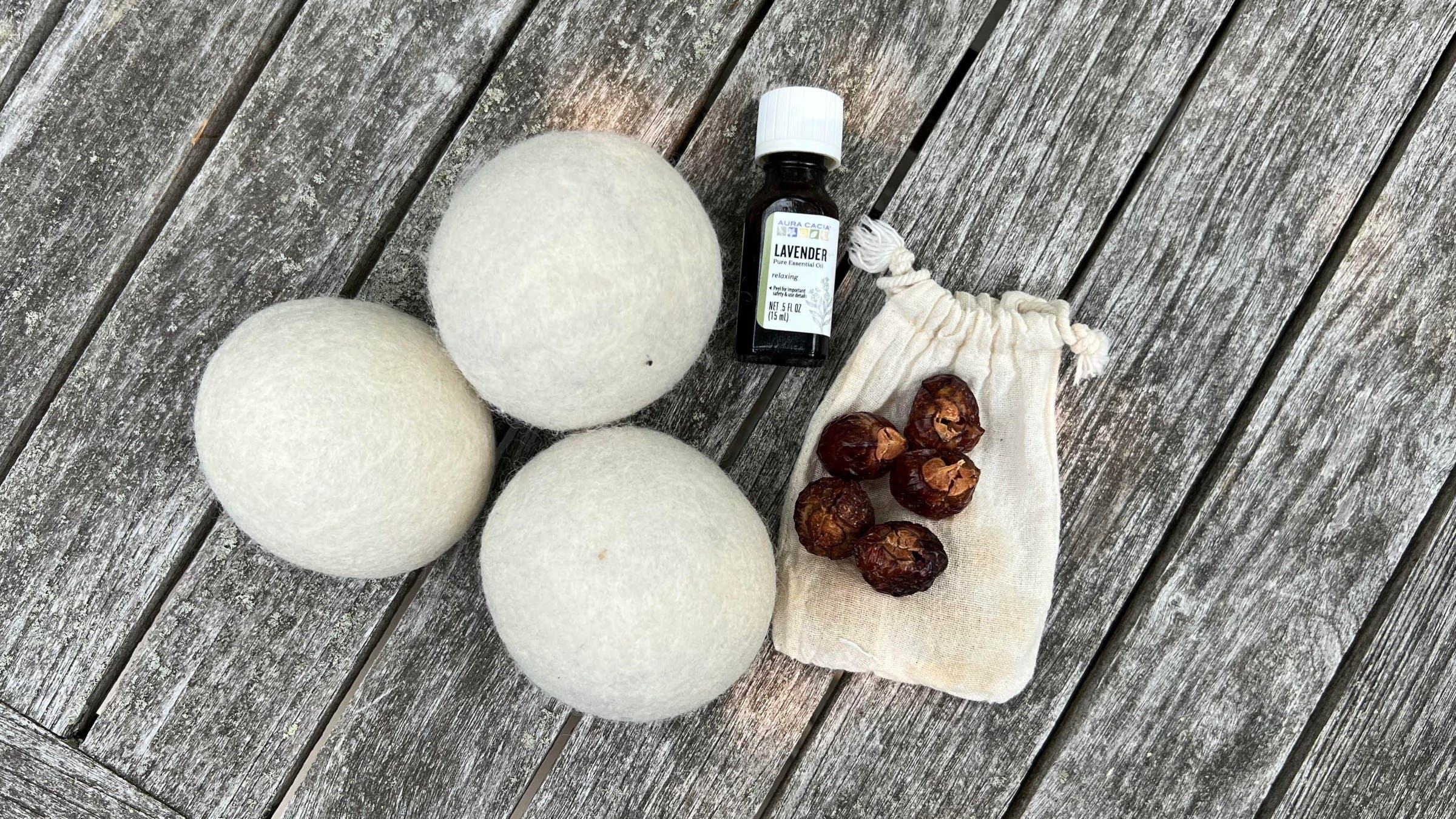
I’ve been using these for over a year now with good results. Just put five to seven nuts (which are really berries) into the included muslin sack and toss in the wash. The shells contain saponin, a natural soap which releases into the water. Soap nuts don’t generate a lot of suds (because they lack the chemical foaming agents we’re used to) and they’re not for tough stains. But for regular use, they’re pretty cool, and they last a long time. (I’ve only resupplied twice in the last 14 months.)
You can use soap nuts five to eight times before the saponin wears off. Compost the spent nuts and replace with new ones. I add a few drops of lavender essential oil to the bag to give my laundry a light fragrance—the nuts alone are odorless.
Cost: about .23 per load.
Meliora Laundry Powder Detergent
This powder also gets my thumbs up. Made with non-toxic ingredients and shipped in curbside recyclable packaging, it comes in several all-natural scents. Meliora also makes a Soap Stick Stain Remover, which I use to rub any tough spots before washing.
Cost: about .23 per load
ADVERTISEMENT
More Sustainable Laundry Tips
Choosing a non-toxic, plastic-free detergent isn’t the only way to green up your laundry process. Here are some other tips.
Wear Clothes Longer
Don’t mindlessly toss clothes into the hamper after a wear. Ask yourself if those jeans really need washing, or can you fold them up and wear them again?
Turn Clothes Inside Out Before Washing
This will make your clothes last longer by protecting colors from premature fading and preventing snags during laundering.
ADVERTISEMENT
Fill the Machine
Say no to half loads; they waste water and energy.
Use Cold Water
Unless your clothes are really dirty, go for the cold wash. You’ll save money and energy, and your clothes will last longer and shed fewer microfibers, which is another environmental concern.
Air Dry
Like cold-washing, air drying will also save you money and energy, even if you partially air dry and then finish it off in the dryer to release wrinkles.
ADVERTISEMENT
Skip the Dryer Sheets
Yep, they contain PVA, too. I’ve been using wool dryer balls for over a year and they do a fine job of releasing wrinkles, fluffing things up, and reducing (most, but not always all) static.
Avoid Dry Cleaning
You know that distinctive smell that hits you when you walk into a dry cleaner? Those are chemicals. Most dry cleaners use a host of toxic chemicals and petroleum-based solvents that can be harmful to humans and the environment. Even if a label says “Dry Clean Only,” you can safely wash it by hand, which will save you money.
Hostetter is still sitting on hundreds of “eco-friendly” laundry strips, which she plans on pawning off on her college-age kids, so at least they won’t go to waste. Follow her journey to live more sustainably by signing up for her twice-monthly newsletter.
