Published March 10, 2026 04:00PM
Texas Border Sheriffs Push Back on Proposed Wall Through Big Bend National Park
A group of Texas border sheriffs wrote a letter of opposition in response to a proposed wall through Big Bend National Park. Big Bend represents just one portion of the nearly 2,000-mile wall slated to extend across the U.S.-Mexico border.
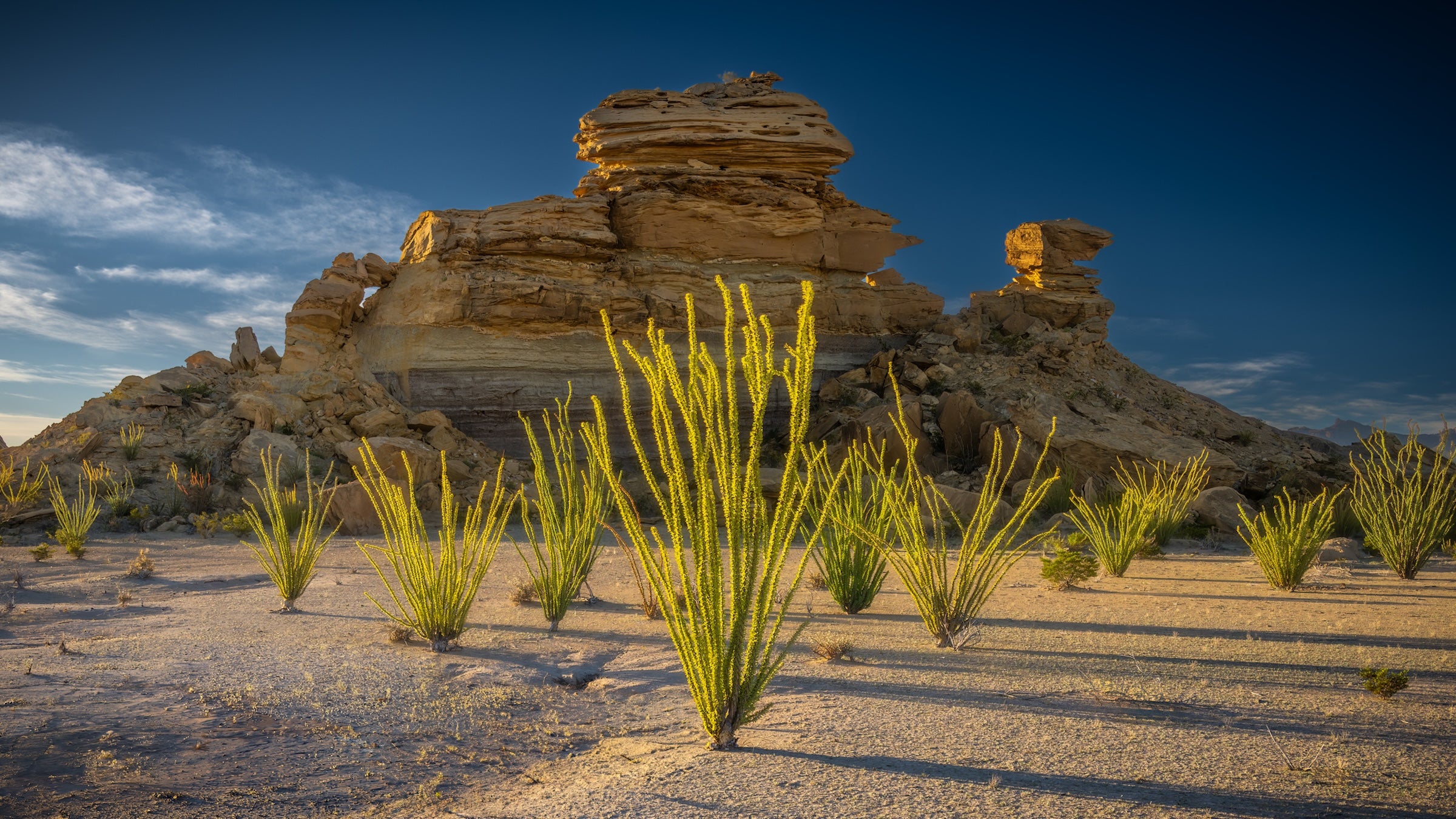
Ocotillo plants in Big Bend National Park (Photo: Dean Fikar/Getty Images)
A group of Texas sheriffs is pushing back against the federal government’s plan to build a border wall through one of America’s largest national parks. Straddling southern Texas, Big Bend National Park shares an 118-mile international border with Mexico via the Rio Grande.
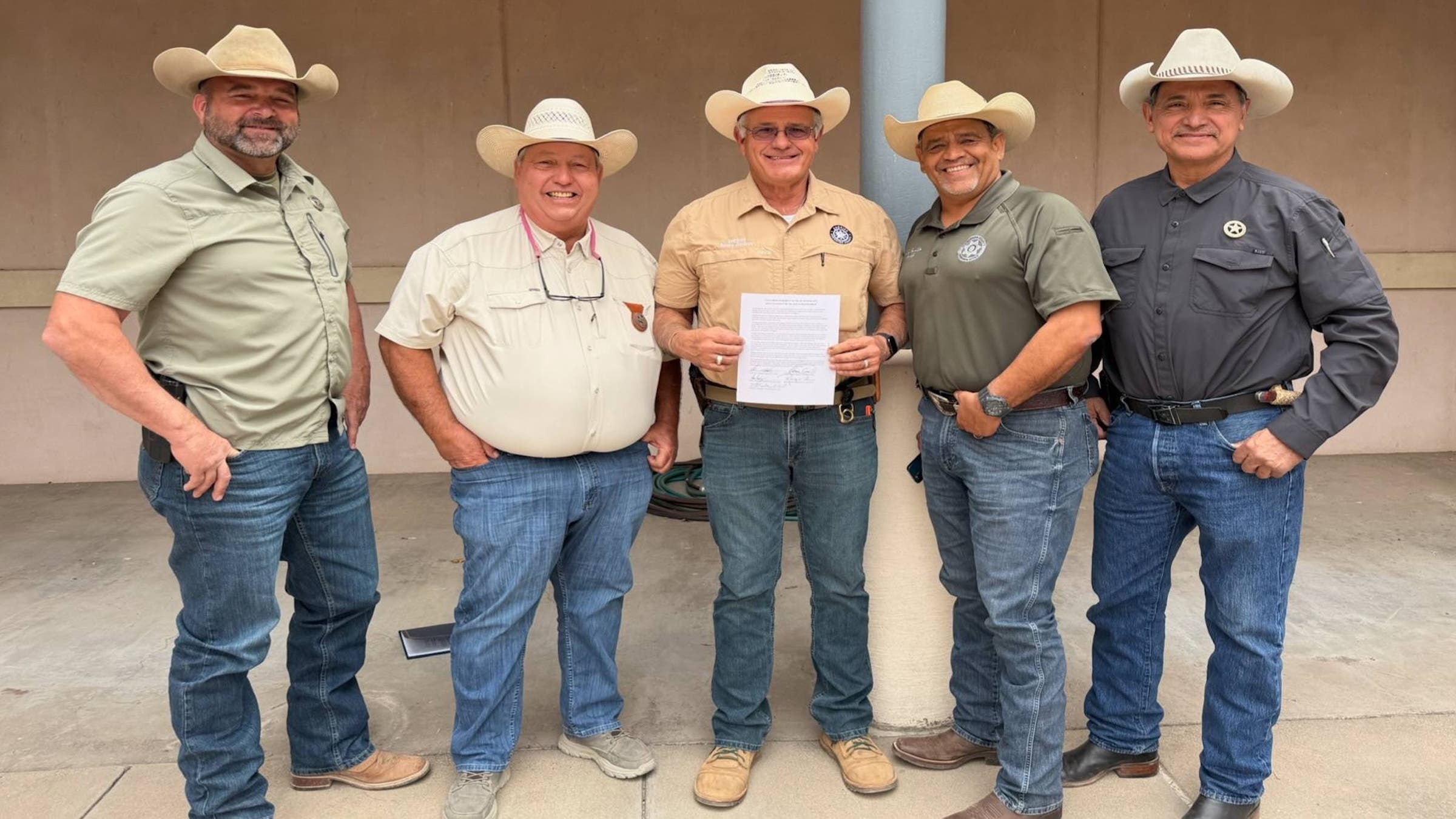
After the U.S. Customs and Border Protection (CBP) announced plans to construct a wall through the park, five sheriffs from bordering counties wrote to federal and state officials expressing concerns over the proposal
“As elected law enforcement officials serving the Big Bend region of Texas, we share a commitment to strong, effective border security. Protecting our communities, supporting our federal partners, and upholding the rule of law are core responsibilities of our offices,” the joint statement says. “Based on decades of combined experience working this terrain, we believe the construction of a continuous physical border wall in the Big Bend region would not represent the most practical or strategic approach to border security in this area.”
The Presidio County Sheriff’s Office posted the statement to Facebook on March 9.
In January 2025, President Trump signed a proclamation to build a border barrier funded by the One Big Beautiful Bill Act. The Big Bend National Park section is just one portion of the nearly 2,000-mile wall slated to extend across the U.S.-Mexico border.
The letter was posted shortly after the U.S. Customs and Border Protection (CBP) updated its proposed smart wall map. According to National Parks Traveler, the original map showed a physical wall cutting through the national park. The latest update, however, describes the zone as having a so-called “detection system” in place rather than a physical wall.
The proposal notes that approximately 535 miles of the U.S.-Mexico border without a barrier will be covered by “detection technology” such as cameras and lights due to unfavorable terrain or remote locations. Former Big Bend Superintendent Bob Krumenaker, who retired in 2023, told National Parks Traveler this technology could negate the need for a physical wall.
Outside spoke with a CBP spokesperson, who said the agency is still evaluating its border wall proposal. No final decisions have been made, and a timeline for any new builds or updates has not yet been established.
“CBP is currently focusing on the top operational priorities with historical rates of high illegal entry where illegal aliens regularly attempt to enter the United States,” a CBP spokesperson told Outside. “The Big Bend National Park and State Park are still in the planning stages. CBP will continue to coordinate with the National Park Service, Texas Parks and Wildlife Department, and other federal and state agencies throughout the planning of border barrier and technology deployments, in order to achieve Border Patrol’s operational priorities.”
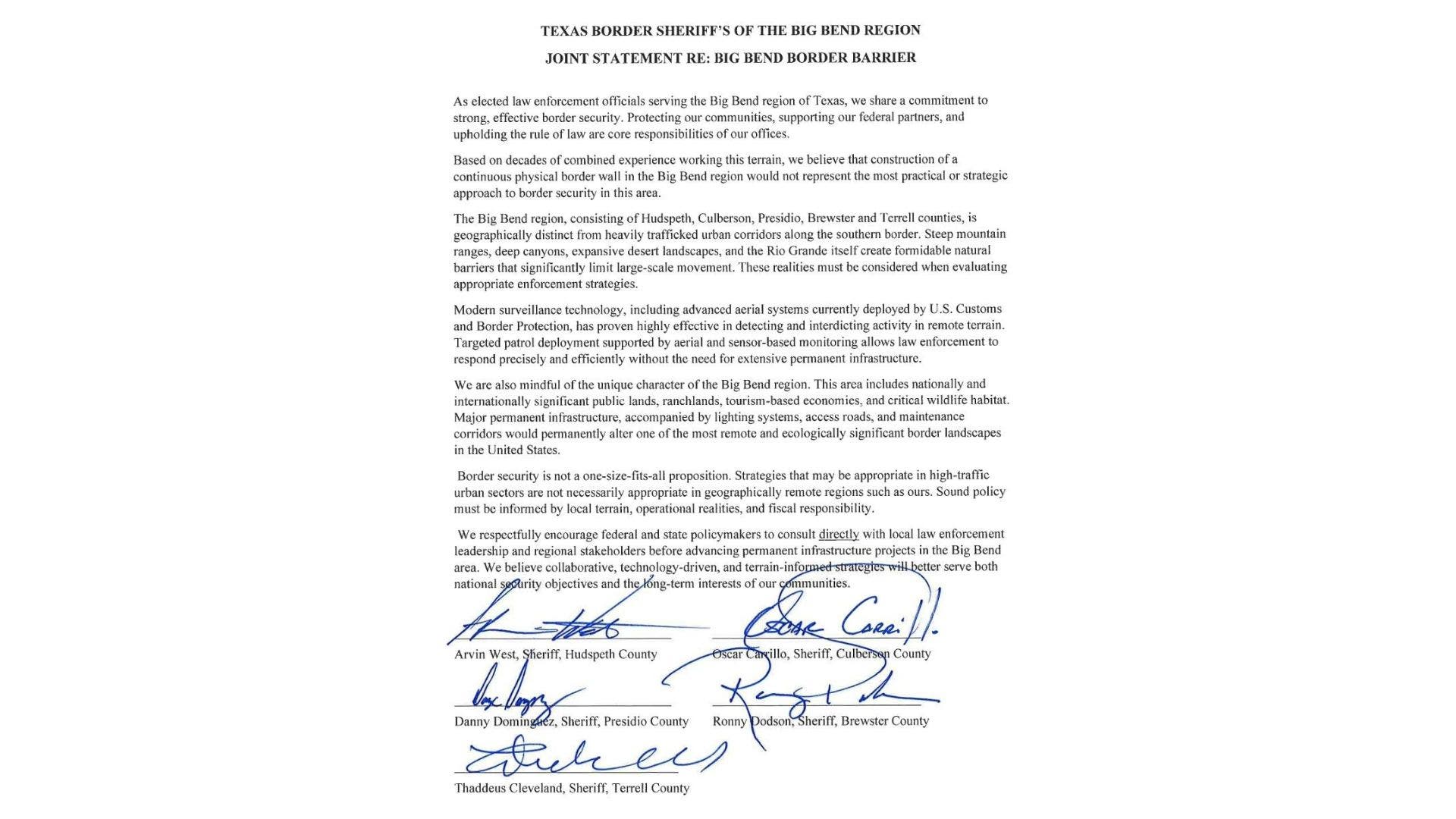
In their letter, the sheriffs write that modern surveillance technology, including aerial systems currently deployed by CBP, has proven highly effective in detecting activity in remote terrain. At more than 800,000 acres, Big Bend is a several-hour drive from major cities like El Paso and San Antonio. The park is so isolated that it has an entire mountain range to itself.
“Steep mountain ranges, deep canyons, expansive desert landscapes, and the Rio Grande itself create formidable natural barriers that significantly limit large-scale movement,” wrote Sheriffs Arvin West, Oscar Carillo, Danny Dominguez, Ronny Dodson, and Thaddeus Cleveland. The five represent Hudspeth, Culbertson, Presidio, Brewster, and Terrell counties, respectively.
ADVERTISEMENT
“We are also mindful of the unique character of the Big Bend region. This area includes nationally and internationally significant public lands, ranchlands, tourism-based economies, and critical wildlife. Major permanent infrastructure, accompanied by lighting systems, access roads, and maintenance corridors, would permanently alter one of the most remote and ecologically significant border landscapes in the United States.”
