Updated February 20, 2026 11:18AM
The Firefall Might Not Happen This Year—and Yosemite Just Closed Its Gates
Thousands of people flock to Yosemite National Park every year to witness the short-lived spectacle.
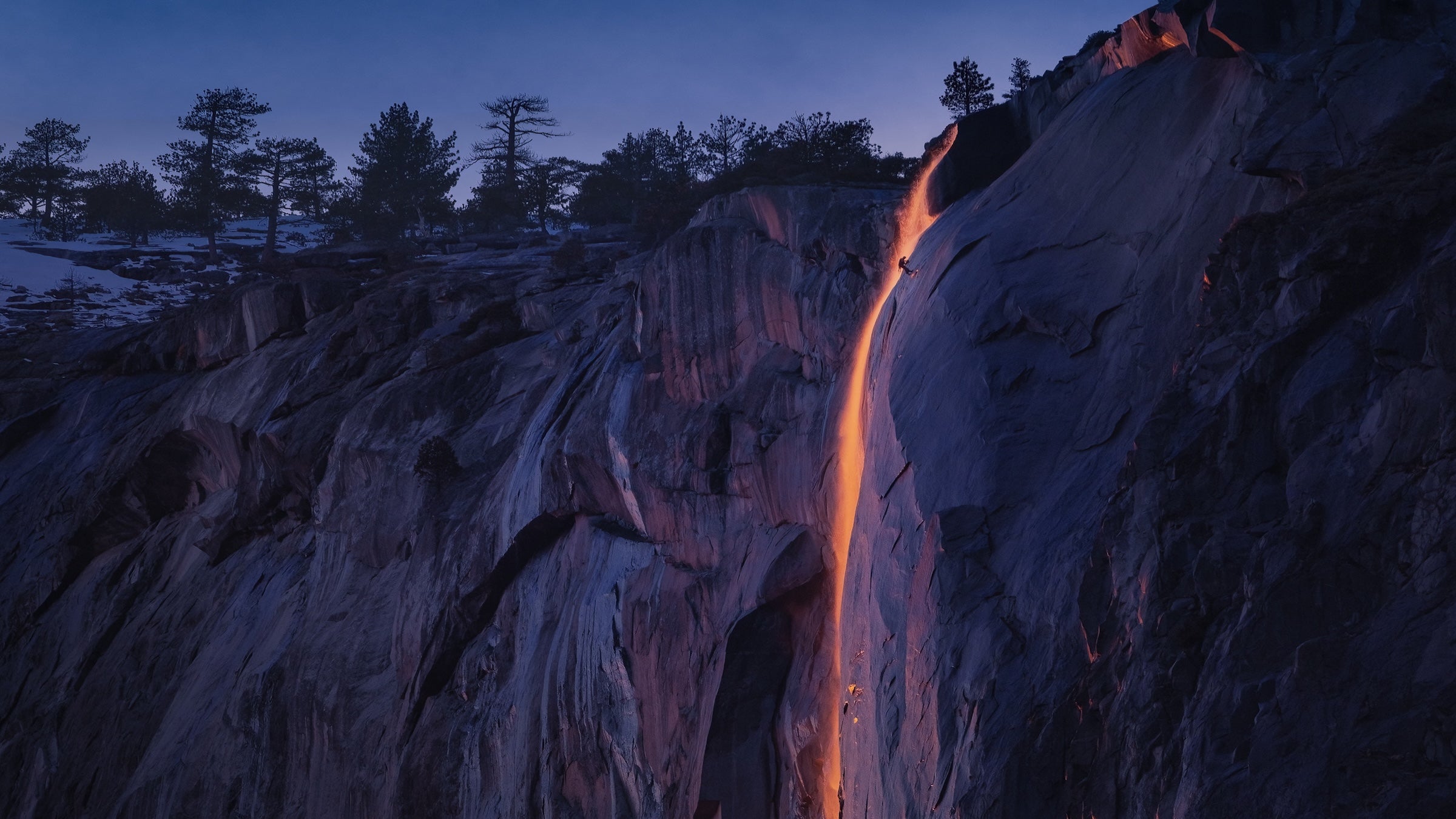
Yosemite's famous Firefall phenomenon lasts for just a brief window every year (Photo: FEBRUARY/Getty Images)
On February 19, Yosemite National Park officials announced the park would be closed to visitors through at least midnight on February 20 due to heavy snowfall and falling trees.
A winter storm is also threatening to dampen one of nature’s rarest spectacles, as severe weather in Yosemite is obscuring the park’s famous firefall, shortening an already brief viewing window. Park officials say that brooding weather conditions could mean the firefall is now absent for a few days, possibly longer.
The firefall is a natural phenomenon that occurs when the setting sun perfectly illuminates Horsetail Fall, a waterfall on El Capitan, turning it into a brilliant cascade of liquid fire.
“Horsetail Falls is very unlikely to be illuminated at sunset due to the cloudy conditions for the next several days and possibly through the weekend,” wrote Yosemite park officials on social media.
The spectacle is short-lived, typically lasting only a couple of weeks in mid- to late-February.
ADVERTISEMENT
“The firefall is a weather-dependent event that happens annually between February and March when conditions are correct. Weather is a primary factor in seeing the firefall,” Scott Carr, Yosemite spokesperson, told Outside.
The Yosemite firefall typically lasts about eight minutes in the early evening and is difficult to spot. Unlike the dependable Old Faithful, the firefall relies on a Goldilocks recipe of ingredients that rarely come together perfectly.
First, there has to be enough snow on top of El Capitan to feed the 2,100-foot waterfall, which only flows from snowmelt or rain during the winter and early spring. Second, temperatures must be warm enough during the day to melt the snow and generate runoff. Finally, the western horizon needs to be perfectly clear at sunset to allow the sun’s rays to hit the cliff face.
The current storm hitting the park is providing plenty of the first ingredient, snow, but cutting out the added necessities of warmth and sunlight.
ADVERTISEMENT
And the storm has done more than block the sun. It’s also temporarily shut down roads and campgrounds, though the park itself remains open. As of February 18, several key roads are closed due to fallen trees and snow, such as Big Oak Flat Road, the park’s main entrance from the northwest, and Wawona Road, the park’s entrance from the south. All of the park’s campsites and the popular Curry Village cabins are also closed through at least February 19 due to high winds and snow.
The park explained that up to four feet of snow could hit the valley, even at low elevations that don’t typically see snow. Visitors should also expect winds anywhere from 20 to 40 miles per hour, which could cause trees to fall, rockfall, and other debris to obstruct roads.
As for the thousands of visitors who flock to Yosemite every year to witness the firefall, the projected viewing window for the firefall lasts until February 26. But if the skies don’t clear by then, visitors may have to wait until February 2027 to see El Capitan glow again.
Current park conditions are available here. During the park closure, visitors with lodging reservations may still enter the park through the Arch Rock entrance.
