Updated May 23, 2025 11:10AM
Think Your Job Is Tough? Talk to a Mount Everest Icefall Doctor.
Mount Everest’s Icefall Doctors, the workers who build and maintain the route through the Khumbu Glacier, pursue a livelihood rooted in tradition and danger

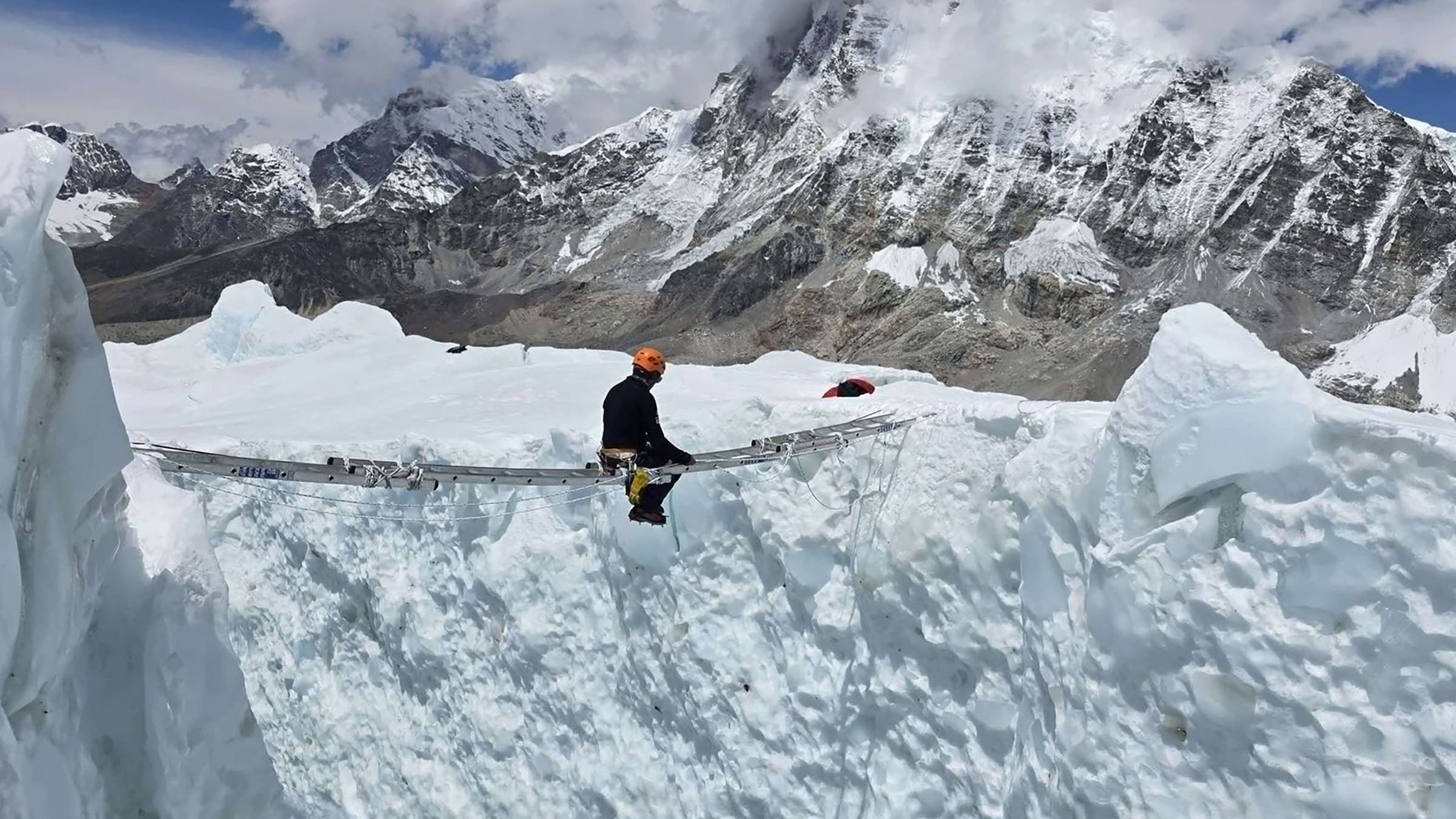
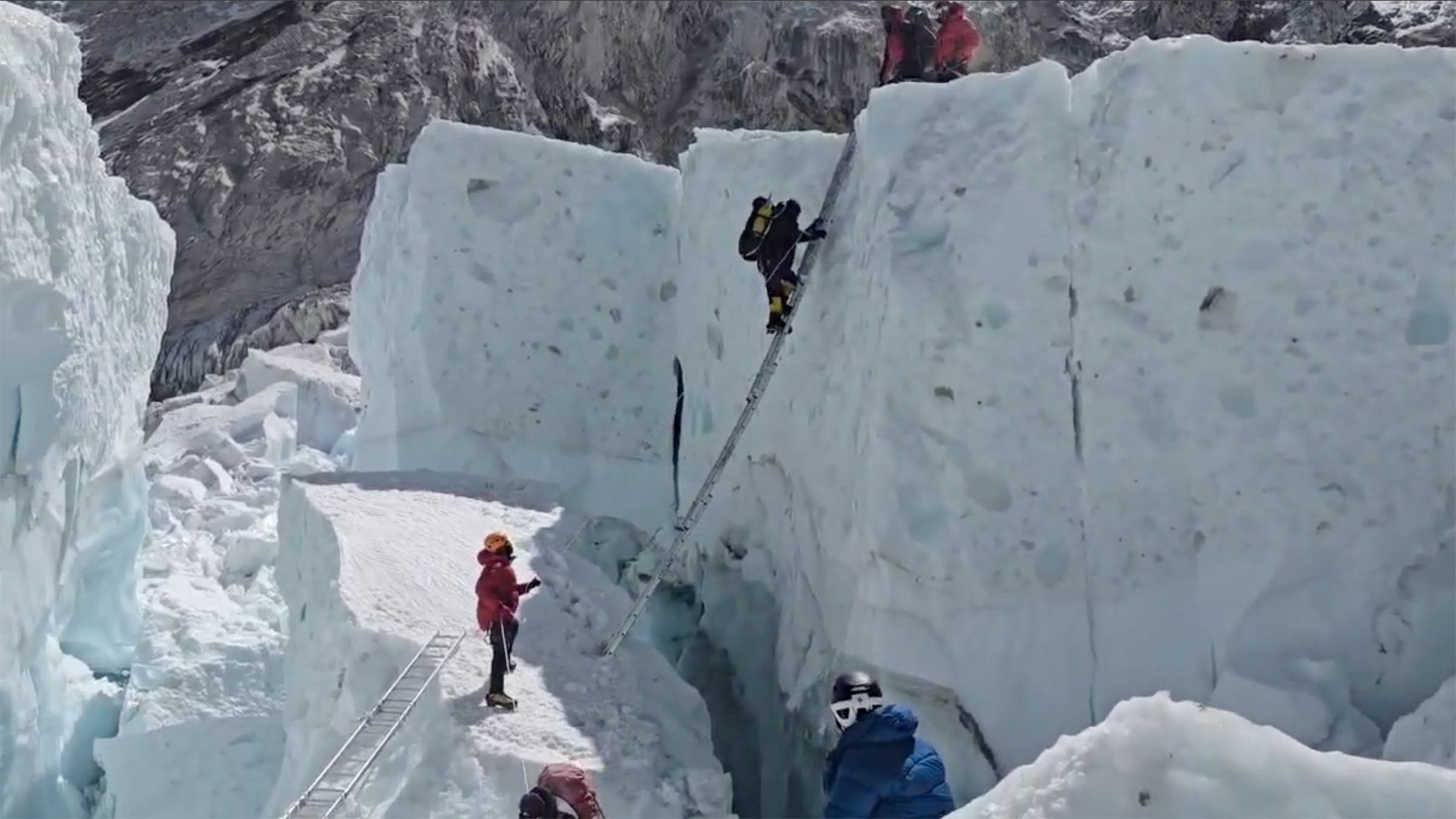
Every year the Icefall Doctors open the route onto Mount Everest (Photo: Sagamartha Pollution Control Committee)
The helipad at the northern end of Mount Everest Base Camp was buzzing with energy when I arrived on a sunny Monday afternoon in mid-May. Men clad in DayGlo vests and hardhats chatted as the whine of a flying cargo drone echoed through the valley. A few hundred meters beyond, the massive Khumbu Icefall cascaded from the flanks of Mount Everest like a powerful waterfall, frozen in time.
This area is the staging zone for the drone operations of the so-called “Icefall Doctors,” a team of mountain workers that build and maintain the route through the shifting Khumbu Icefall, the most dangerous section of the Everest climb. Before any climbers can venture onto the peak, these workers must ascend frozen cliffs and navigate a labyrinthian and alien landscape made of ice. They lay ladders across deep crevasses and place them on the sides of skyscraper-sized frozen blocks. They twist titanium ice screws into the frozen environment and string safety ropes through the glacier, up 1,300 vertical feet.
Their work creates the key artery that climbers and guides use to access the higher camps on the mountain. Perhaps no job on the mountain is more important—yet more wrapped in paradox. On one hand, the job of the Icefall Doctors is changing with the influx of new technology and the swelling crowds on Mount Everest. On the other hand, perhaps no job on Mount Everest is as irreplaceable. The work they do must be done by hand, and with patience and attention to detail.
ADVERTISEMENT
“Without the Icefall Doctors, Everest is impossible,” Jangbu Sherpa, whose official Icefall Doctor title is Second Leader, told Outside. “The routes we open through the icefall, no other mountain guides can. They don’t have the courage.”
The whine of the flying drone was impossible to ignore when I arrived at the helipad—somewhere above my head the device was carrying three full oxygen bottles up to Camp I from a 90-foot longline.
I scanned the mountain for the drone but it was impossible to spot against the jumbled landscape of rock and ice. But I could see the pilot.
“This drone has changed our work on the icefall this year,” Jangbu Sherpa, who is also one of the Icefall Doctor’s drone pilots, told me.
Indeed, after a series of successful test flights in 2024, the drones were put into service this spring by the Sagarmatha Pollution Control Committee (SPCC), the non-governmental organization that is charged with removing garbage, human waste, and dead bodies from the peak. The SPCC is also the body that employs the Icefall Doctors.
Earlier this year the SPCC asked the Icefall Doctors to manage the drone in addition to their responsibilities in the icefall. Now, they operate an unofficial cargo service ferrying tools and supplies from Base Camp up to Camp I, and garbage and waste back down.
ADVERTISEMENT
The new service has had a dramatic impact on the vast army of mountain workers who are responsible for ferrying goods up to high camps and bringing garbage down. Previously, all of this work was done by human power. During a typical season, a high altitude worker employed by an expedition operator may make a dozen trips through the Khumbu Icefall to haul oxygen tanks, tents, and food to higher camps. Each trek begins well before dawn, when the ice is coldest and most stable.
But the drone has eliminated the need for many of these trips, thus reducing the amount of risk each mountain worker faces across the span of a climbing season. The Chinese-made DJI heavy-lift craft has been busy all spring.
“What takes us three hours to hike, the drone does in three minutes,” Ang Sarki, the Icefall Doctor’s other leader, told me.
The drone will also help the SPCC enforce existing rules around garbage removal on the mountain. Each flight can bring down 35 pounds worth of trash, human feces, and spent oxygen canisters.
The flight is tricky, and spans one-and-a-half miles in distance. Due to the interruption of signal caused by the topography, it must be operated by two pilots at Base Camp, set apart by a few hundred feet. This configuration ensures an unbroken signal throughout the flight.
ADVERTISEMENT
Despite this configuration, dangerous mountain flying conditions still exist. Earlier this spring, a drone was damaged during an emergency landing; according to the Icefall Doctors, an unexpected gusting downdraft wind struck the craft mid-flight, triggering an automatic parachute to deploy.
Upesh Upreti, Chief Drone Pilot for the Icefall Doctors told Outside, “We flew into a downdraft with winds around 45mph. The drone is programmed to automatically deploy a safety parachute whenever it loses flight control. When the parachute was deployed, we lost pilot control and it slowly landed in the icefall. When our team reached the drone we found that it was damaged when it was dragged across the ice by the heavy winds.”
While drone piloting has added a new dynamic to the job done by the Icefall Doctors, it hasn’t shifted their primary duty, which is to build the route through the Icefall. And that is still just as dangerous and demanding as it’s ever been.
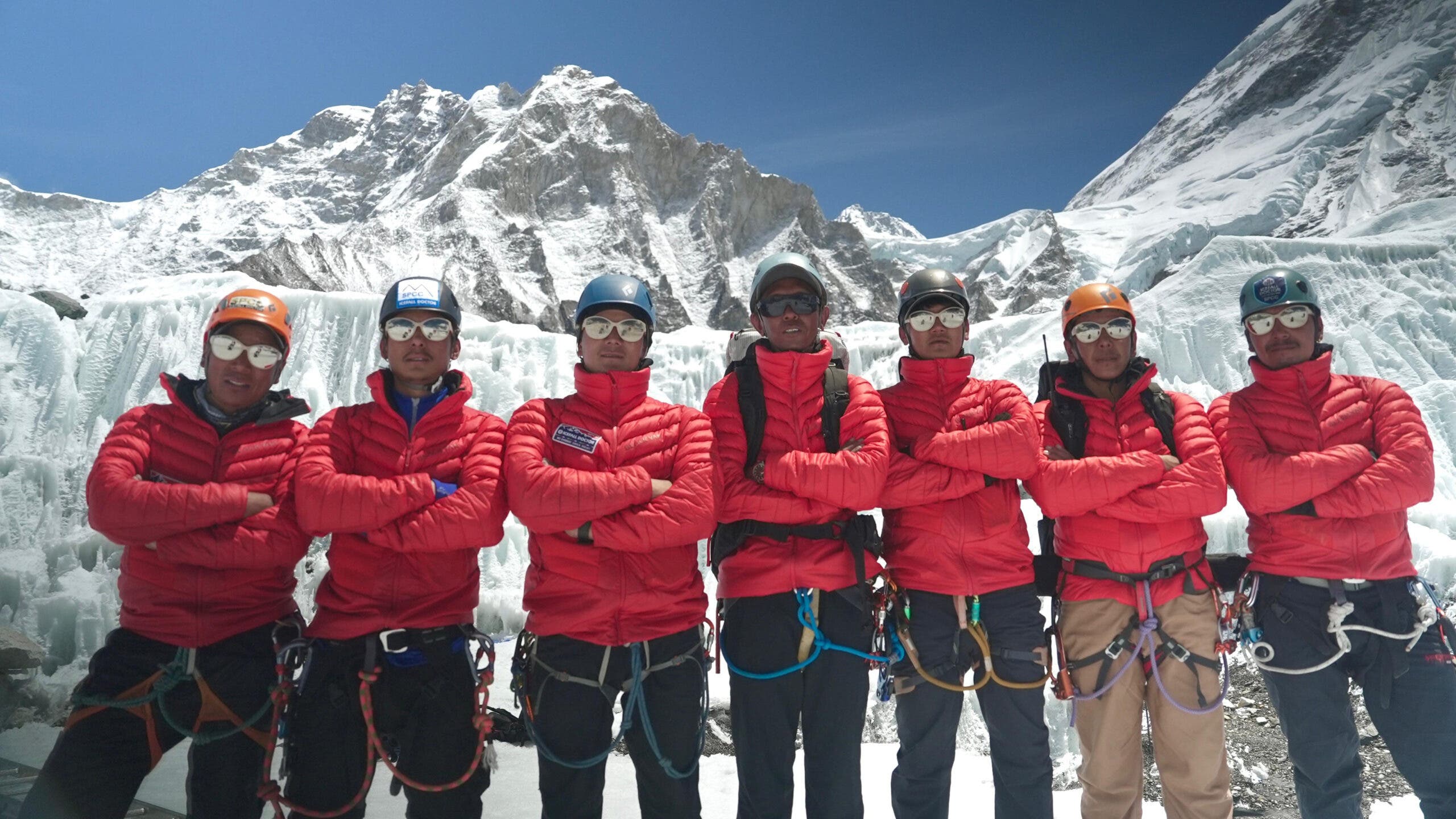
No other group of people on Mount Everest face danger as regularly as this team. During a typical season, an Icefall Doctor may make 40 trips into the glacier. Because the ice shifts constantly, they must check the anchors and fixed ropes every other day.
The Khumbu Icefall is by far the most dangerous and deadly section of the entire Everest climb. According to the Himalayan Database, of the approximately 340 deaths on Everest to date, 91 one of these have occurred in the Icefall.
“It’s like being in a war,” Jangbu Sherpa tells me. “But we do this so that others don’t have to suffer like we do.”
The danger comes from multiple places, and can happen at any point, without warning. The route (and climbers) can be obliterated when seemingly-solid blocks of ice weighing hundreds of tons suddenly collapse. Avalanches post another danger. In 2014, an ice serac collapsed above the Icefall, triggering an avalanche that swept down the slope. It killed 16 mountain workers and brought a swift end to the climbing season.
In 2023, a massive ice tower toppled over, instantly killing three mountain workers.
Every year, the Icefall Doctors arrive in Everest Base Camp in early April, well ahead of the expeditions. They spend several weeks scouting a route through the glacier. They haul metal ladders up through the chunks of ice, and lay these ladders across crevasses and up cliffs. Often, they lash two or even three together with rope to extend them.
ADVERTISEMENT
But once they complete the route, thier jobs aren’t done. The shifting glacier often knocks over the ladders or stretches ropes as it moves ad shifts. Every other day, the team must venture back into the glacier to make regular repairs to infrastructure as the season progresses.
The Icefall Doctors tell me that to succeed at this job, you need to have three qualities: a strong technical knowledge about climbing and anchors, extreme bravery, and a respectful and deep relationship with the spirits and gods that inhabit Mount Everest.
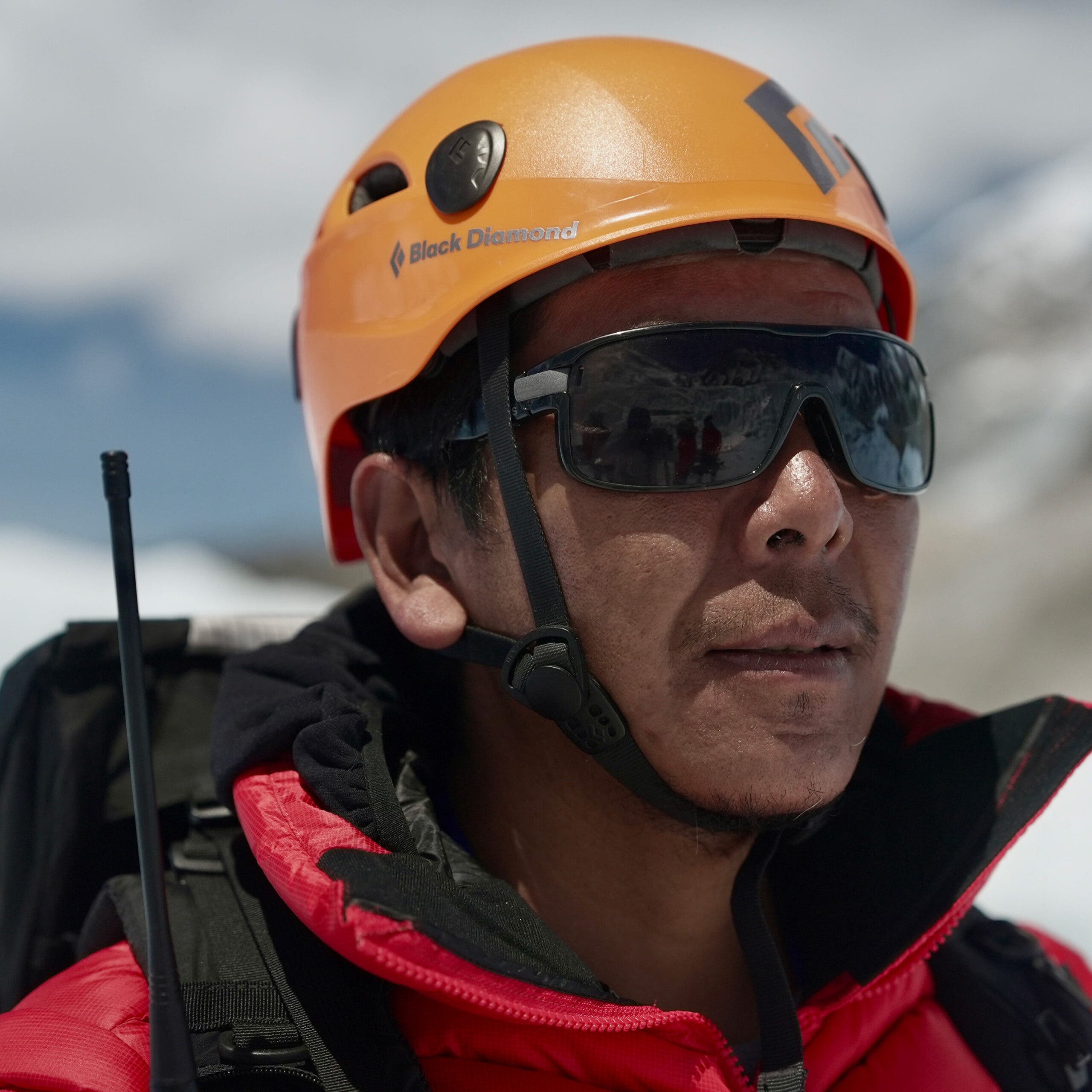
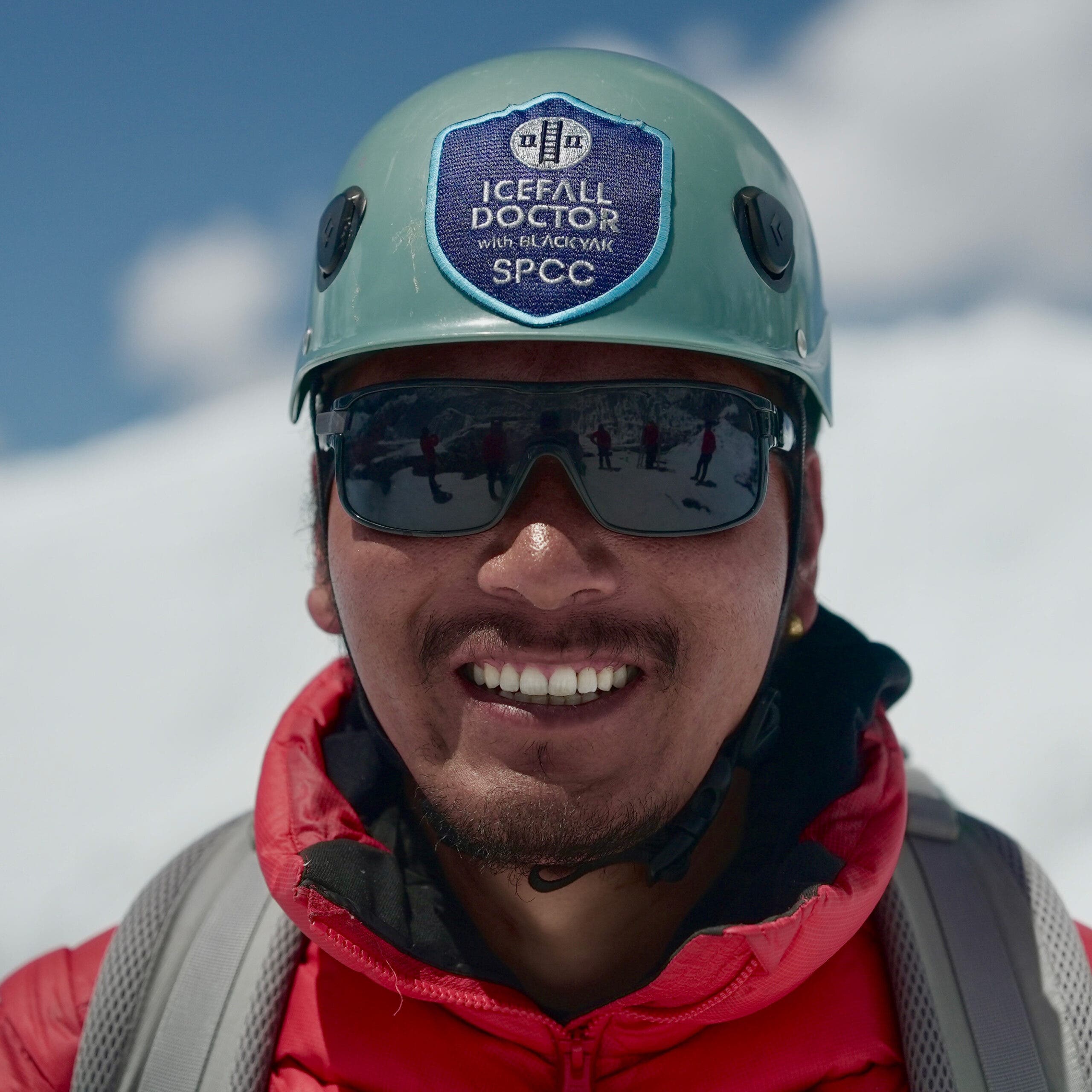
The Icefall Doctors and the SPCC itself have roots in the Tibetan Buddhist traditions of the Sherpa community in the Khumbu Valley.
In 1991, Ngawang Tenzing Zangpo Rinpoche, the spiritual leader of the Sherpa community, reincarnated lama, and abbot of the tamed Tengboche Monastery, instructed members of the local community to address the then-growing issues of pollution and human waste in the sacred Khumbu Valley. This request sparked the birth of the SPCC, which grew steadily in scope alongside the tourism industry.
The Tengboche Rinpoche was an exceptionally powerful spiritual leader, and the second incarnation of Lama Gelu, a mystic lama that founded the Monastery. The Rinpoche was born on the same day as the Dali Lama in 1935 and was present to greet, and bless, the first mountaineering expeditions into the Khumbu Valley in the early fifties. Eventually he assigned this practice to another monk, as he felt that he could no longer in good faith provide blessings for climbers when they were intentionally risking their precious lives on Everest.
ADVERTISEMENT
In the late nineties, the custom on Everest was for one outfitter to take responsibility for fixing the ropes in the early season through the Khumbu Icefall to Camp II. This outfitter would then collect $200 from each climber. Once the icefall route was set, a team comprised of the strongest two Sherpas from each company would then work together to fix the ropes from Camp II to the summit, opening the way for paying clients to ascend.
In 2003, the SPCC took over the role of managing the dangerous icefall route itself and the Icefall Doctors were born. Today, they charged a flat fee of $600 per-client on the mountain, which covers their costs for the season. And even though the Rinpoche passed away in October, 2020, the SPCC team and the Icefall Doctors beam with pride and devotion when they describe his role in the founding of their work.
“What we do is a result of Rinpoche’s leadership and vision. He showed us the way, and we are proud to follow. When I work on Everest, I still feel like I have his blessings,” Jangbu Sherpa told me.
After watching the drone flight, the Icefall Doctors invited me back to their camp for lunch. As we strolled across Base Camp, local guides and expedition leaders approached the men to shake their hands.
The SPCC camp is a small and simple outcropping of a few large dome tents, three long purple and yellow rectangular dining tents, and a smattering of expedition tents piled across the crown of the glacier. We sat down to steaming plates of rice, lentils, vegetables and goat curry.
Ang Sarki Sherpa, 53, is the most senior member of the team. “This work isn’t about the money, for us,” he shared. “We are responsible for everyone who passes through the icefall, and we do the best job we can. Besides, we have to travel through that route too.”
The conversation took on a spiritual tone as more Icefall Doctors shared anecdotes and wisdom in excited whispers.
ADVERTISEMENT
The explained how the texture of the ice in the Khumbu Glacier—which they feel through their crampons with each step—informs them of the route’s condition. Ang Sarki said the glacier’s groans and creaks also inform the team.
“We speak with the icefall, and it speaks to us,” he said. “It usually gives us three warnings before something happens.”
Sitting next to Ang Sarki, the drone pilot, Jangbu, shared an anecdote about a close call with disaster from earlier in the season. “We were near a place called rockfall and I was leading to fix the rope,” Jangbu said. ”I was about 160 feet above my belayer when a huge pile of rocks came at me. I had no choice but to untie from my rope and solo to safety.”
“That time was really dangerous,” he said, looking me deeply in the eyes.
Very few Icefall Doctors ever reach the summit of Mount Everest because their work ties them to the glacier at the foot of the peak.
ADVERTISEMENT
Tired of being asked how many times he had reached the summit, Jangbu took a break from the squad in 2022 to work as a climbing sherpa for the expedition operator Himalayan Guides, and he summited both Everest and 25,791-foot Nuptse that year. In 2024, he also reached the summit as part of an SPCC expedition to remove trash from Everest’s upper flanks.
Ang Sarki said that after 19 years with the Icefall Doctors, he’s never gone higher than the South Col at 26,000 feet. “I don’t want to pollute the mountain,” he said. “I want to keep her blessings.”
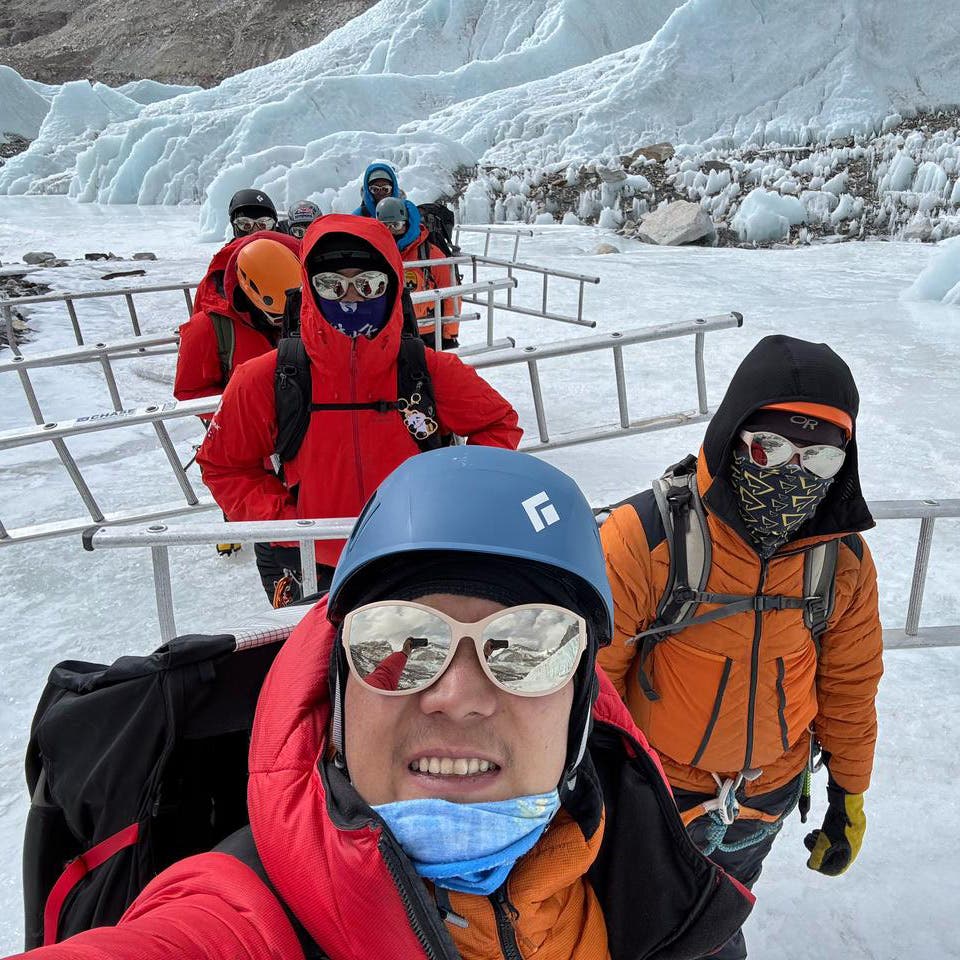
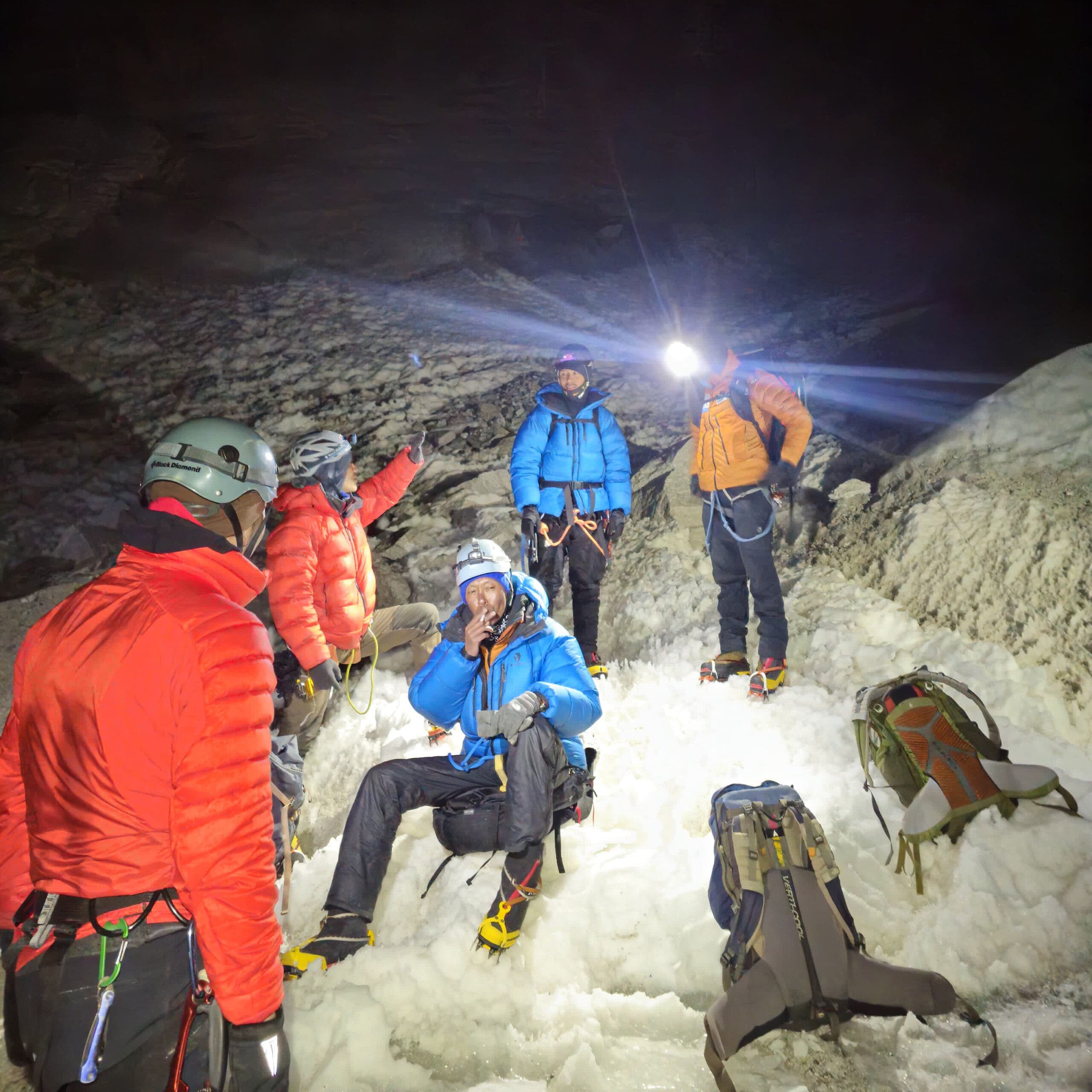
As our conversation drew to a close, the Icefall Doctors shared other techniques to stay safe. Every year they make a ritual offering to dangerous sections of the glacier. They request that the glacier only collapse when people aren’t around.
“It really works,”exclaimed Ang Sarki. arlier this spring, a serac collapsed above the glacier, but it happened when nobody was below—proof, they told me, of their method.
Only one Icefall Doctor has died on Mount Everest in the past 30 years. In 2013, a team member named Mingma Sherpa fell 180 feet to his death in a hidden crevasse while searching for the best route.
The tragedy inspired American mountaineer, Conrad Anker, to work with the local mountaineering school (the Khumbu Climbing School) to provide greater training to the team.
Today, more than a decade later, the squad is in even greater need of support, Jangbu said.
ADVERTISEMENT
“We need to learn more advanced training on anchor systems and setting ice screws,” he said. “We were taught using snow bars for anchors, but with climate change there is hardly any snow to work with anymore. We need to improve our skills with ice screws and rock bolts.”
“I’d like to see how they do it in the Alps,” he added.
As I bade adieu to the Icefall Doctors, I marveled at their camaraderie and skill. They are a talented brotherhood that thrives in this dangerous labyrinth of ice, among a wrathful goddesses. They embody a selflessness and bravery that cuts against the crush of inexperienced clients that defines the mountain this year.
Their use of new drone technology has lowered the risks for fellow climbers. Later this season, the team will install a series of high-tech trackers throughout the icefall for an American group called Safest Summit. The partnership hopes that telemetry tools and AI intelligence will create safer climbing along the route.
As we parted ways, I asked Ang Sarki about his future on the squad—how many years did he have left?
ADVERTISEMENT
“The more you know about the icefall, the more scared you get,” he said. “But I’ve got at least another ten years to go.”
Want to stay up on Outside’s 2025 Everest Season coverage? Sign up for our Outside: Dispatches from Everest newsletter.
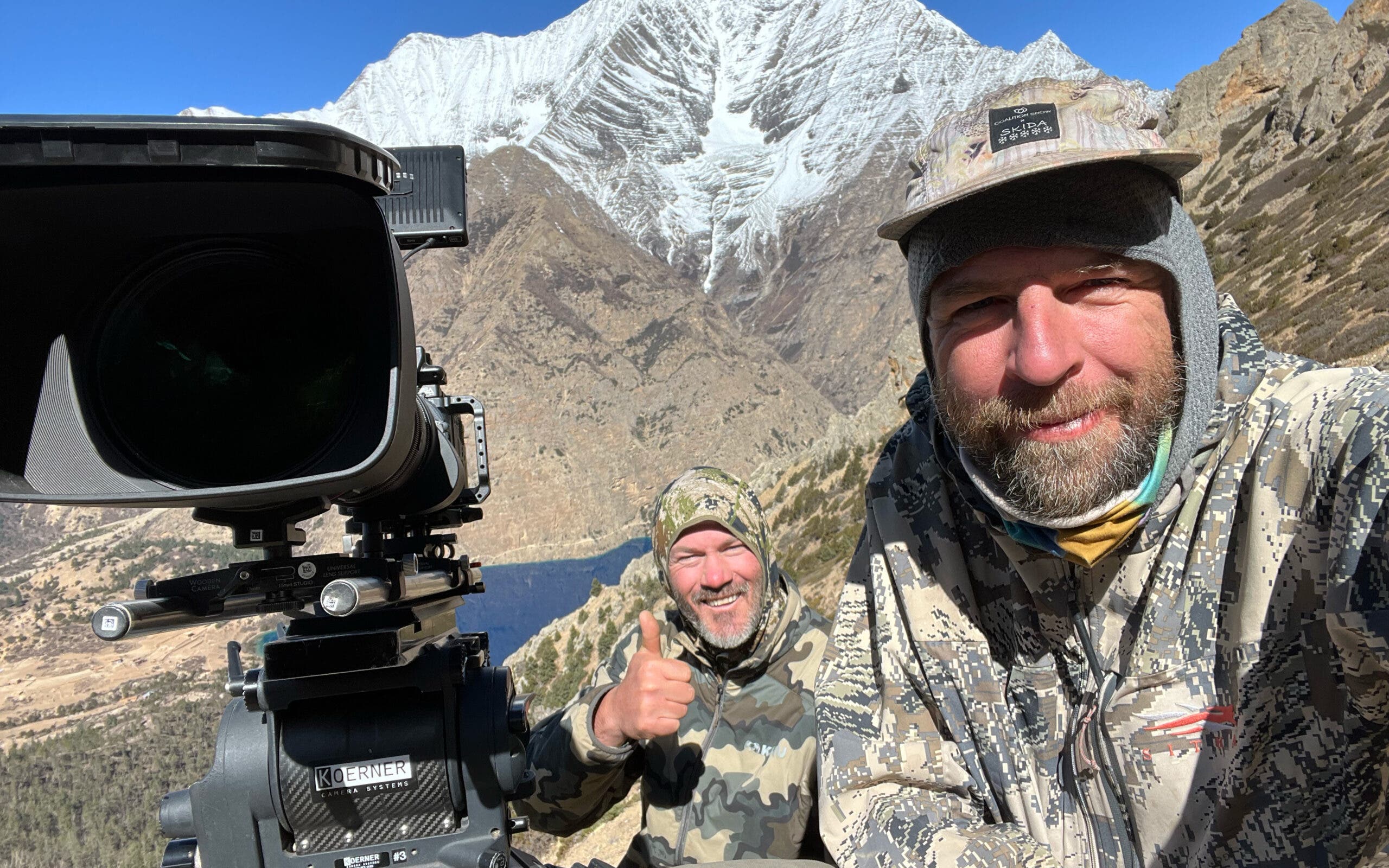
Ben Ayers (right) is a filmmaker, journalist, and adventurer who splits his time between Vermont and Nepal. In 2016 he led an expedition to document the last harvest of wild cliff honey by Nepal’s Kulung Rai people for National Geographic.
