Updated April 30, 2025 02:07PM
On the Nepal Earthquake’s Anniversary, Memories of Heroism and Kindness Remain
The writer became an aid worker for Mount Everest climbers during the devastating disaster. A decade later, he explores how the tragedy shaped Nepal—and his own life.

Rescuers help an earthquake victim in 2015 (Photo: ROBERTO SCHMIDT/AFP via Getty Images)
I remember the shaking.
The vibrations were so severe that I could not stand up. After a few seconds, the soil beneath my feet liquified, and the village I was standing in began to spin like one of those sketchy teacup rides at an American county fair.
I also remember the noise. In an instant, the planet itself became a giant subwoofer, reverberating a terrible deep groan.
After a few seconds, the houses in the village began to collapse. Walls sheared off and crumbled, roofs fell into the potato fields, and the air became choked with dust. As the tiny stone wall I crouched behind fell around me, I looked up to see the bed I had slept in just an hour earlier hanging cantilevered into space on a beam, held aloft by a pile of rubble on my pillow.
ADVERTISEMENT
It was April 25, 2015, and I was in Chaurikharka, Nepal, a small village near the town of Lukla, about 40 miles south of Mount Everest. The earthquake itself lasted for about 50 seconds, which is likely less than the time it’s taken to read this far into my story. Fifty seconds is also more than long enough to fully panic three or four times.
It’s been a decade since the Nepal earthquake, a shallow 7.8 magnitude tremor which killed almost 9,000 people, displaced millions more, and reduced huge swaths of the country to rubble. You have probably read about the quake and its impact on Mount Everest. The tremor dislodged a huge chunk of ice that crashed down on Base Camp killing 15 people immediately—seven died in the following days—and injuring more than 70.
Ten years later, Nepal’s infrastructure has been rebuilt, and the scars on Everest have been covered up. But those 50 seconds of rumbling are still clear in my head—as are the scenes that I witnessed in the days afterward.
ADVERTISEMENT
This past Friday, April 25, I returned to Chaurikharka for the first time since the earthquake. I went there there to begin my trek from Lukla to Everest Base Camp, where I’m reporting on the climbing season for Outside. But I also wanted to stand in spot where, just a decade earlier, the course of my life shifted.
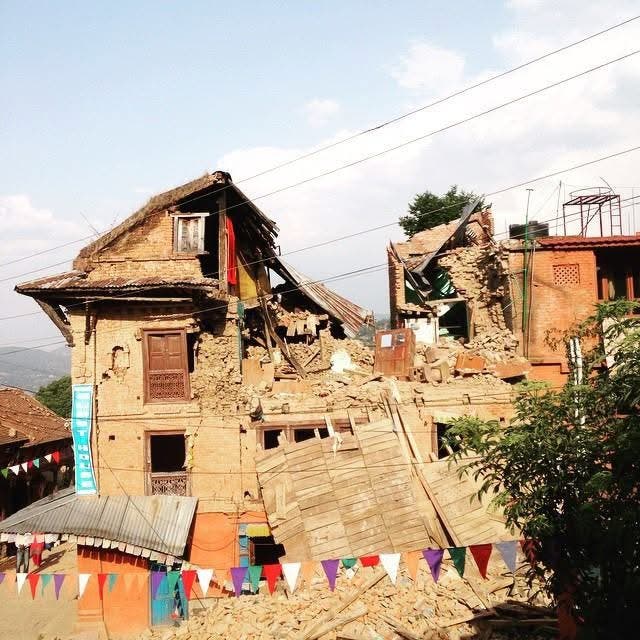
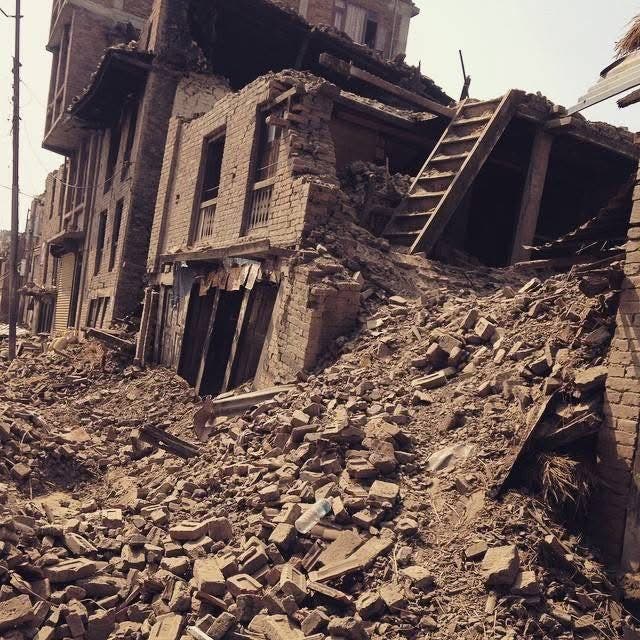
The official ten-year anniversary of the Nepal earthquake fell this past Friday and felt somewhat muted. Scanning the newspapers and speaking with my friends in the development industry, I learned that the country planned only a handful of events.
Prime Minister Khadga Prasad Oli held a moment of silence alongside his ministers at a memorial service in downtown Kathmandu, followed by a candlelight vigil. The Nepal Tourism Board hosted a photo exhibition in a village near the epicenter, as well as an event called a virtual heritage tour, which showcased images of rebuilt parts of the country. London’s Victoria and Albert Museum held a conference in Kathmandu celebrating “a decade of learning” since the quake.
Even at Mount Everest Base Camp, where the earthquake killed 22 people and stranded dozens more at Camp I, it’s business as usual in what looks to be one of the busiest seasons on the mountain.
ADVERTISEMENT
I reached out to a close friend, whom I worked closely with after the quake, to ask if she knew of other regional events commemorating the anniversary. She texted me: “I get jelly legs every single day these days—it all came back after the Myanmar EQ I guess. Personally I’m happy not to have extra reminders!”
Over the past decade, the landscape of Nepal’s remote villages, including Chaurikharka, has changed dramatically. In areas without the tourism economy of the Everest region, stone and mud homes have been replaced by shelters made of corrugated roofing tin. These shelters, once temporary, became permanent after the government’s limited assistance—and the region’s lack of economic opportunities—stalled the rebuilding effort. In the years after the earthquake, 1,500 Nepali workers left the country each day to work abroad, leaving many affected communities functionally abandoned.
ADVERTISEMENT
I have returned to the Lukla region a few times over the past decade, but I haven’t gone back to Chaurikharka until this spring. For years, I attempted to forget the memories of the earthquake and the days that came afterward. I wanted to block out the images of devastation. But forgetting it was also a coping mechanism—Nepal is still under constant risk of major earthquakes. When prediction or prevention is impossible, I’ve learned, all you can do is ignore the danger.
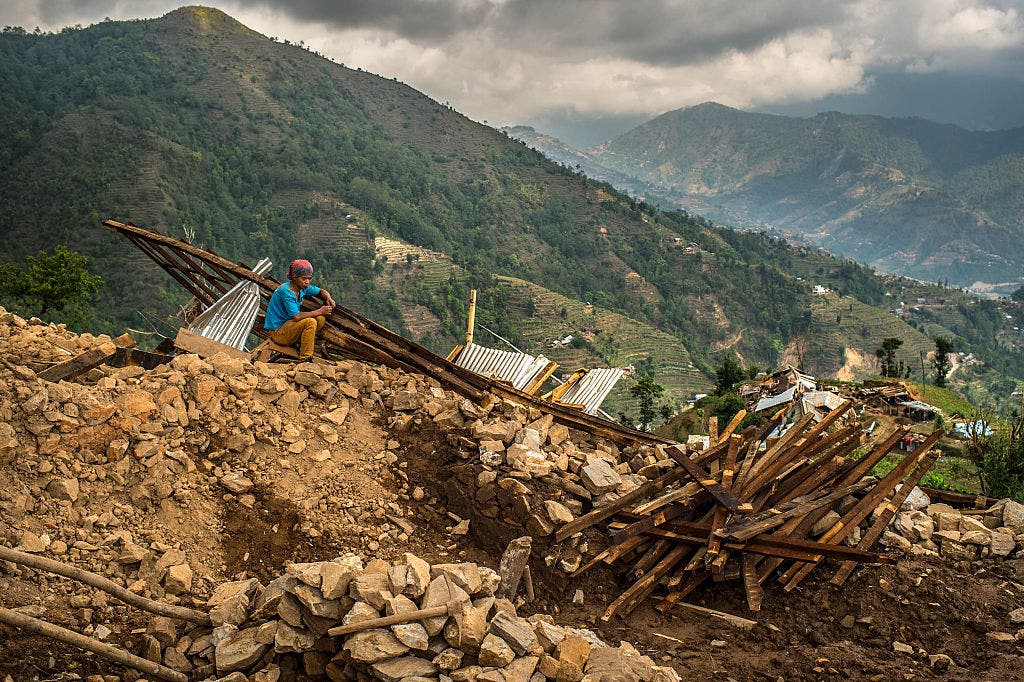
I moved to Chaurikhara in 1999, shortly after I graduated college, and worked at a scrappy nonprofit that helped porters and climbers who worked in the growing expedition industry. But by 2015 I had relocated to Kathmandu, and I lived in a century-old brick home surrounded by a garden with two over-productive guava trees on a quiet lane directly behind the zoo. I was in my mid-thirties and was running a successful international non-profit.
Occasionally, for work, I would attend briefings from various United Nations experts on how to prepare for a massive earthquake. They told us that a devastating tremor was poised to strike Nepal at any moment. Kathmandu’s last major one was in 1934—it measured 8.0 on the Richter Scale and left an estimated 10,000 people dead.
One training session still echoes in my mind: it was held by a rotund white man who appeared to make a fine living by traveling to developing nations to teach disaster prevention. He told us the basics of how to make an earthquake kit with important documents, medicines, drinking water, shovels and pickaxes.
ADVERTISEMENT
But, the teacher warned, we should keep our kit hidden, because after the chaos and death unleashed by the big one, our survival gear would become of high enough value that locals might kill for it. My instructors told me that, after a major earthquake, the locals would likely riot. We were to help them by using the UN ‘cluster system’ which, as far as I could tell, was aptly named.
Another trainer also told us about the poor construction of the tiger enclosure in the Kathmandu zoo. While looking directly at me, he said that the big one would release tigers into the city. My house was first stop on their buffet.
Back then I still returned to Chaurikharaka frequently to visit the family who had hosted me in 1999. I often visited in mid-April, when the community performed a Buddhist ritual to bless the cropland.
ADVERTISEMENT
For the ritual, the men in the village paraded the sacred texts and statues from the monastery around the periphery of the community, stopping at each household on the way to bless the residents and drink implausible amounts of the local millet brew known as chhang. Lacking able-bodied men in the village during the main Everest climbing season, I was asked to fill in. Of course we didn’t know it at the time, but April 25th, the day of the earthquake, was also the chosen day for the ritual. By noon, I was already nursing the start of a hangover.
When my cup of coffee started to shake, I initially figured it was just a trick played by my aching head. In a matter of moments, my father began yelling and grabbing at my shirt, telling me to stay put. Instead, I ran outside and ducked behind a shallow stone wall.
As the shaking increased, my father ran out, too. He stood dazed in the potato fields around the house, watching as it collapsed upon itself. By some great miracle, despite nearly every home being damaged or destroyed, nobody was killed in the village. We were all dazed and terrified.
One thing the disaster trainers got wrong was telling us that Nepal’s telecommunications infrastructure would be crushed by the big one.
In the minutes after the shaking stopped, I was able to call my parents back in the USA to tell them I was OK. I learned that my rented house in Kathmandu was destroyed. I also learned that the tigers were still safe in the zoo.
I also learned about the disaster at Everest Base Camp—and word that casualties were high.
That night, I lay awake in my torn sleeping bag on the floor of a plastic greenhouse, rattled by sharp aftershocks every hour. At 4 A.M. I shouldered my backpack and walked in the dark to Lukla to see if there was any hope of getting a flight back to Kathmandu.
ADVERTISEMENT
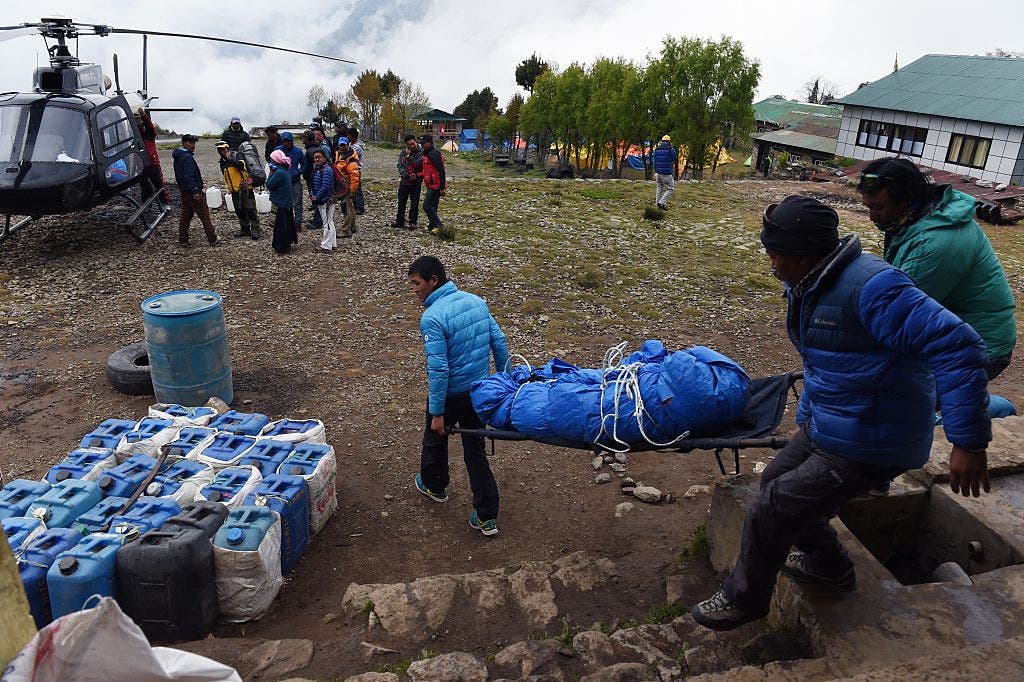
It was still dark when I arrived, but the town was buzzing with activity. The jumbled lodges and outbuildings of the airport town were all surprisingly intact, though the hospital building on the outskirts of town was heavily damaged. As a group of young men ran past carrying an empty stretcher, one of them recognized me. He asked me to join them at the empty airport to help set up a field hospital for the wounded climbers that would be coming down from Everest Base Camp.
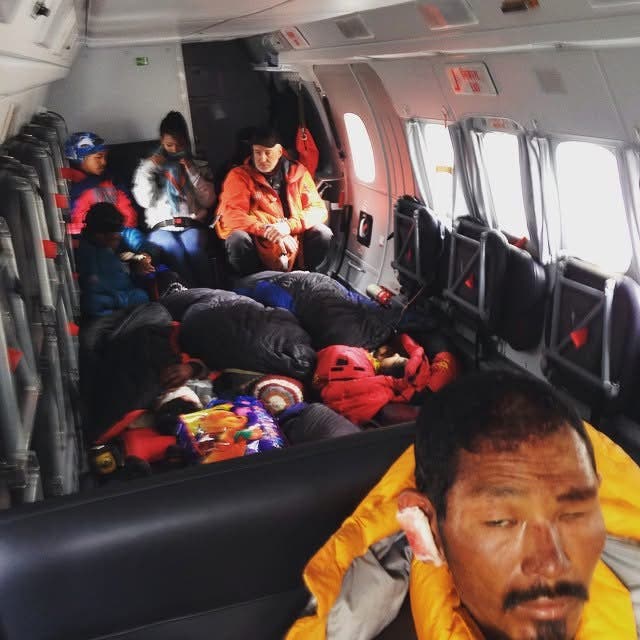
We set up a triage system in the airport. Helicopters carried dead and wounded from Everest Base Camp, and it was my job to run to the choppers and assess the condition of each patient.
Thumbs up meant the patient was walking wounded—they walked upstairs to the terminal building to a makeshift trauma ward. Thumbs down meant that the patient was critical. We carried these people in a stretcher to a small improvised emergency room on the ground floor. A hand pulled across the neck meant that the patient was dead. We carried them to our temporary morgue.
At around 5:30 A.M., the first helicopter took off and returned with four patients in critical condition. Each wore a tattered down climbing suit—someone at Base Camp had scrawled notes about their condition on medical tape stuck on each person’s chest.
ADVERTISEMENT
The helicopter pilot didn’t stop the rotors—we jumped into the craft and pulled the injured out as gently and as quickly as we could. Stretcher-bearers whisked the patients into the terminal building. In less than a minute, the doors were closed and the helicopter took off.
After a few hours, four additional helicopters joined the rotation, repeating the sequence every ten minutes or so. By 7 A.M., we heard the whine of a twin-engine plane coming in to land. We loaded patients into the compartment bound for Kathmandu.
Aftershocks shook the airport. At one point, a hulking Russian MI-17 helicopter joined the parade and brought 17 patients down with each flight. When the aircraft’s clamshell doors opened, we were engulfed by a cloud of loose down feathers from torn expedition jackets and sub-zero sleeping bags.
As the day unfolded, we unloaded approximately 70 injured people from Base Camp. We also carried four bodies to the morgue. Two of our patients died in the makeshift clinic before they could reach a hospital in Kathmandu.
ADVERTISEMENT
That night I managed to jump on the last flight to Kathmandu, squatting behind the pilot’s seat as the plane weaved around heavy clouds. Every few minutes I checked on a Chinese climber with a collapsed lung and a British climber with a shattered pelvis.
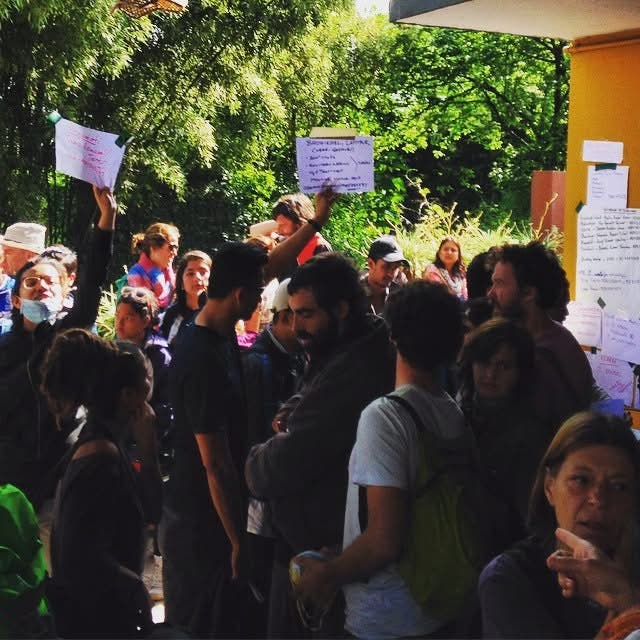
After we landed at the airport and the patients were loaded into a string of waiting ambulances, I walked out of the gate and across the empty city to my broken house. Families were already camping out under tarps in the few green spaces Kathmandu has to offer. As I walked, I saw no marauding looters and zero rampant tigers. Instead, people gathered together with blankets and food.
When I arrived at home, my garden was already populated with a makeshift kitchen and my personal collection of backpacking tents, each housing a pair of friends. My neighbors stopped by frequently to check on us and make sure we were OK. We shared some guavas and medicine from my first aid kit, and they offered us blankets.
ADVERTISEMENT
The next morning, I gathered with my friends at a nearby bed and breakfast called the Yellow House to brainstorm how we could contribute to the recovery. By the end of the day, we had created a hotline where people across Nepal could call or text in requests for supplies, and a Facebook group where other Nepalis could organize to deliver those supplies.
The next month passed in a blur. Each day began at 8 A.M. with a planning meeting at the Yellow House where we would assign missions to teams of Nepali volunteers who would set out in their own cars. We spent the afternoons gathering relief supplies, fundraising, and turning away the steady stream of well-meaning foreign relief crews that were more effort to manage then they were worth. By the time we shut the project down, we were the third largest distributor of relief supplies in Nepal.
ADVERTISEMENT
Eventually, I moved out of my yard and into a modern concrete house on a plateau overlooking the city. As the aftershocks subsided, we, too, resumed our normal lives. Restaurants reopened, the city rebuilt, and climbers returned to Everest Base Camp in record numbers. For years afterwards, a slammed door would trigger a quiet panic—but that, too, faded with time. The Yellow House team reformed a year later when devastating floods struck Nepal’s southern border, and again when COVID-19 shut down the country, leaving daily wage workers in the city facing severe hunger, while local farmers couldn’t sell their crops.
After a while, I got tired of the cold concrete house and moved back into the heart of Kathmandu, renting another 100-year old home with a large garden and guava trees. Only now, I’m a few blocks further away from the zoo.
A decade on, it seems fitting that I’m back in the exact location where everything changed. I’ve sat with the truth of that event one more time: life is as vulnerable as it is precious, and people are always much kinder than we expect.
Want to stay up on Outside’s 2025 Everest Season coverage? Sign up for our Outside: Dispatches from Everest newsletter.
ADVERTISEMENT
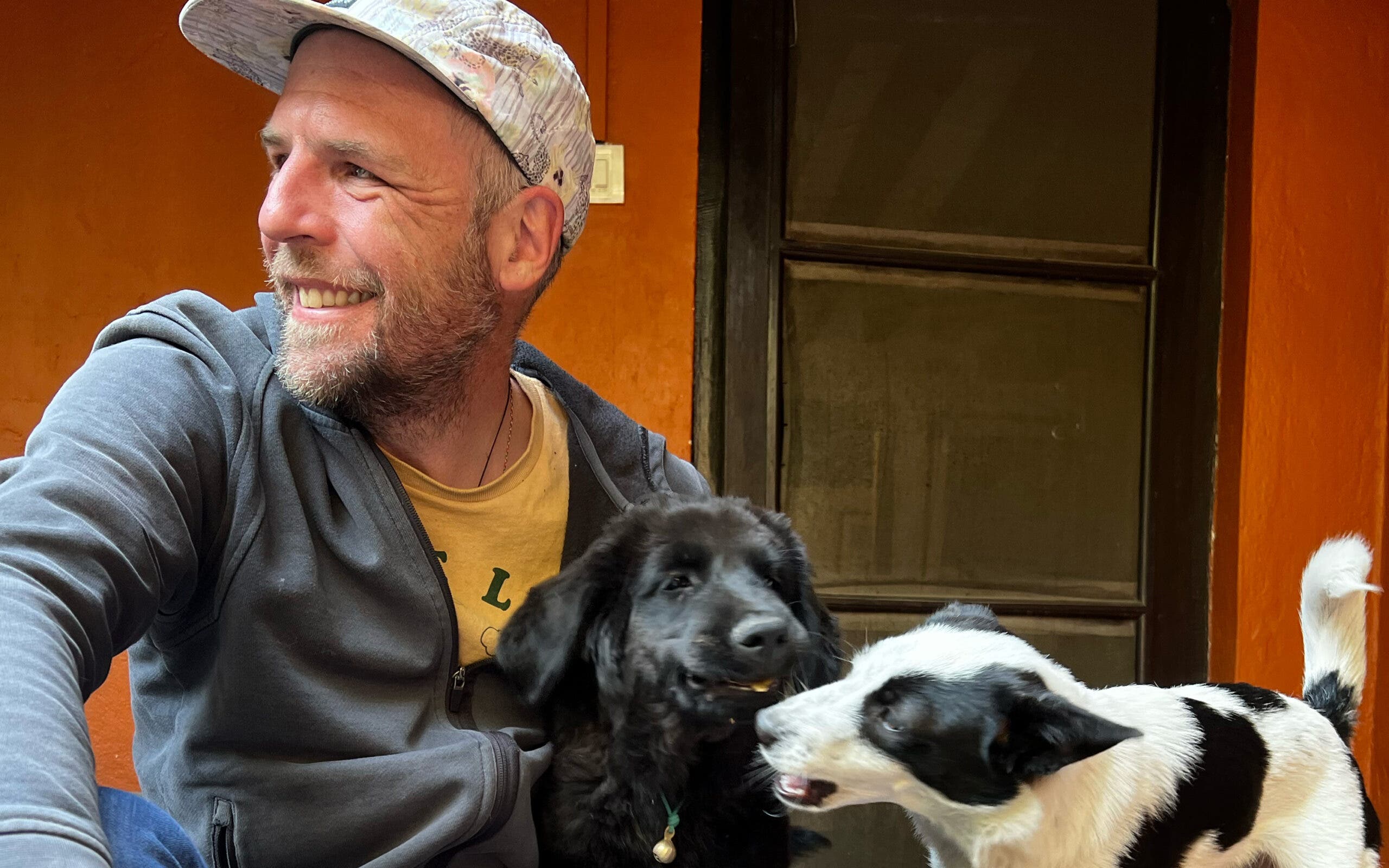
Ben Ayers is a filmmaker, journalist, and adventurer who splits his time between Vermont and Nepal. In 2022 and 2024 he chronicled the Mount Everest climbing season for Outside.
