Published December 6, 2022 10:20AM
Nims Purja Thinks He Can Go Even Faster on the 8,000-Meter Peaks
Articles editor Frederick Dreier sat down with Purja to discuss the triumphs and tragedies from his 2022 climbing season, as well as the speed record he thinks is possible on the world’s highest mountains
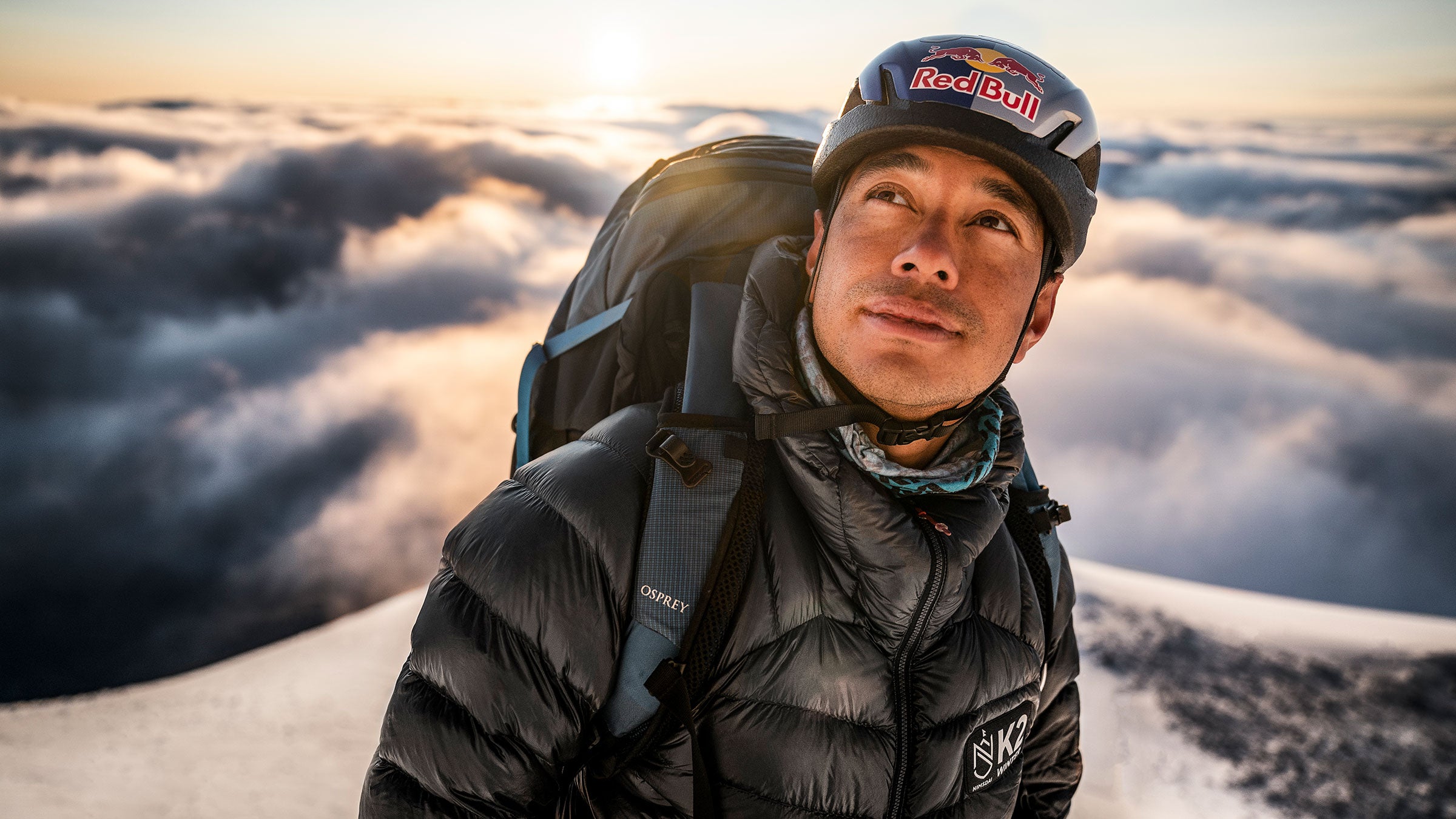
Nirmal "Nims" Purja holds the record for climbing the 14 peaks above 8,000 meters.
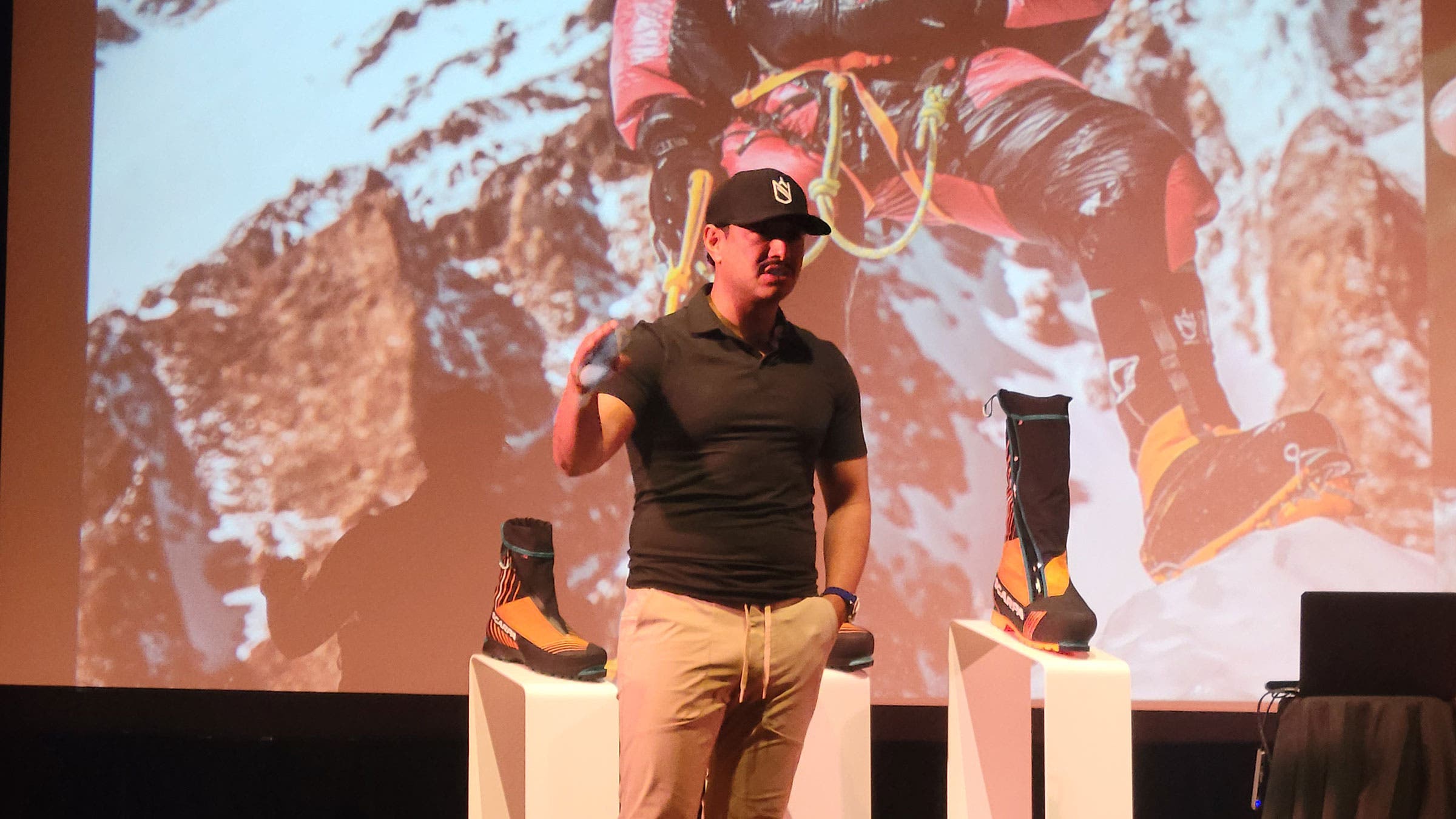
Nepalese climber Nirmal “Nims” Purja wears many hats these days: mountaineer, expedition operator, Instagram celebrity, and even motivational speaker. Last week, Purja, 39, traveled from his home in Kathmandu to Boulder, Colorado, to address a crowd of fans at an event organized by his boot sponsor, Scarpa. Purja retold the story of breaking the speed record on the 14 peaks above 8,000 meters, and then shared some of the insight he gleaned from the expedition. That mission, called Project Possible, birthed the 2021 Netflix documentary 14 Peaks: Nothing Is Impossible, which made Purja a global icon.
We sat down with Purja prior to the event to discuss—among other things—his challenging 2022 season, which brought him both triumph and tragedy.
OUTSIDE: We saw multiple climbers chase speed records on the 8,000-meter peaks this year. What’s your reaction to the uptick in speed climbs on these mountains?
NIMS PURJA: It’s amazing, because if it wasn’t for the 14 Peaks this wouldn’t be happening. So, I take a lot of pride in this happening, because, you know, Project Possible was about breaking records and showing the world at what could be done. Now, I tell everyone: My record needs to be broken. Breaking it will be evidence of us as human beings progressing at climbing these mountains. When the first four-minute mile was done, that became the milestone, and then others did it much faster. If somebody breaks my record, I will be there to shake their hand.
What advice have record-chasing mountaineers sought from you?
People didn’t really ask for my advice, I think it was more that they followed the way I approached the climbs because it is a proven concept now. They know which mountains to climb in the schedule: Annapurna, Dhaulagiri, Everest, Lhotse, and so on.
Let’s say you had access to the funding, helicopters, and permits to enter China. What’s the fastest that you could climb the 14 peaks?
For me, I can climb all 14 without oxygen in four months. But that’s not my goal anymore. If people want to do it to achieve the new possible—their possible, not my possible—it is feasible. If I put together a team of Sherpas, it could be done. Here’s the thing: at 8,000 meters, we are the best, there is no debate. If you ask me to go rock climb with Alex Honnold, there is no way I can be close to him. But if you go full-on bear-to-bear comparison on the 14 peaks, there is no competition. That’s what I proved on my winter expedition to K2. I climbed and executed that expedition where ten Nepalese climbers summited and nobody else did.
What’s your response to the criticism that chasing speed records on these mountains isn’t true alpinism?
Those people who are commenting that are limiting themselves. Before it was OK to climb quickly, but now it’s not OK? According to who and what rules? People have tried to climb Everest and Lhotse in a single push across that traverse. I have done that while guiding and leading 14 people on an expedition, and there were critics! You will always find pushback on these topics.
What about the criticism that chasing speed records is putting climbers in unnecessary danger?
I don’t agree with that because everything we do in these sports is dangerous. I do mountaineering and skydiving and paragliding, and I’m still climbing these mountains and leading the expedition from the front—not from base camp or from Kathmandu. There is always danger in what I am doing. It is up to the individual how to mitigate those risks, and the evolution of that comes down to how much experience, knowledge, and planning perspective that individual has.
What was your assessment of the danger on Manaslu this year? There were a record number of climbers on the mountain, and some hypothesized that the crowding added to the tragedy.
It was heavy snow for sure. We were in charge of fixing the ropes and we fixed it early, there were a few summits, but it was an abnormal season. It was a difficult season, but it had nothing to do with the number of people. If you look at Mont Blanc there will be more than 5,000 climbers a year, and Manaslu it’s 600 or 700, and that is nothing. That’s why we set ropes so early, so that people can climb at their own pace. I think the monsoon didn’t finish in the first week of September like normal, and that is what created problems.
Just a few weeks later you were involved in a skydiving accident that claimed the life of your instructor, Dean Waldo. What do you recall from that event?
It was a pure accident. Dean was a super experienced guy. That day he decided to do something he shouldn’t have been doing: he tried to come and stand on top of my canopy. I had a bigger canopy than his, and his canopy collapsed and he fell through mine. I waited to see what was going to happen and we went into a spiral lock and somehow he had my canopy in his face and he couldn’t get out. I had to cut away because we were losing altitude, but he was trapped. His friends told me that he had [[experienced]] hundreds of situations like this, and that he had crashed harder than this one. But the angle at which he crashed, he died on the spot. Within two weeks I had lost four people very close to me.
What was the emotional impact of these events?
It’s very tough having to call the family members to tell them what had happened. I had my own personal feelings. Everybody is human.
Finally, in November you traveled to K2 to organize a cleanup effort at Camp 4. Who is responsible for keeping the high mountains clean?
I think it needs to be everybody’s responsibility, not just government or operators. Once you start pointing fingers you get into trouble. Every mountaineers is aware of it, that people sometimes have to leave their stuff. The big thing is everybody has to be very aware from the start start that if they leave something, it will be up there a very long time. We’re not just talking about trash from last season, there’s stuff up there that seems like it was from Hillary and Norgay. Taking it down is a challenge. You have to employ separate manpower to go early in the season to remove this stuff. We tried to do a cleanup to remove stuff at Camp 4 and it was so physically tough. People struggle to simply walk around Camp 4 with oxygen, and we were digging garbage out of the ice. It can’t just happen in one season. It will have to get cleaned up over multiple missions.
This interview was edited for space and clarity.
