Published February 14, 2022 04:30AM
If you buy through our links, we may earn an affiliate commission. This supports our mission to get more people active and outside.Learn about Outside Online's affiliate link policy
Tragedy in Baffin Bay
Mark Jenkins chose to skip a risky adventure with his friends. Twenty-five years later, he’s still haunted by what happened in his absence.
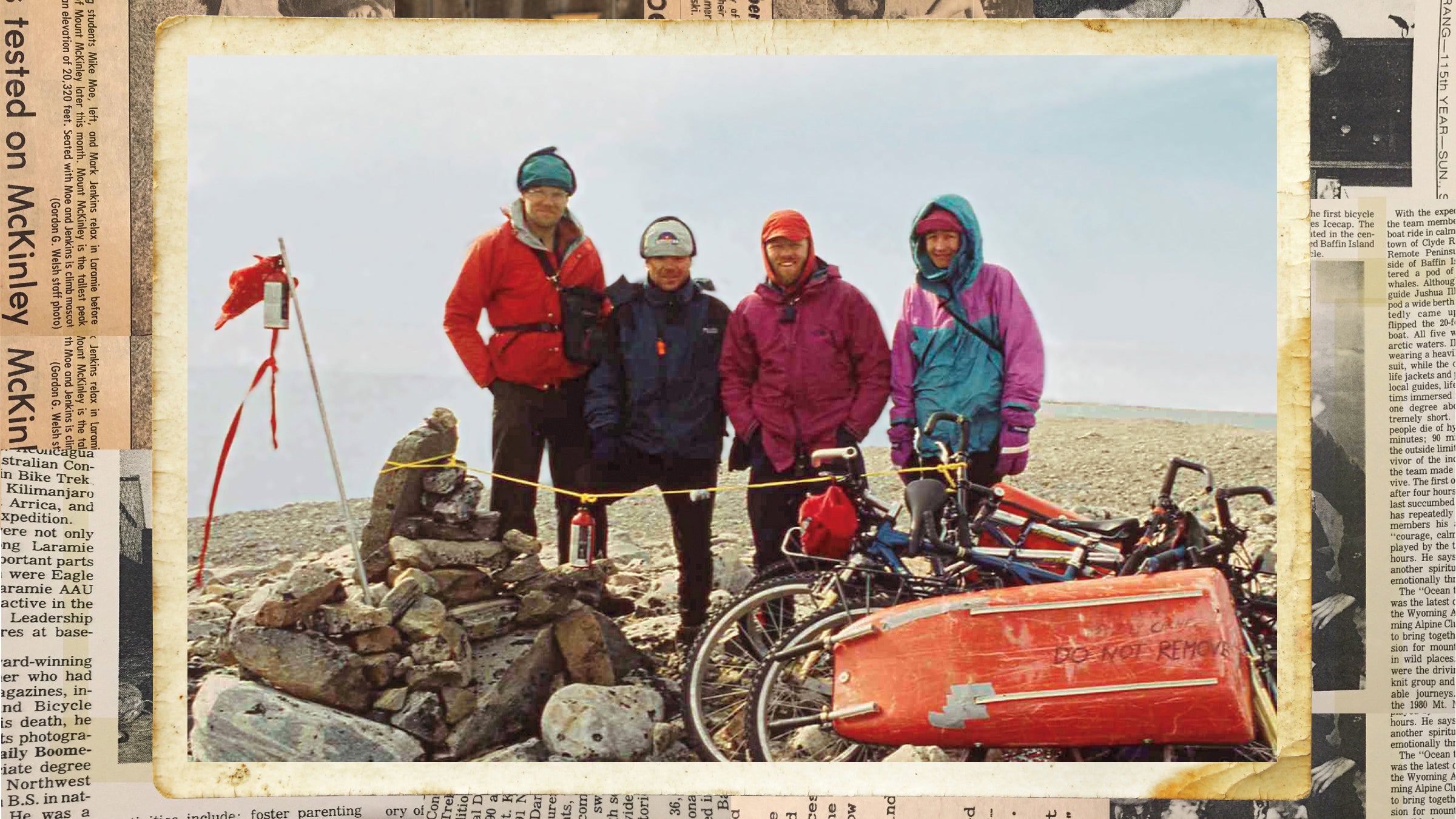
The club expedition to Baffin Island, from left: Dan Moe, Brad Humphrey, Mike Moe, and Sharon Kava (Photo: Dan Moe, group photo; alubalish/Getty, old frame; <i>Laramie Daily Boomerang</i>, newspaper clippings)
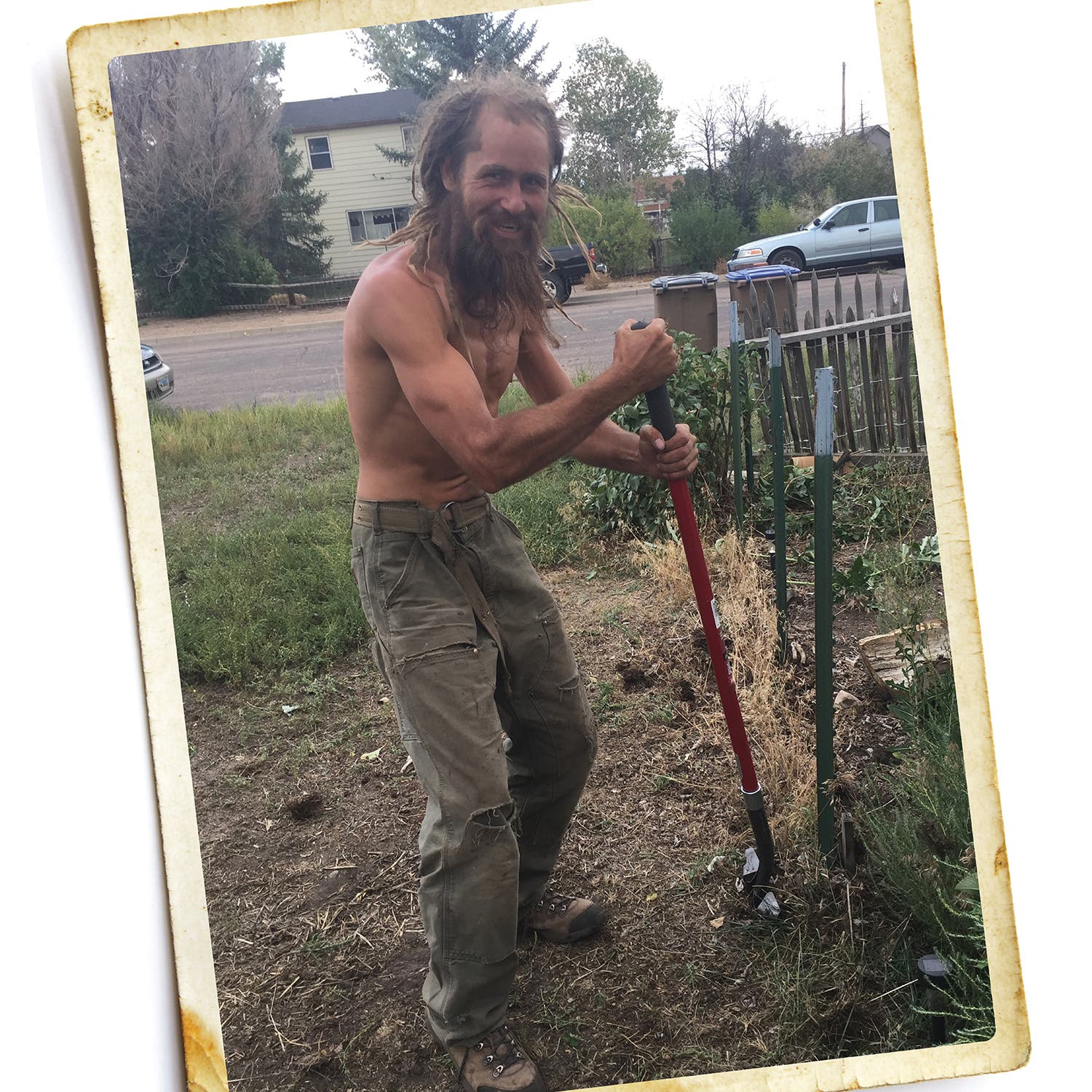
Mike Moe’s eldest son came by the house yesterday. He was just out of the psych ward, after serving time in prison. He looked the same—lean, strong, with a long red beard and a mess of dreads. Behind the hair he was quick to smile, like his dad had been. I had a box of outdoor books I’d saved for him, but he said he’d done so much reading in jail that he was taking a hiatus to get his farsightedness back, a metaphor he did not recognize.
His name is Justin, and the last time I’d seen him was in 2015, when he and I and his younger brother, Kevin, went backcountry skiing in the Snowy Range of southern Wyoming. This was before their sister, Carlie, died. At that time, all three of the Moe children—whose ages ranged from 21 to 24—were homeless. Carlie was living in a van in California, Justin had been aimlessly hitchhiking across the West, and Kevin’s house was a snow cave.
Kevin had dug his cave where his dad and I used to dig ours, at 10,000 feet on the eastern end of Wyoming’s Swastika Lake. All winter long at this spot, snow blasts across blue ice into a big stand of lodgepole pines. The trees slow the velocity of the snow, which settles on the leeward side of the trunks, forming drifts 20 feet deep. Kevin had decorated his cave with battery-powered Christmas lights. On the ice platform that served as a bed, he was using the same heavy down sleeping bag his dad had used when we went to Denali together in 1980.
ADVERTISEMENT
During my backcountry trip with Kevin and Justin, they skied with total abandon and little technique. They would drop down through the trees, legs spread wide, whooping at the top of their lungs. Then, lacking the ability to turn on their skinny cross-country gear, they would inevitably face-plant. Laughing loudly, with snow in their beards, they got back on the boards and kept plowing downhill.
When the terrain eased into rolling hills, we skied in single file through widely spaced pines, and I asked them about their plans. Kevin had already circumnavigated all the islands of Hawaii by sea kayak, solo. Now he wanted to go to Alaska. He played bagpipes and thought he could busk his way up there and back. Justin didn’t have any idea what he wanted to do.
Over the next few years, Kevin actually got to Alaska with his bagpipes, and then he wrote a nonfiction book about the adventure. He became an itinerant carpenter and helped build a shop in my backyard in Laramie. He loved looking at my old slides of his dad.
ADVERTISEMENT
Justin wandered back to California, became ever more mixed up, took a lot of acid. He was tripping nonstop. One night he heard voices in his head telling him his girlfriend was serving the devil and he tried to stab her, which earned him a sentence of two and a half years for assault with a deadly weapon. He spent some of it in jail, some of it in prison, and some of it in the psych ward.
When he came over yesterday, we hung out in the backyard. I suggested he could help me build a fence, and he seemed interested. I tried to ask him about prison, but he had trouble expressing himself.
“Being in a cell, man. No sunlight, no sky,” he said, throwing his head back and staring directly into the sun. With his eyes closed and the dreads out of his face, he looked exactly like Mike.
Mike and I became best friends at Laramie High School, where we were on the swim team together. He had shaggy red hair, a deep chest, and an uncommon fondness for mischief. He was a prankster, the kind of guy who would secretly spoon grape jelly into your goggles. At swim practice in winter, he would dash outside barefoot in nothing but his Speedo, pack snowballs, and then race indoors, hurling them at swimmers in the pool. When retribution arrived and he was dragged from the hot showers out to a snowbank, he was delighted.
Mike had a mouth on him. In PE, during swim class, he would taunt football players until they were frothing like Saint Bernards. “Maladroits! Miscreants!” he’d yell from the water, until one of them waded out to kill him. Mike would stay just out of reach, bouncing backwards, splashing the kid in the face until they were both in the deep end. He would then allow the enraged hulk to hold him under for as long as he could. After which, Mike would pop to the surface like a cork and crawl on top of the guy’s head.
ADVERTISEMENT
For this and other infractions, our gym teacher and swimming coach, Layne Kopischka, made Mike tread water below the diving board with his arms over his head. Doing that is painfully hard, but it didn’t appear to bother Mike. He’d wave at everyone as though he were in a parade, having a great time. Coach would ignore him and go back to his office.
We reveled in the severe truth of climbing, the fact that you really did hold your partner’s life in your hands. Nothing else we tried seemed as serious.
Coach Kopischka—handsome, dark-haired, tight-lipped—led the Laramie High School swim team to 18 championship seasons, with a meet total of 418 wins, 18 losses, and two ties. Every afternoon, walking up and down the pool, he relentlessly, almost wordlessly, drove us to swim faster, try harder. We swam until we were so spent that we sank—300, 400 laps. It was outrageous, but we did it for Coach. He steadfastly believed in us, so we believed in ourselves. He was the only adult I met as a teenager who was willing to do himself whatever he ordered you to do.
ADVERTISEMENT
It was Coach who taught Mike and me how to climb, changing our lives. Before dawn, in the chilly months of September and October, he drove a busload of us up to Vedauwoo, an outcropping of granite domes about 20 miles east of Laramie. The first day of class, as we shivered and waited for the sun to warm the rock, he laid it out.
“Rock climbing is not a game,” he said. “Ball sports are games. Football, basketball, volleyball. If you do something stupid and sprain an ankle or twist a knee, you’re carried off to applause and patched up. Mistakes are inconsequential in games.” He looked at us without expression and we nodded.
“Do something stupid climbing, make a mistake, and you can kill yourself that fast!” He snapped his fingers for effect. “Worse, you can kill somebody else. Your partner. Your best friend.”
Coach was tolerant of joking around in the pool, but he was all business on the rock. He forced us to practice basic skills—belaying, knots, body position, edging, hand jams, footwork—over and over. As I struggled halfway up some stone cliff, he would shout, “It’s balance, not brawn, Jenkins!”
ADVERTISEMENT
During those early lessons, we didn’t have harnesses or rock shoes or chalk—we climbed in stiff leather hiking boots and used a hip belay. Whining was forbidden. If you allowed your fear to show, Coach would shout “Courtesy slack!”—like a referee calling a foul—and the belayer would feed out extra rope, which meant you could take a longer fall. This taught us to suck it up, no matter if your knees were trembling uncontrollably, a condition we called Elvis Leg.
Mike and I took to rock climbing fast. We were fit and fearless. We reveled in the severe truth of the sport, the fact that you really did hold your partner’s life in your hands. Nothing else we tried seemed as serious.
Within weeks, we pooled our money and bought a rope, climbing gear, and rigid-soled climbing shoes. We drove out to Vedauwoo every weekend in a mint green Rambler that belonged to Mike’s grandpa. We had no guidebook, no limits. We were adolescents set free in the world, zealously committed to climbing as only adolescents can be.
I tried to climb like Coach—calm and methodical—but inevitably defaulted to muscling everything. Mike was wild and swashbuckling; he was not afraid of falling or getting bloody. He talked like a pirate and mocked his own fear, even when he was high off the deck, clinging to a featureless wall.
ADVERTISEMENT
At this time in our lives, climbing was not just an opportunity to use our bodies and minds, but an act of rebellion. On Saturdays and Sundays, when most American males were stuffing their faces and watching football, Mike and I were up in Vedauwoo, sunshine or snowstorm, giving each other shit, verbally pushing and physically pulling each other up harder and harder climbs. We often got home long after dark.
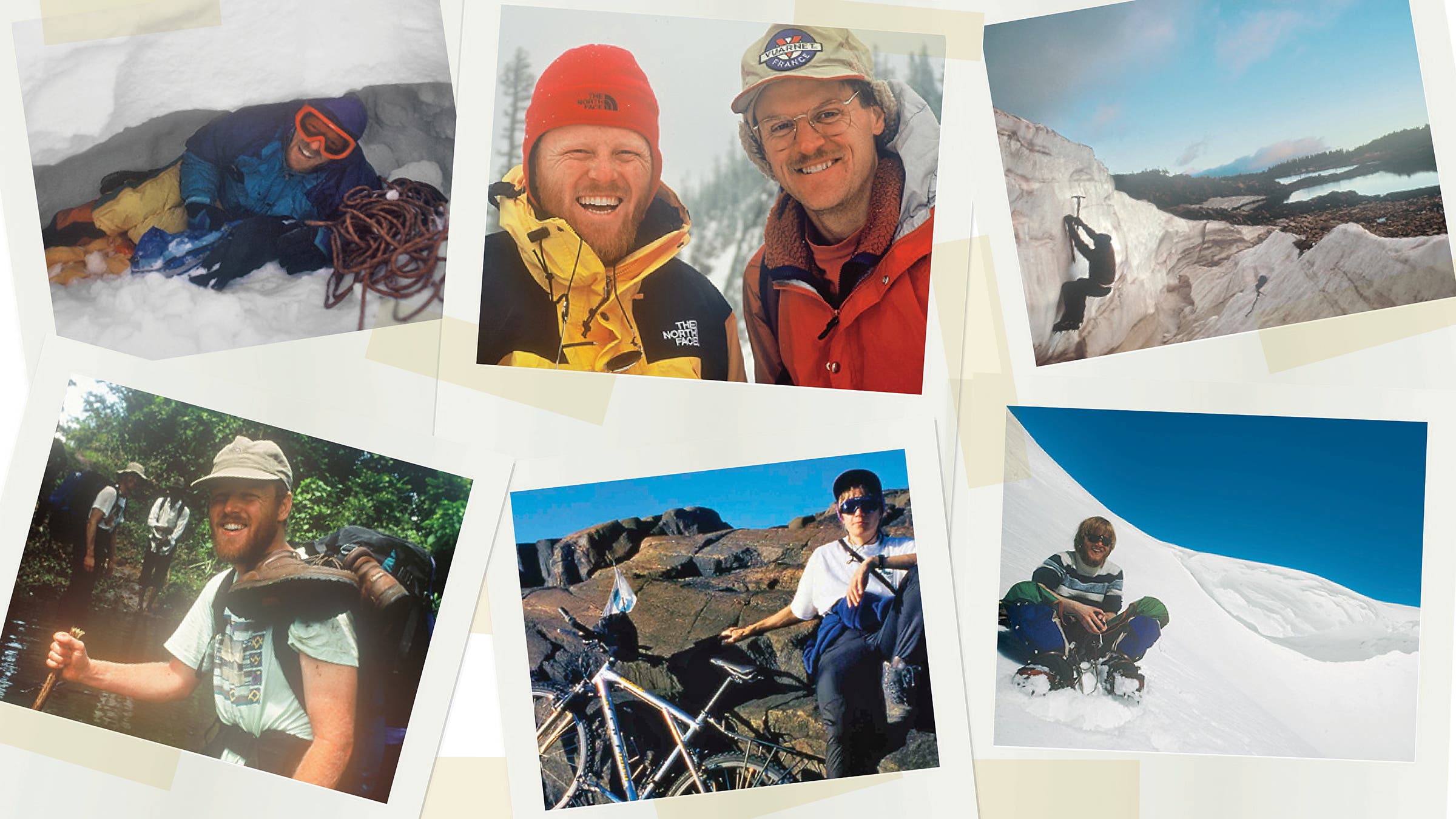
In the winter of 1977, after we’d graduated from high school, Mike and I went abroad. The plan was to climb in the Alps, but we ended up hitchhiking across North Africa. Several months later, back in Europe, we ran out of money but kept vagabonding, eating leftovers off the trays in university cafeterias. During a foray into the Soviet Union, we were detained for selling our Levi’s right off our asses and handing out bootleg copies of 1984.
Eventually, we made our way back home and started college at the University of Wyoming. I majored in philosophy, Mike in recreation. We were long-haired, bearded, budding existentialists. We wore Salvation Army sweaters, debated Nietzsche and Sartre, and stood back-to-back defending atheism, using radical responsibility as a rapier to skewer our Christian attackers.
Back in the lee of the Snowy Range, we also began intensively honing our climbing skills. Yvon Chouinard’s Climbing Ice had just been published, and it became our bible. We gradually mastered the snow-climbing techniques he described, learning terms like pied á plat (climbing on high-angle ice with your feet flat on the surface) and pied en canard (walking duck-footed on less challenging ice). To practice self-arrest, we regularly threw ourselves down couloirs, slid for hundreds of feet, dug our ice axes into the snow, and somehow managed to stop before crashing into talus.
We became connoisseurs of snow. We knew which snowbank would work best for making caves, how different types of snow would feel under skis, and how well an ice ax would sink into various transmutations of the granular ice called névé. We became inured to cold and wind, celebrating our self-chosen suffering. We might have made good soldiers if it weren’t for the fact that we couldn’t stand anyone telling us what to do. This was the end of the 1970s. We’d read All the President’s Men and the Pentagon Papers. Our favorite movies were Monty Python and the Holy Grail and Apocalypse Now. For us, Vietnam had poisoned all notions about the nobility of military service; the fellowship of the rope was all we had left.
It was during this time that Mike and I, along with a dozen male and female heretics deeply devoted to the outdoors, founded the Wyoming Alpine Club (WAC). There were no dues, except to cover the cost of a newsletter called The Alpine Epic, and no obligations, other than to give a slideshow when you got back from your latest adventure. The newsletter contained tongue-in-cheek stories about our latest bad ideas. “Hallett Peak: A Courageous and Dramatic Attempt (from Which Angus and McTavish Retreat Like Drowned Rats).” “Mount Moran: Drink Plenty of Fluids, Always Listen to Sharon, and Never Climb Drizzelpuss in the Dark.” In every issue, there were grainy snapshots of us climbing rock walls or icefalls.
Because most of the reports in The Alpine Epic involved high risk, club member Tim Banks (nicknamed McTavish), felt compelled to publish a disclaimer.
The Wyoming Alpine Club is not so much an organization as it is a group of friends … we encourage newcomers …
We do not, however, guarantee a damned thing regarding safety—it’s a risky world out there … you can fall down from high places or heavy things can fall on your head, you can be covered up with snow, frozen like a popsicle, boiled alive in a hot spring, trampled by buffalo or eaten by bears. You may also suffer from heartburn, hangover, tiresome belay jokes or foul smelling tentmates. …
The Wyoming Alpine Club in no way takes responsibility for broken bones, pulled muscles, frayed nerves, sprained ankles, the contraction of social diseases, the acquisition of traffic tickets, the conception of illegitimate offspring or the general deterioration of members’ moral fiber.
The next winter, some of us started scaring ourselves on short, frozen waterfalls in Boulder Canyon, just west of Boulder, Colorado. The climbs were terrifying because of our antique equipment: ten-pound leather boots, strap-on crampons, and toothless, wood-shafted ice axes.
ADVERTISEMENT
ADVERTISEMENT
ADVERTISEMENT
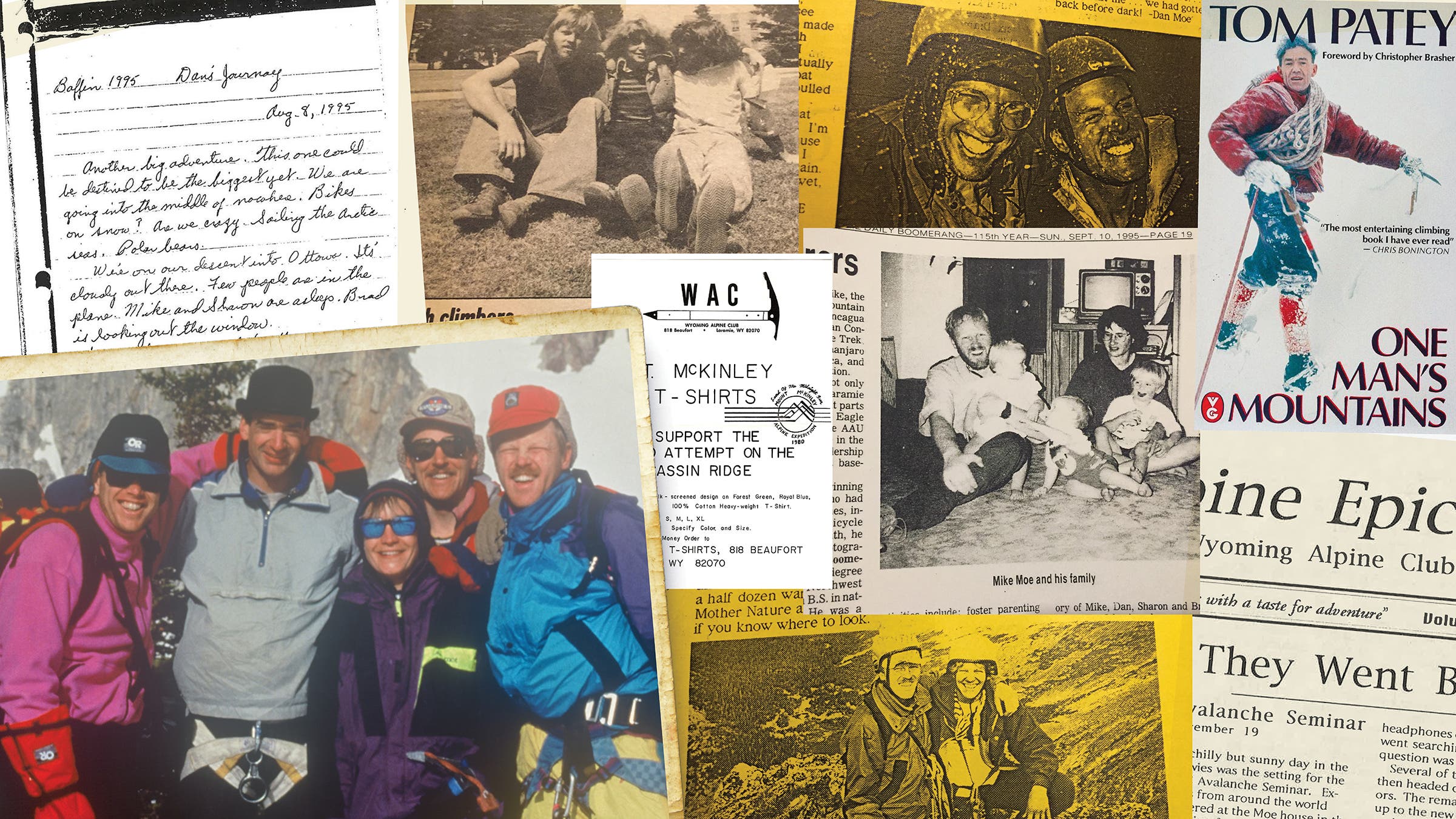
After tough apprenticeships like this, members of the WAC decided the world was just waiting for us to take on its dangers and delights. We had already endured many close calls, but we didn’t see them as warnings. Life-or-death epics were turned into campfire tales.
In the spring of 1981, I partnered with Skip Mancini, a fellow philosophy major at the University of Wyoming, on a monthlong ski trip around Yellowstone National Park. We pulled sleds and were stalked by a grizzly. In 1982, Mike and his brother, Dan, along with WAC members Keith Spencer and Bill Kuestner, hiked the length of the Continental Divide Trail, a 3,000-mile, six-month backpacking epic. In 1983, I teamed up with Sue Ibarra—who I would marry in 1992—to bike 1,500 miles across the Eastern Bloc nations of Yugoslavia, Romania, and Hungary. In 1984, Mike and Dan mountain-biked a new route that covered the entire Continental Divide Trail. That year, I went on my first Himalayan expedition, joining a team that made the second American ascent of Shishapangma, a clean, oxygenless trip to the top of the 8,000-meter peak.
ADVERTISEMENT
In 1986, half the club—Mike and Dan, Brad Humphrey, Richard Walle, and Mark Cupps—set out to climb Argentina’s Aconcagua, at 22,837 feet the highest peak in the Western Hemisphere. Mike got seriously ill again. Cuppie had to abandon his shot at the summit and drag him off the mountain.
That year, I returned to the Himalayas as a member of the 1986 U.S. Everest North Face Expedition. The winter of ’86 had been dry on Mount Everest, and the 9,000-foot North Face was armored in blue ice. We spent 70 days up there, using our heavy 11-millimeter ropes to climb pitch after stone-hard pitch. We had no Sherpas, porters, or cooks. We did everything ourselves and never used supplemental oxygen. Unfortunately, we were stopped short of the summit by the early arrival of avalanche season.
ADVERTISEMENT
In 1987, Mike and I moved to Africa. I went to Kenya, while he went to Swaziland. I lived in a brothel in Nairobi, five bucks a night for a soiled bed. I kept my ice ax within reach and ate on the street for $3 a day. I was stringing for the Associated Press and Time. Sue flew over, and we climbed Mount Kenya and Kilimanjaro together.
Mike worked in Mbabane for CARE, a humanitarian NGO, teaching impoverished Swazis how to obtain small-business loans. He helped start a day care center and fell in love with Diana Kocornik, a Christian aid worker. Dan came over, and the brothers went on an expedition through South Africa’s Drakensberg Mountains—a trip that almost ended in tragedy because they were attacked at night by bandits. Not long after that, making a decision I found incomprehensible, Mike started going to church.
ADVERTISEMENT
By 1990, Mike and I were both back in Wyoming, but he had changed. An avowed atheist when we were in high school, he now fully identified as a Christian, which to me was off-putting. He revered Nelson Mandela, who had recently been released after 27 years of imprisonment. Mike sincerely believed in the transcendence of the human spirit, and he saw Mandela’s liberation as proof of the power and kindness of God.
In 1989, I was part of a team that crossed the entire Soviet Union by bicycle—a five-month, 7,500-mile journey. My experiences there made me feel very different about the human spirit. What Khrushchev started, Gorbachev had finished—pulling back the curtain to reveal the depraved, murderous nature of the Communist regime. I saw blown-up cathedrals all across the country. I visited former prison camps in Siberia and met families who’d lost siblings, fathers, mothers, and children to the gulags. I interviewed people who were tortured horribly. The Soviet Union is where I finally realized that the human spirit was not indomitable. It could be killed as easily as a dog hit by a truck. To me, belief in God—any God—seemed almost immoral.
In the Spring of 1991, Mike and I were doing a lot of paddling on the Laramie River in preparation for our next big adventure together: attempting the first complete descent of the mighty Niger River, in West Africa. The trip would cover 2,600 miles, from the river’s highland source in Guinea to the coastal region in Nigeria, where it discharges into the Atlantic.
ADVERTISEMENT
Mike loved biting off more than he could chew. He still believed that with the right spirit and an unfaltering faith in your mission, you could overcome anything.
ADVERTISEMENT
ADVERTISEMENT
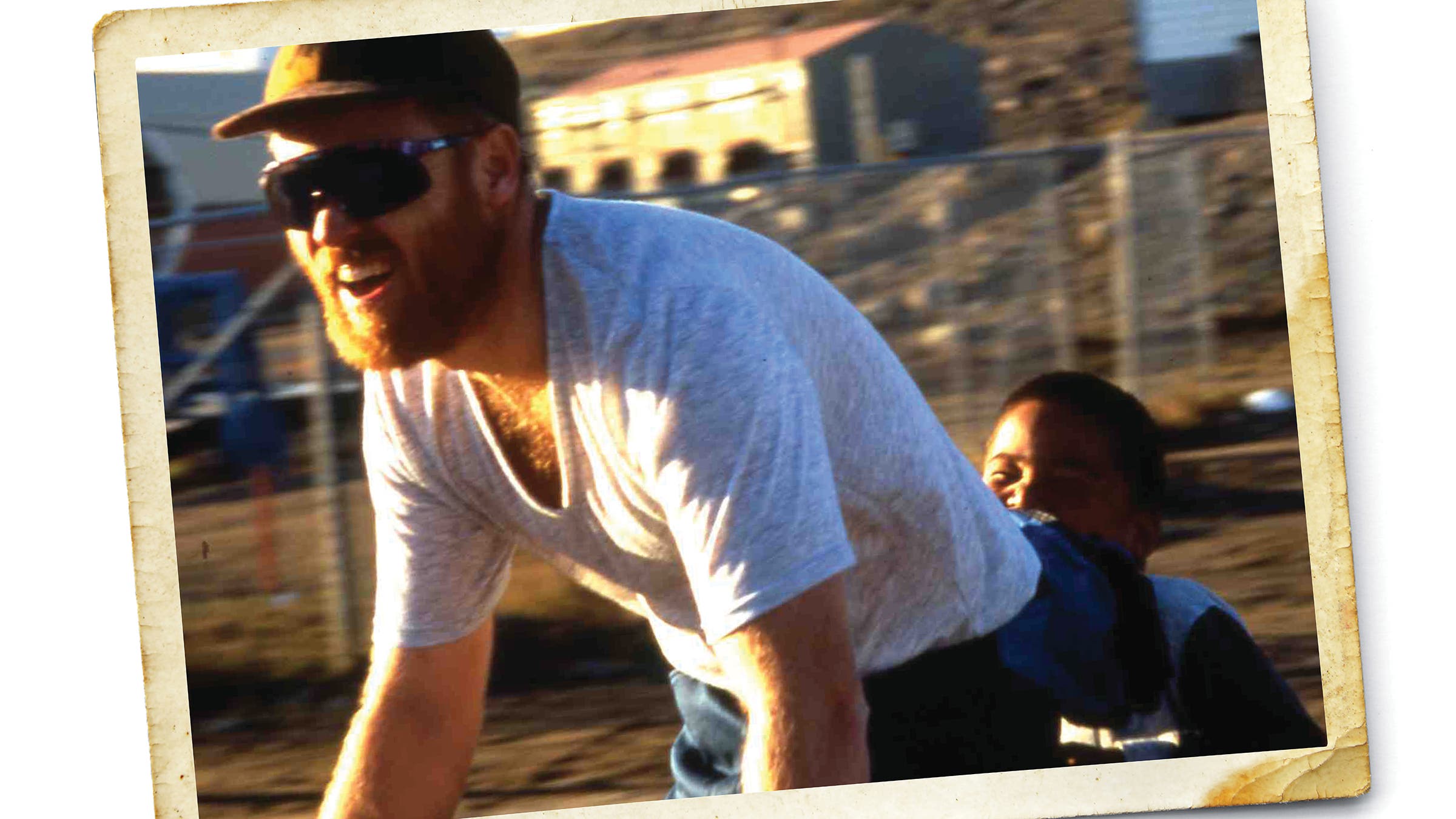
Mike disagreed. He loved biting off more than he could chew. He still believed that technical prowess—progression, muscle memory, skills practiced to mastery—was a distant second to joie de vivre. With the right spirit and an unfaltering faith in your mission, you could overcome anything.
This posed a bigger problem for our friendship than religion had. Mike’s world, and the world of the Wyoming Alpine Club, remained wide open, 360 degrees of potential, while mine had narrowed. I knew we might never do another expedition together. But we did. One more.
In October of 1993, Mike and I, plus WAC stalwart Keith Spencer and Lander sport climber Steve Babits, flew to Lhasa, Tibet. Our goal was to ascend the unclimbed Hkakabo Razi, which at 19,295 feet is the highest peak in Myanmar (then known as Burma). The nation was closed to foreigners, so we would have to sneak across 500 miles of militarily restricted eastern Tibet, slip over the heavily guarded Burma border, then climb Razi. How we would get back was TBD.
ADVERTISEMENT
As things turned out, we ended up reaching the peak but failed to summit, and Mike wasn’t even with us. He developed pulmonary edema again, on our first night in Lhasa, at 12,000 feet. He was coughing so hard he woke me up.
“Sorry. Didn’t mean to rouse you from your beauty sleep,” he croaked. “God knows you need it.”
“You all right?”
“Can’t seem to take a full breath.”
I got up and put my ear to his chest.
“What, no foreplay?”
In the morning, we went to a clinic, where they X-rayed Mike’s chest.
“I see fluid in lungs,” a Chinese doctor said in broken English. “Much, much fluid. This hospital nothing. You fly right now back.” He gave Mike an Army green balloon filled with oxygen, which Mike was supposed to inhale from as needed. The earliest flight wasn’t until the next day. By midafternoon, Mike was noticeably worse.
ADVERTISEMENT
I had brought along a copy of Tom Patey’s One Man’s Mountains. Patey and Mike had the same sense of humor: they both believed that life, at its core, was a comic opera. But what each of us knew, and never discussed, was that Patey died at 38, on a climb in northern Scotland, leaving behind a wife and three young children.
I read out loud from Patey’s “The Art of Climbing Down Gracefully,” a story about the many ways you can turn back on an expedition and still save face. It made Mike laugh so hard that he started choking.
That night I lay on my bunk listening to Mike try to breathe. At one point he said, “Justin’s such a great kid. He and Addi will be best friends.”
We took a taxi to the airport at dawn. I’d been worried all night. “You look worse than I do,” Mike said. To cheer me up, he whispered the lyrics to a song we both loved from Monty Python’s Life of Brian. It’s the ultimate moment in black humor: a group of men being crucified by the Romans cheerfully start singing together in harmony, reminding each other to “always look on the bright side of life.”
Mike’s sangfroid was not an act. It was his self-taught response to danger, but I knew not to trust it. Just because you’re brave doesn’t mean risk is diminished. Even Mike’s limitless willpower could not defeat a force majeure.
ADVERTISEMENT
The next day, Mike flew to Chengdu, China, and went straight to a hospital. We never went on another expedition together.
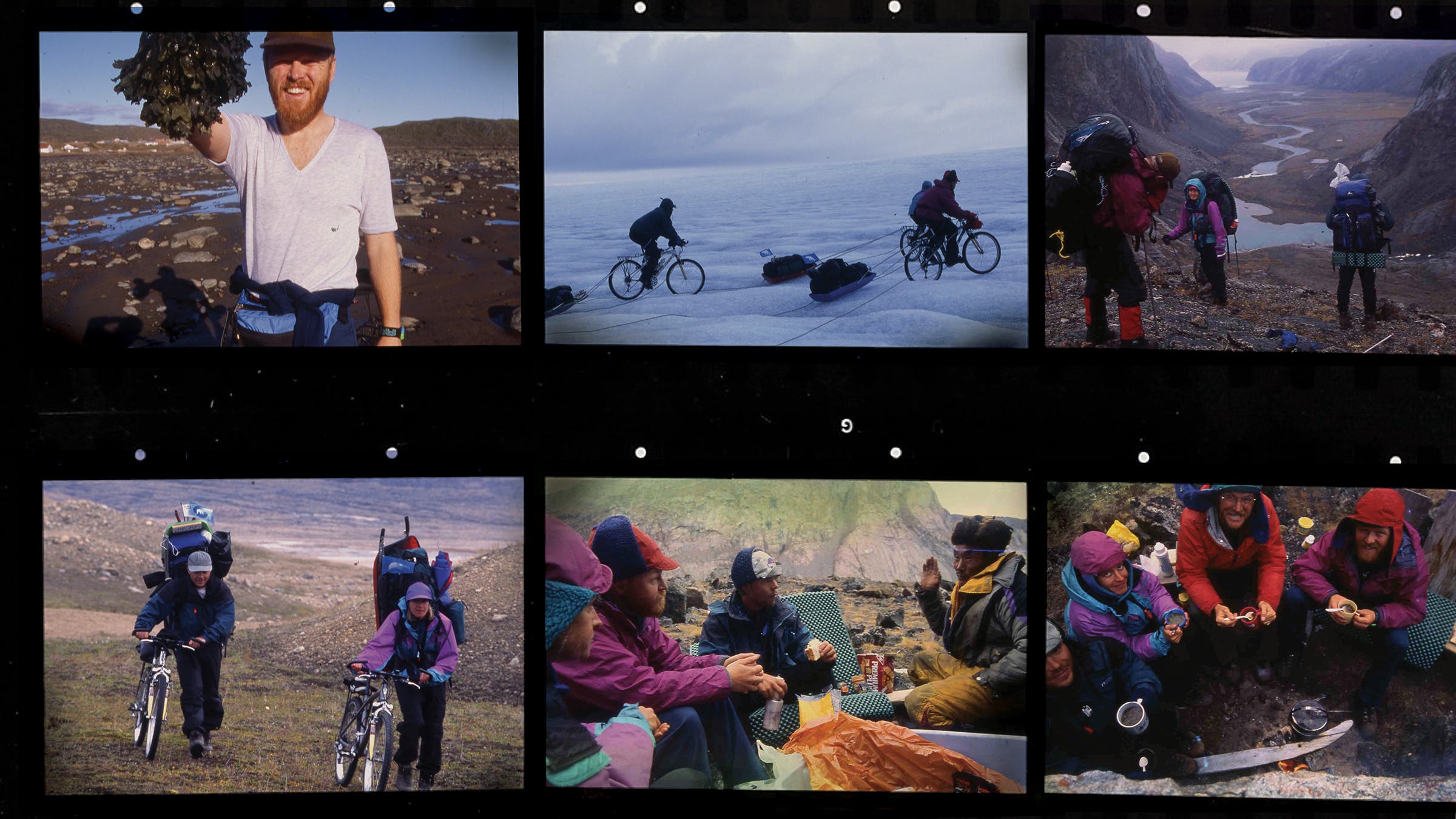
Members of the Wyoming Alpine Club—which at the time numbered around 15—had a full slate of expeditions planned for 1995, including one that struck me as alarming: Mike had talked Dan, Sharon Kava, and Brad Humphrey into heading for the Arctic. Their plan was to mountain-bike over the Barnes Ice Cap in the center of Canada’s Baffin Island, and then sail Hobie Cats through the icebergs of Baffin Bay, ending the journey at an Inuit village called Clyde River. To me, this plan was even more absurd than Burma. Mountain bikes of that era weren’t likely to work well on snow, and they’d be sailing in dangerously cold water.
ADVERTISEMENT
ADVERTISEMENT
ADVERTISEMENT
ADVERTISEMENT
ADVERTISEMENT
At first they tried to joke about it.
“Always did want to see a bowhead whale,” Sharon said. To which Brad replied: “Well, you saw one, all right!”
Mike laughed, but he was looking toward the shore, calculating. It was too far to swim—it looked like several miles.
Jushua urged everyone to pull themselves as far up on the boat’s hull as they could, to get as much of their bodies out of the water as possible.
“We just have to hold on together,” Mike said. “Just hold on.”
Dan suggested they pray, and they did.
The Sangfroid was not an act. It was Mike’s self-taught response to danger, but I knew not to trust it. Just because you’re brave doesn’t mean risk is diminished.
ADVERTISEMENT
They had no way to contact anyone. No one knew where they were. They were alone in the freezing vastness of Baffin Bay. Mike tried to tell them that everything was going to be fine, but they all must have known. The surface water temperature in Baffin Bay in August ranges between 28.2 and 30.6 degrees Fahrenheit. The expected survival time in such temperatures is 45 minutes or less. For the next three hours, half submerged, they encouraged each other to hang on, but there was really no hope.
“I can’t take it any longer,” Sharon finally said, her voice weak from hypothermia.
“You can make it, Sharon!” Mike said. “You are the first woman to traverse the Barnes Ice Cap! You can make it!”
Sharon didn’t respond. It was as if she’d fallen asleep. Then she spoke again. “Tell my friends I am not scared. Give my family a big hug from me.”
“Stay strong, Sharon!” Mike yelled. “Stay strong!”
A few minutes later, she whispered, “God take my spirit.” She stopped breathing. Jushua, more functional because he was wearing a survival suit, tied her to the boat so she wouldn’t float away.
The four men were quiet. They had stopped shivering by now, and could feel nothing from the waist down. They slipped in and out of consciousness.
“I’m afraid I have to go now, too,” Brad said.
“Keep strong!” Jushua said.
ADVERTISEMENT
“Brad! You’ve passed through so much hard stuff,” Dan said. “You’re going to pass through this, too!”
Brad slurred something about tasting winter, then added: “Tell our friends what happened to us. This will be another story for them.”
“You’re going to tell them yourself, Brad,” Mike said.
Brad did not respond for a long time. Then he said, “I was always happy,” and died.
Jushua, Mike, and Dan floated in their minds. Cold beneath the skein of unconsciousness. Cold inside each of them like a frozen sword. Ice and emptiness swirled. God and blackness became one.
Jushua heard Dan say, “If you go up the stairs, you go to a warm place.”
Dan reached down and took Jushua’s hand. Jushua tried to climb on top of the boat, imagining that he had risen from the water and had put his foot on a step. He was going to a warmer place. He would not have to suffer anymore.
ADVERTISEMENT
“Jushua! What are you doing?” Mike shouted. “Hang on, Jushua.”
Jushua moved back down into the water.
“You have a family,” Mike said. “Hang on!”
Jushua came back into his body. He tried to touch Dan, but Dan was no longer breathing. Jushua tied Dan’s body to the boat.
“It’s my fault,” said Jushua.
“It’s nobody’s fault,” said Mike.
“You have to live to tell your family,” said Jushua.
Mike and Jushua passed out of time together. They were blinded by horror, then released from their frozen minds and frozen bodies. As Mike called out for Dan, Jushua put Mike’s hand on his brother, floating facedown in the water.
What will I say to mom and dad
Look Mike the shore is closer
I can’t stay because my brother is gone
You are strong you have kids think only about that
Tell my kids I am not scared it is only the end of life
Make yourself strong Mike
Dan Dan Dan
We’re going to make it Mike
I can’t stay my brother is gone I cannot live Jushua I’m going to leave you now
No no no
God be with you
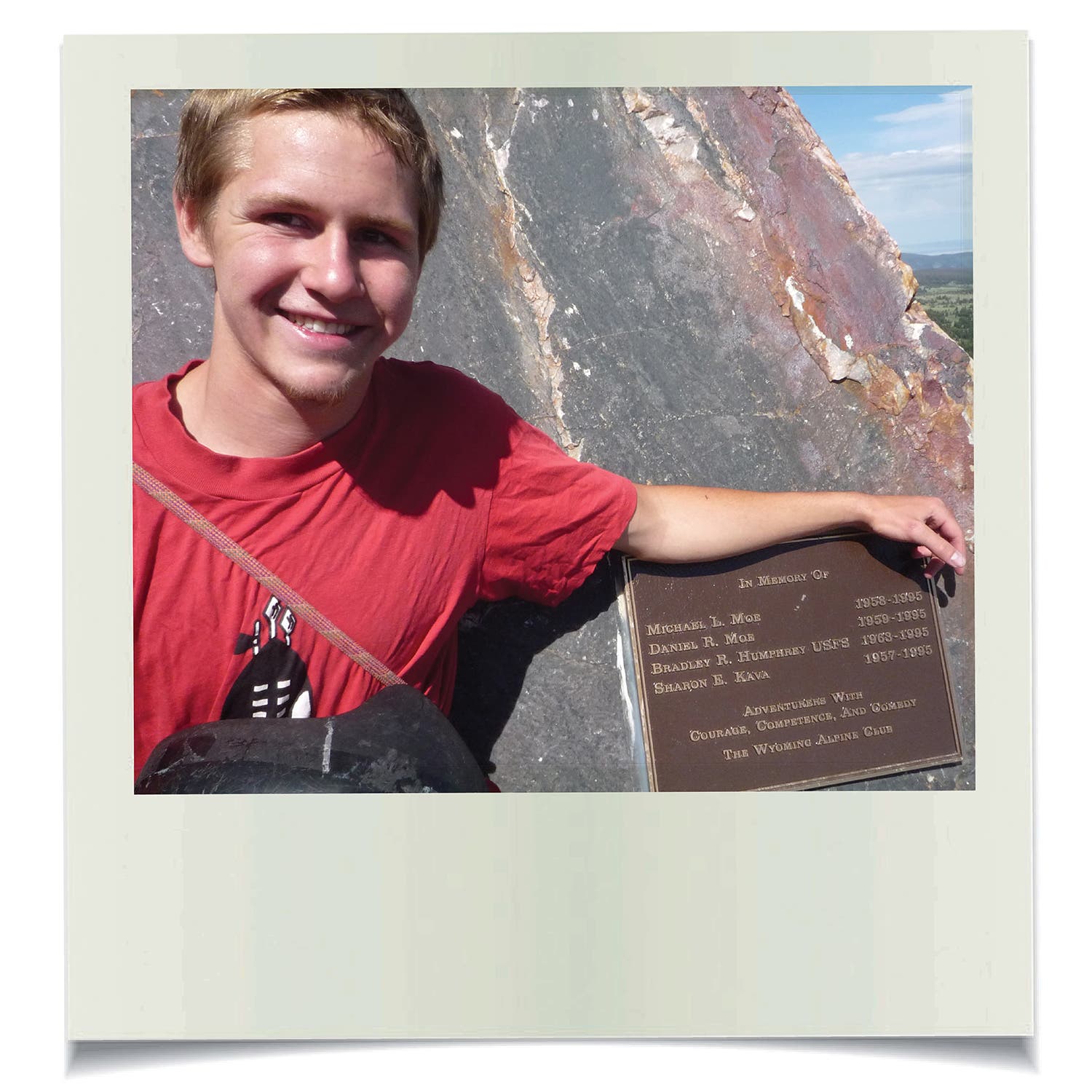
Joshua survived and was eventually washed ashore by waves and tide. His legs were bloated and he couldn’t walk. He said he heard Mike’s voice and Sharon’s voice encouraging him onward. “They stayed with me,” he said later. “They kept me alive.” He crawled into the heath and made a fire. My account of what happened relies largely on an interview he did soon after with the Royal Canadian Mounted Police.
ADVERTISEMENT
Justin and I did end up building that fence together. As I had done with his dad, we debated religion and politics for hours while screwing in the planks. He is a committed Christian, believes the Bible is the word of God and quotes from it often, but thinks most Christians in America are selfish and psychologically sick.
I bought him a book about the Stoics, but he never took it. He had been homeless for almost a decade before he went to prison, and he knew a lot about living on the margins of society. He was brutally candid about his drug abuse and mistakes. Since he was on parole, he had to get drug-tested frequently and attend counseling, both of which he disliked. He was back living with his mom, and he wanted to start a landscaping business.
ADVERTISEMENT
I knew Justin loved to hear stories about his dad and the Wyoming Alpine Club, but I could barely talk about it during the hours we spent working on the fence. The sorrow and emptiness, for all of us, are still so immense, so unspeakable. For too long in life, some of us, myself included, willfully believe that we have the right to risk our lives, that our lives are ours and ours alone to lose. But watching Justin grow up without his father has taught me that this is a self-serving lie.
