Updated March 6, 2026 12:05PM
Sponsor Content: Ford Bronco
Search and Rescue Teams Get a Boost from Ford’s CEO
First responders need capable off-road vehicles. Ford commits to helping, with a new program gifting customized Bronco®️ SUVs.
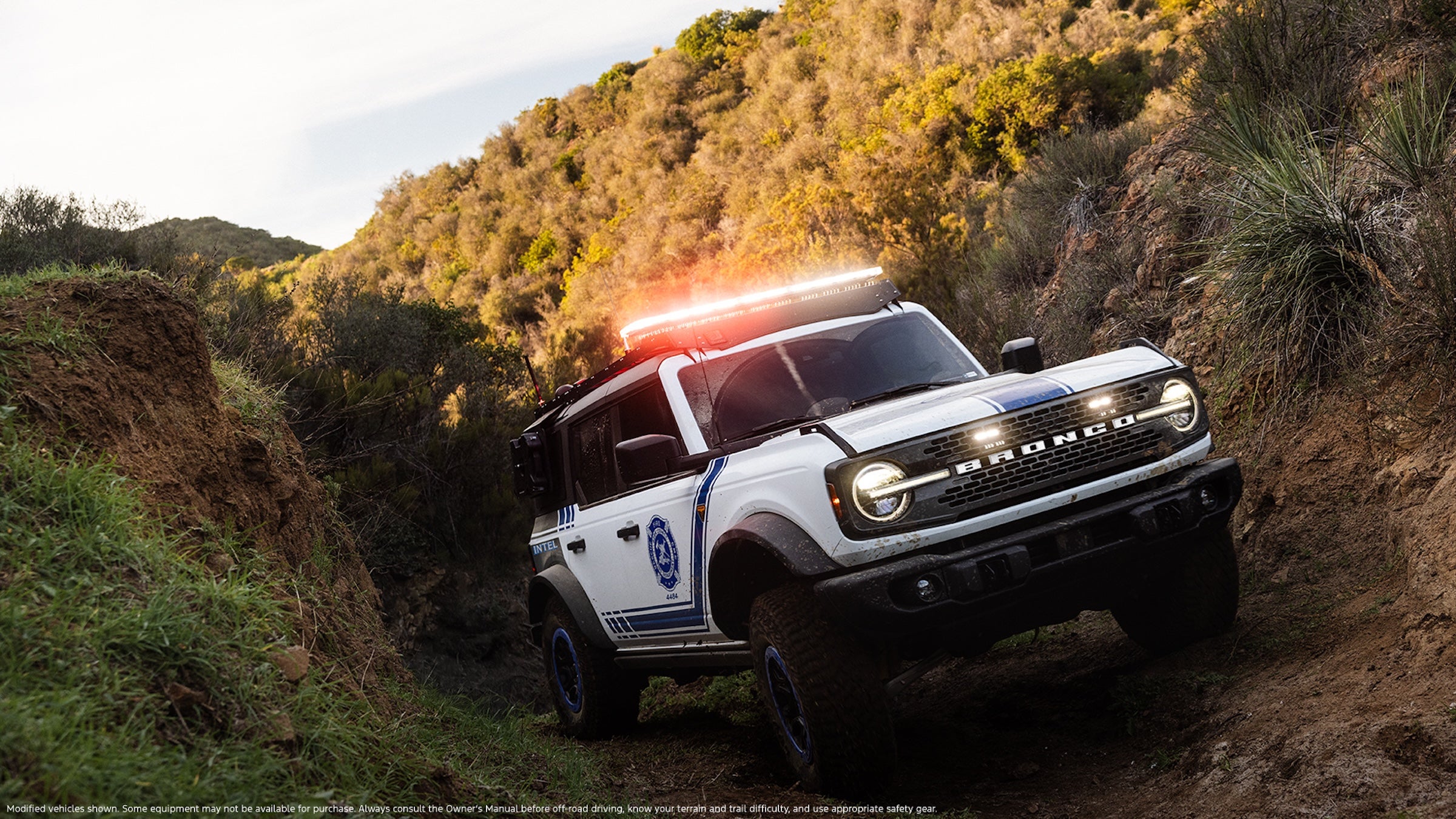
Ford Bronco Search and Rescue vehicle. (Photo: Ford)
In the summer of 2025, a couple of Ford employees were flicking through videos on Instagram when they saw something that stopped them in their tracks: a 2024 Ford Bronco® Badlands® zipping through rugged desert terrain on the way to save someone’s life.
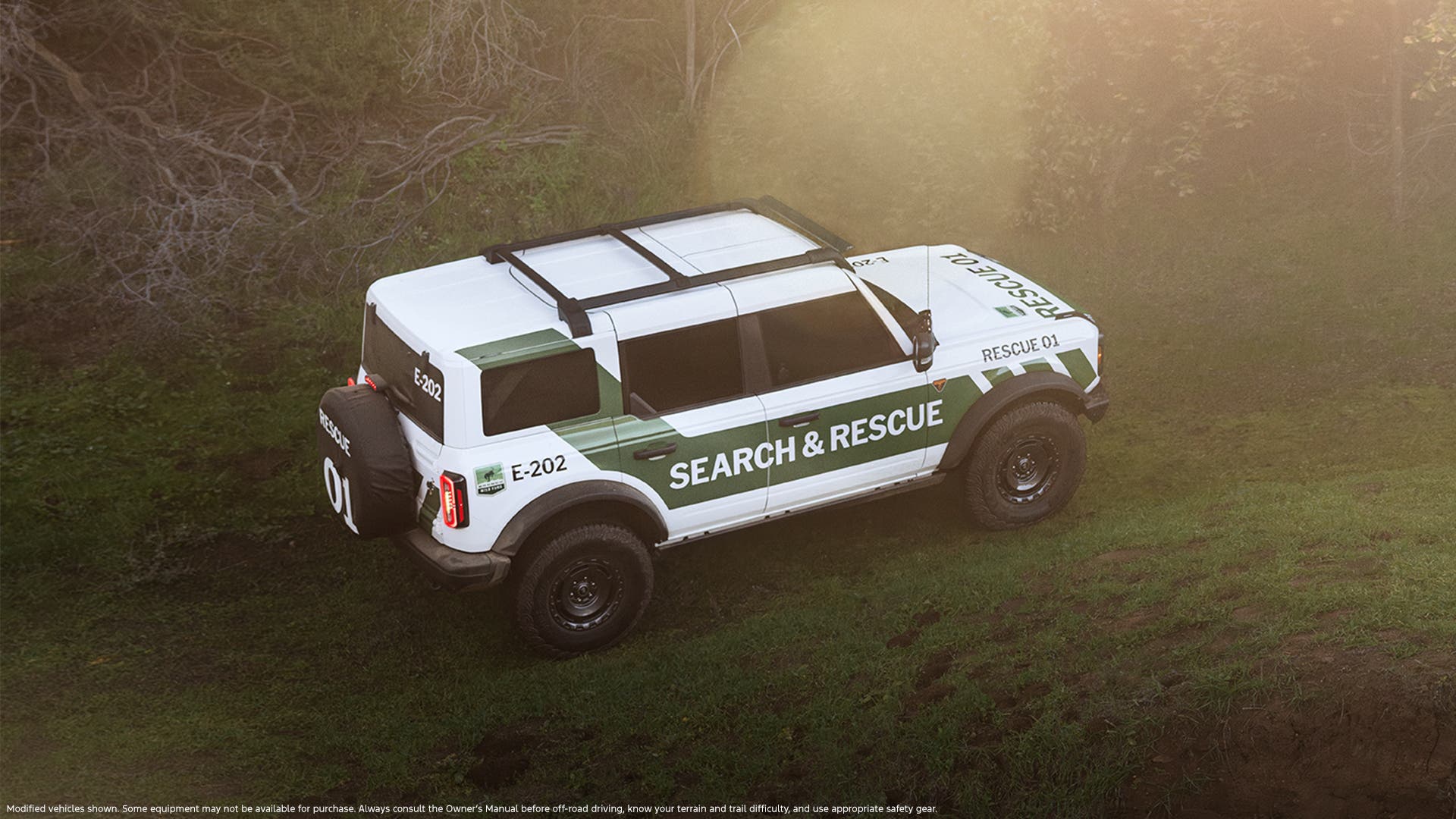
The vehicle in question belonged to the search and rescue team of Grand County, a sprawling sweep of redrock desert that encompasses Moab, Green River, and countless remote canyons. The county has one of the busiest search and rescue departments in the nation, and they rely on a Bronco® SUV to handle the load.
“Most of our incidents are recreation-related—people getting injured or lost in the desert,” says Grand County Sheriff Jamison Wiggins. He’s the fifth Wiggins in his family to hold the office, and he’s been involved in search and rescue for more than a decade.
“We need the 4×4 to get to some of these locations where a normal pickup or car won’t make it,” Wiggins says. The last 4×4 vehicle he tried out in the role just couldn’t handle the terrain. It spent as much time in the shop as it did on the trails. So, in 2024, the county bought a Ford Bronco®.
The video of the Bronco® SUV was shared at Ford and eventually arrived at the desk of CEO Jim Farley. Something about it struck him. The Bronco® SUV was out there saving lives—and performing like a champ in some of the most challenging terrain Farley had ever seen. He had to see it for himself.
Farley regularly hits the road to see how Ford vehicles are performing in the real world, so not long after, he landed in Moab to meet Wiggins—and the famed Grand County Bronco.
“As a CEO of a massive corporation, for him to come out here and physically have boots on the ground is pretty unique,” Wiggins says. But Farley didn’t just show up to shake hands. He also rode with Grand County Search and Rescue (GCSAR) Sergeant Bradley Hines and saw the vehicle rock-crawl, dart through washes, and navigate loose sand at speed.
It was suddenly clear to Farley just how critical GCSAR’s Bronco® SUV was to their work. For one thing, Grand County is huge: 3,000 square miles, much of it furrowed with canyons and desert slickrock. The extreme nature of the terrain draws climbers, base jumpers, mountain bikers, skiers, and pretty much every other flavor of adrenaline junkie you can imagine. People come here to challenge themselves. When it goes well, it’s the adventure of a lifetime. When it doesn’t—well, it’s not pretty.
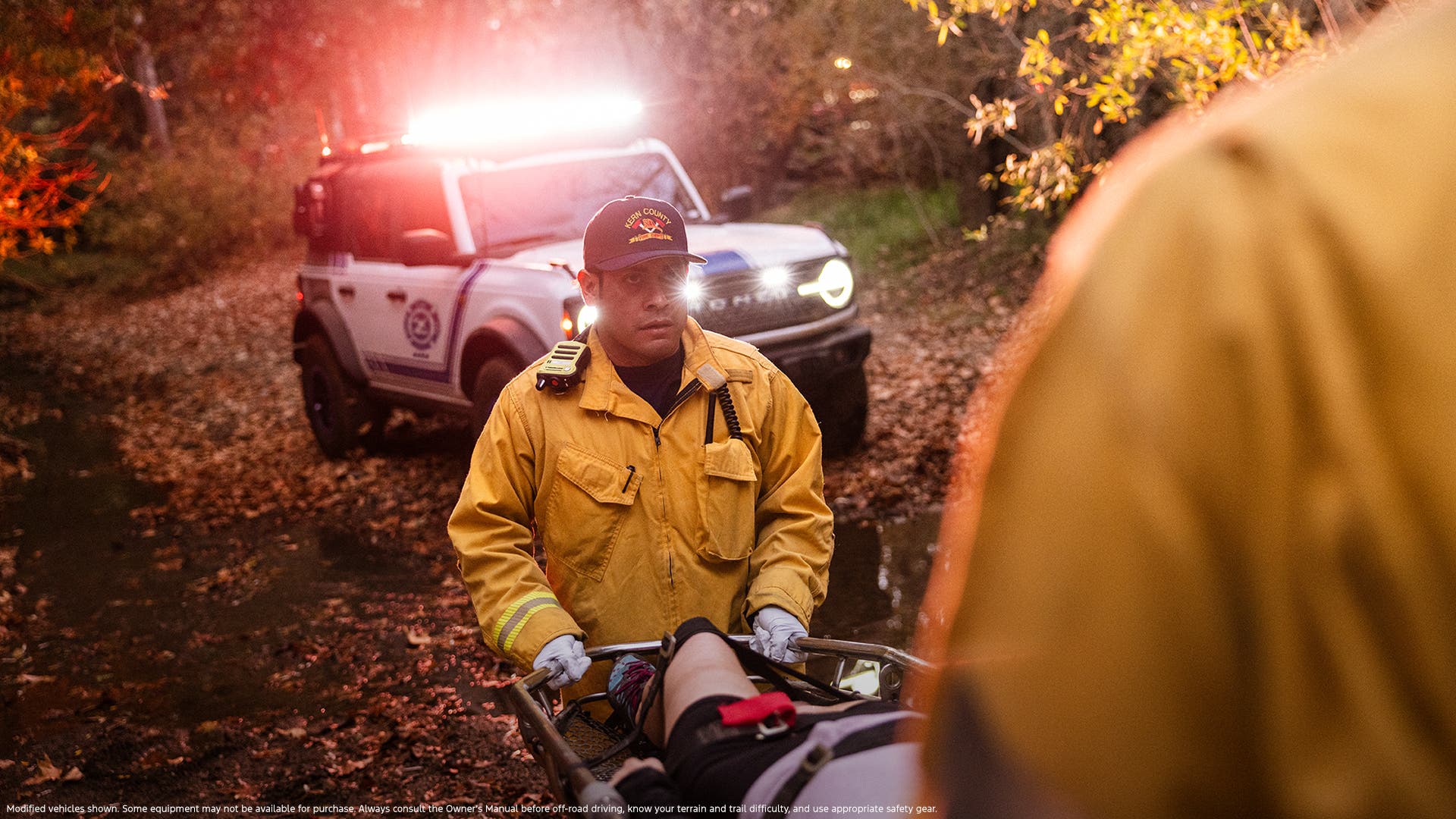
In 2025 alone, GCSAR conducted 143 rescue operations amid some of the most challenging terrain on the planet. Backcountry rescue is hard work on a good day. Add a ticking clock, heavy equipment, and a severely injured climber or mountain biker, and you’ve got a recipe for a truly grueling mission.
It’s intense, in every way. But what also struck Farley is the fact that 99 percent of rescues in the United States are conducted by volunteers. They frequently spend long days—and nights—outdoors in challenging conditions, driving remote 4×4 roads, searching for victims, carrying litters, and treating patients. Most buy their own gear and use their personal vehicles.
“Things have only gotten harder in the past year, especially with the cuts in funding and personnel at the National Park Service,” says Chris Boyer, executive director of the National Association for Search and Rescue (NASAR). Paid rescue staff are fewer and farther between than they used to be. That puts more of the burden—and safety risk—on volunteers.
For Farley, learning this was an epiphany. Here was a group in extreme need—and here Ford was with a perfect solution.
When he got home, he started a discussion back at Ford headquarters. As he shared what he’d learned, the conversation distilled into a single question: “How do we get Broncos in the hands of even more search and rescue teams?”
The Ford team called up NASAR and made an offer: five brand-new Broncos, kitted out specifically for the demands of backcountry search and rescue. There would be no catch: Ford simply wanted to donate the Broncos, no charge, no strings.
NASAR did a double take.
“We were very surprised,” Boyer says of the call. “We’ve been around since 1973, and this is the biggest partnership we’ve had in our history. It’s also a huge gesture of recognition for us and our volunteers, who don’t often get a lot of recognition for what they do.”
Through the new partnership program—Answer the Call—Ford will interview each qualifying team and customize a Bronco® Badlands® Sasquatch® model specifically for their needs. Ford is partnering with Darley to upfit them with specialized gear, including Starlink Satellite Connectivity for remote communication, drone technology for aerial reconnaissance in tough to reach areas, and advanced winches and recovery gear.
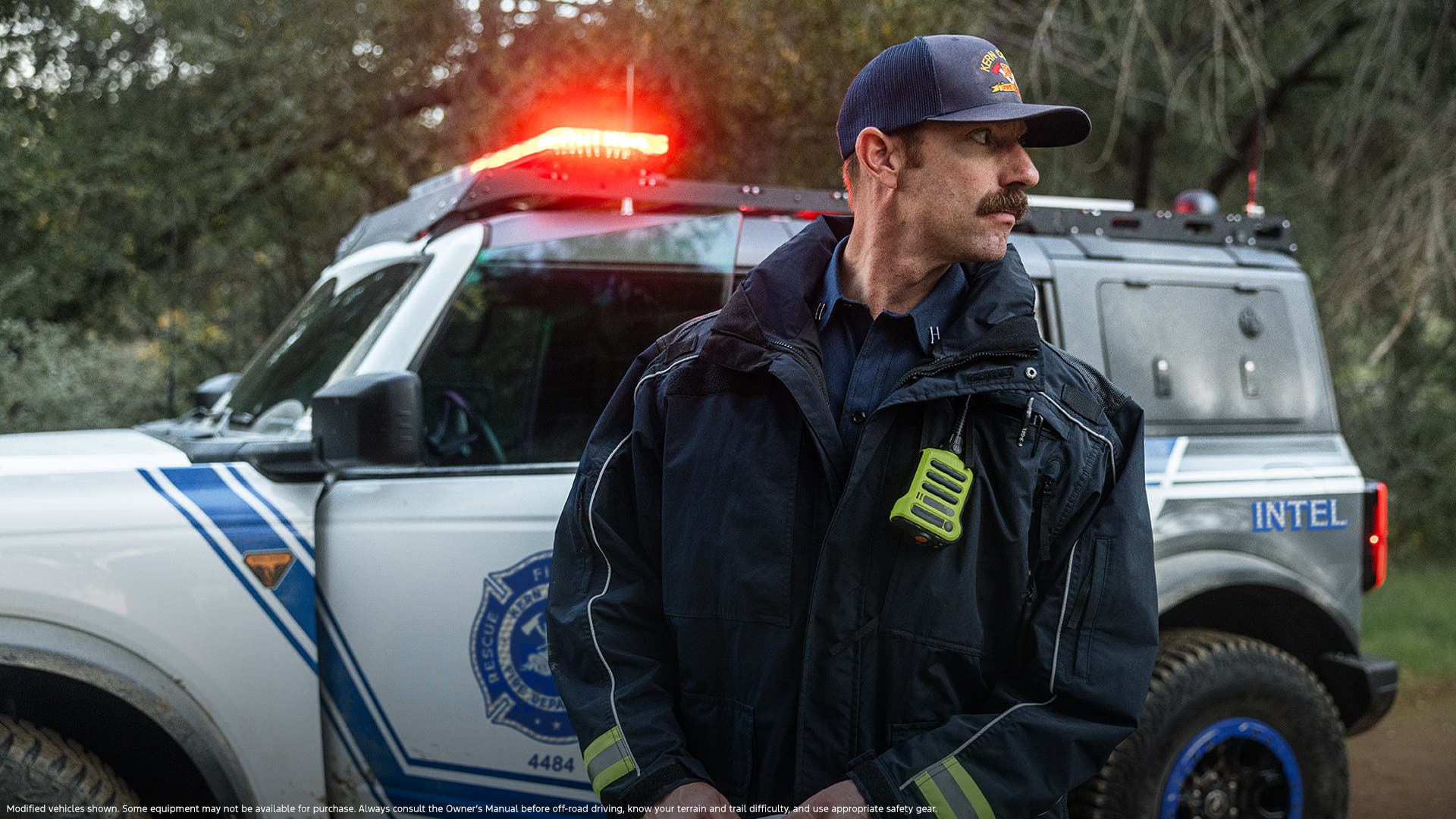
“Volunteers won’t have to put any more money into the Bronco,” Boyer says. “When it rolls off the transport vehicle, it’s ready to go out and fulfill its mission.”
Ford has made a commitment to provide five vehicles to SAR groups by the end of 2026. Organizations in Kern County, California, and Teton County, Wyoming, have already been selected to receive Bronco vehicles.
“A capable vehicle doesn’t just get you to the scene; it brings the lost home safe,” Mikki Hastings, NASAR President, said in a recent interview. “For under-resourced volunteer units, a donation like this isn’t just a new vehicle—it’s a lifeline.”
As for Wiggins? He’s just grateful that his Bronco—and his hard-working team—could be the inspiration for all this.
“It’s hard to describe how proud we feel to be the face of search and rescue utilizing a Bronco,” Wiggins says. “It’s a great thing that other organizations can apply for one. There’s definitely a need out there, and this will be big for a lot of teams.”
Always consult the Owner’s Manual before off-road driving, know your terrain and trail difficulty, and use appropriate safety gear. Learn more at ford.com.
