Updated December 19, 2025 08:15AM
A Rescue Report from New Hampshire Tees Off on Two Lost Hikers
A recent report published by the state’s Fish and Game Department pulls no punches in its assessment of two hikers who got stuck on a mountain and required lifesaving
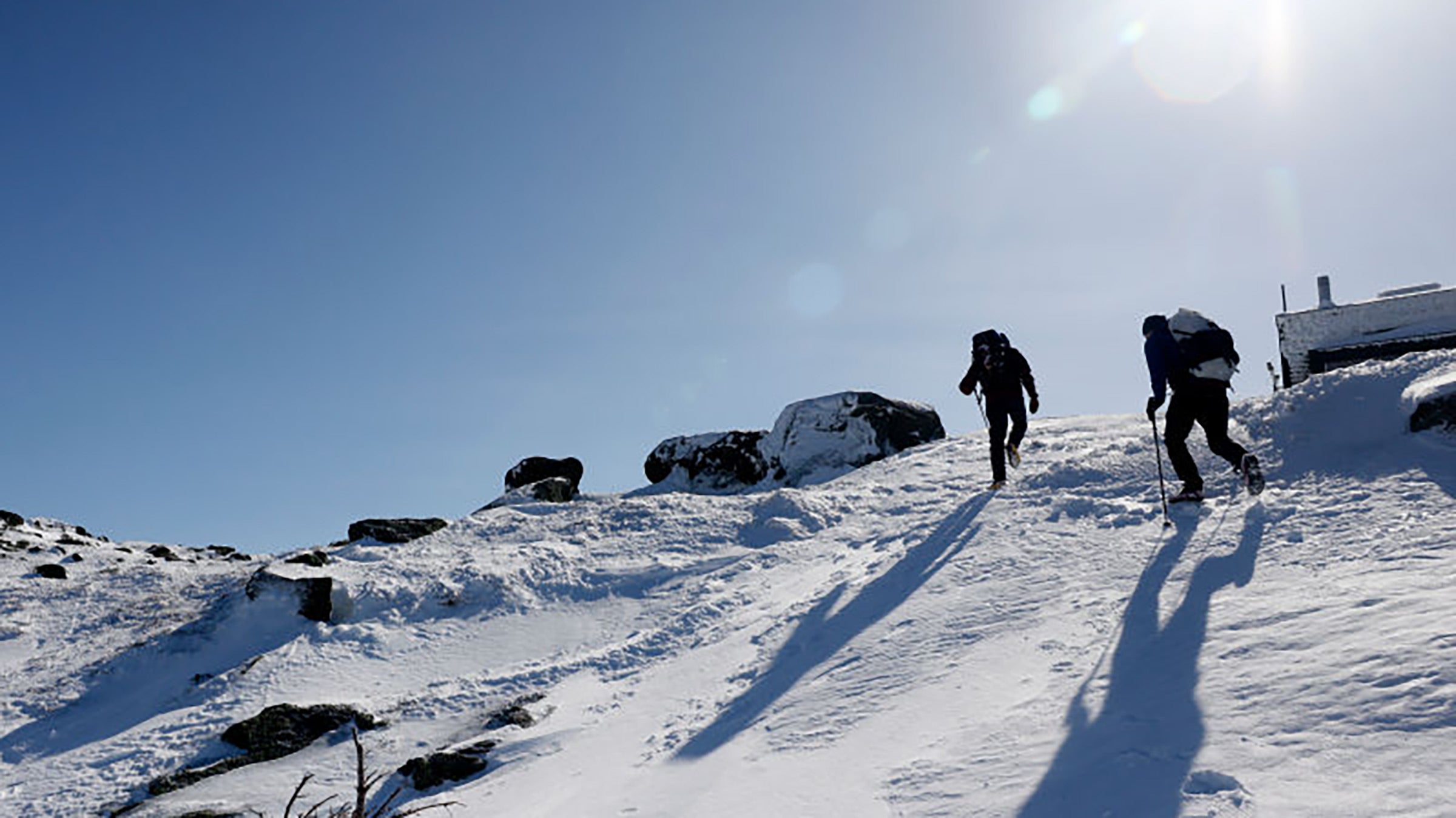
Mount Washington and other New Hampshire peaks are the site of frequent rescues (Photo: Jessica Rinaldi/The Boston Globe via Getty Images)
Live Free or Die!
New Hampshire’s state motto has inspired an impressive tonnage of country music songs and stand-up comedy routines over the years. The slogan, of course, highlights the Granite State’s extreme commitment to individual liberty and personal sovereignty—you know, the kind of stuff uncle Ron explores in his daily Facebook posts.
As it turns out, the motto also adequately captures the vibe of the many search and rescue reports published by the state’s Fish and Game Department. Live free, be prepared on the trail with proper clothing or footwear, or else you may very well die, is my assessment of these reports.
New Hampshire is the only state that routinely charges hikers for rescue services (Oregon and Maine have similar laws on the books). Not everybody has to pay, of course. The Fish and Game Department, which manages SAR activity, decides whether or not to fire off an invoice by assessing the preparedness and actions of the hiker in question.
Will a hiker get charged? You can determine the answer by reading the department’s rescue report, and assessing the magnitude of the author’s Live-Free-or-Die tone. I’ve read dozens of these reports over the years, and let me tell you, some of them pull zero punches.
The latest report to enter the oeuvre is a real doozy. On December 12, two hikers from Massachusetts got caught on the slopes of 5,249-foot Mount Lafayette. Conditions were apocalyptic: heavy winds, 10-degree temperatures, waist-deep snow. The hikers called for rescue at 11:25 P.M. One of the hikers said he was injured and was in and out of consciousness while battling hypothermia. Officials spent all night plucking them off the mountain.
The report of the mission passes more than a little judgment on the two hikers at the center of the ordeal. Here are a few highlights
- They lost their composure and would not listen to any advice being given to them.
- The two were ill-equipped for a hike of this magnitude and had departed for a nearly 9-mile loop at 1:00 p.m.
- They lacked appropriate clothing for a hike in the weather conditions they encountered and were navigating with a phone when they lost the trail.
Chris McKee, a conservation officer with the Fish and Game Department, shared a few more details about the hikers in a story with New Hampshire Public Radio. McKee said the two were wearing work boots, not hiking boots, and lacked the gear you might take on a night hike in winter, such as crampons, snowshoes, or functional lights.
“These individuals just didn’t have the proper gear or experience to be out there hiking in this,” he said.
ADVERTISEMENT
I understand why these reports are so harsh, of course. Every year, New Hampshire’s peaks attract thousands of hikers from nearby Boston and New York City, and many of these visitors show up clad in high tops and gym shorts. Meanwhile, the weather on Mount Washington and other peaks can quickly change from chilly to deadly, and every year, SAR teams must risk their lives to save hikers who get caught by bad weather. If a rescue report’s grumpy tone shames even one hiker into wearing boots and a jacket , then it’s worth the effort.
So, back to the most recent screed. McKee’s statements, when added to the lines in the rescue report, represent a 10/10 on the Live-Free-or-Die scale. I reached out to the Fish and Game Department to ask whether the hikers will be charged. Lieutenant James Kneeland, the author of the report, said he will recommend charging the duo when he submits his report to the New Hampshire Attorney General’s office.
“They acted negligently in not having the correct clothing, or a map, or a plan,” Kneeland told Outside. “They left the trailhead at 1 P.M. to complete a nine-hour hike. If they hand’t have been panicking, we might have been able to talk them off of the mountain.”
The attorney general will ultimately decide whether or not to charge the hikers, Kneeland said. Based on the Kneeland’s vibe, my guess is the hikers are likely to find a bill in their mailboxes, mixed in with the Christmas Cards and catalogues.
