Updated January 3, 2024 12:00AM
Two Friends Completed the Ultimate Peak-Bagging Adventure
Neighbors Jeff Hashimoto and Langton Ernest-Beck dreamed up a crazy summertime challenge: climb Washington’s 100 highest mountains, and link the peaks by bike
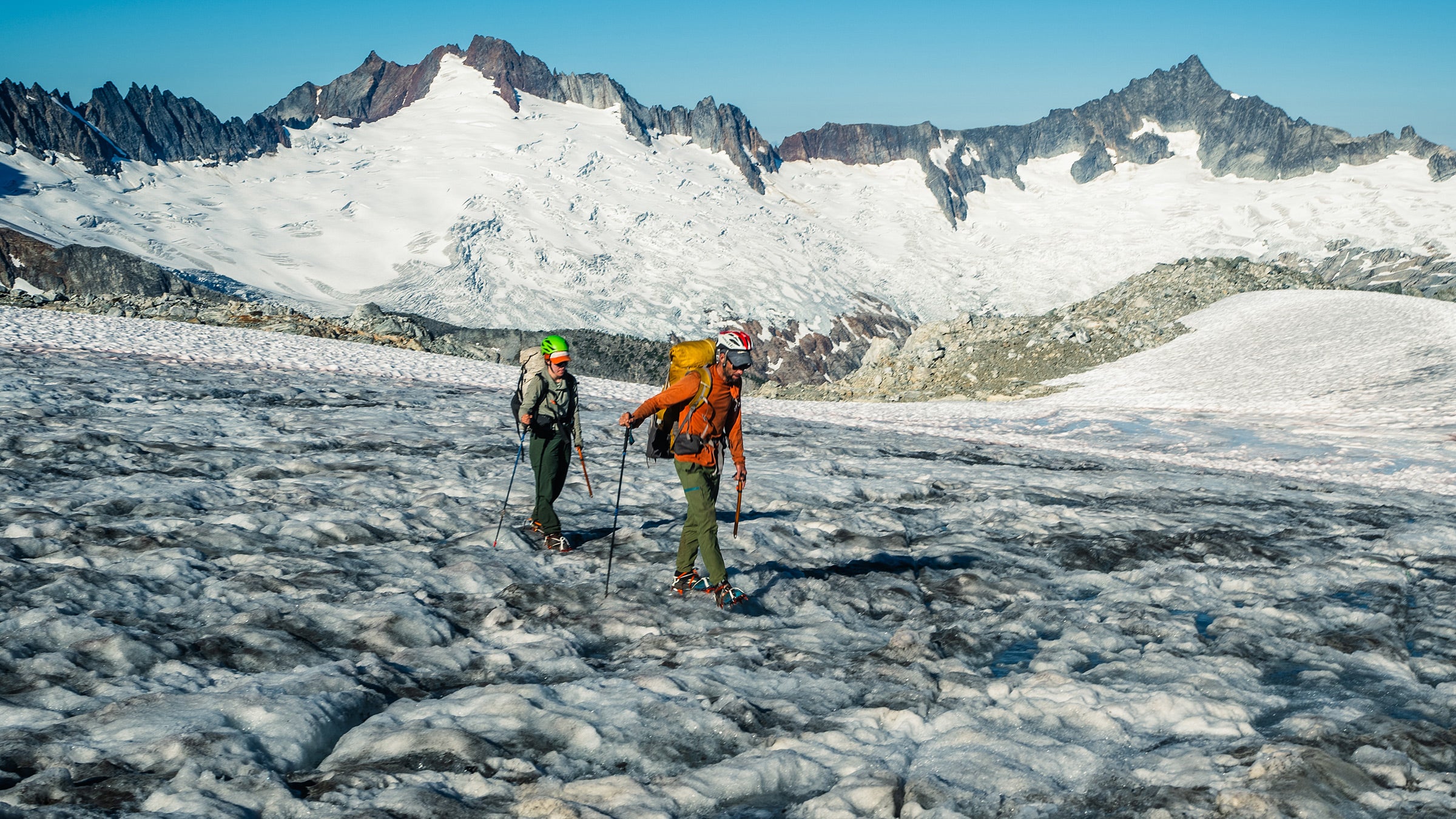
Langdon Ernest-Beck and Jeff Hashimoto spent the summer bagging peaks. (Photo: Langdon Ernest-Beck)
It had already been dark for several hours when Jeff Hashimoto began to fall asleep on his bike. It was Sunday, May 8, and Hashimoto was riding on a stretch of U.S. Highway 97 in central Washington alongside his neighbor, Langdon Ernest-Beck. The two were behind schedule. They had planned to return home on that evening, and now it was almost midnight on Monday morning.
“I’m like, ‘Langdon, I’ve gotta stop. I’m falling asleep on the bike. I’m going to swerve into the road or off the side of the road,’” Hashimoto told me. “And Langdon’s like, ‘You can’t fall asleep on a bike!’” As it turns out, you can.
Hashimoto and Ernest-Beck were 70-odd hours into a grueling weekend outing. They had biked 66 miles from their homes in Ellensburg, Washington, about two hours east of Seattle, to the state’s Enchantment range, where they climbed seven peaks and notched a total of 27,600 vertical feet. Now, they were exhausted, and they still had 30 miles left before they reached their beds. Eventually, Hashimoto began nodding off on the bike. The two weary climbers stopped and camped about 100 feet from the roadway on Blewett Pass. After some shuteye, they eventually rolled into Ellensburg just after Hashimoto, who teaches high school science, usually starts class.
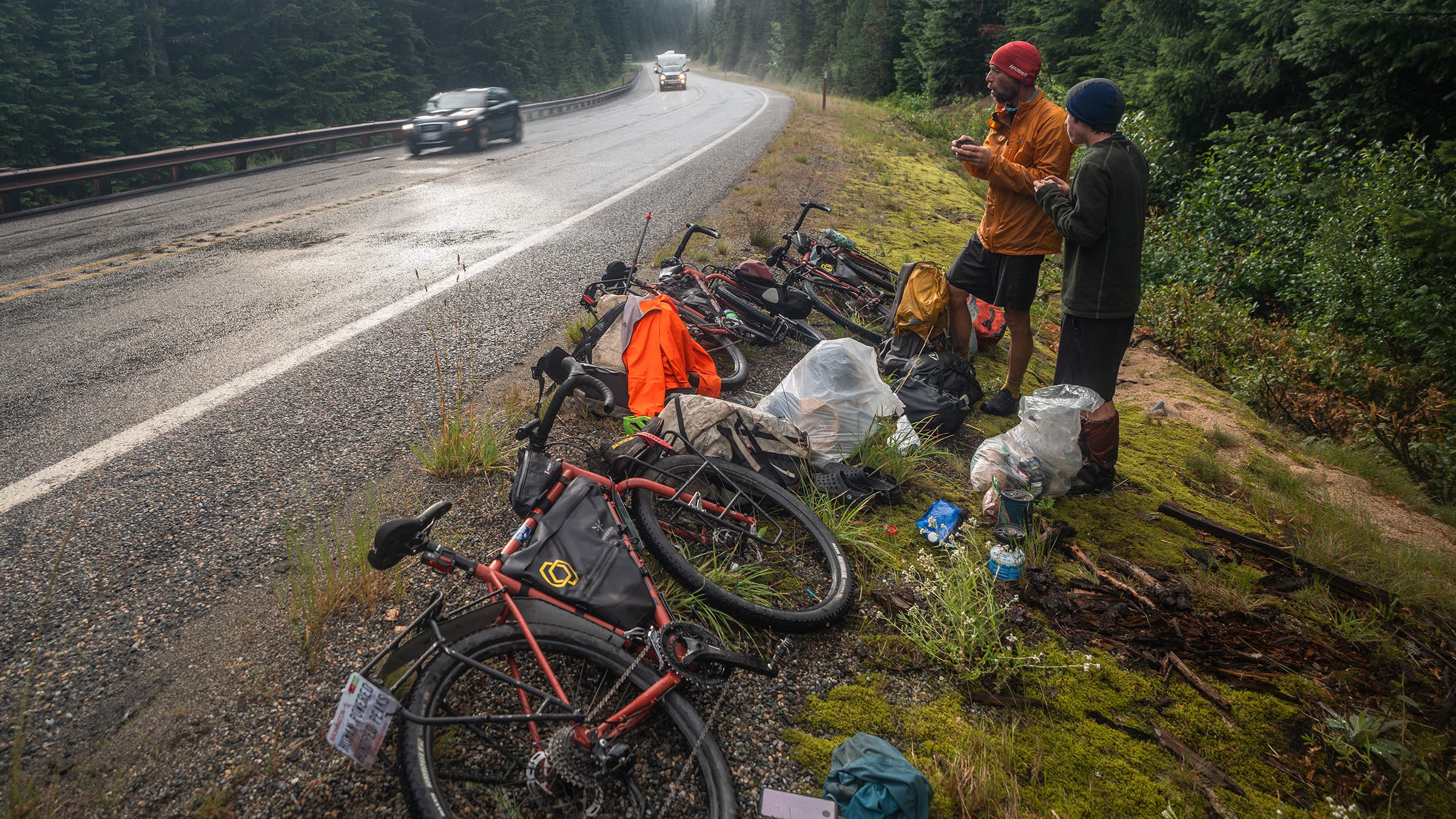
“Fortunately, it was state testing, so school started later for me on Monday,” Hashimoto said.
ADVERTISEMENT
That weekend outing marked the start of an epic peak-bagging adventure that would stretch the entire summer. Ernest-Beck and Hashimoto set out to become the first to climb 100 of the tallest peaks in Washington in a single season using only human power. The “Bulger 100,” as the peaks are known, were named for an informal group of mountaineers who were among the first to climb them. Just 92 people have ever completed them all, according to the mountaineering website SummitPost. Just two—climbers Jason Hardrath and Nathan Longhurst—have bagged them all in a single season.
The idea for a human-powered adventure was Hashimoto’s. At 52, he has spent much of his life in the mountains, and, like most people, has often burned fossil fuels to access them. With this trip, he hoped to plan a trek that “left no trace in the atmosphere.” In 2022, he scouted the route and began planning the trip.
A Tight Schedule for Climbing
The metrics for the proposed route were dizzying: 1,900 miles of cycling, 835 miles of hiking, and nearly 500,000 total feet of elevation gain to climb the 100 mountains.
Ernest-Beck, 23, is Hashimoto’s next-door neighbor and a family friend. Initially, he just wanted to film Hashimoto’s expedition for a documentary. But after tagging along to film a few scouting trips, he decided he wanted to complete the challenge, too. Eventually, he asked Hashimoto if he could join.
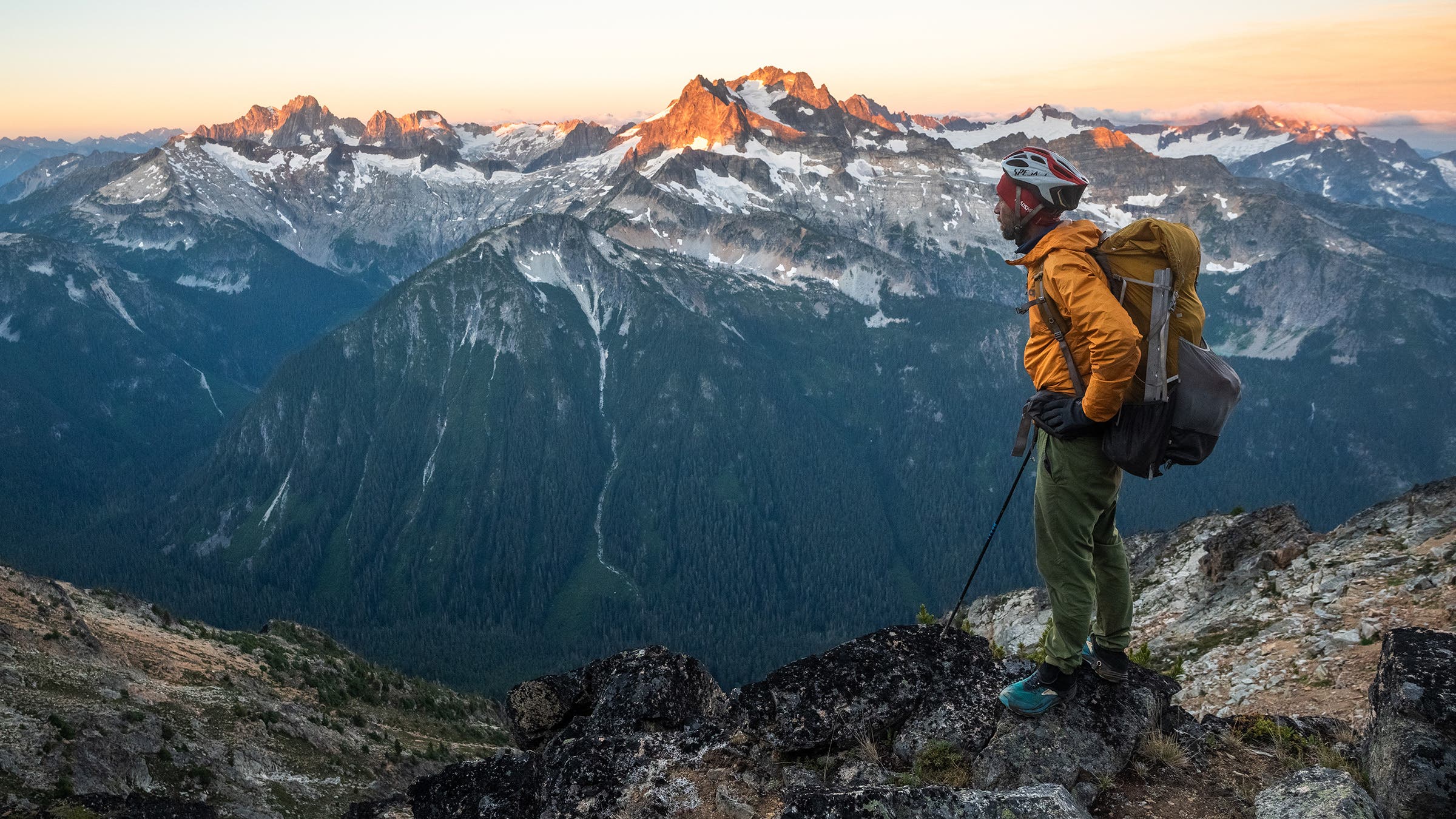
“He basically said that it was unrealistic,” Ernest-Beck said. Hashimoto was reluctant because Ernest-Beck had little experience in technical terrain. “Which was just a big motivator for me to get in shape and get really comfortable on exposed fourth-class terrain,” Ernest-Beck said. Hashimoto made a list of the various climbing skills Ernest-Beck would need to learn for the trip, and he spent the next year developing his strengths in the mountains.
ADVERTISEMENT
Neither Hashimoto nor Ernest-Beck had ever bikepacked before—a detail that did not deter them. Prior to their first trip the two acquired bikes, packed them, and went on a test ride. Ernest-Beck’s bike weighed a whopping 76 pounds the first trip. Meanwhile, Hashimoto loaded most of his gear onto his back. “We’ll see how that works today on our little adventure,” Hashimoto says in a video from the outing. “Tallyho!”
The two would need to stick to a rigid schedule to climb all 100 peaks and navigate work-life commitments. Hashimoto teaches science and coaches cross-country at Ellensburg High School, so he could only manage a few weekends of climbing prior to the end of the school year on June 19. Hashimoto then had only 62 days to complete the challenge. Prior to the trip, he and Ernest-Beck had calculated that the fastest they could complete the trip was 54 days. Come illness, injury, bad weather, or a deep need for rest, the eight-days buffer would have to suffice.
The two launched their adventure on May 5, when there was still plenty of snow in the Enchantments. The first peaks they targeted were Cashmere Mountain, Cannon Mountain, Enchantment Peak, McClellan Peak, Little Annapurna, Dragontail Peak, and Colchuk Peak. To Hashimoto’s surprise, Ernest-Beck not only held his own—he roared up the mountains.
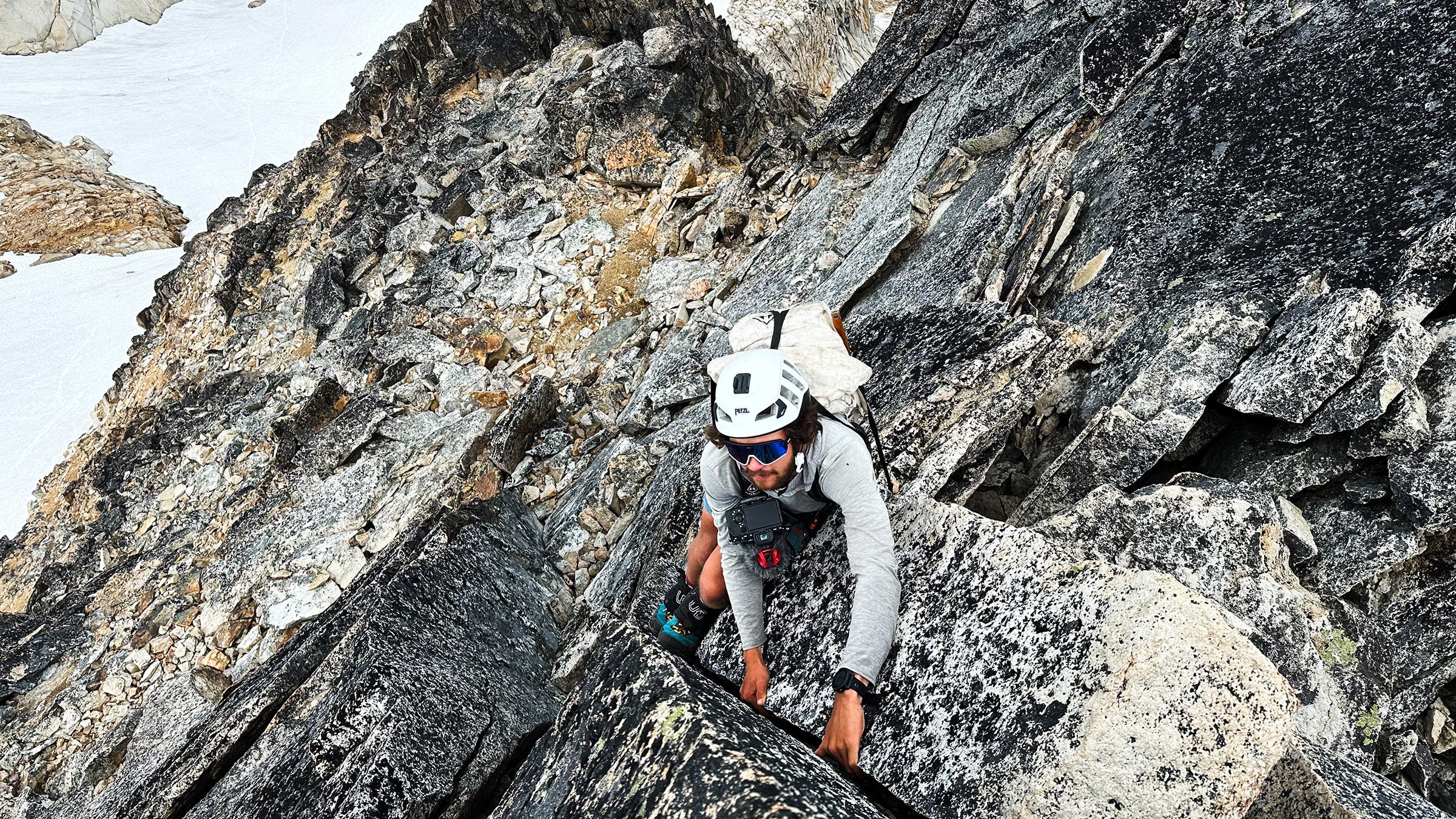
“I’m like, oh my gosh, Langdon is just kicking steps and I just have to follow, and he is still leaving me in the dust,” Hashimoto said. “And the other thing that Langdon is really good at is navigation. If Langdon’s in front, I just trust where he’s going to go.”
ADVERTISEMENT
After the first seven mountains, Hashimoto and Ernest-Beck then climbed Mount Stuart, Sherpa Peak and Argonaut Peak from May 20-21.
Challenges Along the Way
Ernest-Beck’s newfound aptitude, however, didn’t mean he was immune from mistakes. In a blog post from early in the summer, Ernest-Beck writes about a self-inflicted setback: “We figured out the hard way that if you leave a stove attached to the fuel canister without properly closing the valve, your fuel will be no more,” he wrote. “We had couscous and crunchy salmon for dinner with cold hot cocoa for dessert.”
Navigating the state’s roadways was also a challenge. Sometimes the duo had to ride much farther, or climb much higher on their bikes, than they had predicted, due to spotty online information about the forest service roads. Road surfaces were often rough. After climbing 14,411-foot Mount Rainier and 11,138-foot Little Tahoma Peak, Hashimoto lost his panniers after his bicycle hit a pothole—he had to stop and tie them back on. Often, the two lagged behind their expected pace on the roads.
ADVERTISEMENT
Prior to the trip, Hashimoto planned to climb for 12 hours each day and sleep for 9-10 hours each night. They quickly realized the schedule wasn’t practical.
“After the first couple of trips, it became very apparent that every day was going to be hard and that we were not ever going to be sleeping nine or ten hours,” Ernest-Beck said. “And the fatigue was just going to build.”
Hashimoto said he’s sometimes stagger out of the tent wondering if he had the strength for the day’s challenge.
“I’d think, ‘I’m going to climb a mountain today, or four mountains today?” he said. “I don’t think I can make it over to this log to go pee. But things would loosen up.”
ADVERTISEMENT
The duo hit a low point early when they climbed the Entiat Range from June 20-22. There, they encountered stormy skies and deep snow. Ernest-Beck ran low on calories while climbing. The seven peaks took them four days to climb—a full day longer than expected—and they got back to their bikes at midnight. From a diner in the town of Plain, just north of Leavenworth, Hashimoto called his wife.
“If every trip takes us 33 percent longer than planned, then I don’t know if we’re going to be able to finish it,” Hashimoto told her. “But Langdon was like, ‘Oh, no, I think we can do this.’”
Roaring to the Finish Line
The duo got a boost of energy when Hashimoto’s 23 year-old son, Uhuru, joined the expedition in June. He said he would climb with them for as long as his fitness would hold up, and eventually ascended half of the peaks with them. After that, the trio found a pace on the mountains and on the bikes that made their itinerary seem possible.
ADVERTISEMENT
They found other ways to increase their speed. Ernest-Beck figured out that he needed to consume 6,000 calories a day to avoid bonking. Meanwhile, Jeff and Uhuru focused on keeping morale high by singing songs from the 1980s. He woke his partners with the opening lines of The Proclaimers’ 1988 hit “I’m Gonna Be (500 miles),” and during climbs he would riff on Kenny Loggins’ “Danger Zone” with the lyric “Highway to the Bulger Zone!”
On most climbing days, they would summit between one and five peaks. When they got too fatigued to continue, the trio would sleep on the side of the trail for ten minutes or so.
“Your width of focus just narrowed the whole trip,” Ernest-Beck said. “At the beginning of the trip, I would text friends, and I went on a date. By the end, I was just doing the bare necessities to get through the day.”
Hashimoto said he was sometimes too exhausted to even say goodnight to his companions. “And then Uhuru would make these jokes, but I would have no recognizable response,” he said. “I’d tell him later, ‘I’m glad you made that joke. I was laughing on the inside.’”
ADVERTISEMENT
Despite the exhaustion, the trio found wonder in the peaks they ascended. “Every Bulger that I’ve climbed has a spectacular view and is in a beautiful place,” Hashimoto said. “Just by virtue of being that tall, it’s going to be pretty scenic.” They pedaled up the great river valleys that drain the Cascades. A motorist might speed through these landscapes in a half hour, Hashimoto said, but under pedal power, they noticed waterfalls, giant cedar trees, and wildflowers.
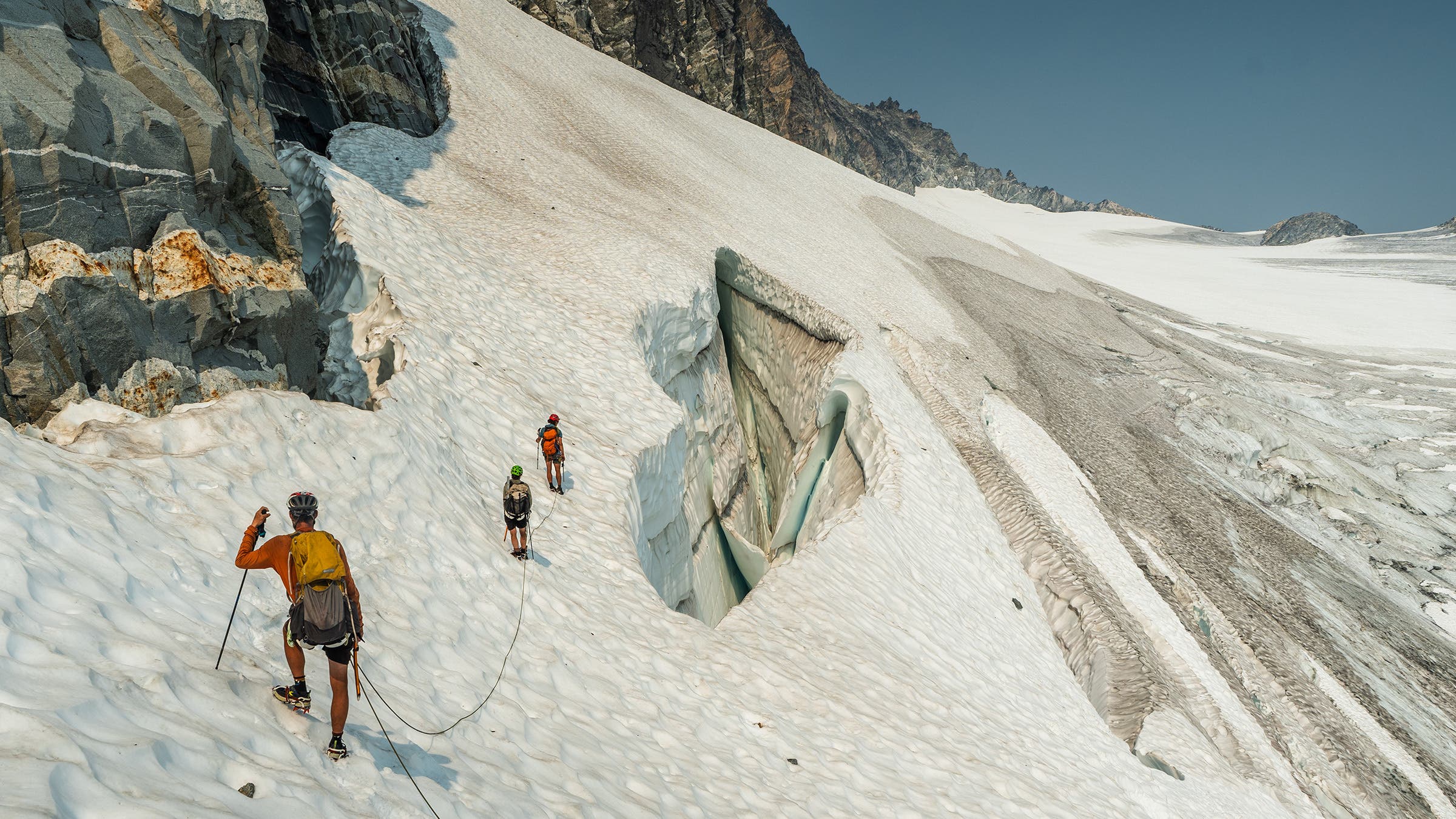
Their journey also demonstrated how climate change is affecting the terrain. Ernest-Beck noted how fast the glaciers were melting. “It’s amazing how big these glaciers are, and how much ice there is, and yet the current conditions are so far from what could possibly produce them,” he said.
According to the Washington State Department of Ecology, glaciers in the North Cascades have lost between 18 and 32 percent of their total volume since 1983. As they climbed, the trio found a moraine-bound lake where a 1970s topo showed the tongue of a glacier. Where their Fred Beckey guidebook described an easy-to-ascend snowfield, they saw a steep and rocky chute.
They climbed the final Bulger, 12,281-foot Mount Adams, on August 18, just three days before Hashimoto had to oversee a cross-country running camp, and 105 days after starting the adventure. Visibility was poor and they wandered off route, but managed to find their way to the top. The trip wasn’t over—they still had to ride back home. The three pedaled back to Ellensburg separately and without ceremony. Jeff Hashimoto added a 22-mile detour to attend a wedding, while Ernest-Beck sought out a shortcut.
ADVERTISEMENT
When Hashimoto finally got home, he filled his gas tank for the first time since spring.
