Published December 22, 2025 07:02AM
What I Learned After Spending 14 Hours at a Suburban Ice Rink
A full day inside a suburban rink revealed how one place can hold ambition, grief, faith, and escape—sometimes all at once.

(Photo: Rubberball, Getty)
At 6:57 A.M., 64-year-old ice rink owner Ed Schroeder seems almost impossibly awake.
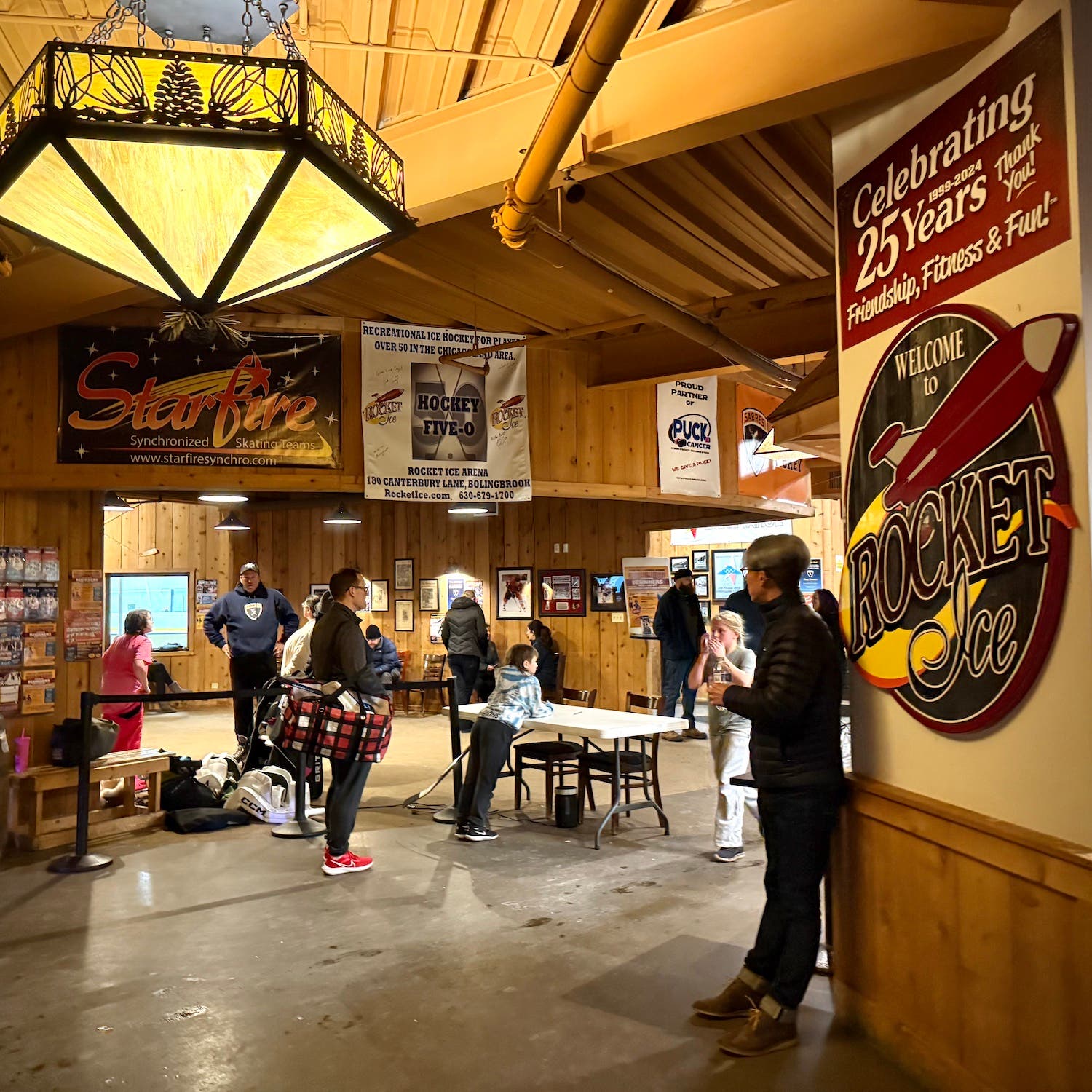
His family business, Rocket Ice in Bolingbrook, Illinois, is still mostly empty, but he greets each staff member and the first sleepy-eyed skaters with a booming voice that fills the space. “SKATE HARD!” he tells a long-haired kid dragging a hockey duffel the size of a body bag. “YOU’RE DOING GREAT!” After they pass, Ed lowers his voice and grabs my arm, guiding me toward a crackling fireplace in the lobby. “That’s what’s missing at most rinks,” he tells me. “Warmth. It’s all too darn cold.”
Ed’s a warm guy. Warm and active. He loves pheasant hunting, dancing all night at weddings, and riding horses with his wife, Sue. “In my prayers,” he says, “I hear God saying, ‘Ed, you need to be physically fit so you can be a good role model. Your grandkids,’”—he has six—“’need to see you water-ski.’”
ADVERTISEMENT
Family, fitness, and fun are the goals of Rocket Ice, but they’re also, Ed tells me, his code words for God’s love. He points through glass, wiggling his finger, toward a hockey coach snapping a puck to the long-haired kid. “You see that?” he tells me. “That’s God.”
That’s also Doug Bosse, dad of three, who’s been teaching hockey lessons here for five years. He’s not a morning guy, but if a kid wants to get up at 6 A.M., who is he to object? He knows what it’s like to love the game.
Skate hard enough, for just a while, and your trouble almost goes away.
Myself, I’m at the rink today, at the crack of dawn, with a mission: to stay here open to close, learning people’s stories. I’ll interview as many rink rats as I can, asking why they skate. Their answers will run the gamut.
To be free, I’ll hear again and again.
To feel close to his dad, who died.
To become a person I like.
To forget what he’s done, or what’s been done to him—or maybe they’re the same thing, which is the kind of question that keeps you up. Another night staring at the dark. But skate hard enough, for just a while, and your trouble almost goes away.
ADVERTISEMENT
One of the day’s first skaters is Constantine, a prodigious, floppy-haired 11-year-old who’s working on his triple salchow. He’s accompanied by his mom, Anna, who speaks to him in Russian, watching as he laces his skates. (Generally, kid skaters seem more awake than their parents in the morning. “Whose idea was it to come here?” I ask another mom. She rubs her eyes: “Certainly not mine.”)
Constantine will skate twice today: once before school, and once after, and if he gets some time in between, he’ll go fishing at the lake by his house. Fishing gives the day some balance; unlike skating, it’s out of his control. Constantine enjoys each catch, he tells me, sitting straight up with his hands in his lap, because he never knows: “It could always be my last fish.”
That seems a preternaturally mature sentiment for an 11-year-old, but Constantine is generally preternatural: skating is his purpose, he says, and he likes having a job. He’s been a national champion twice, at the pre-juvenile and juvenile levels, and his goal this year is to make the national development team, which would mean attending a special camp with Team USA. Does he have a skating hero? Negative. But, he allows, he admires two-time Olympic gold medalist Yuzuru Hanyu’s work, particularly Hanyu’s jumps and his ability to recover after he falls. “It’s really beautiful skating to watch.” The better you get at skating, Constantine tells me, the more it feels like you can fly.
ADVERTISEMENT
Across the lobby, a young woman paces in. Twenty-one-year-old Jayna Holman is a full-time competitive skater, and along with Constantine—the two of them grace posters throughout the lobby—she’s Rocket Ice’s crown jewel. She has impeccable posture, clean-girl slicked hair, perfect makeup, and such a sweet, open smile that I want to give her a hug.
Jayne sticks to the same routine each day: she gets up at 5:30 A.M., drinks hot lemon water, does her hair, picks her skating outfit (today: brown turtleneck, black leggings, gold necklace, and small gold hoops), drives an hour to the rink, trains, cooks, journals, takes a bath, and gets back to bed by nine. I ask, what would surprise people about her? “I’m a perfectionist,” she says, which would surprise nobody, but she shares it like a confession.
Jayna remembers when she realized she was special, after a Christmas show one year as a kid. She stepped off the ice and “so many people came up to me, congratulating me. They had to see something, right?” Then, when she was nine, she had an undefeated season, and she understood that skating’s what she’s meant to do. When Jayna walks through the rink doors, she feels fulfilled. “When I’m in here, I can be a person I’m proud of.”
ADVERTISEMENT
How does it feel to know that every other skater looks up to her? I ask. Is she kind of a unicorn? Jayna nods. “This sport can be very lonely,” she tells me, but solo doesn’t mean alone. Like Ed, she feels God on the ice. She prays in her head while she’s training, and in competitions, too, calming her thoughts before each jump. “Each element I do is part of God’s plan for me,” she says. “I rely on the fact that I’m never alone.”
Once she’s skating, Jayna’s face hardens, a steely concentration that seems to fall over her the instant she steps on the ice. She accelerates hard with one hand on her hip, then lifts into a floaty double lutz that she seems to execute without noticing, as if brushing hair from her face. A minute later, she lands a double axel with one arm swinging up, a split-second’s waver before steadying out. She’s added to her outfit: she wears baby-pink gloves. The other skaters watch her while they rest.
Mid to late morning, the Chicago Warriors, a disabled veterans hockey team, start to trickle in. The youngest guy on the team is 25, bright-faced. The oldest is 67. He’s slowing down, so he doesn’t do tournaments, but he still joins every practice. The others try not to hit him in the head.
Three of the Warriors sit with me to talk. Bryan’s slim, with a gray beard and a faded Carhartt hoodie. He speaks slowly, taking deep breaths. “The kids who join the military,” he explains, “aren’t the kids who are level off. It’s the kids who had abusive parents, alcoholics, poverty situations.” Bryan grew up in Hell’s Kitchen in the eighties. It was a rough neighborhood, and his family didn’t have money. His savior was playing street hockey every day. Or at least, it was until he enlisted.
ADVERTISEMENT
“The military breaks people,” he tells me. “They have to. A well-adjusted human isn’t going to shoot someone. They have you thinking, I want to go home. I want my friends to go home. So you have to do awful shit to make that happen.”
And what can he do now? He’s missing a chunk of lung the size of his fist from the burn pits in Iraq; he expects to die 15 years earlier than he should. “You’re fine,” his superiors told him. “You won’t get sick.” After lies like that, what else in life can he trust? And all he’s been trained for is to shoot a moving target. He drove a tow truck when he got back, a dangerous job, because danger was one thing he knew how to do. When he found the Chicago Warriors, hockey saved his life all over again.
“The team’s an alternative to suicide,” I say, and all three men nod in agreement.
ADVERTISEMENT
Duke’s the youngest. He was a combat medic, and now he’s a student, going to grad school for healthcare administration. School’s been a shock to his system. Is he ahead of his peers, or behind? He feels behind. His friends have girlfriends, jobs. They’ve never left home. They look to him for excitement, stories from the world, and what’s he gonna say? There are things he doesn’t talk about. His hockey teammates are the ones who understand.
Mark’s 60 and a Green Beret. He’s missing a third of one lung and a quarter of the other. He was in a bad way a month ago, he tells me, and he called Bryan.
“All he said was, can I come over,” recalls Bryan. “I was at his house within ten minutes.” Anyone on the hockey roster calls and needs help, whether they’re going to drink themselves to death, swallow pills, or just put siding on their house, and he’s there. Even the guys he’d like to punch in the mouth… Bryan sighs. Even if they call, he’s there. They’re dicks, but he understands why.
It helps that hockey is violent. It’s a place you’re allowed to get mad. “This way, it’s not coming out as road rage,” says Bryan. “It’s not yelling at your son too much.” The Warriors are relatively calm, actually, for a hockey team. They know what can happen when they let go.
ADVERTISEMENT
Their disabilities affect their hockey, for sure. Their bodies are “busted,” with bad breathing and bad knees, feet “jacked up.” Bryan gets frustrated that he can’t skate as well as when he was young. Mark has to talk him off the shelf sometimes, when he gets caught in the past. “Sure,” Mark tells Bryan. “And I used to be able to jump out of planes. There are a lot of used-tos.”
So now they try to make some good in a world they can’t trust. They help out with hockey games for blind skaters—players use a big puck with a rattle inside it—and Deaf hockey, which has lights around the rink that flash when someone blows a whistle. They teach kids with cancer to skate. They push themselves, too: they won a tournament in Vegas in 2018.
As we’re talking, some firefighters walk into the rink, coming off a multi-day shift. Bryan grins and stands up. “Let’s beat them,” he says. “They’re six or seven deep.”
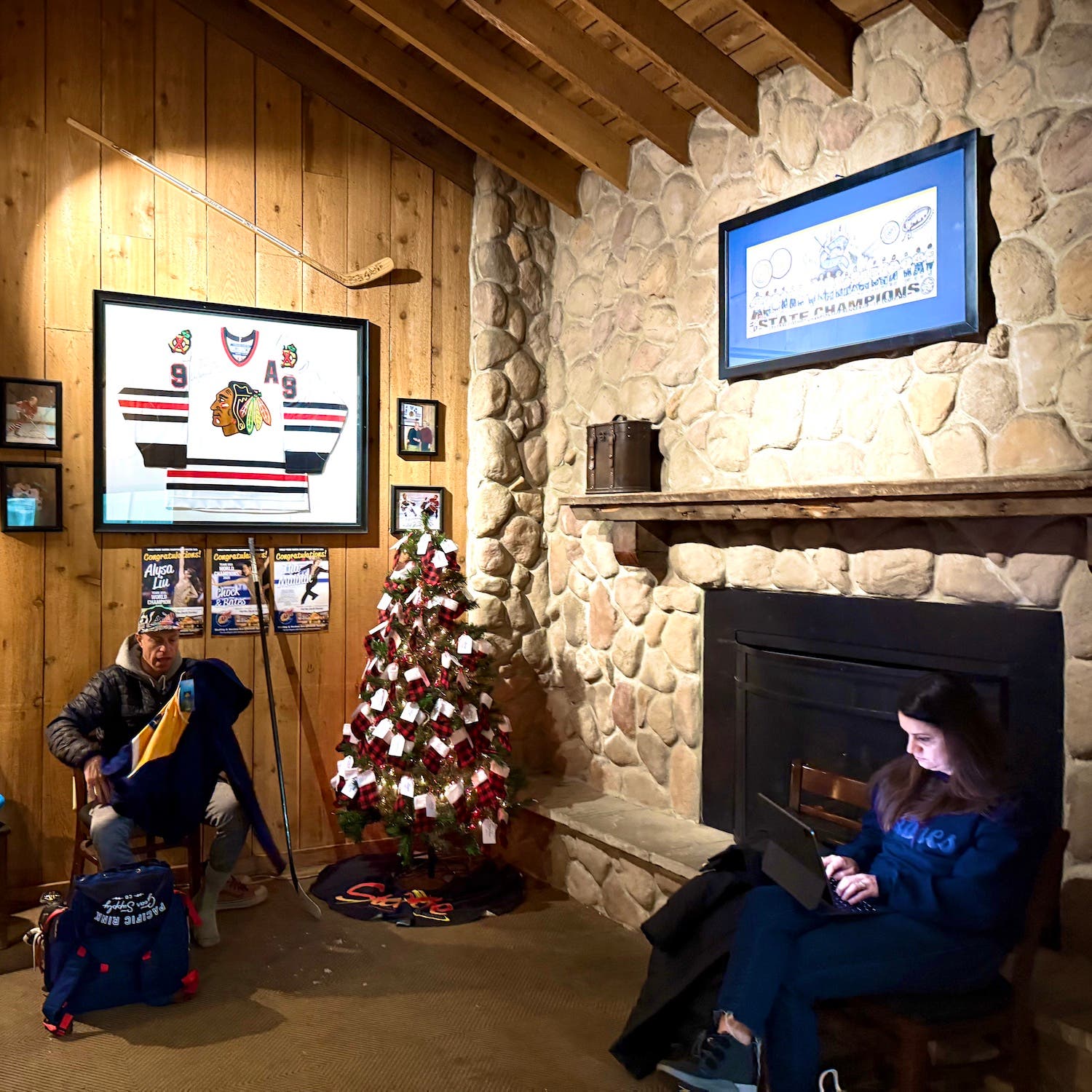
By early afternoon, more figure skaters stop by the fireplace to put on their skates. They’re muscular, spandexed, long. Even the short girls are long. They pull on firm skates with thick tongues, yanking the laces so tight that they hiss. Soakers and butt pads litter open suitcases around the floor, and a fourth-grader jumps rope one-footed in the corner, left knee in the air like she’s about to land a jump. Some of the kids are home-schoolers, come for gym class. The air smells like perfume and soap.
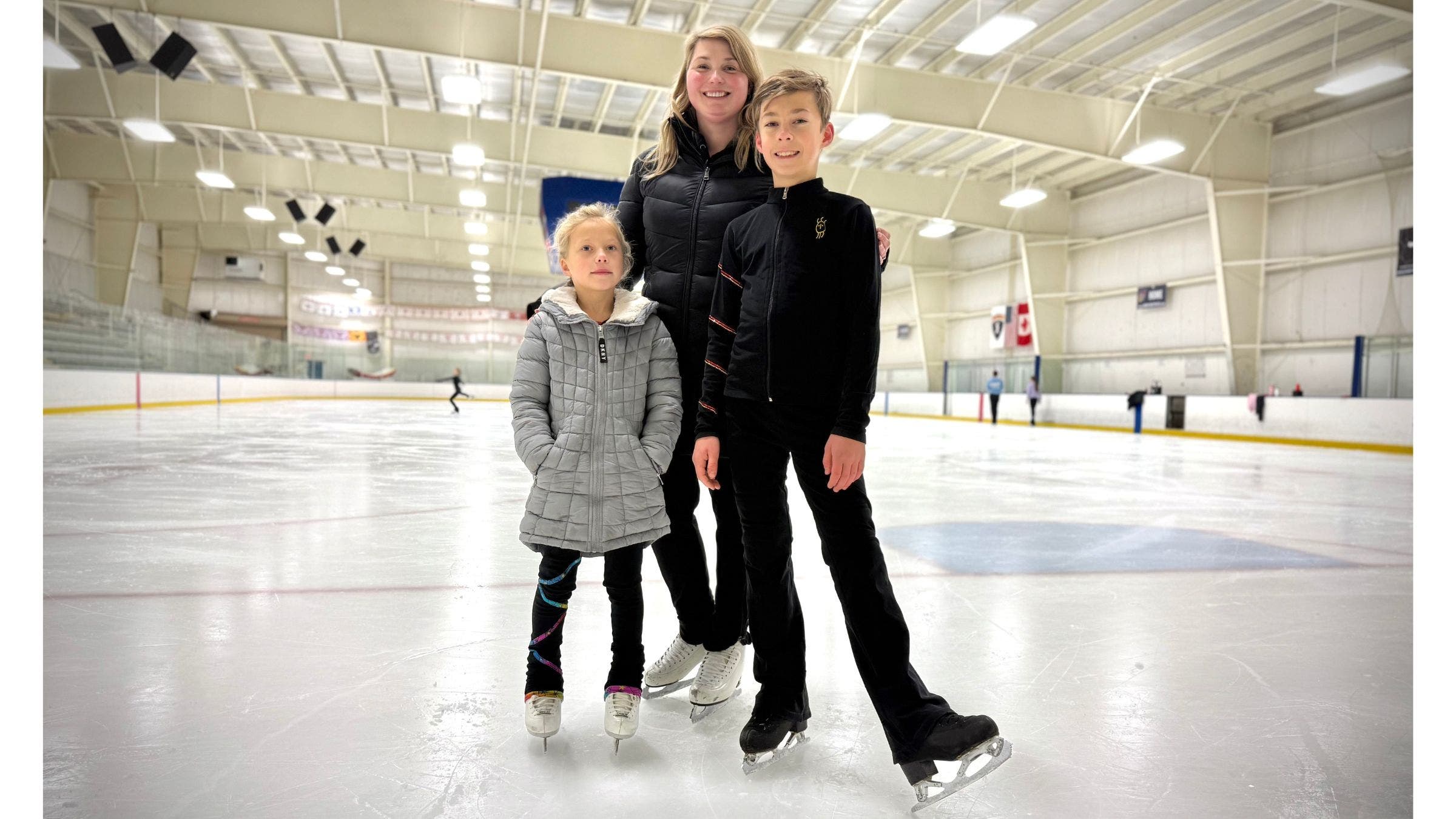
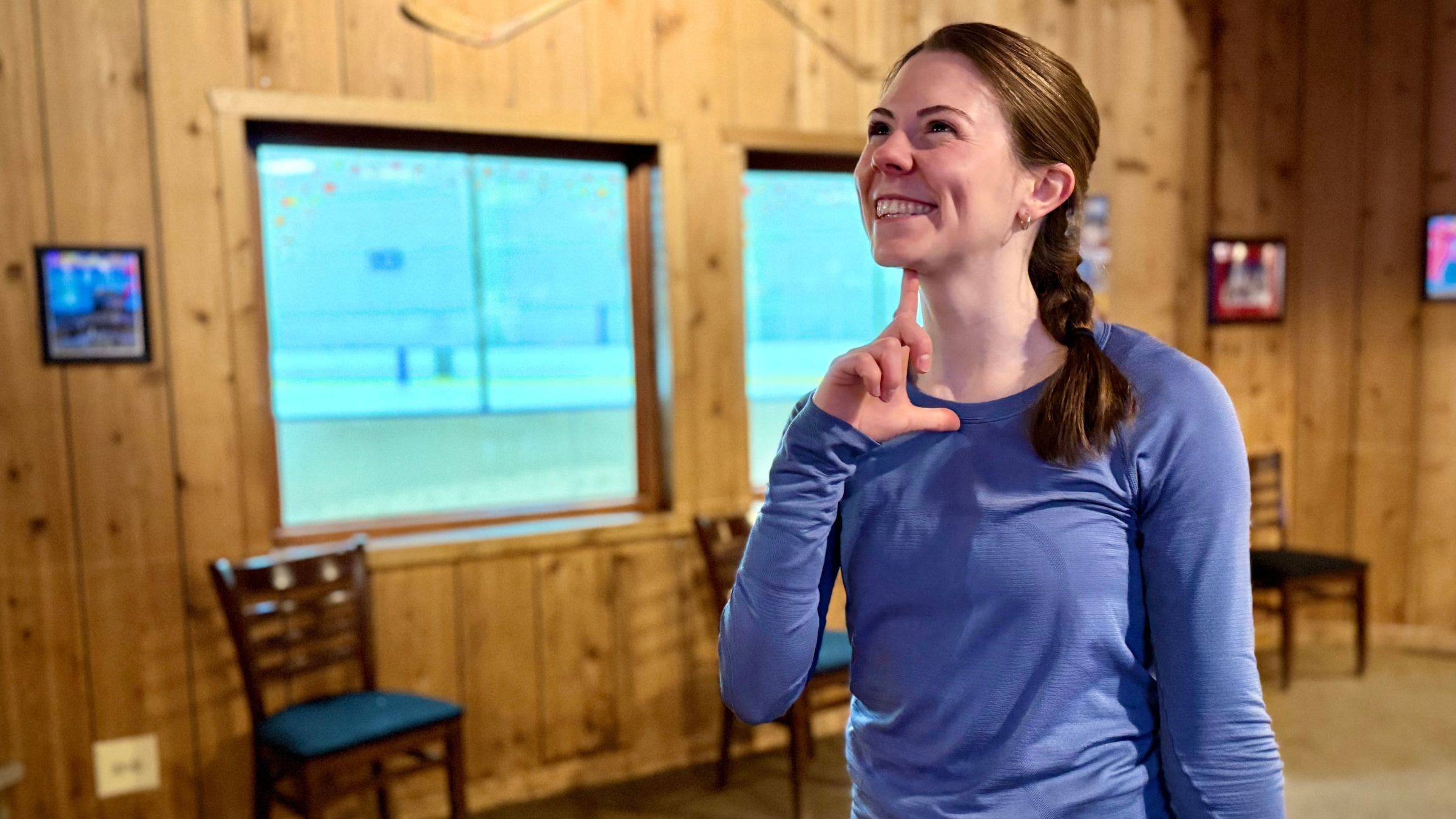
In one corner of the ice, a coach, Katie, works with an adult student who’s learning spins. Katie’s been skating at Rocket Ice for 25 years, and coaching for 17; her first students are coaches now themselves. At her other job, she’s a surgical tech, passing instruments and retracting organs during C-sections. That feels like work. This doesn’t. She skates seven days a week. When I asked her, earlier, why she comes here, her eyes softened. “It’s the feeling of being free,” she said. Now she hops with excitement as her student nails a backspin, shoulder and hip snapping back in tandem, pulling her into a quick rotation that she breaks with a lift of her knee.
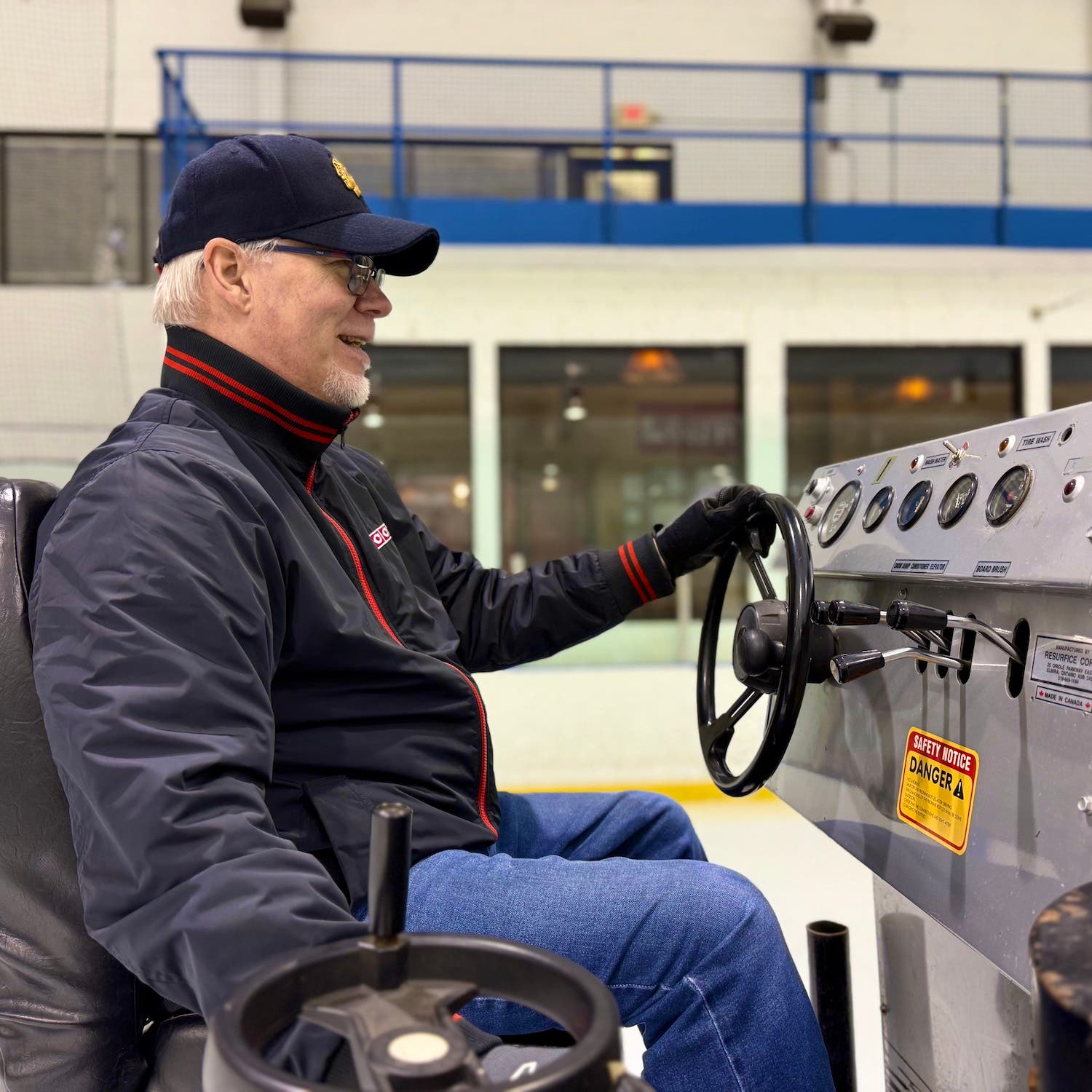
At three, I meet the Zamboni driver, Emmet, for a ride-along. He climbs smoothly into the seat of the machine, gesturing for me to climb after. There’s no second seat, so I cling to a water tank, which lifts abruptly as the machine rolls onto the ice. “Promise,” says Emmet, “that you’re going to hold on.”
ADVERTISEMENT
Driving Zambonis put Emmet through art school 40 years ago, he tells me, as we glide around the rink clockwise. “Some of my friends are master painters now.” After art school, he did graphic design for decades, working for a minor-league baseball team and designing signs for amusement park rides. Then COVID hit and he lost his job. “Things got bad,” he tells me. “You know how bad things get.”
He’s a Disney geek, so he hoped to work for Disney, but how could he move to Anaheim when all his roots are here? Rocket Ice is five minutes from his house. He never thought he’d be clearing ice again, but here he is. Plan B. This place saved him. “You gotta survive.”
The kids who work here—when Emmet says “kids,” he means twenty-somethings—reminded him how to drive the Zamboni, though it hadn’t much changed in half a lifetime. This machine’s from 1998. They have electric ones now, and self-driving, which isn’t great for Emmet’s job security. But then again, he’s already 63. Actually, he tells me, this isn’t even a Zamboni. It’s an Olympia, the company’s main competitor. He’s a Zamboni man himself, but he’ll drive an Olympia, too.
ADVERTISEMENT
They work the same, basically. There’s a steel blade at the bottom, like a giant razor—“or a Samurai sword,” Emmet offers—that shaves the surface of the ice, with augers on each end that drag snow up into a dump tank. The tank empties post-ride into a huge grate in the floor. Hockey players cut more, so Emmet shaves deeper. Figure skaters poke the ice with their jumps, so you don’t have to shave as deep; water will work for you, filling in the holes.
When Emmet leaves at 4:30 P.M., he’ll go back to his other work, designing for a minor league baseball team called the Joliet Slammers. It’s owned by Bill Murray. He does volunteer design work, too. Actually, he ran into Mark from the Chicago Warriors earlier today and offered to help them if they want it. Maybe they will.
She was lifted in the air by her teammates, arms and legs straight out in what’s called a clown lift, before a rink’s glass wall that overlooked the snow-covered Alps. Who’s lucky enough, in this life, to experience freedom like that?
We circle back to the edge of the ice, and the tanks lower with a jolt, almost throwing me off. Already kids are flowing back on with their coaches, pushing goals, ready for stick and puck.
ADVERTISEMENT
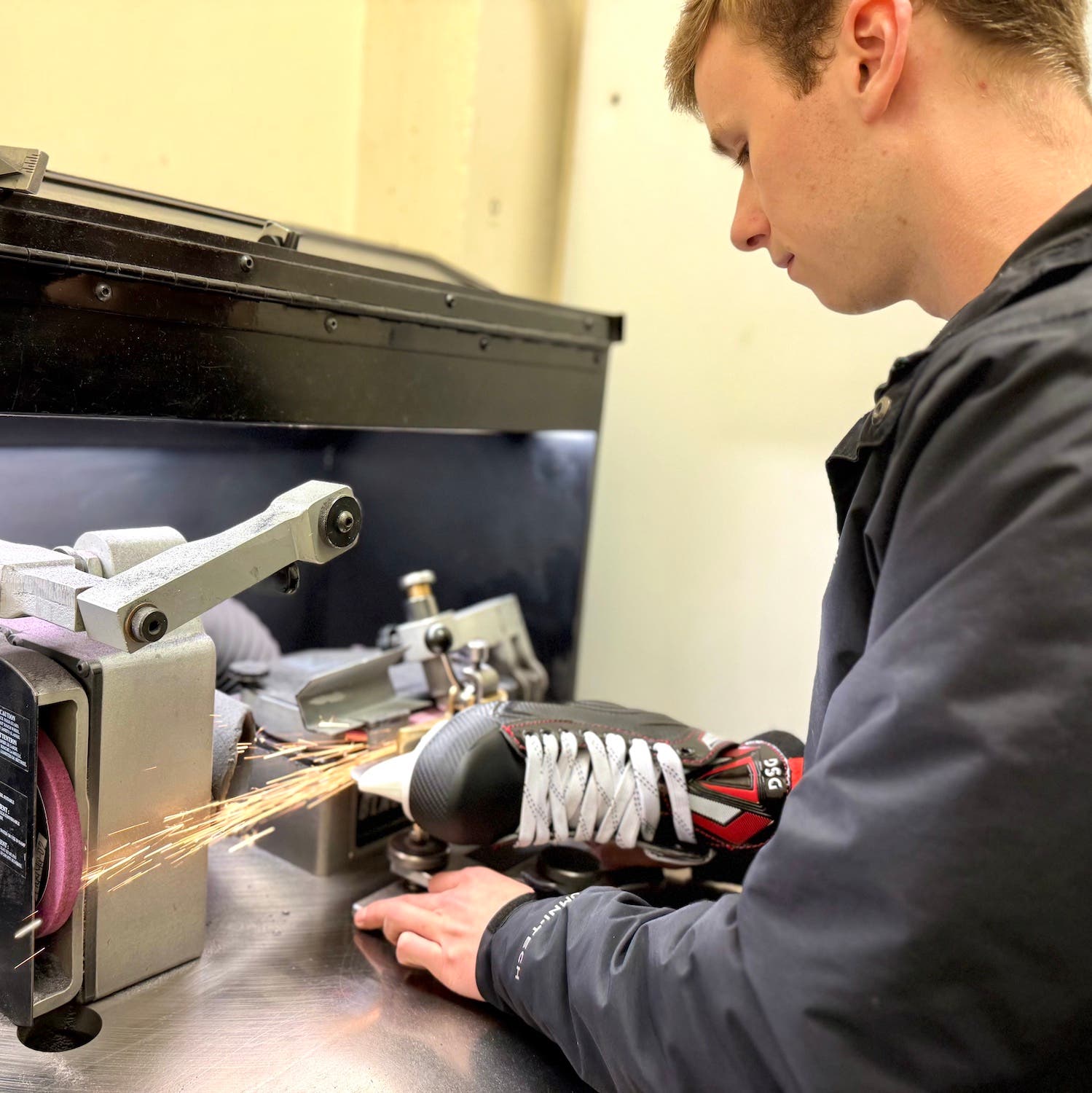
Out by the lobby, one of the managers, an extremely polite young man named Liam, is sharpening a new pair of hockey skates for a kid. Liam started working at Rocket Ice’s concession stand in high school, but now he’s an Olympia driver and does maintenance with Paul. He went to the University of Iowa for computer science, just graduated this year, and he wants to get into cybersecurity, but it seems like every entry-level job requires five years’ experience. He might join the Geek Squad for now. Get it on his resume. Emmet calls Liam Tinker, because he can fix just about anything around the rink. It’s a Disney reference, but Liam doesn’t know that. Mostly, it’s a private joke for Emmet himself.
Liam’s careful when he sharpens, fine-tuning the grinder and reading the orange sparks it spits out. He triple-checks the angle of the blade, moving slow. He doesn’t skate much himself, but he likes his hobbies to be done right, so he knows the skaters will, too. Liam’s main hobbies are building his home computer lab and collecting records. Records are expensive, so his collection’s not that big yet. But over time, he hopes, it’ll grow.
Late in the day, the rink gets busier. Kids coming after school. Parents bringing them after work. The synchronized figure skating teams start practice, and coach Chiara directs young students in pinwheels, watching intently as they rotate arm in arm. One girl stumbles, breaking the chain, and skates hard to reconnect.
Chiara doesn’t mind when kids stumble. She’s taught her students to clap for each other when they fall in routines and get back up, and now they do it independently, calling out each other’s rebounds even more than their triumphs. Before they go on the ice, she holds out an invisible bucket—Coach Chiara’s Worry Bucket, the kids call it—for them to toss their worries into. Then she drop-kicks the contents into a closet, or dumps them theatrically over the boards. There’s no room for anxiety on the ice. “All that should be left is excitement.”
ADVERTISEMENT
Chiara used to be on this same team herself. She was a super-girly kid; she loved dresses and anything to do with sparkles. Skating fit the bill. Eventually she worked her way onto synchronized Team USA, competing in Scotland, Italy, and Austria. That’s where she had her favorite skating moment ever: she was lifted in the air by her teammates, arms and legs straight out in what’s called a clown lift, before a rink’s glass wall that overlooked the snow-covered Alps. Who’s lucky enough, in this life, to experience freedom like that? The moment’s always stayed with her. Maybe it’s part of why she still coaches, on top of her other job as an art therapist. Or maybe the two jobs aren’t too different after all. They’re both about helping kids with their emotions, guiding them into a state of flow. One practice after another.
Trainings go late into the evening. Freestyle, synchro, stick and puck. Waves of kids come and go, little siblings scrambling behind. Parents check their phones, stretch, read, and gossip, clutching hot Dunkin’ cups in their hands.
Between sessions, Liam cleans the ice with the Olympia. A little boy with a mullet waits at the edge of the boards. He’s barely tall enough to see; he stands on his tiptoes, pressing his nose to the tempered glass. When the machine passes, the boy looks up at Liam, and for a moment their eyes meet. Liam smiles. Then, with a whoosh, the machine moves on, leaving a glassy trail. The boy steps back, leaving fog on the glass. It’s almost his turn on the ice.
