Published June 17, 2020 12:00AM
Sponsor Content: TakeMeFishing
If you buy through our links, we may earn an affiliate commission. This supports our mission to get more people active and outside.Learn about Outside Online's affiliate link policy
Everything You Need to Know to Start Fishing
Where to go, what gear to buy, and all the other info you need to get into fishing today
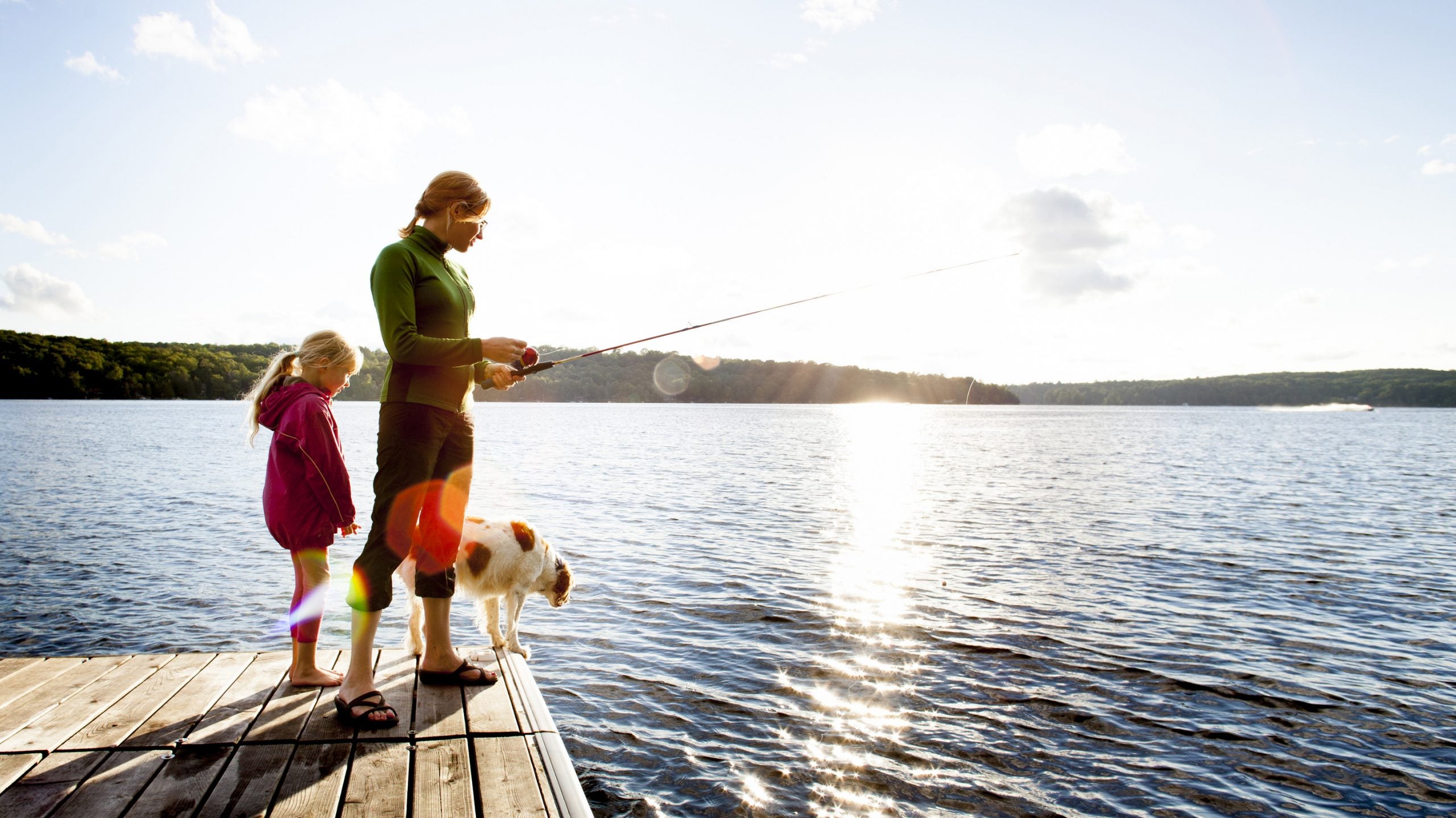
Mother, daughter and dog fishing from a dock on a quiet cottage lake.
One of the best things about fishing is that it can challenge and reward you for a lifetime. There’s always another species to outwit, another body of water to explore, another skill to master. It's also a great way to spend quality time with friends outdoors and get a big dose of all the positive benefits of simply being outdoors. But because fishing is so varied and nuanced, it can be tough to know how to break into the sport.
Where to start? Patrick Mapes, founder of Urban Angler USA, a blog that highlights how accessible and close-to-home fishing can be, suggests spin casting. “The gear is easy to use and inexpensive.” Here’s everything you need to get going.
Is It Safe to Fish Right Now?
The short answer: yes. But how and where you can cast a line will vary from state to state and city to city. Rules and closures are continually evolving, so be mindful of updates from your local governing bodies. TakeMeFishing.org has the latest guidance on fishing responsibly during the pandemic, along with links to the most current state regulations.
Which Rod Should I Buy?
Spin-cast combo sets, which match the reel with the rod to eliminate any guesswork, are a great place to start. They work in a variety of freshwater situations and are great for catching small fish like crappie, trout, and certain bass. Combo sets are also inexpensive and easy to use, with a simple thumb trigger and handle for recalling the line. And don’t mistake their simplicity or low price for signs of a lesser product. “I’ve caught some of my best fish on combo sets,” says Mapes.
What Else Do I Need?
In addition to the rod and reel, you’ll need a few simple and affordable supplies, some of which you probably already own.
- Long-nose pliers make getting hooks out of a fish’s mouth easier.
- Nail clippers are the best tool for snipping and trimming fishing lines.
- A rubber net is best for landing your catch, especially if you plan to release the fish. (Rubber netting is much gentler on fish scales than thin nylon netting.)
- Tackle: the catchall term for important bits like hooks, bobbers, and weights, which you’ll need in a variety of sizes depending on the fish you’re luring. Rather than trying to assemble the right mix of tackle from scratch, make things easy by snagging a pre-assembled starter pack.
- A place to store everything. A purpose-built tackle box will keep everything neatly organized and accessible, but household containers and a backpack will work too.
- A bucket if you’re fishing with live bait or plan to keep what you catch. Plus, a bucket also makes a good seat if you’re fishing from the bank of a river or lake.
- A fishing license: All the info you need to do so is here!
Which Is better—Live Bait or Lures?
They both work. Generally speaking, locally acquired natural bait, because of its familiar texture, odor, and color, is going to be the most effective option. But the important thing is to match the current diet of the fish you’re seeking, and a conversation with a local guide or outfitter is always a good way to determine the right bait for the job. (Some areas, we should note, allow you to fish only with lures.)
Of course, the internet is a massively helpful resource here as well. For info on the bait other anglers have used to catch fish in your area, check out Take Me Fishing's interactive map. Live bait, like worms, minnows, and crickets, can be your best bet and are easily found at the local tackle shop (or your backyard). The only tricky part of using live bait is keeping it alive and on your hook when you’re casting. And keep in mind that people have tossed out corn and bread for centuries and caught fish.
If you go the lures route, the choices are seemingly endless, from the neon-colored Power Bait, which is a gummy substance you mold into a ball, to faux frogs that swim like the real thing as you reel. If you don’t know where to start, consult local guides and regulations to get your bearings.
How Do I Find a Good Fishing Hole?
As with choosing the right bait, the best first step to finding a good spot to fish is to ask your local outfitter or bait shop for recommendations. Take Me Fishing's map is also handy here too: it uses your GPS location to find fishing holes that local anglers frequent, and it also lists other fishing-related resources—bait and tackle shops, boat ramps, and more. Regardless of whether you have inside beta or not, the key is to get out and explore the water near you. “Try out your local waterways and see what you find,” Mapes says. “Don’t overlook anything. Any park pond or stream, there will be something swimming around in it. There are fish everywhere.”
When’s the Best Time of Day to Fish?
Whenever you have the opportunity. But if you’re looking to increase your chances of success, fish in shallow water tend to look for food early in the morning or late in the day, when it’s cooler, while deep-water fish do most of their nibbling in the middle of the day.
Do I Need a Boat?
Not necessarily. Fishing from a boat is great (more on that below) but you can’t beat the simplicity and convenience of dropping a line in the water from shore. Also, fish love the cover found on the edges of lakes and rivers, like docks, boulders, and trees. You can fit everything you need for a bank-fishing adventure in a small backpack, making it easy to keep a basic fishing “go kit” packed in your closet or car so you can pounce on the opportunity to fish when it pops up.
But Boats Are Cool.
They sure are, and fun, too. Here are a few things to keep in mind as you consider which might be best for you.
- Canoes are the classic watercraft and have been used for centuries, but for the most part, they take two people to operate. Casting and reeling in a fish from a canoe can take some practice as well, since the boats tend to be tippy.
- Kayaks are also popular, and many manufacturers even make fishing-specific rigs driven by foot pedals that allow you to cast and move at the same time.
- Stand-up paddleboards (SUPs) are also growing in popularity with anglers. In addition to adding an element of balance, SUPs put you higher above the water, giving you a vantage point that often makes it easier to see deeper into the water.
- Motorboats come in all shapes and sizes, of course, from small and affordable aluminum boats to multi-purpose boats that also allow you to waterski or cruise with the family. Whatever you decide, make sure it's registered in your state.
Regardless of the watercraft you choose, remember to pack the proper safety gear (chief of which is a personal flotation device), create a “float plan” detailing where you’re planning to paddle and leave it with someone close to you, and invite a partner to join you (in his or her own boat, of course).
What Are the Rules?
That depends on the season, location, and species of fish you’re after. For instance, it’s up to you to know whether the fish you want to keep are subject to a limit or size requirement, or whether you’ve hooked a catch-and-release species. Thankfully, finding information on current regulations is easy—and it can all be done online. Here’s a comprehensive guide to getting the right license and finding current regulations in your neck of the woods.
And What About the Unwritten Rules?
Like every outdoor activity, fishing is better for everyone involved when you observe a few simple points of etiquette.
- Don’t crowd other anglers. Whether you’re fishing from the shore or from a boat, try not to follow other anglers or cast close to them. Be respectful of everyone’s space and practice responsible recreation.
- Treat the fish with dignity. If you’re allowed to keep what you catch, take only what you’ll eat. If it’s catch-and-release, use wet hands, handle the fish as little as possible, and release them gently back into the water as soon as you can.
- Don’t linger at the boat ramp. If you’re launching a boat at a crowded ramp or dock, get it in the water and move away efficiently so others can launch in turn.
- Follow Leave No Trace principles. OK, this set of rules is written. But its importance cannot be overstressed: leave the water and shore in better shape than you found it. Pack out any trash, including discarded fishing line and hooks, which can wreak havoc on wildlife.
- Have Fun! There’s a reason so many people wear “I’d Rather be Fishing” T-shirts.
Take Me Fishing is a national campaign from the Recreational Boating & Fishing Foundation. RBFF helps people of all ages and experience levels, learn, plan and equip for memorable moments on the water.