Published June 15, 2015 12:00AM
Stand-up Paddleboarding 101
SUPs are a great way to explore your nearest lake or coastline. Just don’t get caught off guard when the tides change.
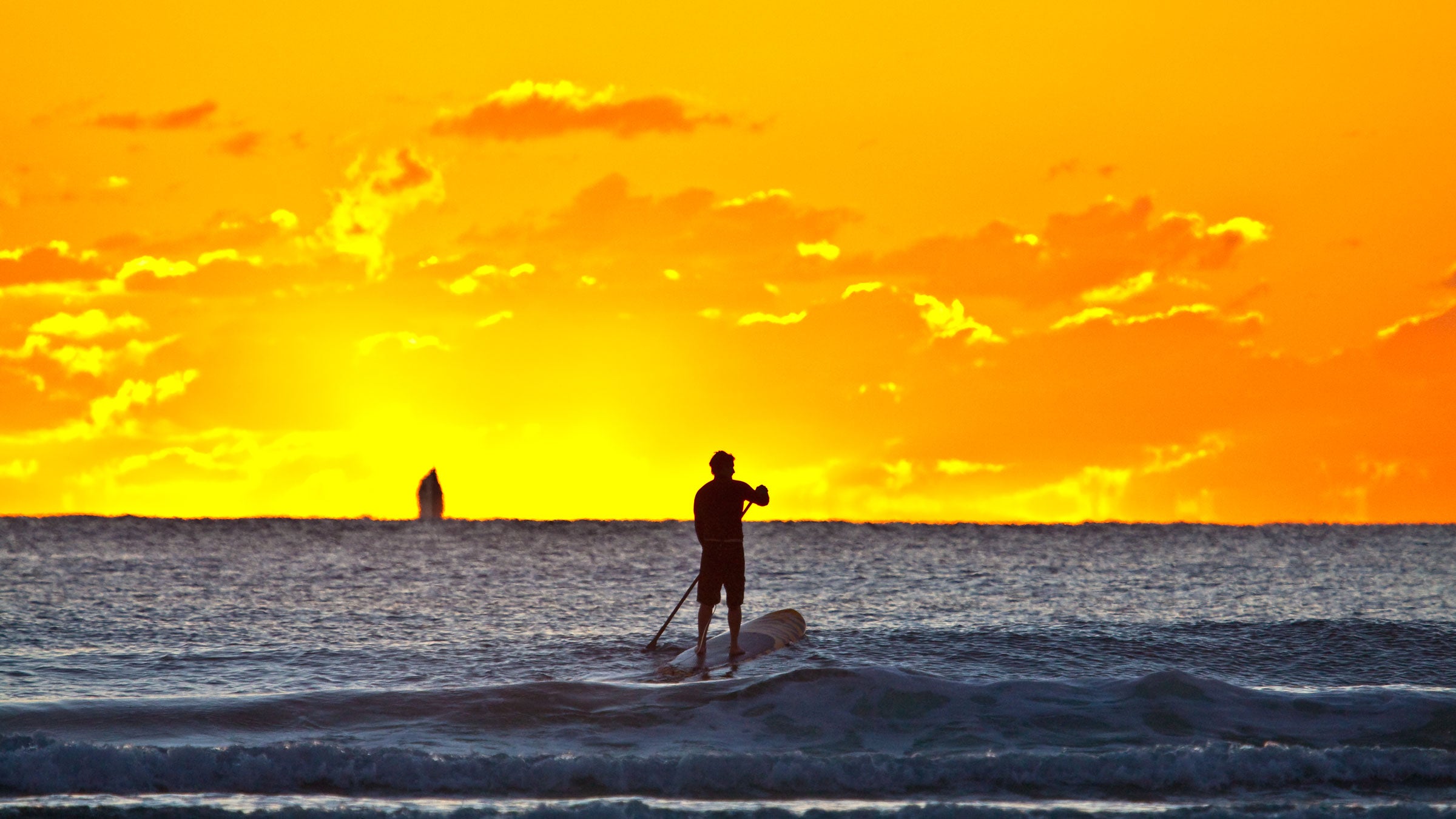
Stand-up paddleboarding is really just a matter of balance and form. If you can master those basics, you'll be golden.
The first time I ever took a stand-up paddleboard on the open water was eight years ago in Clearwater, Florida. The idea was to paddle a quick mile from the coast to the white sand beaches of Caladesi Island State Park. The way out was a relaxing paddle, but by the time I needed to head back in the tide had changed and the offshore winds picked up. It took me hours of prone paddling—lying on my stomach and paddling with both arms—to make it back to the beach. When I did, I flopped over, panting and exhausted.
Don't repeat my mistake. Before you hit the open ocean, hone your skills on flat, calm water such as a lake or marina. Make sure you select a stable board that is at least 30 inches wide and 11 feet long. If you start with a board too small, you’ll fall a lot and spend most of your time in the water, disheartened.
Here are some tips to help you perfect your balance and form. Once you have that down, everything else will follow.
- Stand in the middle of the board with your feet parallel and spread shoulder width apart.
- Paddle with your whole body, not just your arms. Straighten your arms, bend your knees, twist your core, and engage your back. Always grip the paddle with one hand on the top and the other on the center of the shaft.
- Get the stroke right. Once the paddle passes your feet, you're essentially just shovelling water. The most power is attained by having a long forward reach, then finishing the stroke just past your feet.
- Focus on the horizon in the direction of where you want to go. Your body, and in turn the board, follows where you look.
- When you’re standing on your SUP, you act like a sail. If the winds pick up and the water starts to get choppy, simply drop to your knees, sit, or even lie down on your board and paddle with your arms.
ADVERTISEMENT
The Kit
Have the basics covered? The Yeti Hopper 20 ($299.99) soft-sided cooler easily transports up to 12 cans with sturdy carrying straps and tie down points to secure it to your board. Unlike other soft-sided coolers, the Hopper is puncture-resistant, leak proof, and sports an anti-microbial liner that resists mildew. Plus. it keeps your beverages cold for days thanks to an inch of closed-cell foam insulation on the sides and 1.5 inches of on the bottom.
Make the most of those cold ones with the SUP Buddy Water Bottle Holder ($25), a removable koozie for cans and bottles. Suction cups and rip-and-stick straps make for easy mounting to the front of a stand up paddleboard. And finally, turn your lake paddle into a party with the EcoPebble ($59.99) waterproof Bluetooth speaker that pumps out up to seven hours of tunes, can be strapped to your board or pack, and, best of all, floats.
