Published August 1, 2016 12:00AM
How BMW Designed the World's Fastest Wheelchair
A German automaker’s California design lab is cooking up custom chariots for American Paralympians
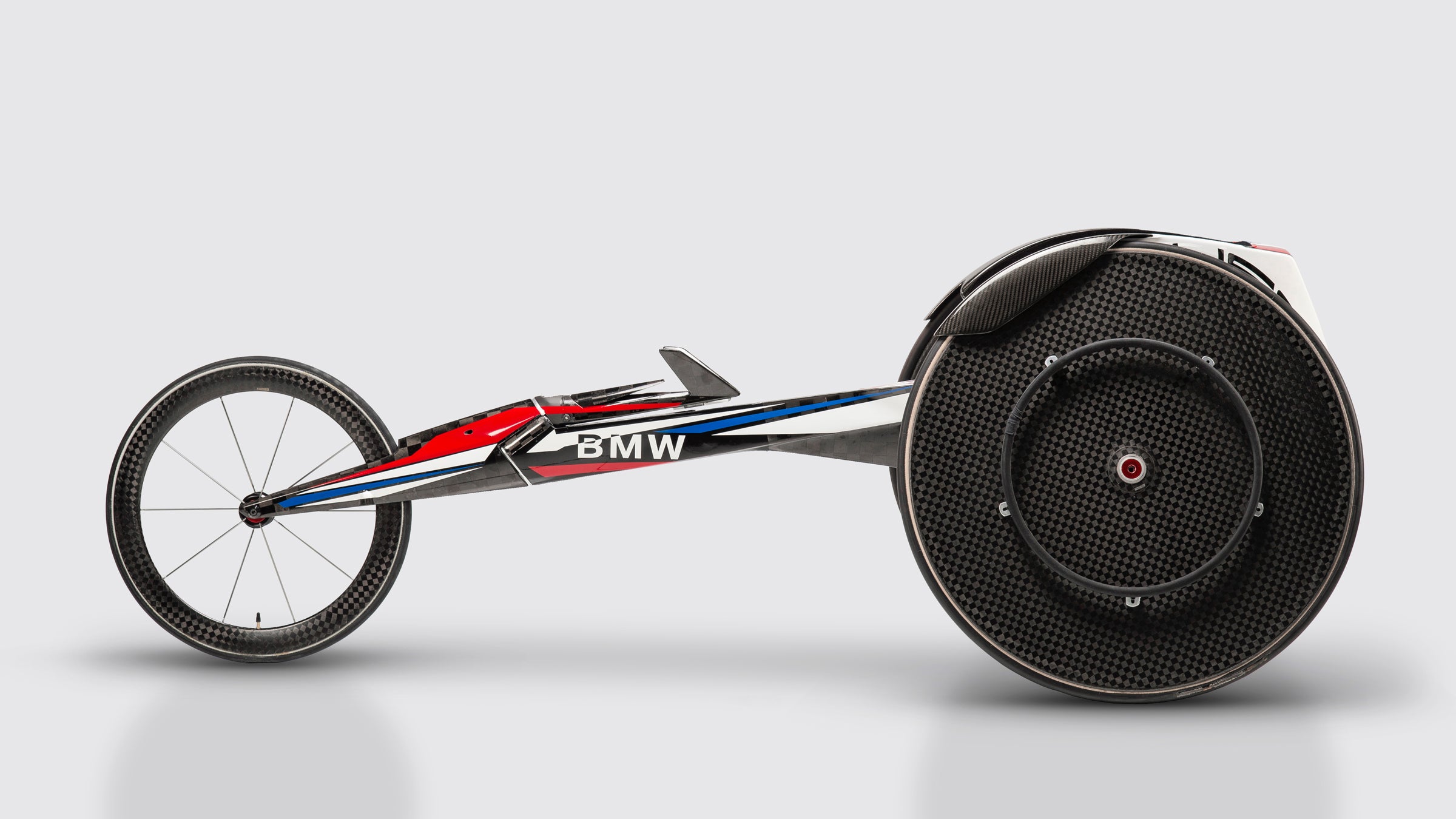
Six athletes on the USA Track and Field team will compete at the Paralympics this September in custom carbon-fiber wheelchairs dreamed up by Designworks, BMW’s Southern California design firm. (Photo: Courtesy of Designworks)
Six athletes on the USA Track and Field team will compete at the Paralympics this September in custom carbon-fiber wheelchairs dreamed up by Designworks, BMW’s Southern California design firm. The team has worked with Olympians before; they built sensors for long jumpers to check their form and delivered the lightning-fast two-man bobsleds that enabled the United States to break a six-decade medal drought in Sochi. But this is their first time tackling a wheeled rig. To do so, they rethought it from front to back. “The ideal is that the wheelchair disappears,” says associate director Brad Cracchiola, “and it’s just the athlete.”
Carbon Footprint
BMW decided to upgrade the chassis from aluminum to carbon fiber for the same reason pro cyclists prefer it: with the improved strength-to-weight ratio, you can cut flab without sacrificing durability.
Cheat the Wind
Since carbon molds into virtually any shape, engineers spent months testing prototypes in a computer-simulated wind tunnel to arrive at the perfect, sleekly aerodynamic design.
Power Performance
The steering and braking systems aren’t just tuned for precision handling. They’re also constructed of lightweight carbon and 3-D-printed parts, fabricated in aerodynamic shapes to help reduce drag.
ADVERTISEMENT
Bespoke Fit
Racers need to keep their bodies firmly anchored, so that no effort is wasted shifting weight or correcting angles. The team at Designworks made a 3-D scan of each of the athletes, then built custom seats for them.
Stiffen Up
Wheelchair racers don’t so much grab and turn the wheels as punch them. With that much force applied, any flex translates into wasted energy, so BMW maximized the frame’s rigidity to handle the additional load.